Have you ever heard the phrase “it wears its heart on its sleeve”? The Vivo X300 Ultra tells you what it is about the second you pick it up. The huge camera bump, the weight, the accessories, the optional external lenses, everything here screams that this is not meant to be a normal flagship phone, and honestly, that’s what makes it interesting.
For the last few years, Vivo’s Ultra phones have quietly become favourites among smartphone photography enthusiasts because of how aggressively they push the camera hardware. The only problem: these devices were limited to China, which made them inaccessible to most people. That changes with the X300 Ultra, as it is finally going global.
After using this phone around Delhi for everything from street photography in Connaught Place to lowlight shots in Hauz Khas Village, it became pretty clear that the Vivo X300 Ultra is not trying to be the most balanced flagship phone in the market. Instead, Vivo has built something that feels much closer to a compact mirrorless camera that also happens to run Android. The real question is whether that experience justifies a price tag that goes close to Rs 2 lakh.
The Main Camera Finally Feels Different
One of the highlights of the X300 Ultra is its 1-inch type 200MP Sony LYT-901 main camera, currently one of the largest 200MP sensors on a smartphone, which is paired with a 35mm equivalent focal length.
Vivo X300 Ultra
Rs 1,59,999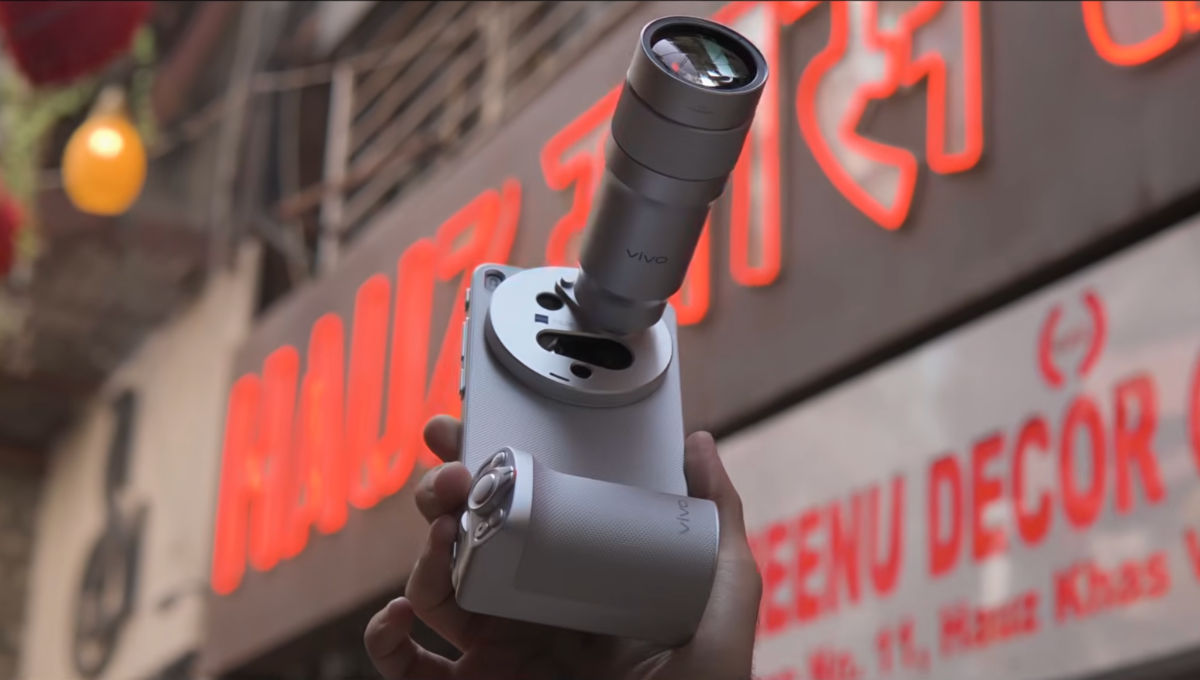
What Is Good?
- Exceptional camera performance
- Beautiful QHD+ OLED display
- Telephoto extenders push it into compact camera territory
- Flagship-level performance
- Battery easilt lasts a full heavy day
What Is Bad?
- Becomes bulky with accessories
- Heating under sustained heavy usage
- OriginOS 6 can feel restrictive
- Extremely expensive with the full photography kit
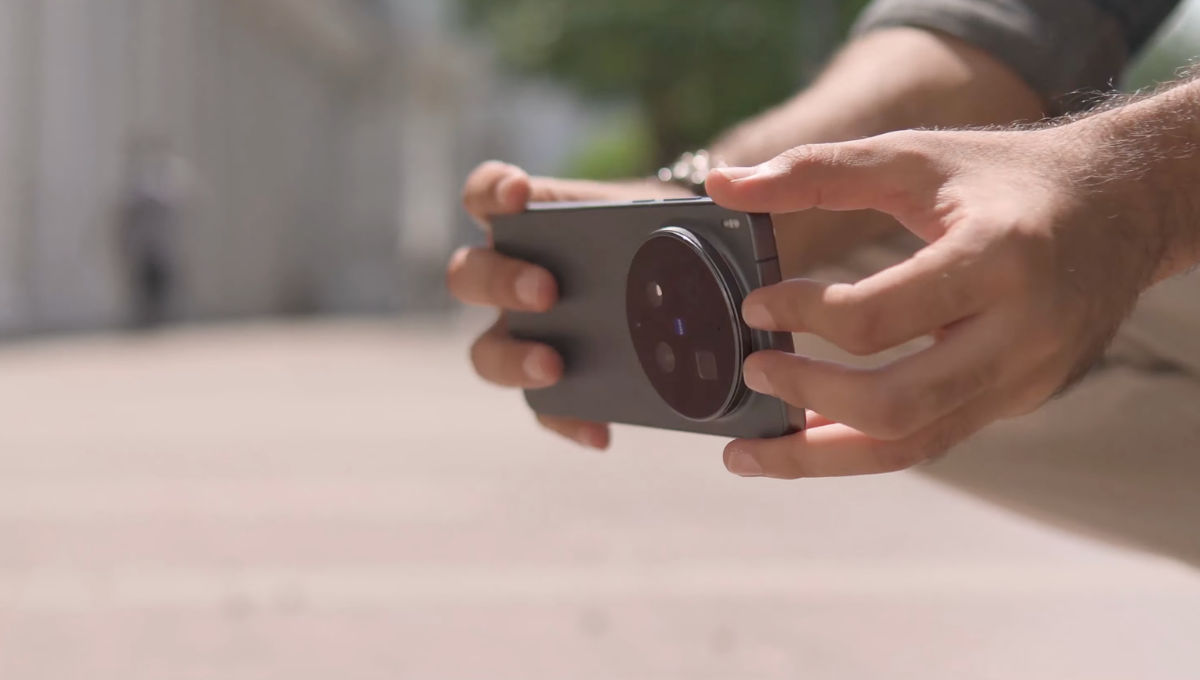
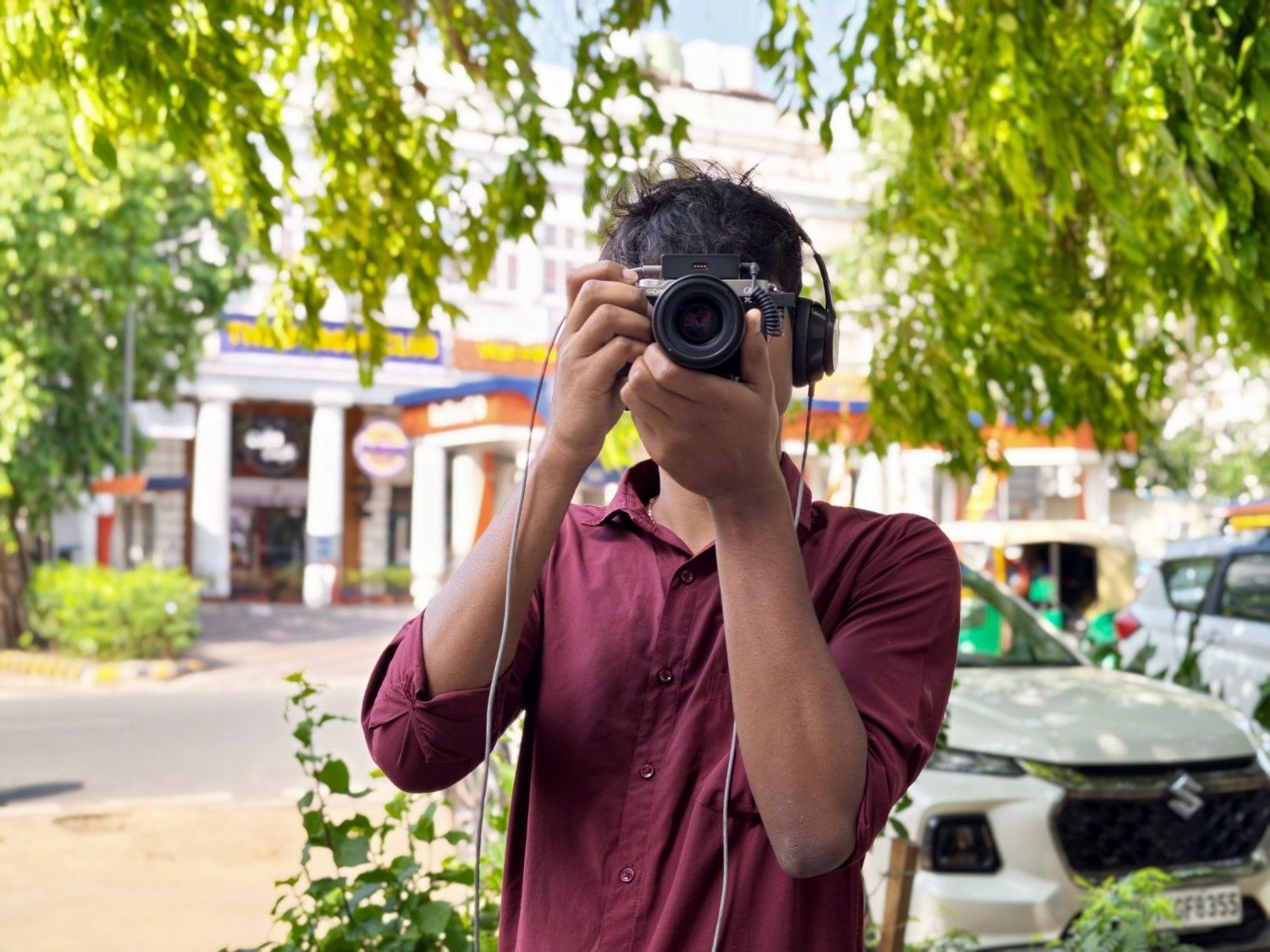
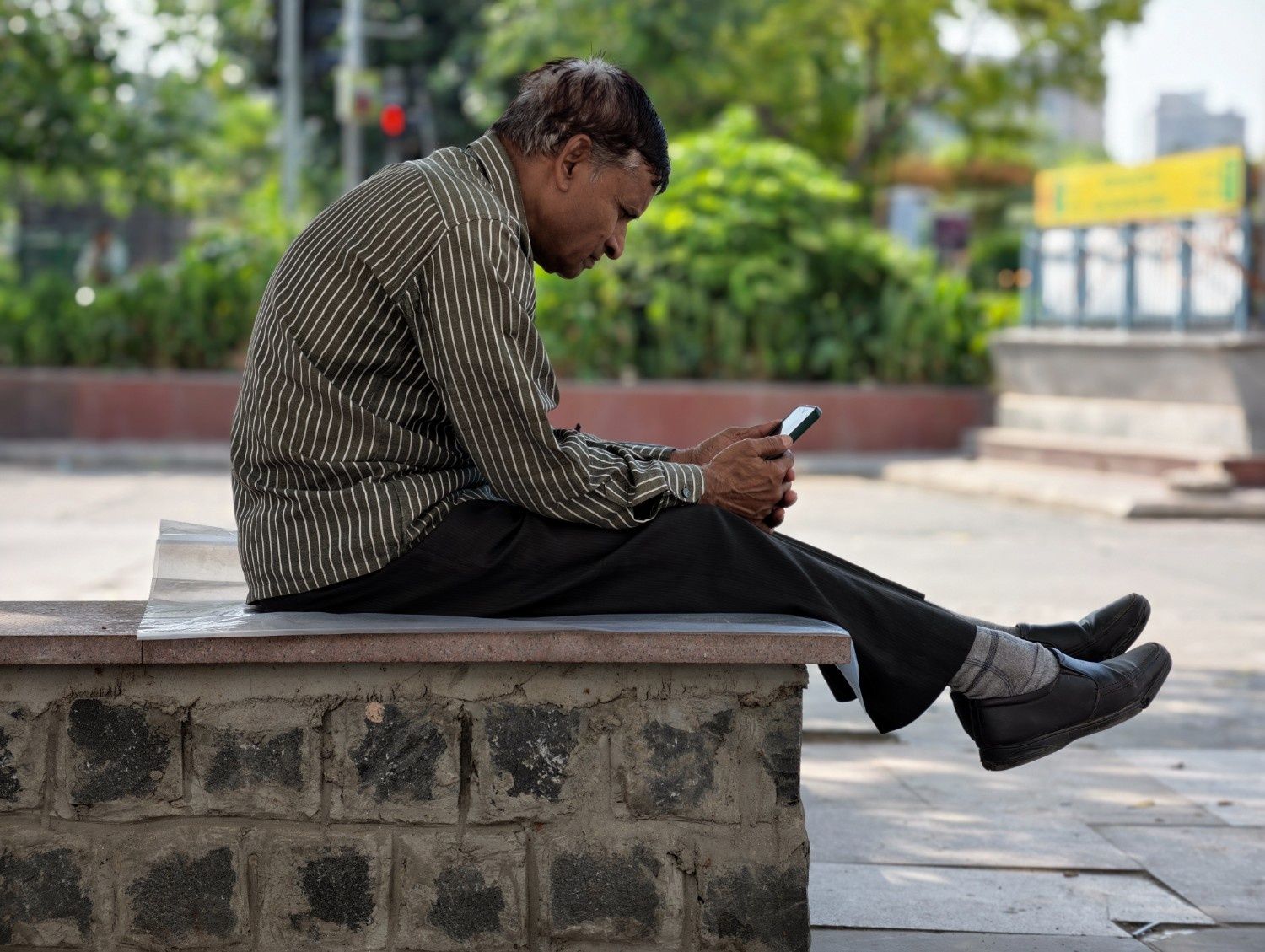
Most smartphones shoot at 24mm (1x), which creates a wider perspective but can also distort faces and make compositions look overly “phone-like”. On the other hand, the Vivo X300 Ultra’s tighter framing with 35mm (1.5x) feels more natural, especially when it comes to portraits and street photography.
While shooting around Delhi, the photos looked consistently cleaner and more intentional than what you would expect from a smartphone. Combined with the large sensor, the phone also delivers excellent dynamic range, strong subject separation, and noticeably more restrained processing than older Vivo devices.










However, when you use the camera in the default vivid mode, it does saturate the pictures aggressively. When you switch to the Natural mode, you get more balanced colours and realistic skin tones. But that’s a personal preference, some like their colours saturated, so you do you.
The Telephoto Camera Is Still The Star
The telephoto setup is one of the best parts of the X300 Ultra. The phone uses a 200MP 85mm periscope lens that gives you genuinely usable results even at around 10x zoom. Detail retention is great, autofocus is fast, and the natural compression from the telephoto lens gives your portraits a much more cinematic look.









In addition to this, you can even add the optional 200mm and 400mm telephoto extenders to the setup. Just a heads up, you have to pay extra to buy those. The 200mm lens pushes the phone into compact-camera territory, while the 400mm extender feels completely excessive, but also incredibly fun to use in good lighting conditions.
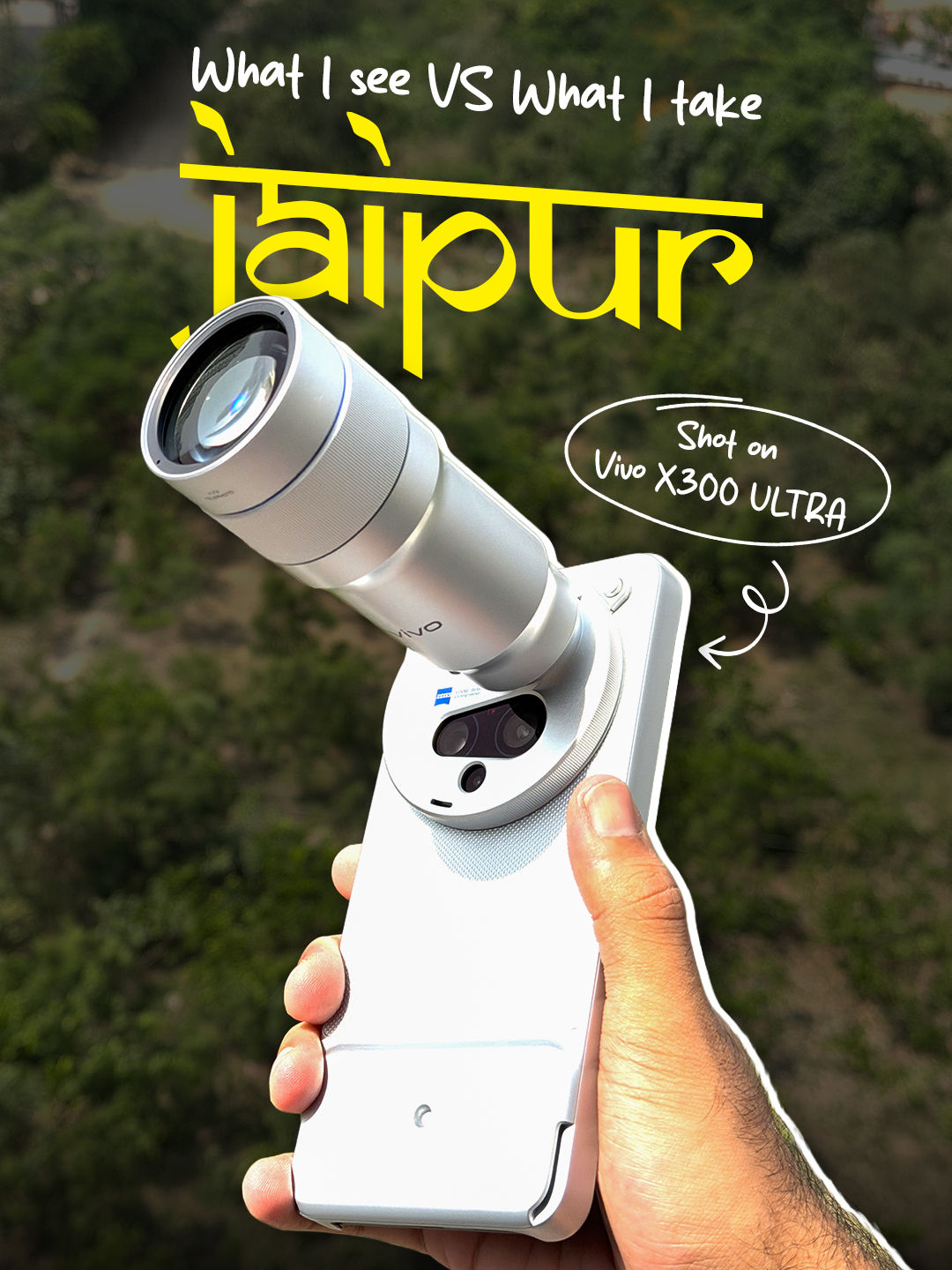






At India Gate, the camera captured distant textures and details surprisingly well with the telephoto extender lenses, while lowlight performance remained more stable than expected for a smartphone zoom lens.
Low-light & Video Performance
Low-light performance is another major strength. In places like Hauz Khas Village, where the lighting isn’t always ideal, the X300 Ultra handled neon signs, LEDs, and deep shadows impressively well without aggressively smudging texture to reduce noise.
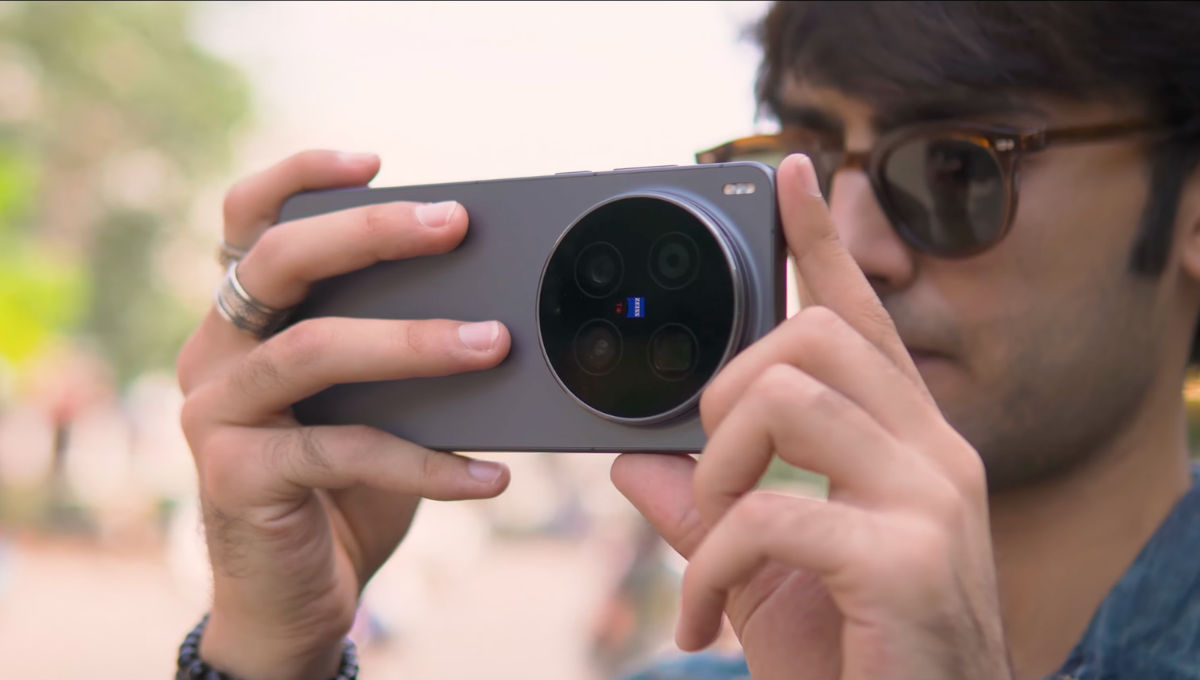
The video is equally strong. The phone supports:
- 4K/60fps recording across all rear cameras
- 4K/120fps recording
- LOG video
- APV codec support
More importantly, the footage actually looks excellent. Stabilisation is smooth, exposure transitions feel natural, and Vivo’s new Film Style mode adds a cinematic 2.4:1 aspect ratio that genuinely looks good straight out of the camera. If you’re a content creator, you no longer have to depend on iPhones for videos.
The only weak point in the entire setup is the ultrawide camera, which still delivers good colours and exposure but struggles with visible edge distortion and slightly noisier lowlight performance compared to the main and telephoto sensors.
There is no subtle way to say this: the Vivo X300 Ultra feels huge!
Now, if we talk about the design and its form factor, it’s hard to convince someone that it is an easy-going device, but it wasn’t a problem for me.
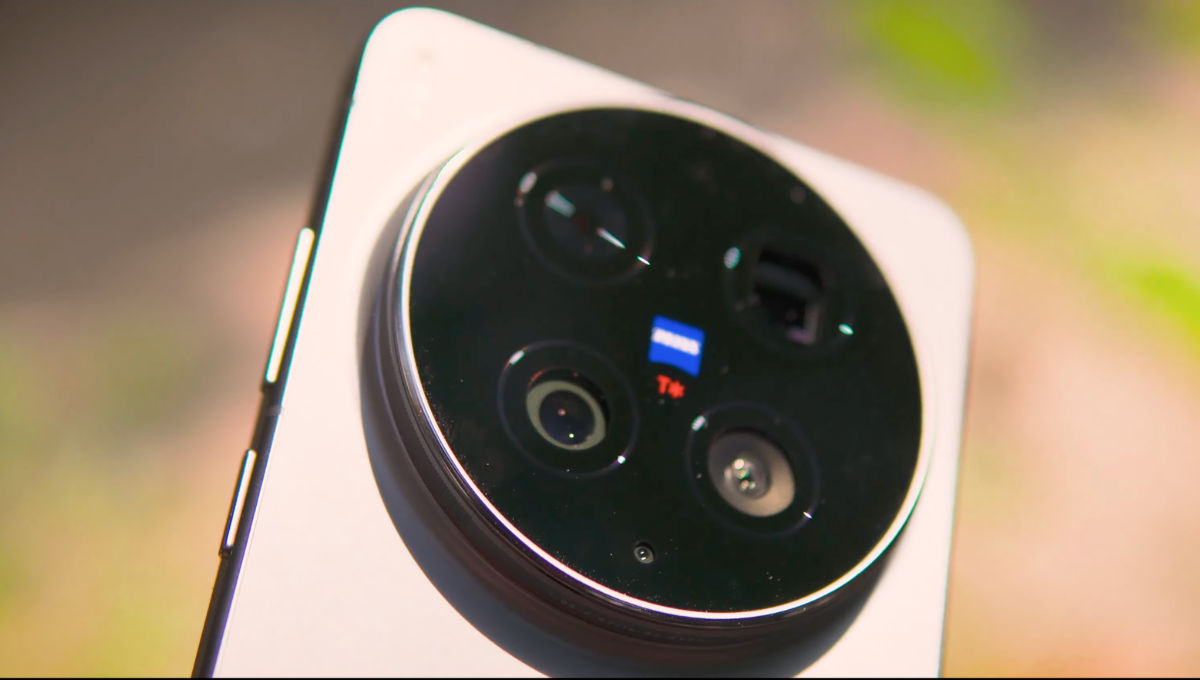
Because of two things – first, if I use it stock, the camera bump is indeed massive, but it also makes you feel that you are using a top-end camera phone. Moreover, lookwise, we also have to accept that these big camera modules are a new way of making a statement, just like three camera rings on the back. However, if you use the attachments, then the entire story changes. Then it is no longer a phone; you will have to use it like a professional camera (with a lanyard). And yes, if you have small hands, then there is a struggle.
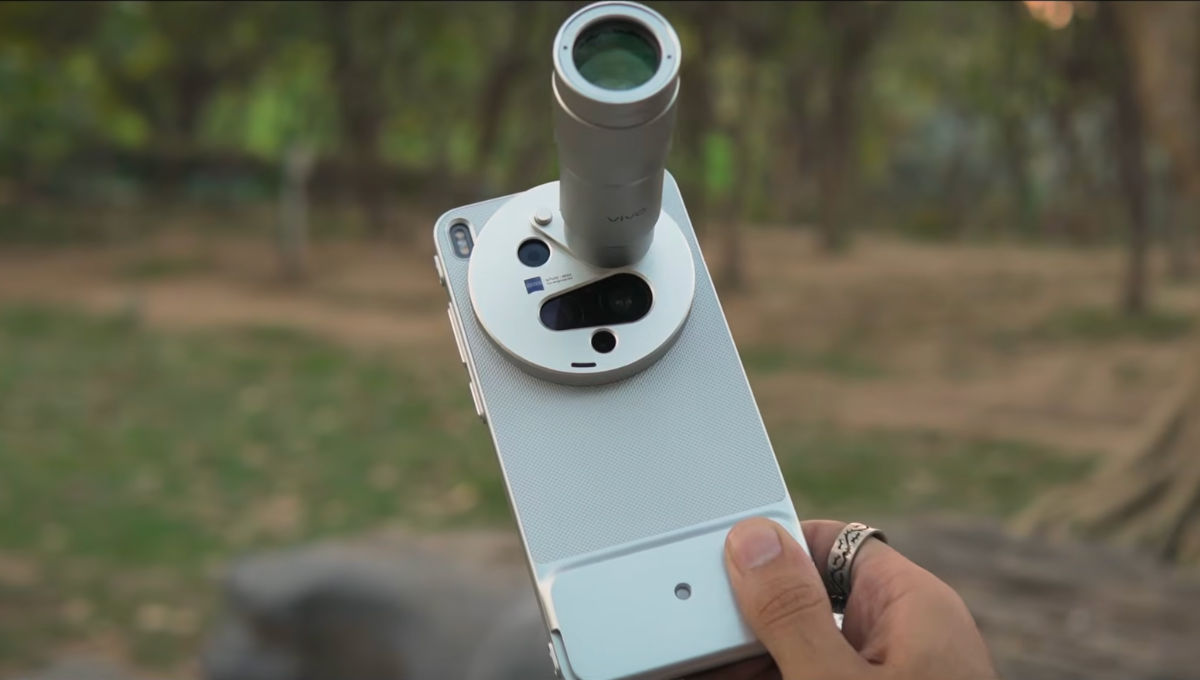
With that said, the build quality is excellent, though. You get IP68 and IP69 ratings, the materials feel premium, and the overall construction matches the flagship price tag.
Additionally, I would like to appreciate the smartphone’s haptics. Even a small feedback of shutter speed feels quite prominent and natural. I usually use my phone on vibration, and with an iPhone, I hardly miss any texts and calls. With the Vivo X300 Ultra, it was a similar experience.
Image Processing, Heavy-Gaming, Or Video Editing – It Doesn’t Flinch
The Vivo X300 Ultra is powered by the Snapdragon 8 Elite Gen 5 chipset, which is paired with up to 16GB of LPDDR5X Ultra Pro RAM and up to 512GB of UFS 4.1 storage. The phone has found a spot at the top when it comes to raw performance, leaving chart-toppers like Vivo X300 Pro, iPhone 17 Pro Max, and more behind.
In regular use, this smartphone performs excellently. Apps open instantly, multitasking feels smooth, scrolling is fluid, and even processing large 200MP images and zoomed images happens fairly quickly. Even during heavy use, like editing a 4K video, gaming at 120 FPS, or using its camera actively, you won’t feel any stress on the smartphone.
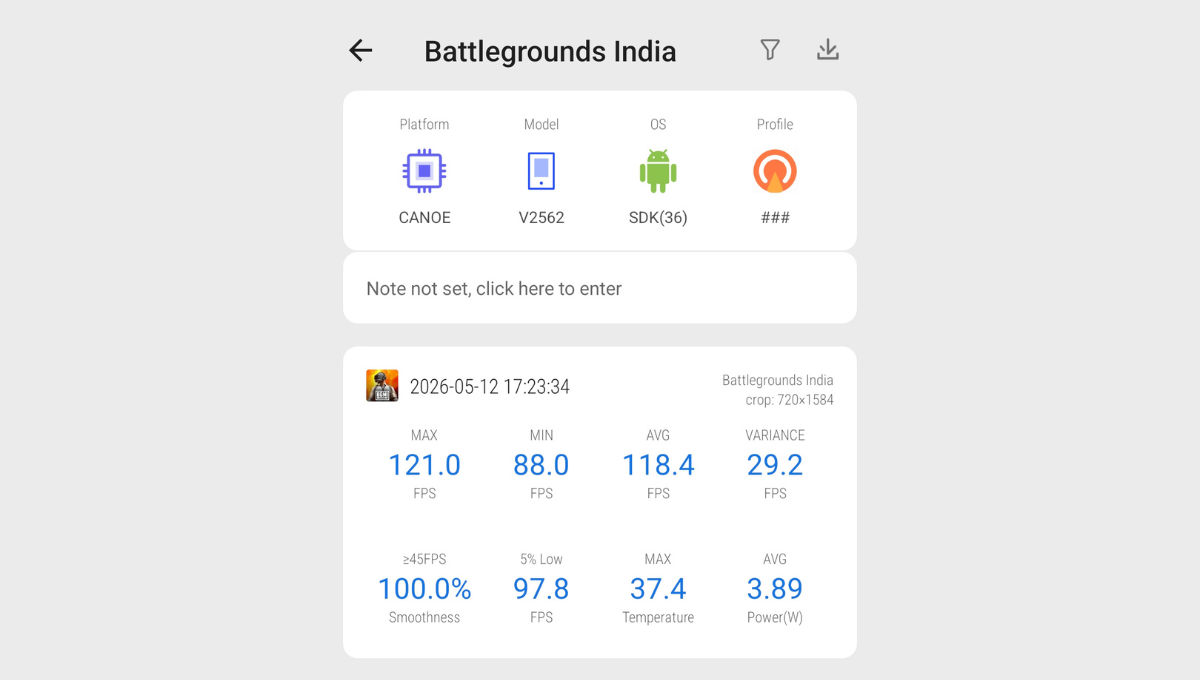
One thing apart from photography that I really enjoyed on this phone is gaming. The Vivo X300 Ultra supports up to 120 FPS in BGMI, and according to our testing, we recorded an average of 118.4 FPS with 97.8 FPS at 5% Lows. In simpler terms, BGMI runs smoothly at 120 FPS on this smartphone, as you can see, it shows 100% smoothness.
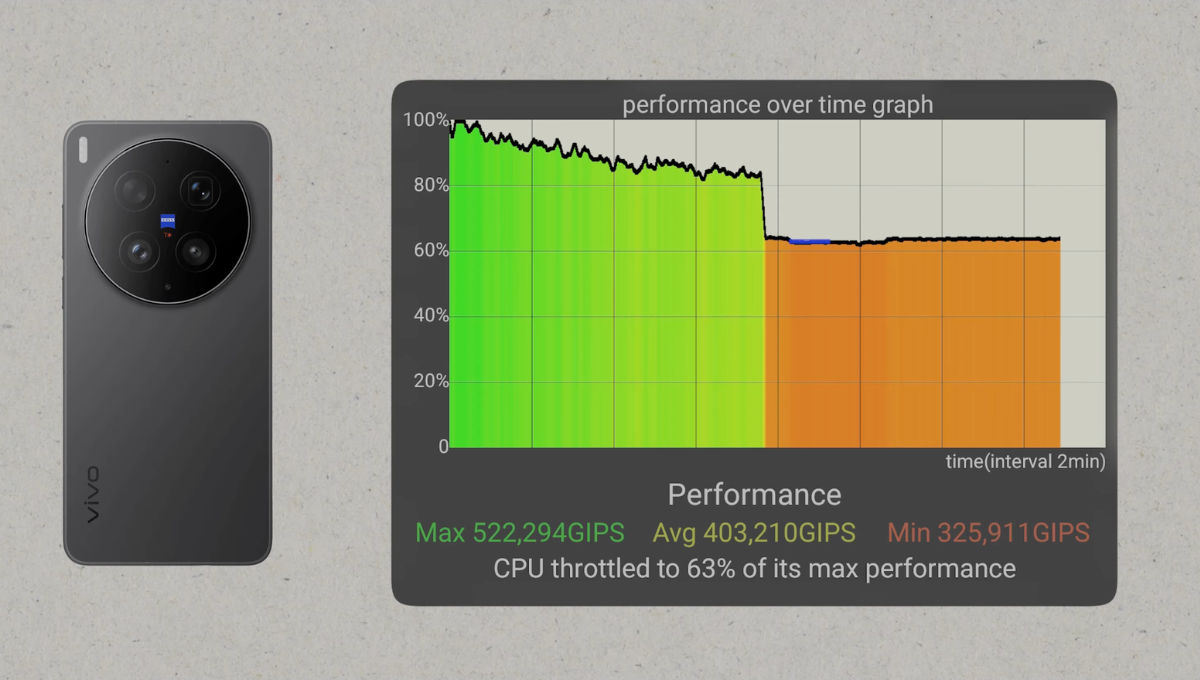
Although the phone definitely gets warm under sustained loads. Long gaming sessions or aggressive camera usage reveal noticeable heating much faster than some competing flagships. And that is visible in our stress test, too.
Still, for everyday use, the phone feels extremely fast and responsive.
OriginOS 6 Is Cool, But It Can Be More
The phone runs on OriginOS 6, which is one of the more divisive Android skins. Some like it, while others don’t. Vivo promises 5 years of Android updates and 7 years of security patches.
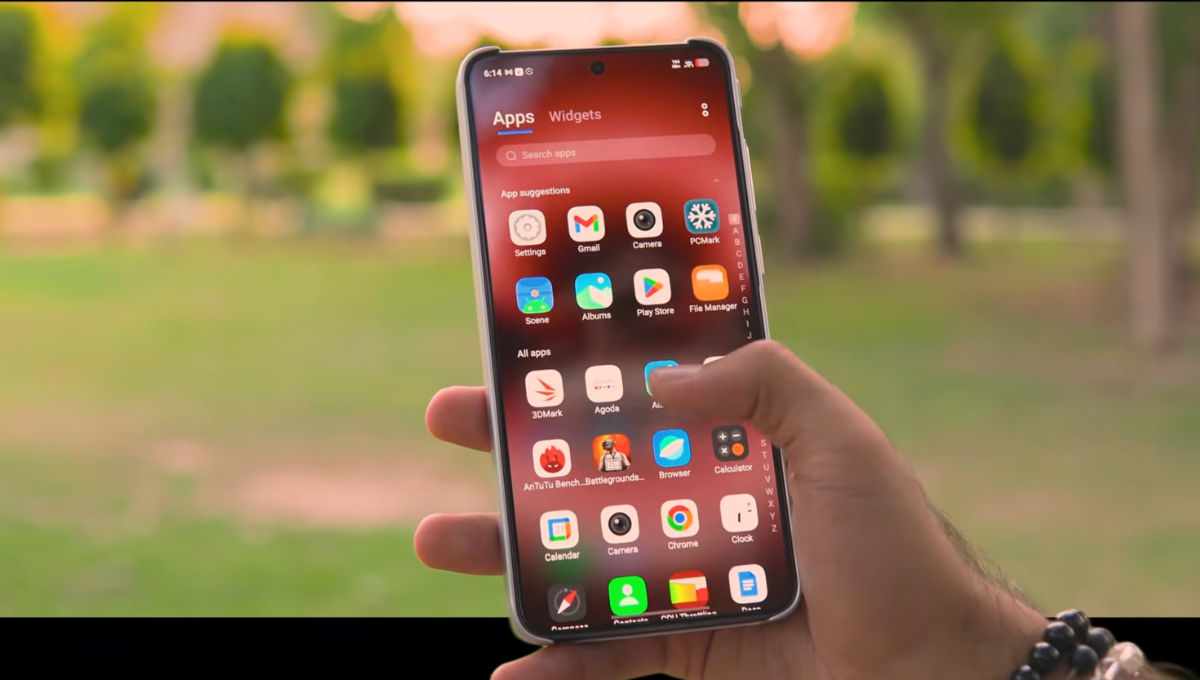
The overall software experience, however, is smooth and feature-rich. There are some genuinely useful additions like per-app volume control, app-specific brightness settings, and some cool add-ons in the Camera UI. However, customisation is not as flexible as One UI or ColorOS, especially when it comes to widgets and quick settings.
A Display That Feels as Fast as It Looks Good
The display of this phone deserves some credit for this whole ‘smooth experience’. You get a 6.8-inch QHD+ OLED display that supports up to a 144Hz refresh rate, and the brand claims 4500 nits of peak brightness. Now the claimed brightness is tested on a pixel level, so obviously, it’s 4500 nits. In our testing, with a lux meter, we recorded a peak brightness of 2240 nits, which is a very good number, because the iPhone 17 Pro Max recorded just 1460 nits of peak brightness.
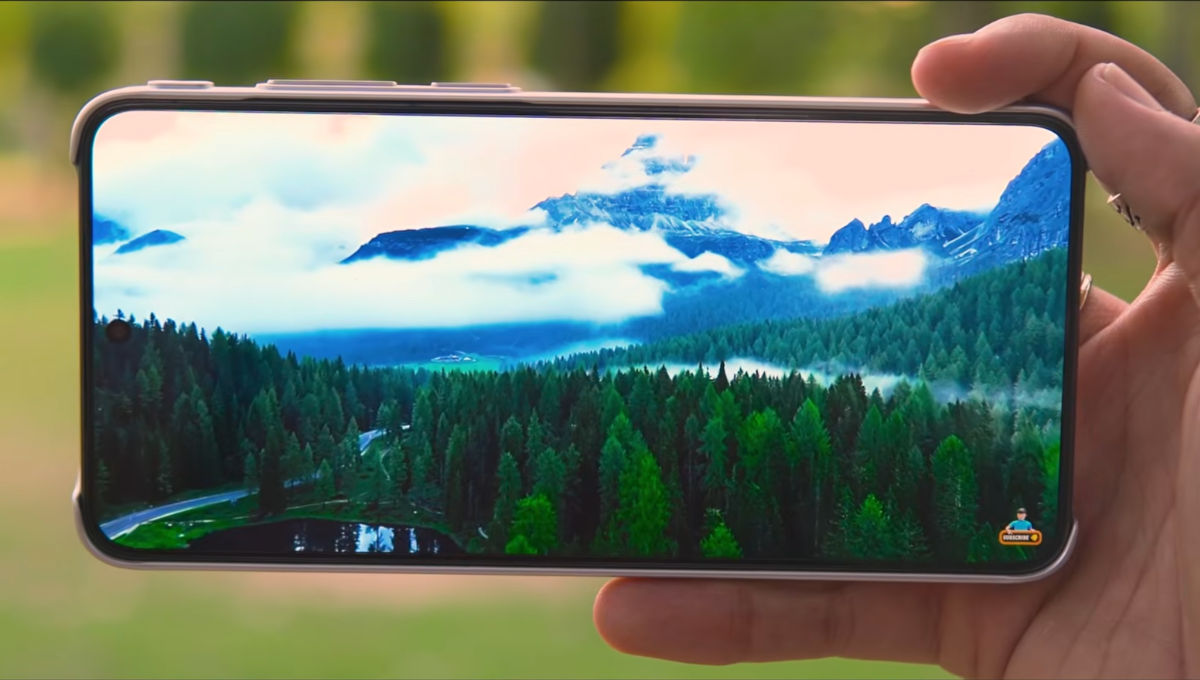
During editing videos or watching movies on it, the panel looks excellent, providing sharp and vibrant visuals. In dark scenes, you get to see good HDR, very close to the likes of the iPhone 17 Pro Max.
And with a 144Hz refresh rate, you get an extremely smooth multimedia experience. Which reminds me of its ultrasonic fingerprint sensor, too. Since it is a top-end flagship phone, its display performs like one too.
The 6600mAh Battery Lasts More Than a Day
Now for the battery, I started shooting with the Vivo X300 Ultra at 7 am and got free with the shoot at 7 pm. After using it heavily throughout the day, I was left with 19% battery. Keep in mind, I have shot at least 400-500 photos on it, shot multiple videos, and used it for Google Maps, among other things.
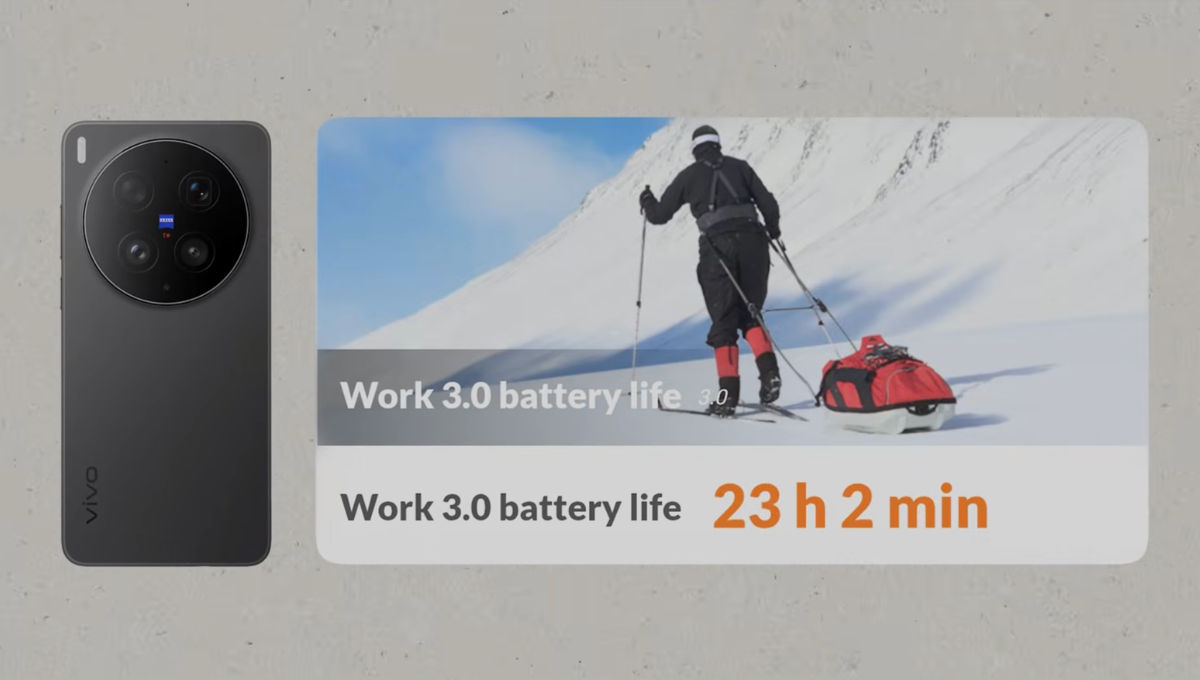
The phone has a 6,600mAh battery, and on lighter days, it will easily give you 2 days’ worth of battery life. On our PC Mark Battery Life test, it lasted over 24 hours.
You even get 100W fast charging, which juices up the device in less than an hour. Plus, there’s 40W wireless charging and reverse charging support as well.
Who Should Buy This Phone?
The Vivo X300 Ultra will be available in Eclipse Black and Victory Green in a 16GB + 512GB variant priced at Rs 1,59,999, while the complete Photography Kit with the 200mm and 400mm ZEISS telephoto extenders, Vivo Imaging Grip, lanyard, and other stuff is priced at Rs 2,09,999.
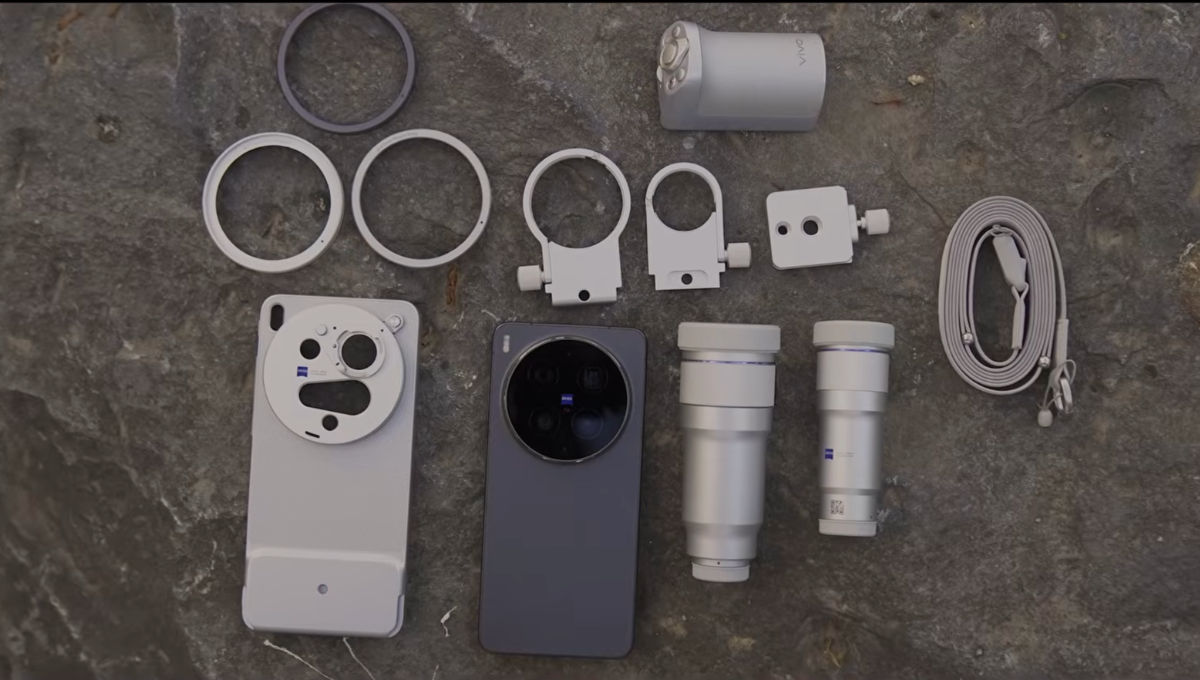
With that price tag, Vivo broke all the bars of smartphone pricing, and the reason? The Vivo X300 Ultra is not trying to be the most practical flagship smartphone. It is trying to be the best camera phone, and honestly, Vivo makes a strong case for exactly that.
The combination of the 35mm main camera, one of the best telephoto systems currently available on a smartphone, strong low-light performance, and genuinely creator-focused video features makes the X300 Ultra one of the most ambitious camera phones available right now.
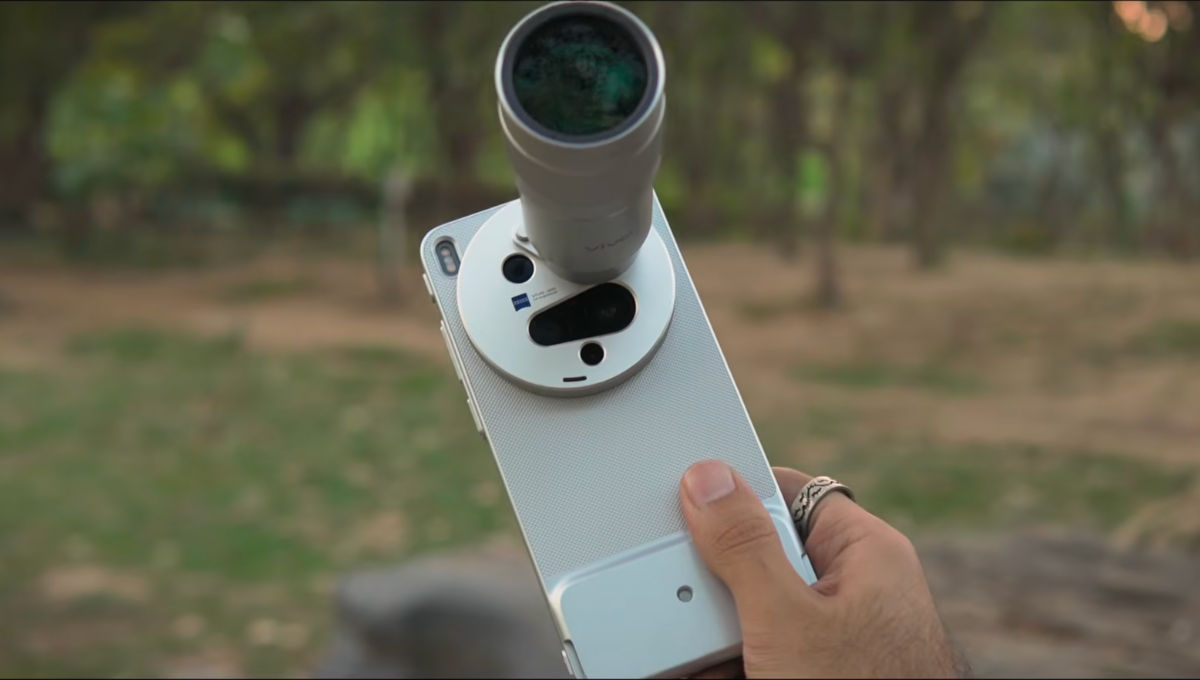
The device alone costs Rs 1,59,999, which makes it an enthusiast device, especially if you start adding the accessories and their costs too. And with accessories, it’s also not the most practical flagship out there. If you simply want a balanced premium smartphone, something like the iPhone 17 Pro Max probably makes more sense. Or maybe the Vivo X300 Pro with a less pricey tag, if you want a similar photography experience as the X300 Ultra.
But if you genuinely care about mobile photography and videography, the Vivo X300 Ultra feels different, positively in a way very few smartphones currently do.