India's room air conditioner market is heading into Summer 2026 with a slightly uncertain start. Early projections had pointed to a strong heatwave-driven season, but demand has been uneven so far, particularly in North India where temperatures have not spiked as expected. In contrast, southern markets continue to see steady cooling demand. This divergence comes at a time when brands had already built inventory and channel strategies around a more aggressive summer, making the next few weeks critical for how the season shapes up.
It is against this backdrop that Blue Star has announced its largest-ever room AC portfolio, signalling that the company is positioning itself for long-term structural growth rather than reacting to short-term demand fluctuations.
A Portfolio Built For Scale, Segmentation, And Premium Push
Blue Star's 2026 lineup includes 125 models across inverter, fixed-speed, and window air conditioners, designed to cater to a wide spectrum of consumers and usage environments. The strategy here is clearly about depth and segmentation rather than just expanding the catalogue.
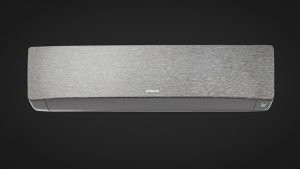
The company has structured its offering across multiple consumer needs, including energy-efficient models for cost-conscious buyers, heavy-duty ACs built for extreme weather conditions, hot and cold variants for year-round usage, and models focused on air quality through anti-virus and filtration technologies. Alongside this, the introduction of the ‘Iconia' premium range in a Midnight Silver finish highlights a growing emphasis on design and aspirational appeal, a trend that is becoming increasingly visible in the AC category.
Performance And Efficiency Become The Core Narrative
The 2026 portfolio leans heavily into cooling performance and energy efficiency, which aligns with how buyer expectations have evolved over the last few years. Blue Star claims that its 1-ton inverter models can achieve an ISEER rating of up to 6.25, positioning them significantly ahead of standard 3-star offerings in terms of energy savings.
At the same time, the heavy-duty range has been engineered for more extreme conditions, with the ability to operate in temperatures as high as 56 degrees Celsius while maintaining full cooling capacity at 43 degrees. This positioning reflects a broader industry shift towards designing products for more intense and prolonged heat cycles, even if the current season has not fully reflected that trend yet.
Airflow and cooling reach are also being emphasised, with claims of up to 55 feet of air throw. This points to a focus on larger rooms and high-load environments, where real-world performance often becomes a deciding factor for buyers.
Smart Features Expand, But Cooling Still Leads The Decision
Nearly 50 models in the new lineup come with WiFi connectivity and features such as AI-driven cooling, customised sleep modes, voice control, and energy management tools. While these additions continue to expand the role of software in appliances, they remain secondary to core expectations like cooling effectiveness, power consumption, and long-term reliability.
That said, the inclusion of multi-layer filtration, self-cleaning mechanisms, and anti-corrosion technologies shows that durability and air quality are no longer niche requirements. They are increasingly becoming standard expectations, especially in urban markets dealing with pollution and heavy seasonal usage.
Manufacturing And Distribution Reflect Long-Term Intent
Beyond the product lineup, Blue Star is also strengthening its manufacturing and distribution backbone to support future growth. The company currently has a production capacity of around 1.4 million units, which can be scaled up to 1.8 million units as demand rises. Its manufacturing footprint spans facilities in Sri City and Himachal Pradesh, supported by automation and digitalisation initiatives aimed at improving efficiency and consistency.
On the market side, the brand now has a presence across more than 900 towns, with over 10,000 retail outlets and a service network of more than 2,100 partners. This becomes particularly important as growth shifts beyond metro cities. Tier 3, Tier 4, and Tier 5 markets are increasingly contributing to demand, driven by first-time buyers entering the category.
The Bigger Bet Is On Structural Growth, Not Just One Summer
Blue Star's broader messaging reflects confidence in the long-term trajectory of the AC market. The company expects the category to grow from around 14 million units to 30 million units by FY30, supported by rising incomes, urbanisation, and increasing climate intensity.
There is also a significant affordability story at play, with a large base of households expected to become AC-ready over the coming years. This explains why brands are continuing to invest aggressively in portfolio expansion, manufacturing capacity, and distribution, even when seasonal demand visibility is not perfectly aligned.
For consumers, the expanded lineup translates into greater choice, particularly in segments focused on energy efficiency and high-performance cooling. The push towards higher ISEER ratings and more robust cooling capabilities is a positive shift, especially for regions that regularly experience extreme summers.
At the same time, the current demand uncertainty could influence pricing dynamics. If temperatures do not rise as expected in certain regions, brands may lean on offers and financing schemes to drive sales, potentially making this a favourable window for buyers.
Blue Star's 2026 strategy is less about reacting to a single season and more about preparing for a structurally expanding market. While the summer has begun on an uneven note, the company's focus on scale, segmentation, and premiumisation suggests a long-term play.