Blue Star’s September-quarter results may not look spectacular on the surface, but they reveal a quieter story of reinvention. As the AC industry grapples with erratic weather, prolonged monsoon and no heat wave GST the company is investing close to ₹400 crore to build capacity, modernise its factories, and double down on smart, connected cooling. For a brand that has always sold reliability over flash, this marks a clear shift toward technology-driven growth.
Cooling demand, heating ambition
India’s air-conditioning market has cooled unexpectedly this year. With the GST on air-conditioners slashed from 28 to 18 per cent in September, many buyers chose to postpone purchases. Extended rains and softer retail demand added more pressure. Despite these headwinds, Blue Star’s revenue grew about 9 per cent year-on-year to ₹2,422 crore, showing that its diversified business, which comprises room ACs to large commercial projects, helped steady the ship.
But the bigger story lies in where the company is spending. Around half of the new ₹400 crore capex will go into the next phase of its Sri City plant, expected to expand room-AC production by nearly 40 per cent. Additional investments in Himachal Pradesh and Maharashtra will upgrade automation lines for commercial cooling and freezers. The goal is not just to make more air-conditioners, but to make them smarter and faster.
Smart cooling for real India
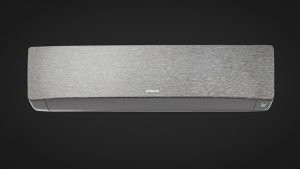
Earlier this year, Blue Star launched a sweeping portfolio of 150 room-AC models across inverter, fixed-speed, window, and Smart Wi-Fi variants. That range was designed to serve every budget and climate, from compact homes to high-heat regions. Several of these models already support app-based control, voice commands, and live energy-use tracking. Most of these features were earlier reserved for the top tier.
As we explored in our recent feature on the brand’s Tier-2 strategy, this approach could help Blue Star tap the fast-growing first-time-buyer segment beyond metros. The latest launches extend that ambition: Smart Wi-Fi for connected convenience, and “Heavy Duty” cooling for extreme 56 °C conditions, both built on domestic manufacturing lines to keep prices accessible.
Factory intelligence meets product intelligence
Behind the consumer-facing upgrades lies a quieter transformation in how Blue Star makes its machines. The Sri City and Himachal facilities are being retooled with greater automation, precision coil assembly, and improved leak-testing systems. These investments will be used not just to raise capacity but also to enhance product consistency. For India’s still-fragmented appliance supply chain, such back-end digitisation could prove as important as front-end smart features.
This dual play, which includes factory intelligence and product intelligence, positions Blue Star differently from global rivals that import large portions of their lineup. The company’s edge now lies in proximity: designing and producing smart hardware attuned to local power conditions, usage cycles, and climate variation.
Riding new regulations and new behaviour
The pivot also aligns with a broader industry shift. From January 2026, India’s Bureau of Energy Efficiency will introduce revised efficiency norms that demand higher ISEER scores. Meanwhile, connected-appliance adoption in India is rising nearly 30 percent annually, as smart-home ecosystems become mainstream through affordable routers and voice assistants. Blue Star’s early bet on in-app monitoring and predictive servicing could allow it to meet both regulatory and behavioural transitions before they peak.
For consumers, this new lineup offers a clearer choice. Those prioritising efficiency and remote control can look at the Smart Wi-Fi series, which supports both Google Home and Alexa integration. Buyers in hotter or dust-prone regions will find better value in the Heavy Duty variants designed to maintain full cooling even at 43 °C ambient temperatures. With GST cuts already in effect and fresh production coming online, competitive pricing during the next summer cycle seems likely.
Blue Star’s current quarter might not excite stock traders, but its strategy should interest tech-savvy homeowners and analysts alike. The company is using technology as insulation against an uncertain climate, in both literal and economic ways. Success will depend on execution: after-sales networks for smart appliances, timely software updates, and visible quality gains from factory automation. Blue Star already has a large network so that should work in its favor. Also, there are very few Indian brands that are trying to modernise at this depth or scale. If it works, Blue Star’s next decade could belong as much to its software and sensors as to its compressors.