India’s air purifier market has become increasingly crowded over the last few years, especially in the Rs 7,000 to Rs 10,000 price bracket, where brands such as Qubo, AGARO, Eureka Forbes, and several online-first players are aggressively competing on affordability. Most products in this segment now promise HEPA filtration, smart indicators, silent operation, and large room coverage claims, making differentiation far more difficult than before.
Portronics Air X
Rs.12,499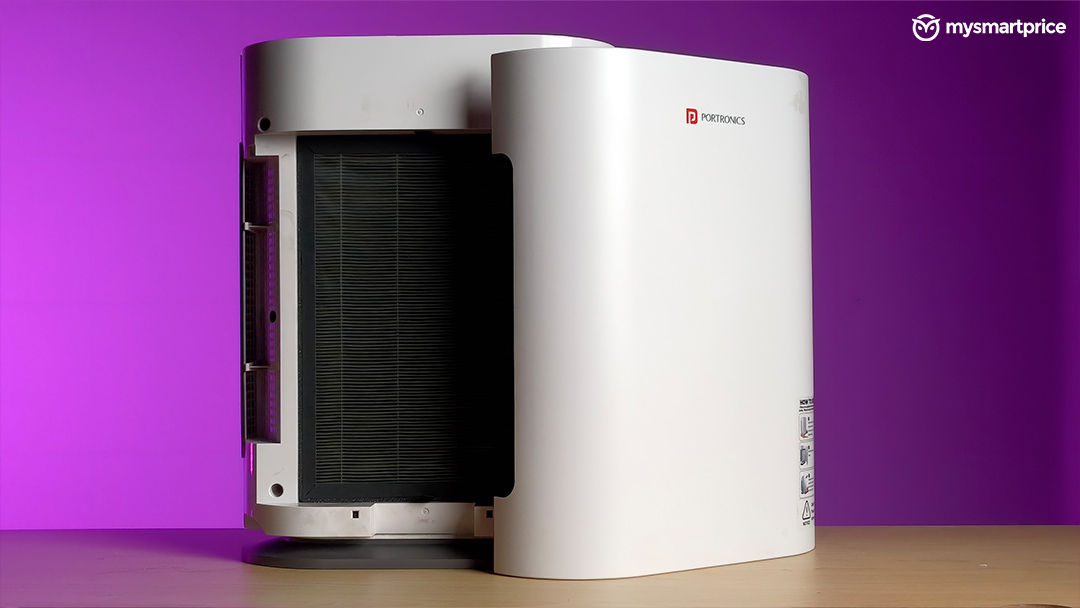
What Is Good?
- Lightweight and easy-to-carry 6.5kg design
- Quiet operation, especially during sleep mode
- HEPA H13 + activated carbon + UV filtration setup
- Useful remote control with multiple function shortcuts
- AQI-responsive lighting system works well
What Is Bad?
- No air swing or oscillation mode
- Touch controls could feel more premium
- Real-world power draw slightly exceeds claimed rating
- Faces strong competition from aggressively priced budget brands
When we first heard about Portronics making an entry in this segment, we thought that with its first device, it might be making a beeline for the same segment. However, Portronics Air X takes a slightly different route. At Rs 12,499, it deliberately positions itself above the ultra-budget category instead of trying to win purely on aggressive pricing. The focus here is clearly on offering a more rounded purification package that combines HEPA H13 filtration, activated carbon filtering, UV sterilisation, quieter operation, and Anion support without pushing into premium Dyson-level pricing territory.
That positioning makes the product interesting because it sits in a middle ground that many brands currently overlook. It is not as aggressively value-focused as entry-level Qubo or AGARO purifiers, but it also avoids becoming an overcomplicated smart-home appliance overloaded with app-first gimmicks. The real question, then, is whether the overall experience justifies paying extra over the budget-heavy competition currently dominating online marketplaces. So we have been using this in Delhi for the last fifteen days and tested it out extinsevely and this is what we have to say about it.
Design Prioritises Practicality Over Flashiness
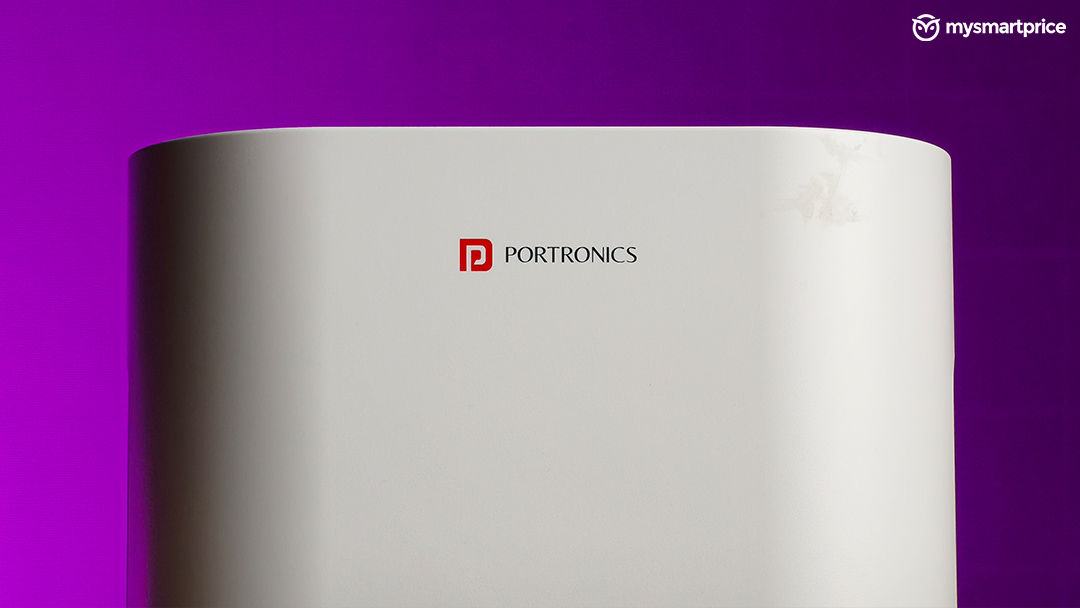
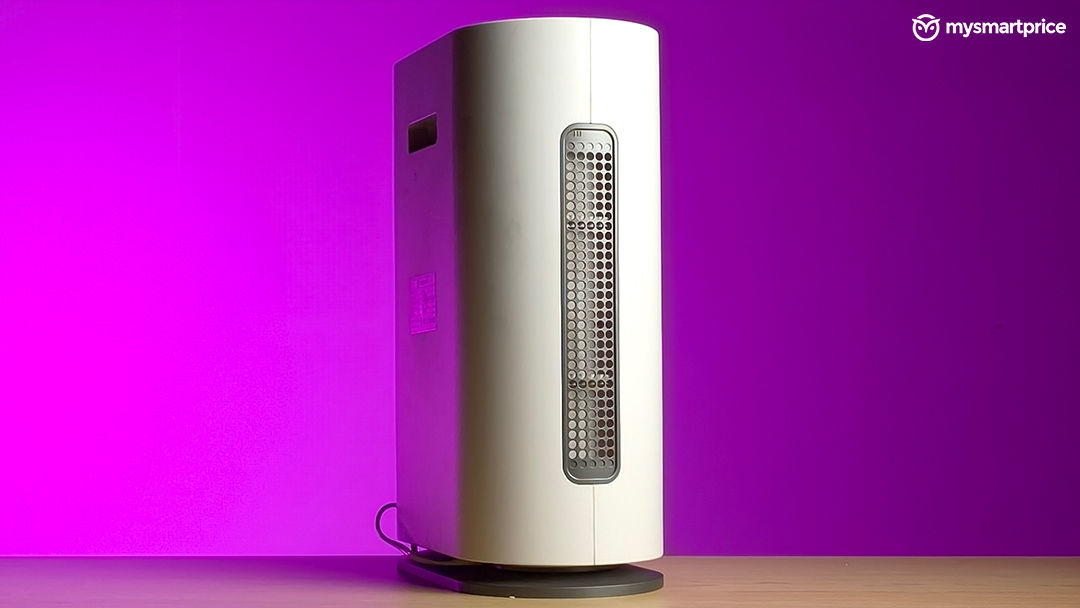
The purifier adopts a fairly straightforward design language instead of trying to look futuristic or overly premium. The plastic construction feels sturdy enough for everyday household usage, while the relatively lightweight 6.5kg body makes it easier to shift between rooms compared to heavier alternatives in this category.
That portability matters more than it initially appears because many Indian households still move air purifiers between bedrooms and living spaces depending on pollution levels, weather conditions, or seasonal usage patterns.
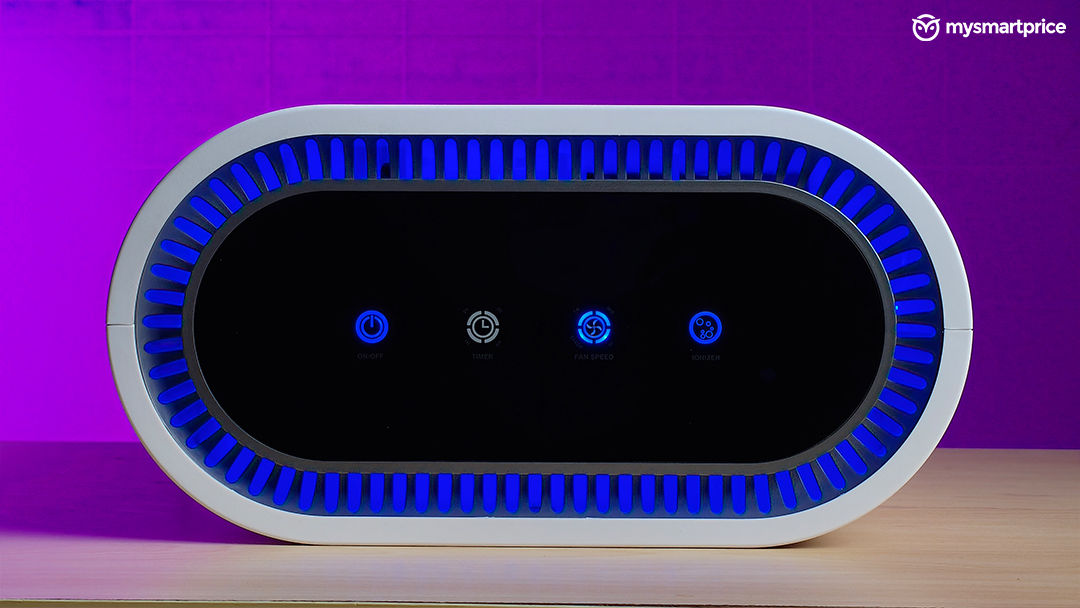
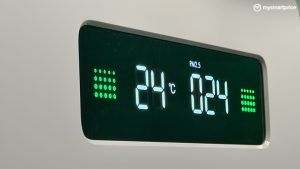
The overall fit and finish feel reasonably well managed for the price. The LED display remains easy to read from a distance, while the AQI-responsive lighting system adds useful visual feedback without overcomplicating things. The purifier displays blue lighting during clean air conditions, green during normal AQI levels, and red when pollution levels become hazardous.
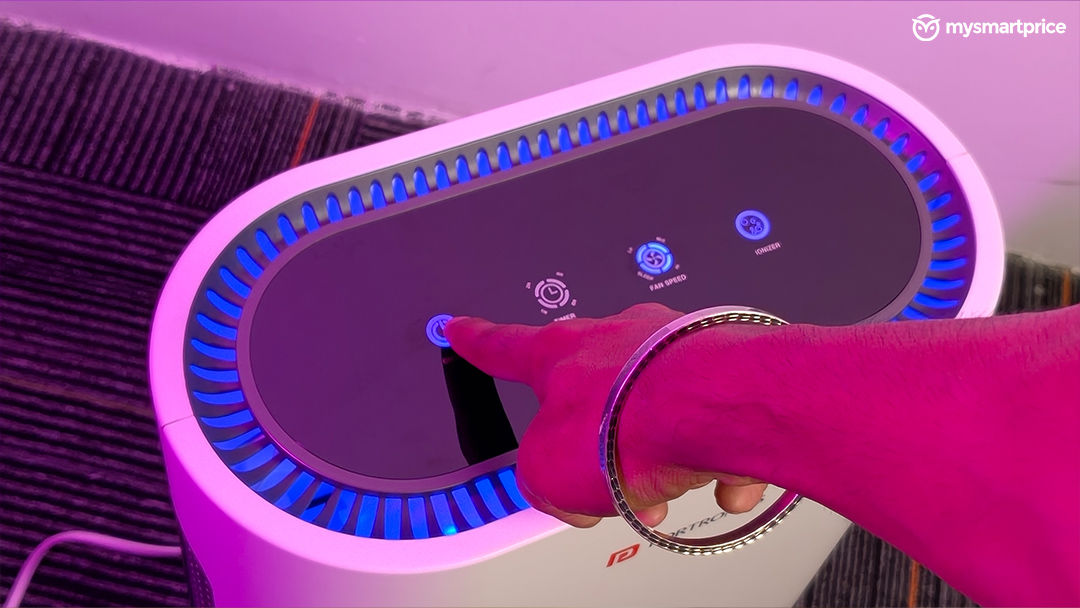
Touch controls offer decent responsiveness during everyday operation, although they do not feel exceptionally premium. The included remote control, however, turns out to be a useful addition that many similarly priced competitors still skip. It allows quick access to fan speed controls, power toggles, UV mode, Anion mode, timer settings, and operating modes without needing to physically interact with the purifier repeatedly.
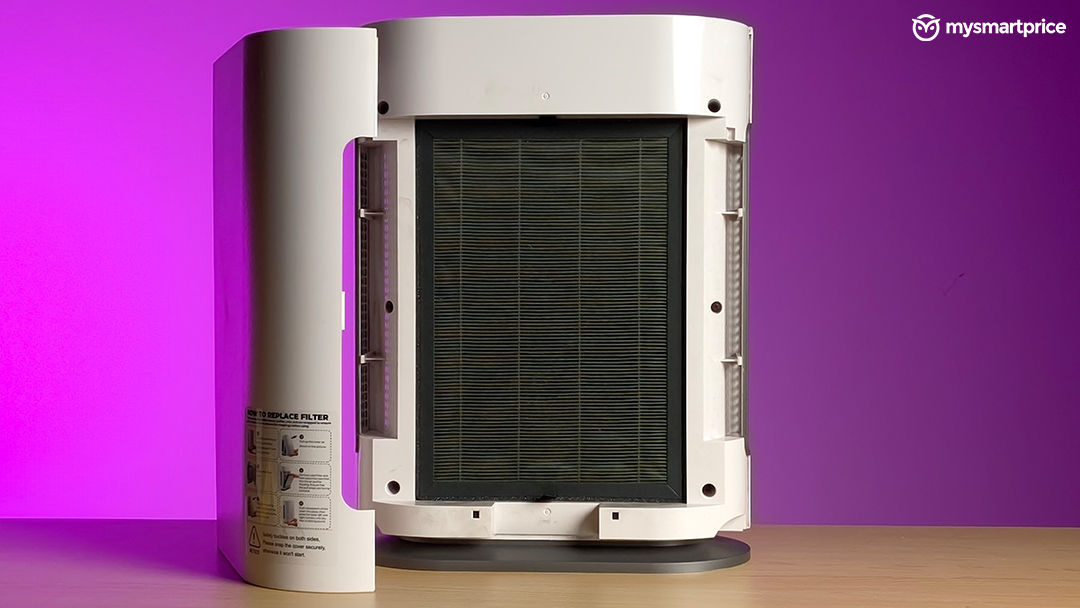
Filter access is also fairly straightforward, which becomes important over long-term ownership because difficult maintenance often discourages users from replacing or cleaning filters regularly.
Filtration Setup Feels Better Positioned Than Budget Rivals
The purifier combines HEPA H13 filtration, activated carbon filtering, UV sterilisation, and Anion support as part of its purification setup. That immediately helps it feel more serious than several entry-level purifiers that primarily focus on basic HEPA filtration while limiting additional purification layers.
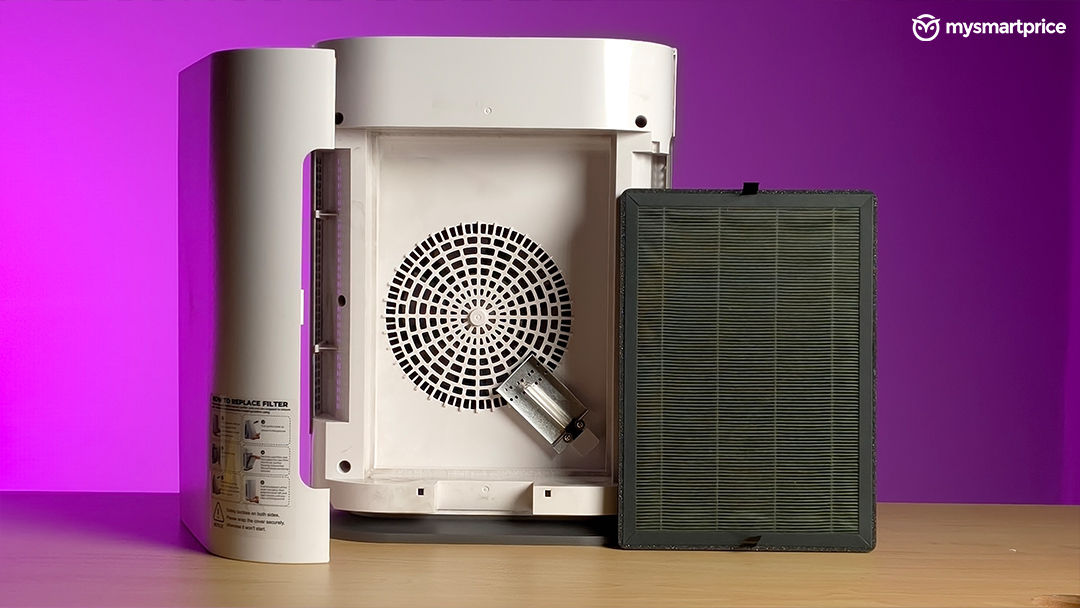
In real-world usage, the purifier handled larger visible pollutants such as dust particles and hair effectively while also reducing smoke and odour presence indoors. The activated carbon layer contributes meaningfully in urban environments where cooking smells, smoke exposure, and traffic-related odours remain common indoor concerns.
The HEPA H13 filter also helps the purifier stand apart slightly from more aggressively priced competition because several budget-focused models still rely on lower-grade filtration systems while heavily marketing coverage numbers and app connectivity instead.
UV sterilisation and Anion support further strengthen the overall package on paper. While the real-world impact of Anion purification can vary depending on room conditions and pollutant concentration, its inclusion does help the purifier feel more feature-complete at this price point.
The claimed coverage area of 388 square feet makes it suitable for medium-sized bedrooms, office rooms, and compact living spaces. For standard urban apartments, the coverage feels reasonably aligned with practical usage expectations.
One area where the purifier does fall slightly behind some competitors is airflow flexibility. There is no air swing or oscillation mode available here, which means airflow direction remains fixed. In larger rooms, that can slightly affect how evenly purified air circulates compared to models that offer directional airflow movement.
Air Purification Performance
The purifier’s real-world purification performance turned out to be one of the stronger aspects of the overall experience, especially when looking at how consistently it reduced PM2.5 levels across corner placement, centre placement, and auto-mode testing.
Instead of relying purely on marketing claims around HEPA filtration and room coverage, the purifier managed to show measurable particulate reduction during our controlled PM2.5 testing. The biggest takeaway here was consistency. The purifier steadily reduced PM2.5 concentration levels instead of showing sharp early drops followed by slower clean-up performance, which is something we often notice in lower-cost air purifiers.
PM2.5 Reduction Performance
| Test Scenario | Starting PM2.5 | 10 mins | 20 mins | 25 mins | Final Reading |
|---|---|---|---|---|---|
| Corner Placement | 403 µg/m3 | 300 µg/m3 | 221 µg/m3 | 178 µg/m3 | 83 µg/m3 |
| Centre Placement | 395 µg/m3 | 305 µg/m3 | 220 µg/m3 | 177 µg/m3 | 83 µg/m3 |
| Auto Mode (30 mins) | 395 µg/m3 | – | – | – | 146 µg/m3 |
The purifier delivered very similar reduction curves in both corner and centre placement testing, which is encouraging because airflow inconsistency is often visible when purifiers struggle to clean room corners effectively. Here, both testing positions eventually dropped to 83 µg/m3, showing fairly balanced air circulation despite the lack of an air swing mechanism.
The purifier also performed steadily during centre-position testing, reducing PM2.5 levels from 395 µg/m3 to 177 µg/m3 within 25 minutes before eventually reaching 83 µg/m3. That kind of consistency matters more in daily usage than aggressive initial drops that plateau quickly afterward.
Auto mode performance, however, was slightly more conservative. During the 30-minute automatic cleaning test, PM2.5 levels reduced from 395 µg/m3 to 146 µg/m3. While still effective, the purifier behaved less aggressively in auto mode compared to manual higher-speed operation. That is not entirely surprising because auto modes are usually tuned to balance acoustics, fan speed, and energy efficiency rather than purely maximising cleaning speed.
Another interesting observation was how stable the purifier remained across HCHO and TVOC readings during testing. While PM2.5 reduction was the clearest improvement area, the purifier maintained fairly controlled volatile compound readings throughout the testing cycle instead of showing sharp fluctuations.
Noise Levels
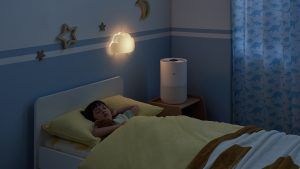
One of the stronger aspects of this purifier is its low-noise operation, particularly during lower fan speeds and sleep mode. The company claims 28dB noise levels during sleep operation, and in practical usage, the purifier remained quiet enough to avoid becoming distracting during night time usage.
That becomes important because many affordable air purifiers tend to become noticeably intrusive once fan speeds ramp up aggressively. Several budget-focused models prioritise airflow strength but end up generating constant fan noise that can become tiring in enclosed bedrooms.
Here, the acoustic management feels noticeably more refined at lower speeds. Sleep mode especially remains comfortable enough for overnight usage without constantly drawing attention to itself.
Power Consumption
The purifier is officially rated at 60W power consumption, although our testing recorded a slightly higher real-world draw of 65.89W during operation. Over a 70-minute runtime, the purifier consumed a total of 0.08kWh of electricity.
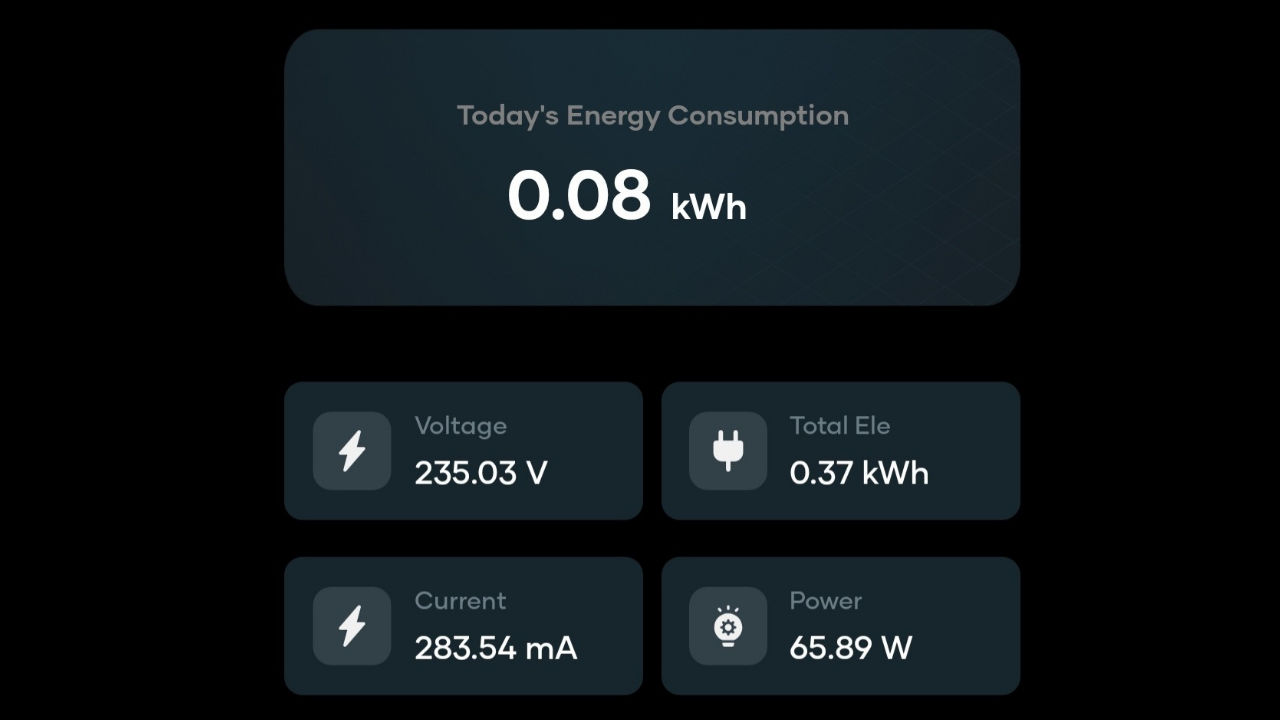
While the actual consumption slightly exceeds the company’s rating, the overall power usage still remains fairly manageable for regular household operation.
Is Portronics Air X worth buying?
This purifier works best when viewed as a balanced mid-segment air purifier rather than a budget-first option chasing headline specifications. The real-world purification data shows consistent PM2.5 reduction across both corner and centre placement testing, which helps reinforce that the purifier is not simply relying on strong initial airflow bursts to create the impression of fast cleaning.
The quieter operation, practical usability, HEPA H13 filtration setup, and stable purification consistency help justify its positioning above entry-level air purifiers. Auto mode could have behaved slightly more aggressively under heavy pollution conditions, and the absence of air swing functionality still limits airflow flexibility somewhat.
Even then, the purifier delivers a fairly rounded everyday experience with measurable air cleaning performance instead of depending entirely on feature checklists or smart-home marketing.