Winter in Delhi brings a familiar dilemma. Air pollution peaks just as temperatures drop, forcing many households to choose between breathing cleaner air and staying warm. Running an air purifier often means pulling in cold air, making already biting winters feel even harsher. It is a compromise no one enjoys making.
The Dyson Hot+Cool HP2 De-NOx attempts to solve this exact problem. By combining air purification with a built-in heater and fan, it promises clean air without the discomfort of cold drafts. In theory, it sounds like the perfect winter appliance. But at a premium price, the bigger question remains: is it genuinely effective, and does it justify the cost? We put the Dyson HP2 to the test to find out.
Design and build quality
The Dyson Hot+Cool HP2 De-NOx looks unmistakably like a Dyson product, but in a more compact and refined form. Compared to older models like the TP10, the HP2 feels noticeably smaller and less imposing, making it easier to place in bedrooms and living spaces without it dominating the room. The familiar loop amplifier design remains intact, but the overall footprint is more restrained, which works in its favour.
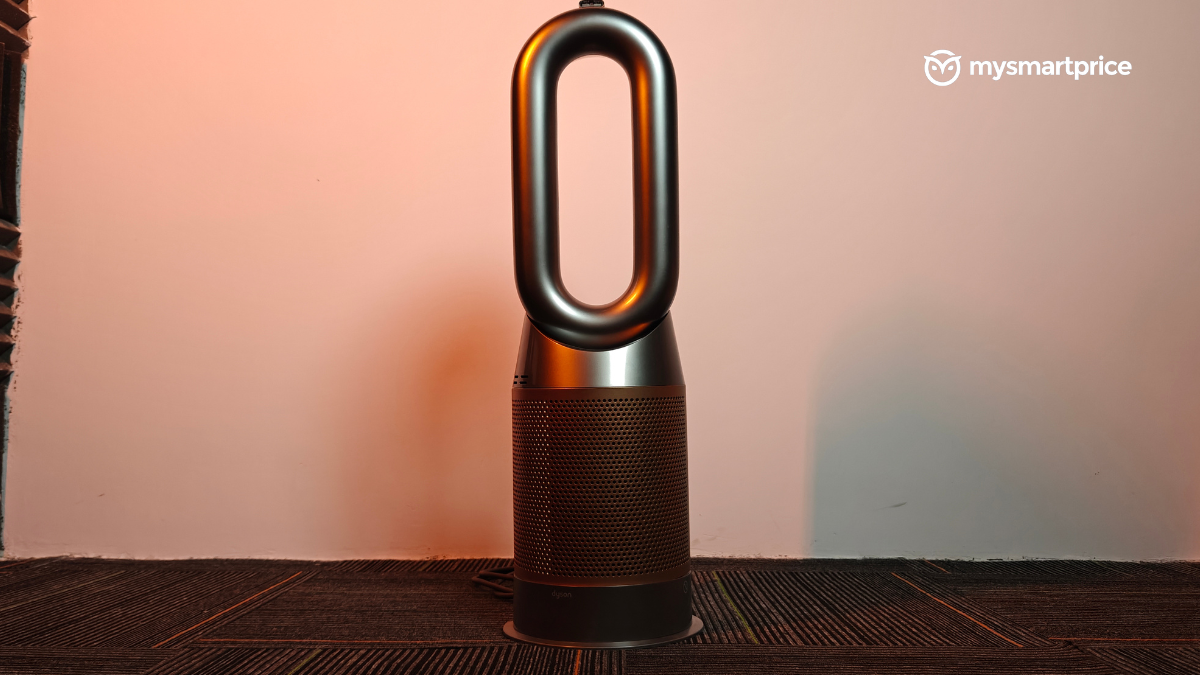
Build quality is exactly what you expect at this price point. The materials feel premium, the finish is polished, and nothing about the unit feels flimsy or rushed. The surface treatment resists looking cheap even after weeks of use, and the overall construction reinforces Dyson’s reputation for well-engineered appliances rather than purely functional boxes.
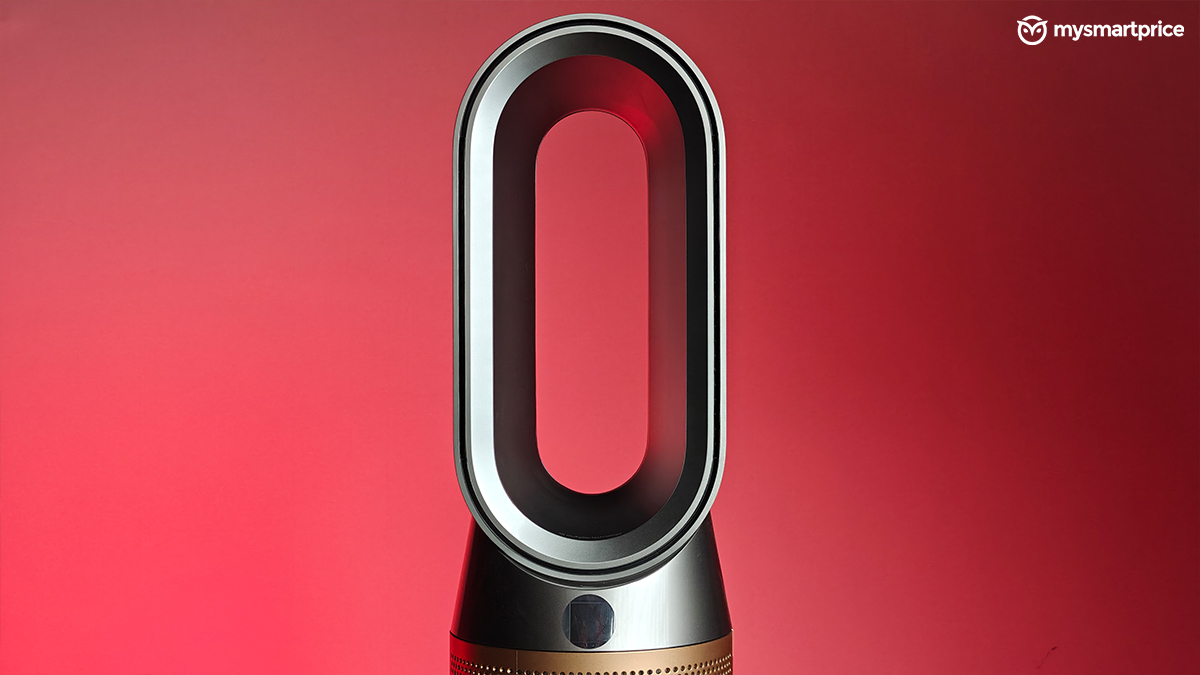
Our review unit came in the Nickel/Gold colour variant. While silver remains the more classic Dyson look and is personally easier to blend into most homes, the gold finish makes a stronger visual statement. It is clearly aimed at users who treat appliances as part of their interior design rather than something to hide away. In homes with warmer tones or modern decor, the Dyson Hot+Cool HP2 De-NOx can easily double up as a visual centrepiece instead of just another appliance in the corner.
Overall, the HP2 does not try to reinvent Dyson’s design language. Instead, it refines it. Smaller, cleaner, and more living-space friendly, it feels like a deliberate evolution rather than a cosmetic refresh.
Performance and real-world behaviour
At MySmartPrice, air purifiers are tested in a closed-room lab where pollution levels are intentionally raised, and external airflow is cut off. This is followed by multiple placement and mode tests to reflect how people actually use these products at home. The Dyson Hot+Cool HP2 De-NOx was evaluated in centre placement, corner placement, and Auto mode, and then used extensively through peak winter months.
In centre placement with the purifier running at maximum output, the HP2 showed a steady and predictable reduction in PM2.5 from extremely high starting levels. Instead of chasing a dramatic early drop, the purifier worked progressively over 20 to 30 minutes, eventually bringing particulate levels down to far more manageable territory. This behaviour was consistent across repeated runs, and gaseous pollutants such as TVOCs and HCHO reduced more gradually, indicating sustained filtration rather than short bursts of aggressive airflow.
Corner placement naturally slowed the pace of purification, but the trend remained intact. Even when positioned away from the ideal airflow path, the HP2 continued to pull down PM2.5 and gaseous pollutants over time. This is important because many homes simply do not allow for centre placement, especially in bedrooms or smaller living spaces. The results suggest that airflow circulation remains effective even when placement is compromised.
Auto mode testing revealed the personality of this purifier most clearly. Over a 30-minute cycle, the HP2 adjusted its speed based on detected air quality rather than running flat out. The drop in PM2.5 was slower compared to max mode, but noise levels stayed lower, and the purifier never felt intrusive. This aligns closely with real-world winter usage. Over several weeks, the HP2 proved to be a true set-and-forget appliance, quietly maintaining air quality rather than constantly demanding manual control.
One testing moment worth highlighting came early on. When switched to heat mode, the purifier refused to go beyond speed level 7, even though level 10 is available in cooling and fan modes. This initially looked like a limitation. It later became clear that this is a deliberate failsafe. Dyson caps airflow in heat mode to prevent an uncomfortable blast of hot air at occupants. It is a subtle but thoughtful design choice that prioritises comfort without compromising purification.
Over the months, we have been testing a wide variety of air purifiers, and when viewed purely as air purifiers, both the HP2 and the older Dyson Purifier Cool TP10 follow the same fundamental philosophy.
The difference lies in versatility and refinement. The TP10 is a simpler purifier plus fan, designed for warmer months and basic purification needs. The HP2 builds on that foundation by adding heating, smarter Auto behaviour, and more nuanced comfort controls. The older Dyson Cool TP10 is a fan-plus-purifier without heating. In raw purification numbers, both units take similar times to bring PM2.5 down in our strict testing, especially in centre placement. Where the HP2 distinguishes itself is consistency across placements and modes, largely thanks to airflow refinements and updated sensor logic that reads the room more responsively. Auto mode also feels smarter and less ‘jump-to-max’ than older models, making it quieter and more comfortable for continuous use.
Price plays a critical role here. The TP10 sits in a significantly lower bracket, making sense for users who only want purification and airflow. The HP2 commands a premium, but that premium is tied to winter usability. When pollution peaks coincide with cold weather, the ability to purify and heat together becomes a genuine functional advantage rather than a luxury add-on.
Noise Levels and Power Use
Noise output ranges from around 34 dB at the lowest setting to roughly 75 dB at full power when measured at one foot. In practical terms, Auto mode stays quiet enough for bedrooms and work-from-home setups, while max mode is clearly audible but expected during rapid clean-up cycles.
Power consumption during our testing window registered at approximately 0.1 kWh, which aligns with the HP2’s multi-function nature. The more noticeable practical issue is the power requirement. The Dyson Hot+Cool HP2 De-NOx needs a 16-amp socket. In many Indian homes, especially bedrooms, this is not always readily available. Compared to many air purifiers, even in the premium segment, that rely on standard plugs, this can add friction during installation and room placement.
Ease of use, maintenance, and ownership
Dyson positions the Dyson Hot+Cool HP2 De-NOx as a low-maintenance appliance, and day-to-day use supports that claim. Filter replacement is straightforward and tool-free.
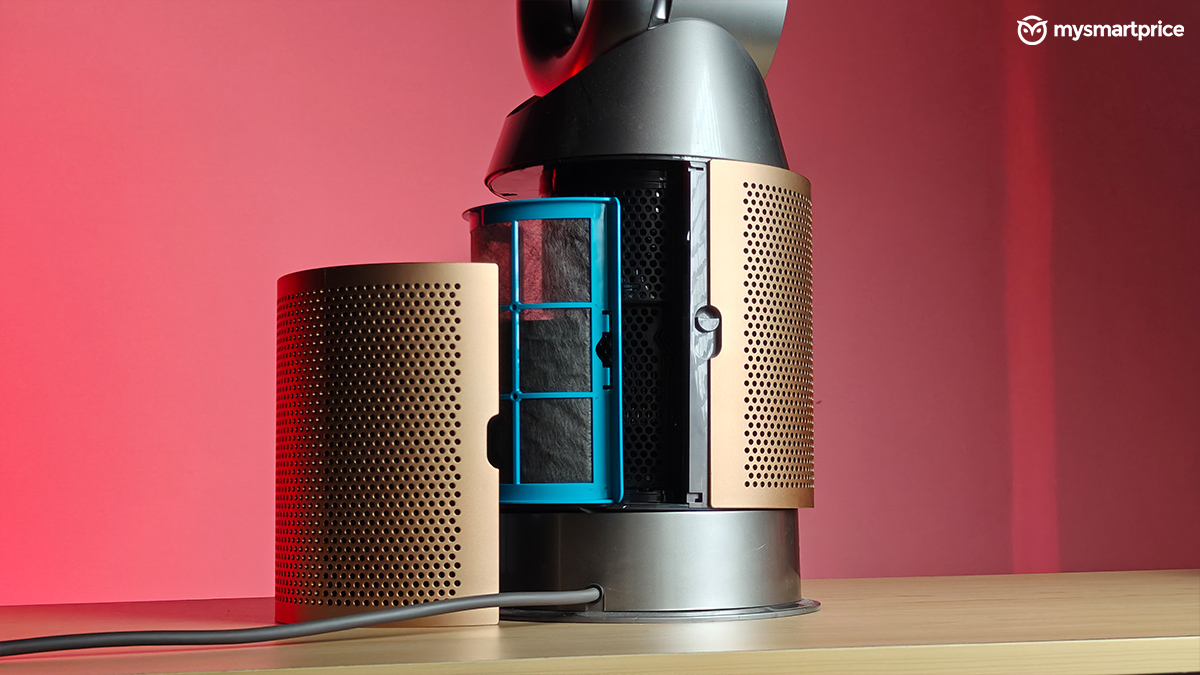
The purifier uses a sealed HEPA and activated carbon filter, with Dyson claiming a typical lifespan of up to 12 months under average household use. In highly polluted cities, replacement may be required sooner.
Replacement filters are priced at a premium and should be factored into long-term ownership costs rather than treated as an occasional expense. On the plus side, the purifier tracks filter life accurately and alerts you when replacement is needed.
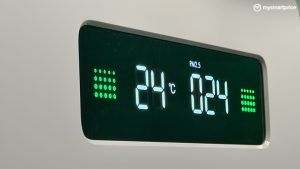
The MyDyson app pairs easily and provides real-time air quality data, mode control, scheduling, and filter status. It is not overloaded with advanced automation features, but it is stable, intuitive, and sufficient for everyday monitoring.
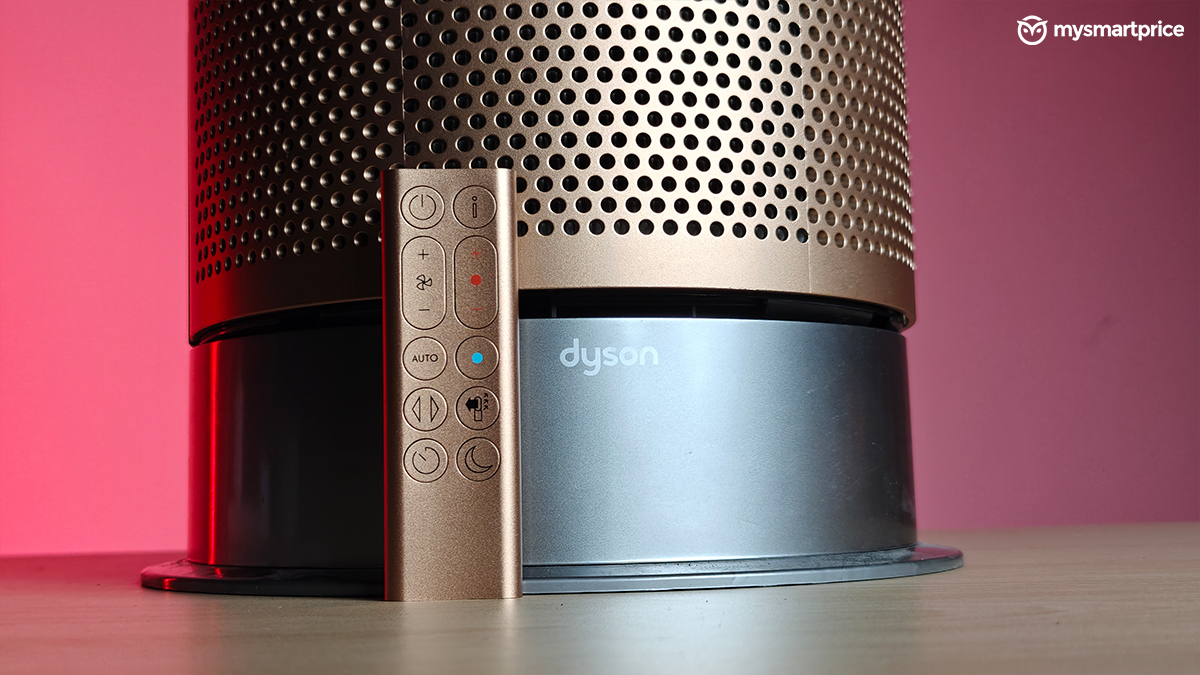
The remote is small, minimal, and easy to use. There is a genuine risk of misplacing it, but Dyson addresses this with a magnetic docking point on top of the unit. It is a simple but effective solution that keeps the remote accessible at all times.
Verdict
The Dyson Hot+Cool HP2 De-NOx is not designed for quick theatrics. It is built for sustained air quality management, especially during winters when pollution and cold overlap. In our testing and extended use, it delivered consistent purification, intelligent Auto behaviour, and thoughtful comfort safeguards. The premium pricing makes sense only if you value year-round utility and winter heating. If you do, the Dyson Hot+Cool HP2 De-NOx justifies its position in Dyson’s lineup.