The 65-inch is the most competitive screen size in India right now. Between Rs 70,990 and Rs 2,10,990, six panel technologies compete for the same buyer: OLED evo, QD-OLED, QNED, Micro RGB, RGB Mini LED and QD-Mini LED and a higher price does not automatically buy a better picture. The TCL Q7D makes that case at Rs 1,09,999 with 2,160 local dimming zones and 2,000 nits peak brightness, against panels that cost twice as much. TCL’s Q6C at Rs 70,990 offers four HDMI 2.1 ports and a 144Hz native panel, while the Xiaomi S at Rs 74,999 costs more and has one.
Samsung’s Micro RGB R85H at Rs 1,31,972 generates colour at the emitter instead of filtering it, a panel architecture no other backlit television in India uses. At the top, LG’s OLED G6 at Rs 1,74,990 is the reference with an anti-reflection coating and per-pixel dimming, and the C6 at street prices around Rs 99,990 runs the same processor and OLED evo panel for Rs 75,000 less. This guide answers one question: which of these ten televisions offers the best picture quality for what it costs? Not the best value outright, not the most features. Every judgement has a number behind it, and each manufacturer claim is weighed against what the panel architecture can deliver.
Also Read: Best LG TV deals this Diwali on OLED, QNED Mini LED and Nano 4K UHD TVs
Best 65-inch TVs in India: at a glance
| Rank | TV | Category | Price |
| 1 | LG OLED G6 65″ | Best picture quality | Rs 1,74,990 |
| 2 | Samsung S95H OLED 65″ | Best QD-OLED | Rs 1,79,990 |
| 3 | LG OLED C6 65″ | Best value OLED | Rs 99,990 |
| 4 | Samsung Micro RGB R85H 65″ | Best new display technology | Rs 1,72,990 |
| 5 | TCL 65Q7D RGB Mini LED | Best Mini LED picture | Rs 1,09,999 |
| 6 | LG QNED82 65″ | Best mainstream pick | Rs 1,05,590 |
| 7 | Xiaomi 65″ S QD-Mini LED | Best under Rs 75,000 | Rs 74,999 |
| 8 | TCL 65Q6C QD-Mini LED | Best budget buy | Rs 70,990 |
| 9 | Lumio Vision 9 65″ | Best Indian brand | Rs 72,999 |
| 10 | LG QNED70 65″ | Entry-level option | Rs 89,990 |
Our Recommendations
1. LG OLED G6: Best Picture Quality

Rs 1,74,990 | OLED65G6PLA
Best for: Buyers who want the brightest OLED available and watch in a room with windows or lamps.
Why it makes the cut
The G6 gives you the reference-grade picture at 65 inches in India. Brightness Booster Ultra and LG’s three-layer OLED stack take peak HDR brightness to more than double the C6. The anti-reflection coating the C6 lacks matters just as much in any room with windows or overhead lighting.
Colour accuracy is a strength of the panel and Dolby Vision IQ adjusts tone-mapping to ambient light, which suits a TV built for variable lighting rather than a blacked-out room. The Alpha 11 Gen3 processor adds 50% more AI processing capacity over the previous generation. All four HDMI 2.1 ports run 4K at 165Hz, with VRR from 40Hz to 165Hz across G-Sync Compatible and FreeSync Premium Pro.
Having said that, full-screen brightness falls well below the peak figure, as it does on every OLED. 60W through a 4.2 channel array is one of the strongest built-in audio configurations in this list. If you are running a television without a separate soundbar, the G6 is a legitimate standalone audio solution
Pros
- Outstanding peak brightness
- Anti-reflection coating for mixed-light rooms
- Four HDMI 2.1 ports at 4K/165Hz
- 60W 4.2ch audio
- Dolby Vision IQ with ambient light compensation
Cons
- Full-screen brightness drops well below peak
Verdict: The G6 is the answer if picture quality is the only criterion. At Rs 1,74,990, it is also the most expensive TV here and the anti-reflection coating separates it from the C6.
2. Samsung S95H QD-OLED: Best QD-OLED
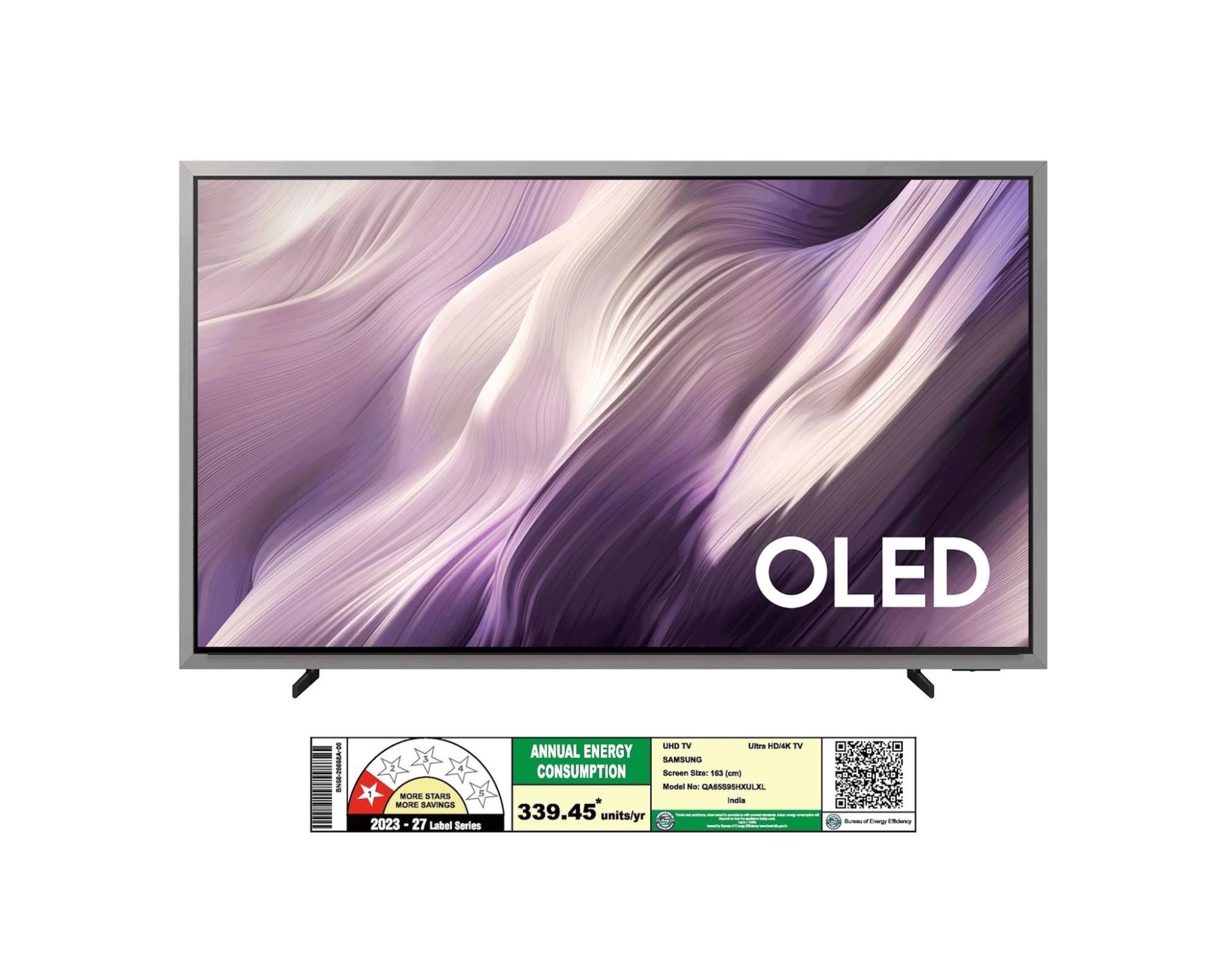
Rs 1,79,990 | QA65S95HXULXL
Best for: Gamers and colour purists who do not depend on Netflix Dolby Vision.
Why it makes the cut
The S95H generates colour at the emitter with a quantum dot layer on an OLED substrate, so it holds 100% DCI-P3 volume at peak brightness where standard OLED compresses saturation as it gets brighter. It peaks close to 2,900 nits on a 2% window, second only to the G6 on this list.
The gaming specification is the strongest here with a 165Hz native panel, 40–165Hz VRR (G-Sync Compatible, FreeSync Premium and HDMI Forum VRR) on all four HDMI 2.1 ports and game-mode input lag of around 5 ms. Audio is 70W through a 4.2.2ch array with an upward-firing channel for Dolby Atmos, making it one of the best built-in sound systems on this list.
Having said that, there is no Dolby Vision. Netflix’s 4K HDR streams in India carry Dolby Vision, so on the S95H they play in HDR10, while Prime Video plays in HDR10+.
Pros
- Close to 2,900 nits peak HDR
- 165Hz native, 40–165Hz VRR on all four HDMI 2.1 ports
- 100% DCI-P3 colour volume at peak brightness
- 70W 4.2.2ch audio
- Per-pixel dimming with no blooming
Cons
- No Dolby Vision, so Netflix 4K HDR plays in HDR10
Verdict: On panel performance alone, the S95H ranks above the C6. Buy it if Prime Video, gaming and peak luminance matter more than Netflix Dolby Vision.
3. LG OLED C6: Best Value OLED
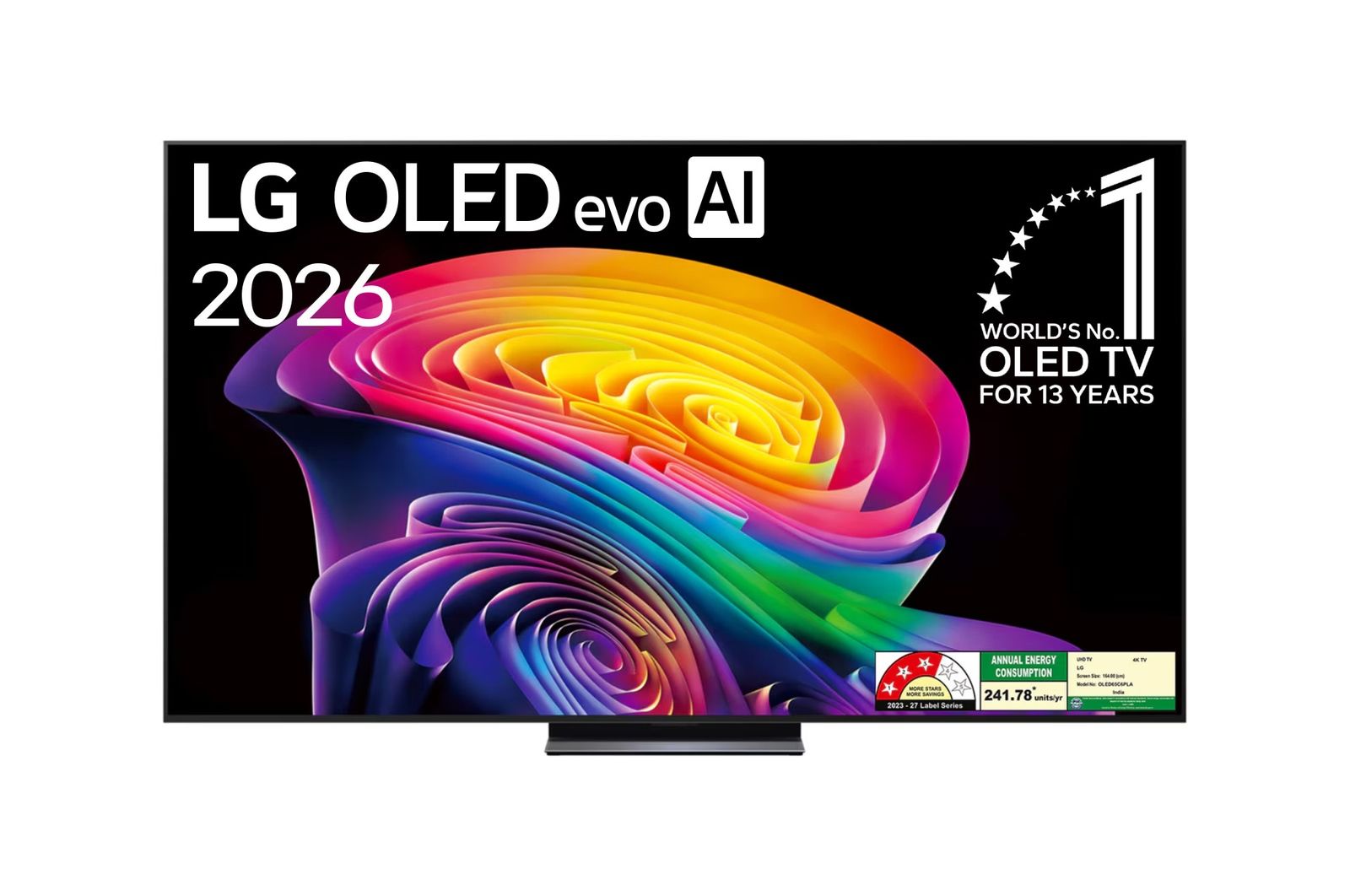
From Rs 99,990 (MRP Rs 2,79,990) | OLED65C6PLA
Best for: Dark or light-controlled rooms where OLED contrast matters more than peak brightness.
Why it makes the cut
The C6 runs the same Alpha 11 Gen3 processor and OLED evo architecture as the G6, with a single-layer Brightness Booster in place of the three-layer Ultra stack. Most Dolby Vision content is mastered to 4,000 nits and the G6 gets closer on highlights such as lightning, explosions and the sun.
In a dark room, the gap barely shows on SDR, or on HDR that stays under 1,200–1,400 nits. Per-pixel dimming makes blacks black, not ‘dark grey’ and not a ‘dimmed zone’. In a bright room, the C6 with no anti-reflection coating turns the screen into a mirror and that coating is the upgrade you are paying for at Rs Rs 1,79,990.
At street prices around Rs 99,990, the C6 costs about Rs 75,000 less than the G6. The gaming connectivity is identical: four HDMI 2.1 ports at 4K/165Hz and VRR from 40Hz to 165Hz. Audio is 40W through a 2.2ch array, which is adequate but not exceptional. A soundbar pairing is recommended if audio matters to you.
Pros
- Per-pixel OLED contrast, true black on any content
- Perfect OLED for dark rooms
- Four HDMI 2.1 ports, 4K/165Hz, full VRR range
- Same Alpha 11 Gen3 processor as the G6
- Dolby Vision IQ
- Most Affordable LG OLED
Cons
- Speakers are adequate but not exceptional
Verdict: For a dark or light-controlled room, the C6 is the best value OLED on this list. In a naturally lit room, budget for curtains or step up to the G6.
4. Samsung Micro RGB R85H: Best New Display Technology
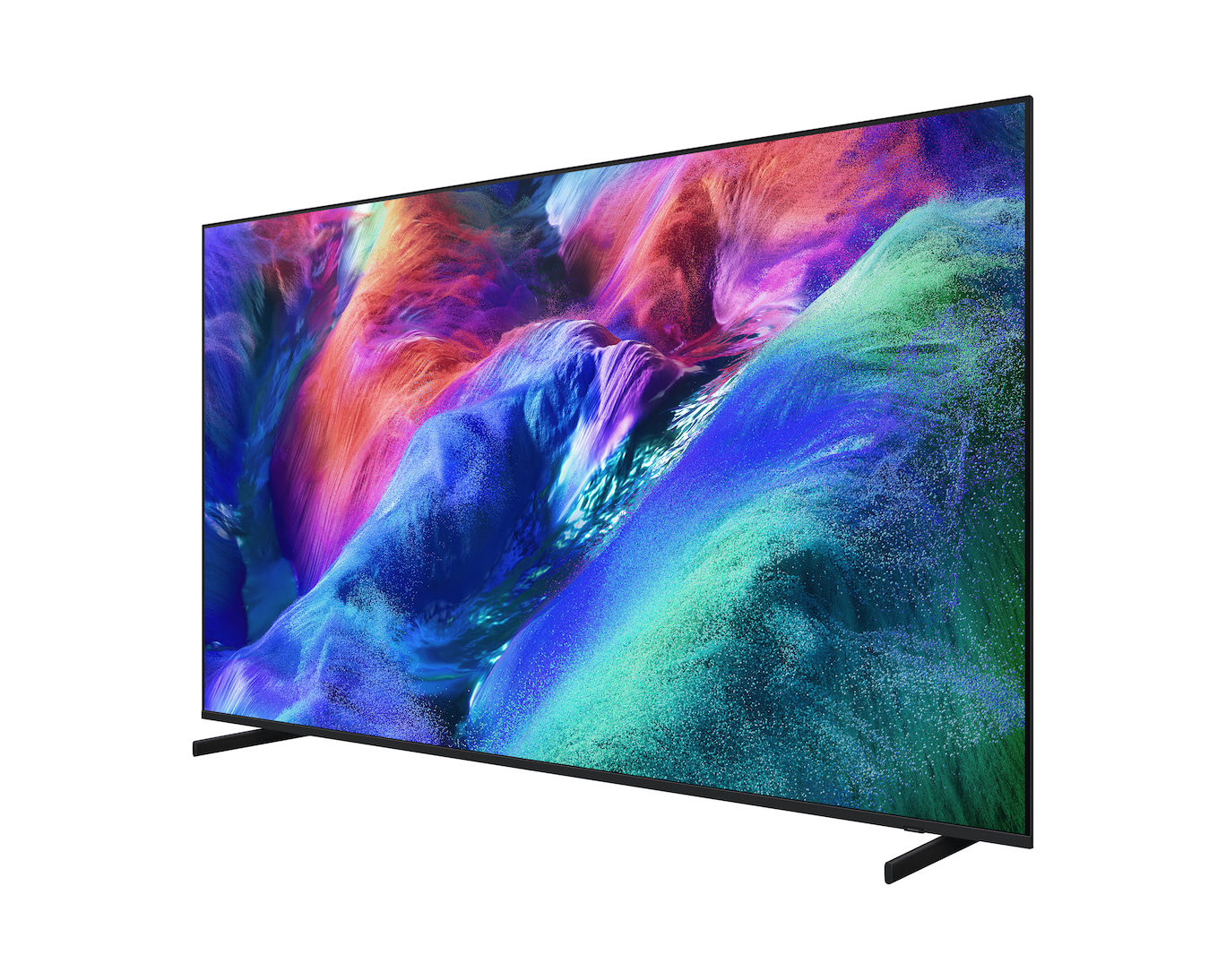
Rs 1,72,990 | MRA65R85HAULXL
Best for: Buyers who want new panel technology, watch more on Prime Video than Netflix and will add a soundbar.
Why it makes the cut
Samsung’s Micro RGB replaces the white LED backlight with individual red, green and blue micro-LED chips, so each colour is emitted directly rather than filtered. Samsung claims 100% BT.2020, broader than DCI-P3 and the architecture supports the claim with no filter to absorb light, colour volume at high brightness should come in above QD-Mini LED sets of comparable brightness.
Samsung names its dimming system ‘Ultimate Micro Dimming’ but does not disclose a zone count, so it cannot be compared directly with the Q7D’s 2,160. Expect good control of bright objects on dark backgrounds, with some halo left around fine detail such as single pixels and small text. The Micro RGB AI Engine upscales SDR content competently and is tuned to the panel’s native colour space.
Having said that, the R85H supports HDR10 and HDR10+ but not Dolby Vision, so Netflix plays in HDR10 exactly as on the S95H. Audio is 30W, the weakest among the higher-ranked TVs here, while four HDMI 2.1 ports are a positive inclusion.
Pros
- Micro RGB: colour emitted directly, not filtered
- 100% BT.2020 colour gamut claimed
- Four HDMI 2.1 ports
Cons
- No Dolby Vision
- Zone count undisclosed
- 30W audio
Verdict: The R85H is one of the most affordable Samsung Micro RGB television in India and its emitter-level colour is a step above filtered quantum dot sets. Prime Video households lose little; Netflix-first households lose Dolby Vision. If that matters, buy the Q7D instead.
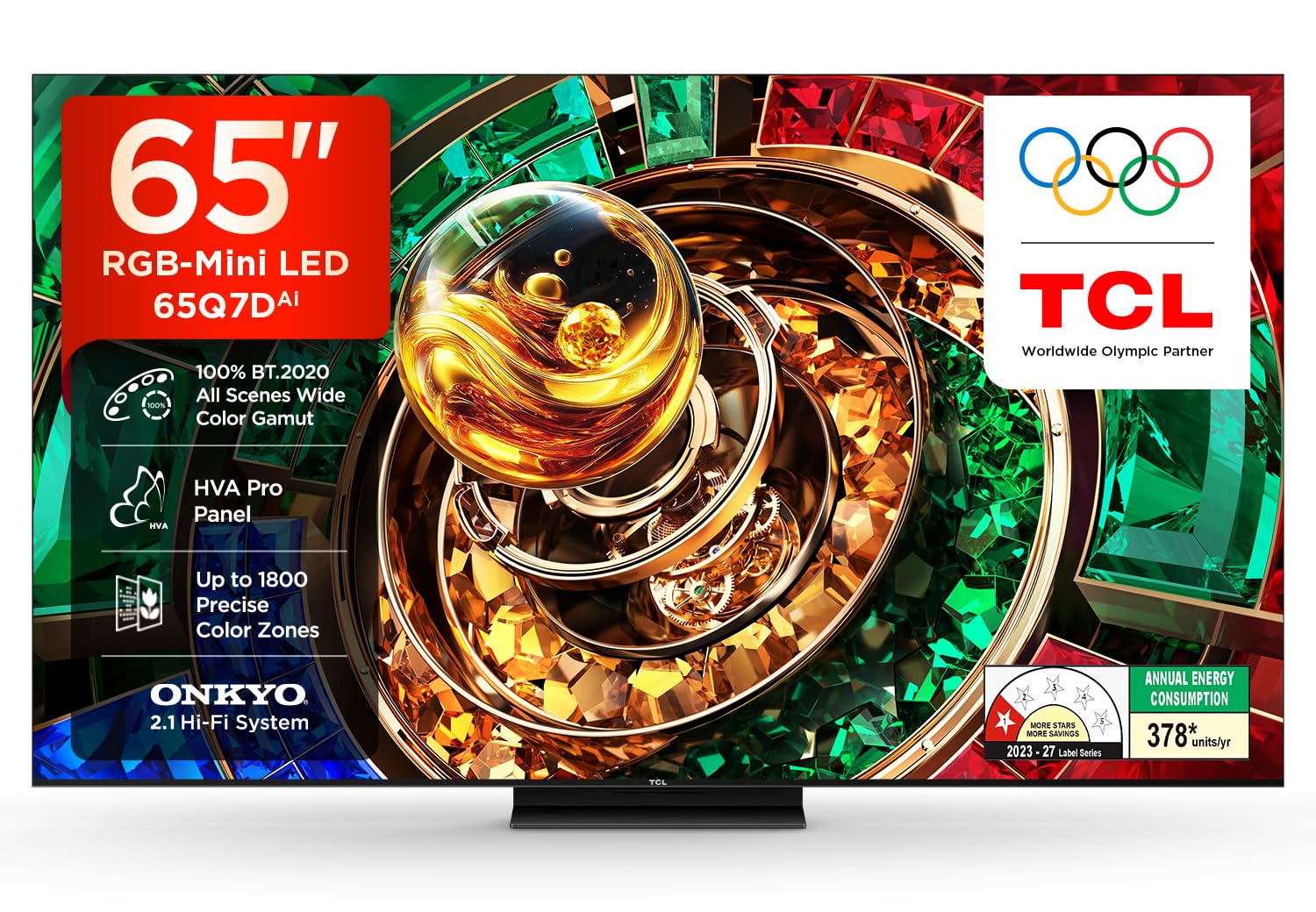
5. TCL 65Q7D RGB Mini LED — Best Mini LED Picture Quality
Rs 1,09,999 | 65Q7D
Best for: Buyers who want the best Mini LED picture per rupee without moving to OLED.
Why it makes the cut
At Rs 1,09,999 the Q7D is the most affordable television in the top five. Its RGB Mini LED backlight applies the same colour-generation principle as Samsung’s Micro RGB at the backlight level, with 2,160 local dimming zones and a 2,000 nits peak. The hardware supports both claims as zones this small can reach the peak on tight highlights without lighting their neighbours and discrete red, green and blue emitters are consistent with the 100% BT.2020 claim.
2,160 zones across 65 inches is about 19 sq cm each which is smaller than a business card, so a highlight the size of a candle flame can be lit on its own. White LEDs behind a colour filter lose energy in the filter; RGB LEDs emit at three discrete wavelengths and lose none. Saturated highlights, such as a red emergency light or a neon sign in rain, hold their colour at high brightness.
The panel used is HVA Pro, a vertical alignment type with better off-axis viewing than standard VA, though it still trails OLED from an angle. Audio is 46W through an Onkyo-tuned 2.1 channel system.
Pros
- 2,160 local dimming zones
- 2,000 nits peak brightness
- RGB Mini LED with 100% BT.2020 claimed
- 46W Onkyo 2.1ch audio, the best among the Mini LED sets here
- Four HDMI 2.1 ports
Cons
- Smaller TCL service network than LG or Samsung
Verdict: At Rs 1,09,999 the Q7D is the clearest recommendation here for picture quality per rupee outside OLED. OLED still wins on contrast and motion; nothing in Mini LED at this price comes close on brightness or dimming precision.
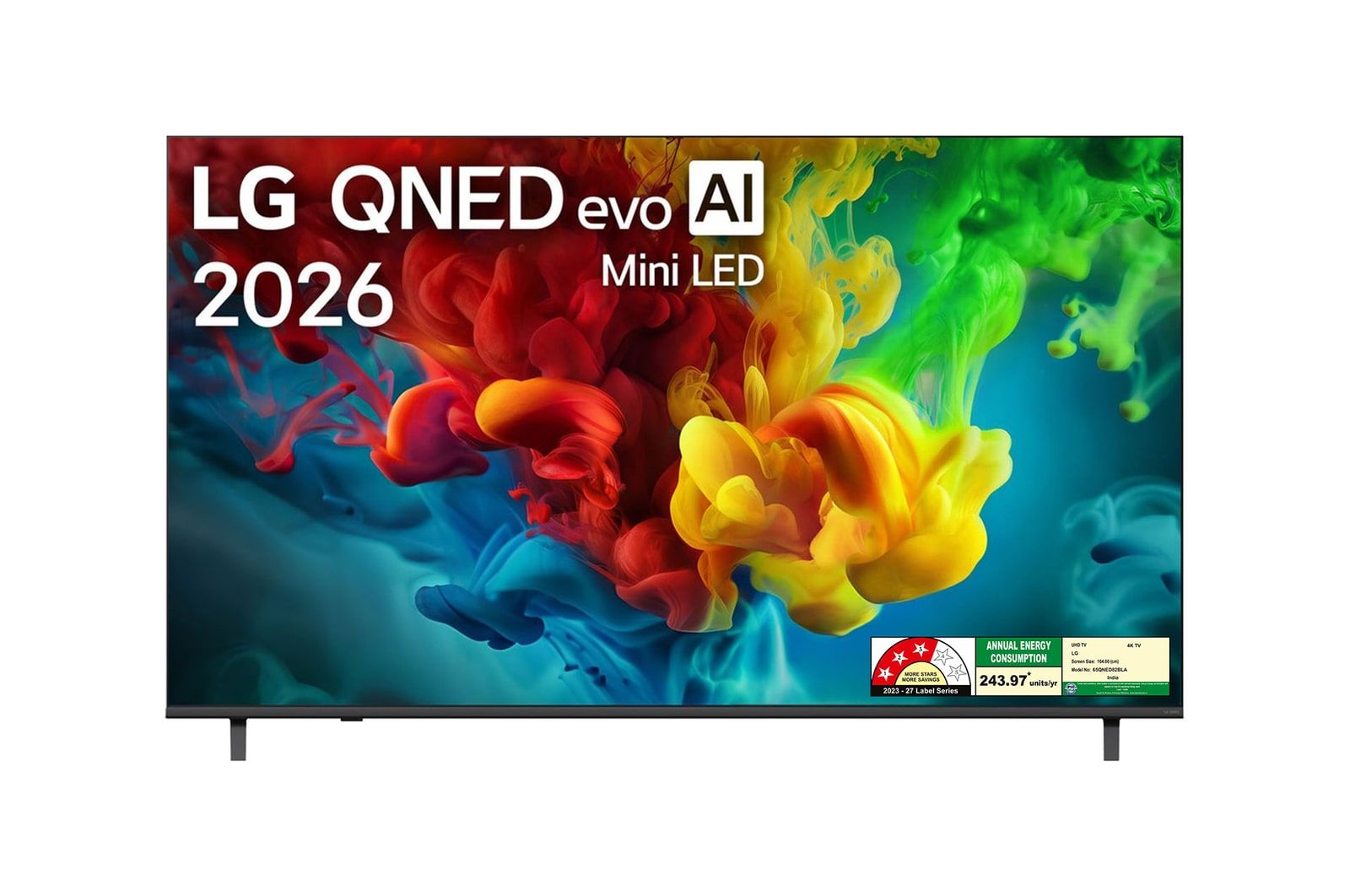
6. LG QNED82 65″ — Best Mainstream Pick
Rs 1,05,590 | 65QNED82BLA
Best for: Buyers who want webOS, Dolby Vision and LG’s service network at a Mini LED price.
Why it makes the cut
The QNED82 is the sensible choice for LG’s ecosystem without an OLED price. At Rs 1,05,990 it costs Rs 4,000 less than the Q7D, but it gives up dimming precision. Dolby Vision IQ adapts tone-mapping frame by frame and Alpha 8 Gen3 processing for genre detection and upscaling from 1080p.
The panel runs 120Hz native with VRR up to 144Hz. Three HDMI 2.1 ports are one fewer than the Q7D and the OLEDs, which matters when a console, PC and streaming box compete for inputs. Audio is 20W, enough for a mid-size room but not for a home cinema and webOS 26 adds Google Gemini and Microsoft Copilot for voice search.
Pros
- Alpha 8 Gen3 processor
- 120Hz native, 144Hz VRR
- Dolby Vision IQ
- webOS 26 with Gemini and Copilot voice search
- LG’s service network and three-year warranty support
Cons
- 20W audio
Verdict: Choose the QNED82 over the Q7D if LG’s after-sales network, webOS and Dolby Vision carry weight. Choose the Q7D if picture quality per rupee is the only measure.
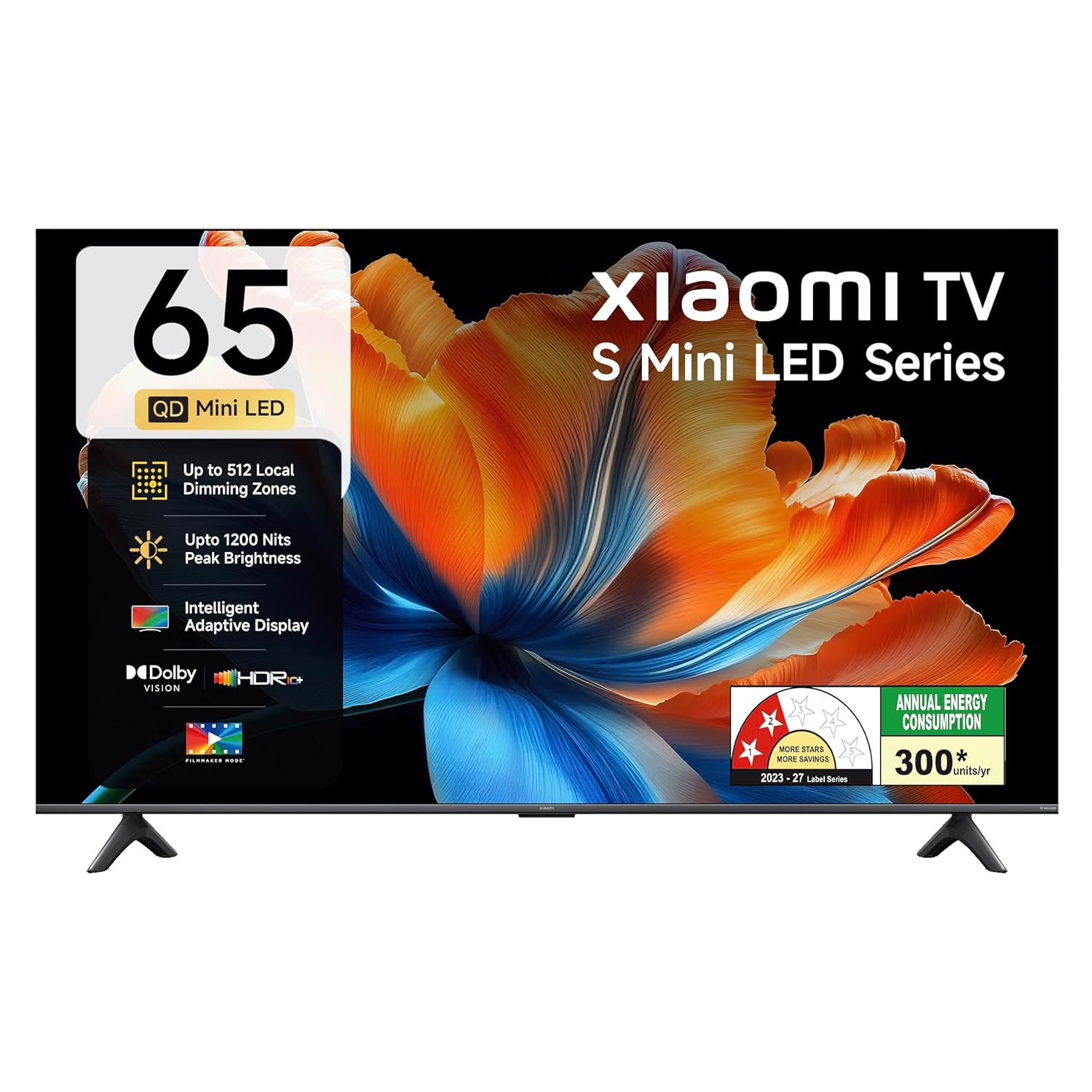
7. Xiaomi 65″ S QD-Mini LED — Best Under Rs 75,000
Rs 74,999 | L65MC-IN
Best for: Films and streaming in a dimmed room with Dolby Vision and free live channels on a Rs 75,000 budget.
Why it makes the cut
At Rs 74,999, the Xiaomi S offers 384 local dimming zones, 1,200 nits peak brightness (around 600 nits typical), Dolby Vision and Xiaomi’s magiQ quantum dot panel. The Xiaomi holds its place with Dolby Vision and PatchWall+, a discovery layer on Google TV with free live channels.
The L65MC-IN runs a 60Hz native panel. The 120Hz gaming mode drops resolution to hold the frame rate, which is a significant qualifier in a picture quality guide. Motion is softer than on a 120Hz native panel and sports will show blur that the TVs ranked above it avoid. At 384 zones, expect visible blooming on credits and night-scene HDR, though not enough to distract in normal viewing.
Ports are the other limit as you get one HDMI 2.1 and two HDMI 2.0. A PlayStation 5 on the single HDMI 2.1 port leaves the soundbar and streaming box capped at 4K/60.
Pros
- Dolby Vision at Rs 74,999
- 1,200 nits peak brightness
- PatchWall+ with free live channels
- 34W quad speaker array
Cons
- 60Hz native panel, 120Hz only at reduced resolution
- One HDMI 2.1 and two HDMI 2.0
Verdict: The Xiaomi S works for film and streaming in a controlled room. Skip it if gaming, sports or several 4K sources are priorities.
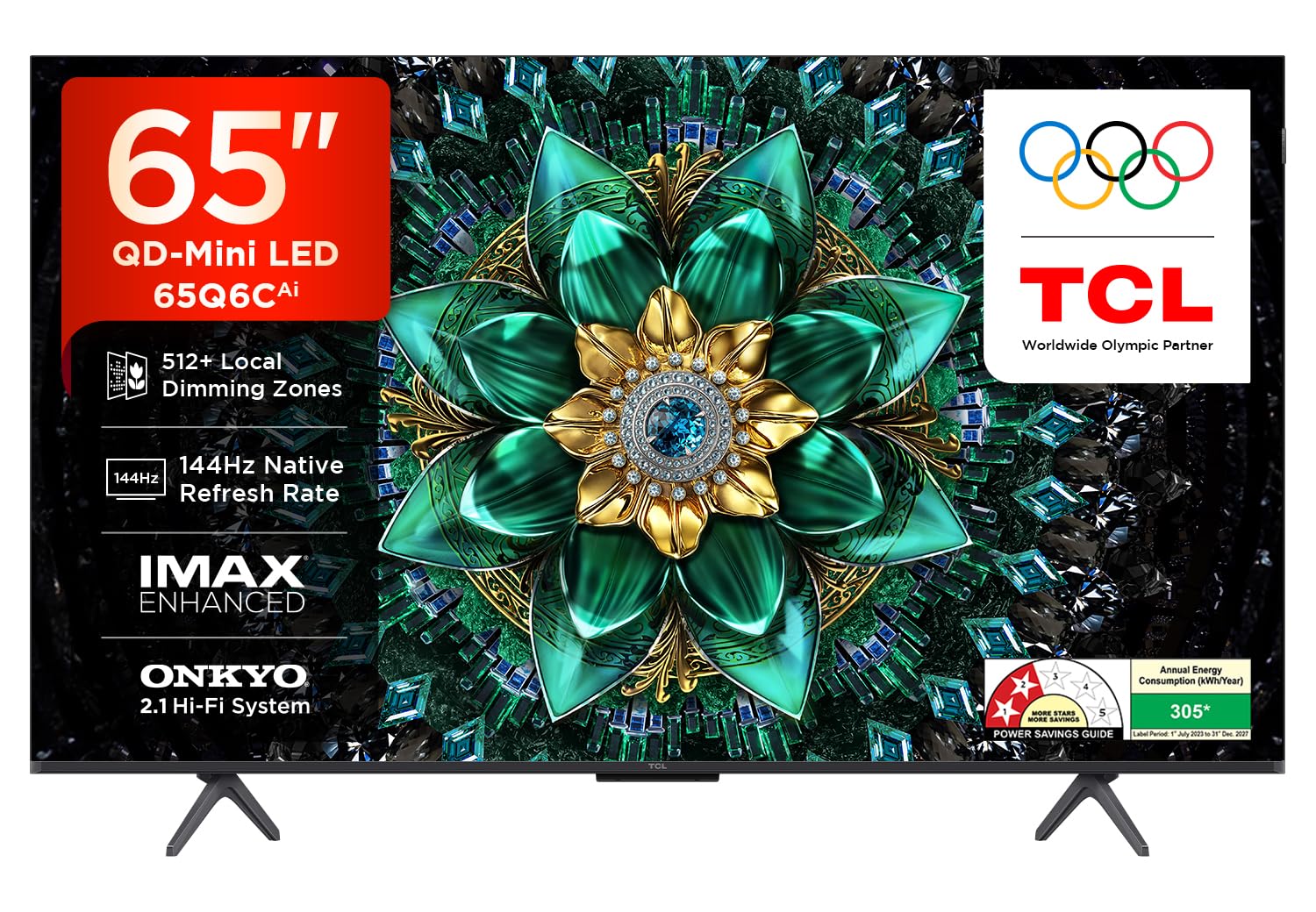
8. TCL 65Q6C QD-Mini LED — Best Budget Buy
Rs 70,990 | 65Q6C
Best for: Gaming households and anyone at Rs 70,000–75,000 who wants the strongest all-round specification.
Why it makes the cut
The Q6C is the most straightforward value proposition on this list. At Rs 70,990 it offers four HDMI 2.1 ports, a 144Hz native panel with FreeSync Premium and TCL’s AIPQ Pro picture processor on a 65-inch QD-Mini LED panel. The four HDMI 2.1 ports separate it from the Xiaomi at Rs 74,999 and the 144Hz panel separates it from the Xiaomi on motion.
‘512+ dimming zones’ is TCL’s descriptor rather than an exact count and it is for the 98-inch model, so expect fewer zones on the 65-inch model. Blooming will show on demanding content, but everyday streaming and broadcast will look clean. Audio is Onkyo-tuned, in line with the Q series and the TV is an Amazon India exclusive at the time of writing.
Pros
- Four HDMI 2.1 ports at Rs 70,990
- 144Hz native panel with FreeSync Premium
- AIPQ Pro processor
Cons
- Smaller TCL service network than LG or Samsung
Verdict: The Q6C is the default recommendation at Rs 70,000–75,000. Four HDMI 2.1 ports and 144Hz give it the edge over the Xiaomi S for gaming households.
9. Lumio Vision 9 65″ — Best Indian Brand
Rs 72,999 | EPIC2-ADSI
Best for: Buyers who want an Indian brand and loud built-in audio and rank picture quality second.
Why it makes the cut
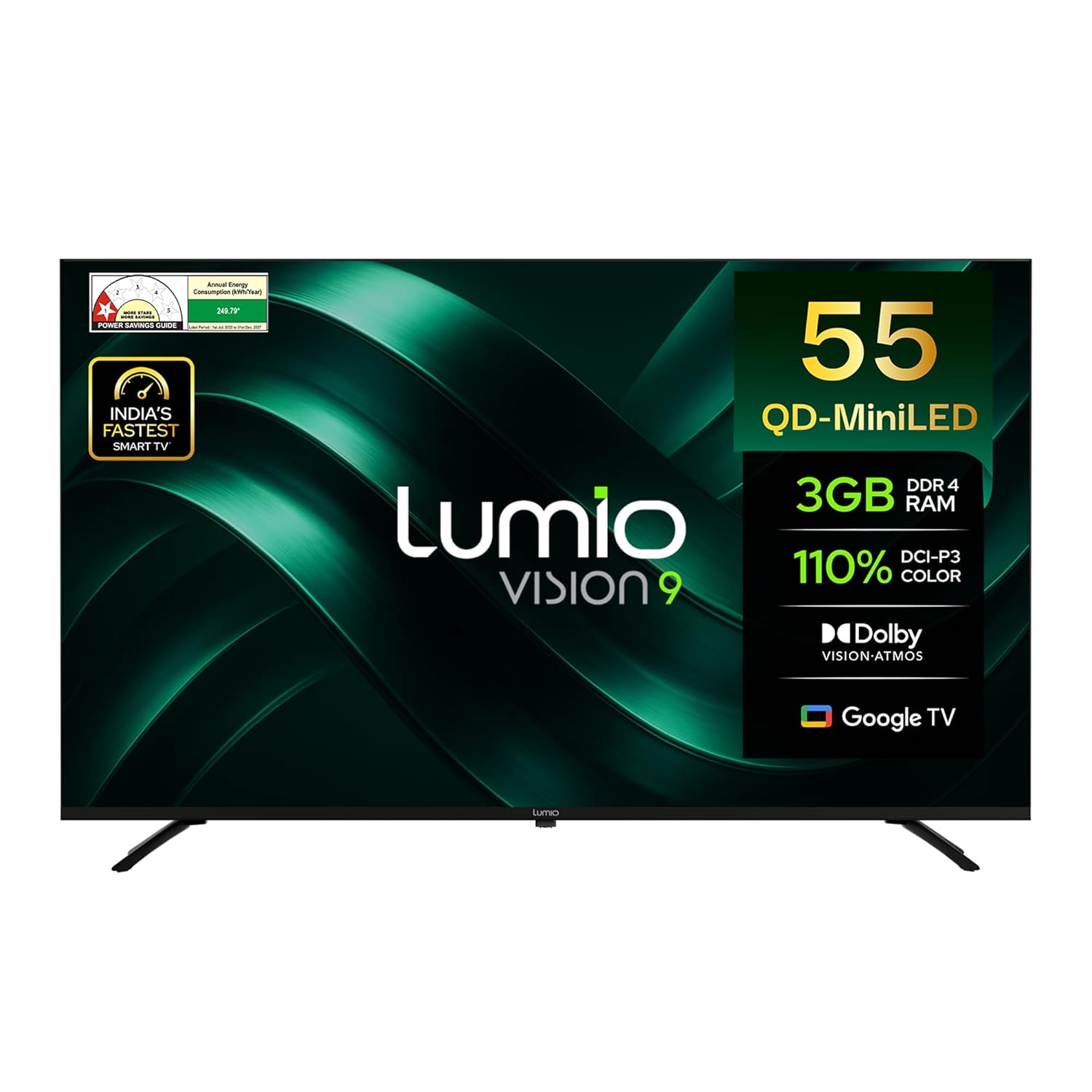
The Vision 9 ranks ninth on picture quality. With 128 local dimming zones and 800 nits peak brightness (around 450 nits typical), it trails the TCL Q6C at Rs 70,990 on every headline specification. The case for it is specific: 50W audio, a 144Hz panel and Google TV, from an Indian brand with after-sales support in major cities.
The panel is an EVA (Enhanced VA) QD-Mini LED, a VA panel with quantum dot enhancement and a 7,000:1 native contrast ratio. The 128 zones define its ceiling which is about 329 sq cm each, larger than a paperback book, blooming on bright-on-dark HDR will be visible and hard to ignore. With zones this large, the dimming algorithm has to choose between halos and crushed shadow detail around bright objects and the native contrast gets little room to show.
The MediaTek Pentonic 700 handles 4K streaming and 144Hz gaming and 3GB RAM with 64GB storage is comfortable for Google TV. Ethernet is capped at 100 Mbps, below the 1 Gbps on most rivals. The 50W audio is the Vision 9’s clearest win over the Q6C and Xiaomi S.
Pros
- 144Hz native panel
- 50W audio, the best in the Rs 70,000–75,000 range
- Google TV
- 7,000:1 native contrast
Cons
- Ethernet capped at 100 Mbps
- Smaller after-sales network than LG, Samsung or TCL
Verdict: Consider the Vision 9 if buying in India matters or you don’t want to buy a soundbar.
10. LG QNED70 65″ — Entry-Level Mini LED
Rs 89,990 | 65QNED70BLA
Best for: Buyers who want LG’s webOS and service network and cannot stretch to the QNED82.
Why it makes the cut
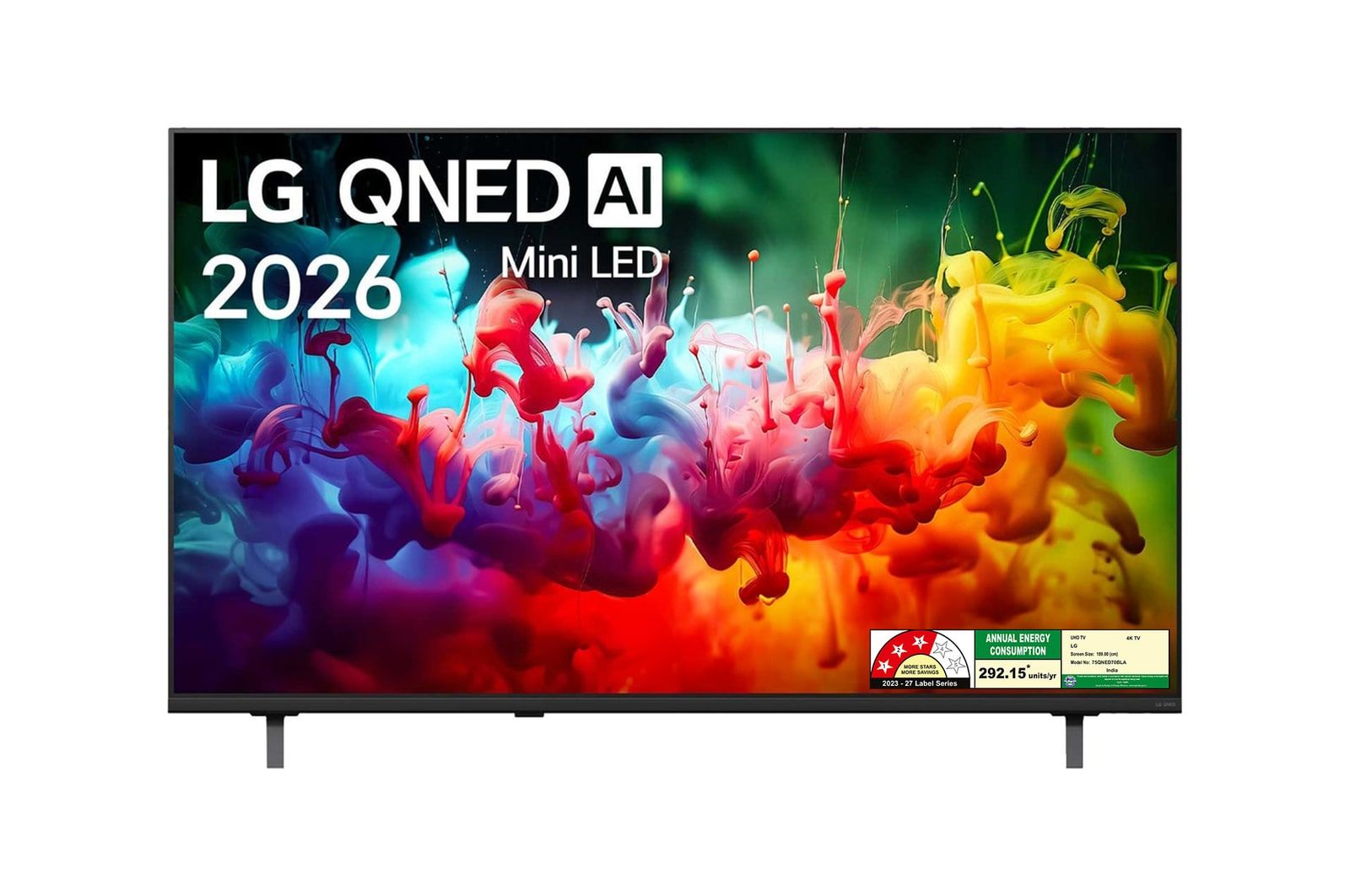
At Rs 85,499 the QNED70 is the most affordable way into LG’s QNED Mini LED range and the price buys the ecosystem of webOS 26, the same fast interface that runs on LG’s costlier sets and an established service network that matters when a 65-inch panel has to last a decade. The 60Hz native panel suits the content most households watch every day, streamed films and television at 24fps and 30fps.
The Alpha 7 Gen9 processor is one tier below the Alpha 8 in the QNED82 and handles SDR upscaling competently. Three HDMI ports cover a streaming box, a soundbar and a console. Sports and gaming at 120fps are where the 60Hz panel reaches its ceiling, so a console-first household is better served by the Q6C. In cities where LG service is reliable, the QNED70 is the safer long-term pick over a TCL or Lumio at similar money.
Pros
- Fast and reliable webOS 26
- Established LG after-sales network
- Alpha 7 Gen9 SDR upscaling
- Three HDMI ports for a streaming box, soundbar and console
Cons
- 60Hz native panel, so sports and 120fps gaming are capped
Verdict: Buy the QNED70 if LG’s webOS and service network come first and most of your viewing is streamed films and television. Skip it if you game at 120fps or watch a lot of sport; the TCL Q6C at Rs 70,990 gives 512+ zones, four HDMI 2.1 ports and 144Hz. Upgrade to the QNED82 at Rs 1,05,990 for a 120Hz panel and Dolby Vision IQ.
How To Buy A 65-Inch TV In India: What To Look For When Buying For Picture Quality
Panel technology: picking your trade-offs
Self-emissive panels (OLED evo, QD-OLED) light every pixel individually, so black is true black and contrast is effectively infinite. The trade-off is in sustained brightness where the G6 reaches around 3,000 nits on a 10% white window but falls to 400–500 nits on a full white screen. The backlit panels (QD-Mini LED, RGB Mini LED, Micro RGB) hold brightness across the whole frame but cannot switch a pixel off, so a dimmed zone still leaks light and bright objects on dark backgrounds pick up a halo. Zone count decides how large that halo gets. The Q7D at 2,160 zones keeps it small; the Lumio Vision 9 at 128 zones cannot.
Dimming zones: the number that matters most in Mini LED
Zone count decides how precisely a panel can brighten one region while darkening the one next to it. At 2,160 zones across 65 inches, each Q7D zone covers roughly 19 sq cm. At 128 zones on the Lumio Vision 9, each covers roughly 329 sq cm, a patch the size of a paperback book. A star field, a car headlight on a night road and a title card on black are all tests for dimming zones.
Peak brightness and HDR formats
HDR10 is the baseline every TV here supports. Dolby Vision adds scene-by-scene tone-mapping and is carried by Netflix and Prime Video on their premium tiers. Samsung’s S95H and R85H do not support it and use HDR10+ instead, which Prime Video carries and Netflix does not. A Netflix-first household will watch in HDR10 on either Samsung with less of the panel’s brightness put to use.
Native refresh rate and motion quality
A 120Hz native panel shows twice as many unique frames per second as a 60Hz one. For 24fps cinema, the difference is academic but for sports, gaming and general motion cadence it is plainly visible. The LG QNED70 and the Xiaomi S are the only 60Hz native panels here. The Xiaomi’s limit is defensible at Rs 74,999 but the QNED70 at Rs 89,990 costs more than the Xiaomi S, the TCL Q6C and the Lumio Vision 9 while running a slower panel than all three.
Connectivity for gaming and multiple sources
HDMI 2.1 carries 4K at 120Hz, which HDMI 2.0 cannot and it matters in households where a PlayStation 5, a streaming box and a soundbar share one TV. The Xiaomi S has one HDMI 2.1 and two HDMI 2.0 at Rs 74,999 while TCL’s Q6C has four HDMI 2.1 for Rs 70,990.
Frequently Asked Questions
Is OLED worth the premium over Mini LED at 65 inches?
In a dark or controlled-light room, yes. Per-pixel dimming means no blooming and black scenes are physically black rather than the dimmed grey of a suppressed LED zone. The G6 at Rs 2,10,990 and the C6 at around Rs 1,61,000 beat every Mini LED here on contrast precision. In a bright room the C6’s reflective screen undercuts that advantage.
What is Micro RGB and how does it differ from Mini LED?
Standard Mini LED uses white LEDs with quantum dot films or colour filters above them to produce red, green and blue. Micro RGB replaces the white LED with individual red, green and blue micro-LED chips, so colour is emitted directly with no filter loss. Samsung’s R85H is the only Micro RGB television on this list.
Does it matter that Samsung TVs do not support Dolby Vision?
It depends on where you watch. Netflix 4K HDR in India carries Dolby Vision, so on the S95H or R85H it plays in HDR10 with no dynamic tone-mapping. Prime Video carries both formats, so Samsung’s HDR10+ gives dynamic tone-mapping there. For Netflix-first households, Dolby Vision matters more.
What is the minimum zone count to recommend a Mini LED TV for picture quality?
There is no fixed threshold, but below 256 zones on a 65-inch panel, blooming shows regularly on credits, starfields and night scenes. The Q6C’s 512+ zones and the Q7D’s 2,160 are visibly cleaner on the same content. The Lumio Vision 9’s 128 are the lowest here.
What does a 60Hz native panel mean in practice?
It can show a maximum of 60 unique frames per second. Sports, high-frame-rate gaming and motion interpolation all benefit from 120Hz or higher. The Xiaomi S and the QNED70 are 60Hz native and offer 120Hz only at reduced resolution. For films and television at standard frame rates, 60Hz is adequate; for gaming or sports, 120Hz native is the minimum.
Which TV in this list is best for gaming?
The Samsung S95H has the strongest specifications: 165Hz native, input lag around 5 ms in game mode and 40–165Hz VRR across four HDMI 2.1 ports, though stock is uncertain. The LG G6 and C6 match its 165Hz VRR and four HDMI 2.1 ports with low input lag. Among Mini LED sets, the TCL Q7D and Q6C offer 144Hz with FreeSync Premium.
Is the Lumio Vision 9 a reliable purchase?
Lumio has a smaller service network than LG, Samsung or TCL. In major cities with accessible service centres it is a reasonable buy; in smaller towns, after-sales logistics are a practical concern.
Final Verdict
The best picture at 65 inches in India right now is the LG OLED G6 at Rs 2,10,990: around 3,000 nits peak, an anti-reflection coating and four HDMI 2.1 ports at 4K/165Hz. For a buyer who cannot justify that price, the LG OLED C6 at a street price of around Rs 1,26,990 offers OLED evo picture quality, the same Alpha 11 Gen3 processor and full gaming connectivity, just that it has a reflective screen.
In the Rs 1,00,000–1,30,000 band, the TCL 65Q7D at Rs 1,09,999 is the strongest value with 2,160 dimming zones and 2,000 nits peak at a price that bought an entry-level Mini LED a year ago. The Samsung R85H at Rs 1,31,972 is one of the most affordable Samsung Micro RGB televisions at this size.
Below Rs 75,000, the TCL Q6C at Rs 70,990 leads on specifications with four HDMI 2.1 ports, up to 512+ zones and 144Hz. The Xiaomi S at Rs 74,999 adds Dolby Vision and PatchWall+ in exchange for a 60Hz panel and fewer HDMI 2.1 ports. The Lumio Vision 9 at Rs 72,999 is for buyers who put built-in audio and Indian brand origin first.
The LG QNED70 at Rs 89,990 is the pick for buyers who put webOS and LG’s service network first and watch mostly streamed films and television. Gamers and sports viewers should look at the Q6C or step up to the QNED82.
Read More: Best 75-inch TVs in India: Expert Picks for Every Budget