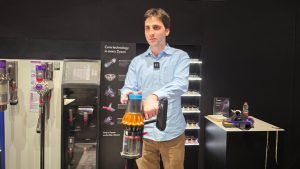
Hisense’s new Gurugram headquarters includes an experience centre filled with products the company does not yet sell in India. The display ranges from large refrigerators and new television lineups to an unusual front-load washing machine with two smaller drums positioned above the main drum. It is more than a showroom. It offers a fairly direct preview of how Hisense wants to reposition itself in India: from a TV-led brand to a wider consumer electronics and home appliances company.
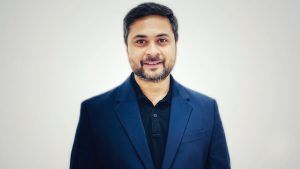
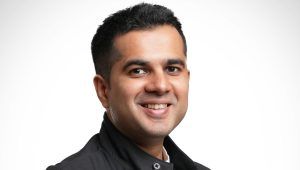
Speaking exclusively to MySmartPrice, Pankaj Rana, CEO of Hisense India, said the company is laying the retail, manufacturing and organisational groundwork required for a longer run at the Indian market. The ambition is substantial, even if the company is giving itself time to get there.
“We are here for the long run. If we have to be among the top three players in the Indian market in the next five to 10 years, building the base and infrastructure is very important,” Rana said.
Hisense says the first half of 2026 was largely on track despite higher television memory costs and geopolitical uncertainty. During the period, it added around 10 large regional retailers and large-format retail partners, opened its first manufacturing facility in India at Sri City in Andhra Pradesh, and hired senior leaders across televisions, home appliances, finance, go-to-market operations and IT.
Washing Machines Become the Immediate Test
The first visible test of that wider strategy is laundry. Hisense has already entered the Indian washing machine market with top-load and semi-automatic models, but Rana’s comments suggest the initial launch is only the first layer of a much broader portfolio.
“We are planning more than 45 SKUs,” Rana said. “By huge, I mean huge.”
The expanded range is intended for both online and offline channels. Rana said Hisense plans to use the Sri City facility for front-load and top-load washing machines, while Dixon will support its semi-automatic portfolio. The company expects washing machines to become its most important new category in the second half of the year, helped by the monsoon, winter and festive buying cycles.
Hisense also hopes its established TV network will shorten the route into appliances. The same retailers and distributors that sell its televisions have begun taking its air conditioners, and the company wants a similar channel crossover for washing machines. That access matters in a category where buyers still depend heavily on in-store comparisons, installation support and after-sales service.
Small Appliances First, Refrigerators Later
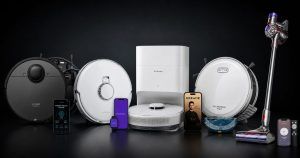
Hisense’s category roadmap does not stop at cooling and laundry. The company is working on small domestic and kitchen appliances for the first half of 2027. Rana specifically mentioned microwave ovens, juicers, mixer grinders, robotic vacuum cleaners, coffee machines and dishwashers.
Refrigerators are likely to follow in the second half of 2027, although Rana stressed that the timing remains tentative. Unlike a smaller appliance launch, refrigerators require a much larger investment in local manufacturing, distribution and service. Hisense therefore wants to stabilise its washing machine business before taking on another major white-goods category.
“Before refrigerators, we plan to bring small domestic and kitchen appliances in H1 next year,” Rana said. “If things go on track, I would love to launch refrigerators in H2 next year.”
The sequencing is sensible. Smaller appliances can widen Hisense’s presence inside the home without demanding the same factory and logistics commitment as refrigerators. The refrigerator entry, if it arrives on schedule, would be the more consequential step because it would place Hisense directly against a relatively concentrated group of established brands in one of India’s biggest durable categories.
Local R&D Moves Up the Agenda
Manufacturing is only one part of the localisation plan. Rana said a sizeable R&D team from China spent the past three months in India working on air conditioners and washing machines. Hisense has also started hiring R&D engineers and product managers locally, while drawing on teams at its global headquarters and regional R&D centre in Dubai.
“In India, localisation plays a very big role. The consumer in South India is slightly different from the consumer in West India,” Rana said. “To grow sustainably, we need to do R&D in India.”
A larger India-focused R&D move could be announced in 2027 or 2028, according to Rana. He described the present phase as one of building the base before Hisense moves into what he called a ‘Hisense 2.0 or Hisense 3.0’ phase for the country. The distinction will be important. Local assembly can improve cost and availability, but local product development is what can address differences in climate, water conditions, room sizes, power supply and household usage patterns.
MiniLED and RGB Remain the Television Bet
Televisions will continue to anchor Hisense’s India business. Instead of mirroring rivals’ OLED-heavy strategies, the company plans to concentrate on MiniLED and RGB MiniLED, where it believes it can create a clearer technology identity.
The next step is to take RGB beyond the 100-inch and 116-inch flagships and into 55-inch, 65-inch and 75-inch screen sizes under both Hisense and Toshiba. Hisense also plans to build more than 500 RGB display zones across India over roughly two months so consumers can compare the technology in person.
“A real demonstration makes the difference,” Rana said. “We will focus primarily on MiniLED and RGB. Democratising RGB for the next two to three years will be the main focus for us as a group and in the Indian market.”
Large screens are already central to the strategy. Rana said sales of Hisense’s 75-inch, 85-inch and 100-inch televisions grew nearly twofold during the company’s May-June sports campaign. Rising memory costs have also had a proportionately larger effect on smaller televisions, he said, making the shift towards mid-to-high-end large screens commercially useful as well as strategically desirable.
Software is the other part of the TV pitch. Hisense will continue to use its proprietary VIDAA platform, now referred to globally as V. Rana argued that owning the operating system gives the company more control over updates, languages, content and app compatibility across a TV’s working life. That is becoming a more relevant ownership issue as television replacement cycles stretch well beyond those of smartphones.
The Festive Season Will Test the Strategy
Hisense is targeting at least 50 per cent growth during the festive period, with the ambition to go higher if pricing and the broader market remain stable. Rana expects approximately 25 per cent of H2 business to come from online channels and 75 per cent from offline retail.
TVs will remain the star category during Diwali, followed by washing machines. Air conditioners typically slow in H2, but Hisense plans to use the period to add more SKUs and prepare the channel for the next cooling season. A strong Onam promotion in Kerala is also expected to feed into the festive momentum.
The launch calendar is ambitious, but breadth alone will not win the appliance market. Hisense already has some useful building blocks: TV-led brand visibility, a growing offline network, local manufacturing and a global product pipeline. Turning those advantages into an enduring appliance business will depend on product performance, service reach, spare-part availability and installation consistency across cities.
The experience centre can help Hisense demonstrate what is coming, while the proposed RGB zones can make unfamiliar TV technology easier to understand. Appliances will face a different test. Buyers will want proof that the products work well in Indian conditions and that support remains reliable years after purchase. If Hisense gets that part right, its expansion could bring useful competition to categories that are still dominated by a small set of familiar names.