India’s home appliance market has traditionally rewarded companies with deep retail distribution, extensive service networks and decades of consumer trust. Online-first brands have found room to challenge that order through sharper design and faster product development, but the harder test begins when they move beyond digital discovery and try to build scale across cities and categories.
Nuuk is now entering that phase. The design-led appliance company plans to reach 1,000 offline retail touchpoints over the next three years and says more than 80% of its product portfolio will transition to domestic manufacturing by the end of FY27. It has already launched 14 products in 21 months across categories including fans, vacuum cleaners, garment care, kitchen appliances and heating.
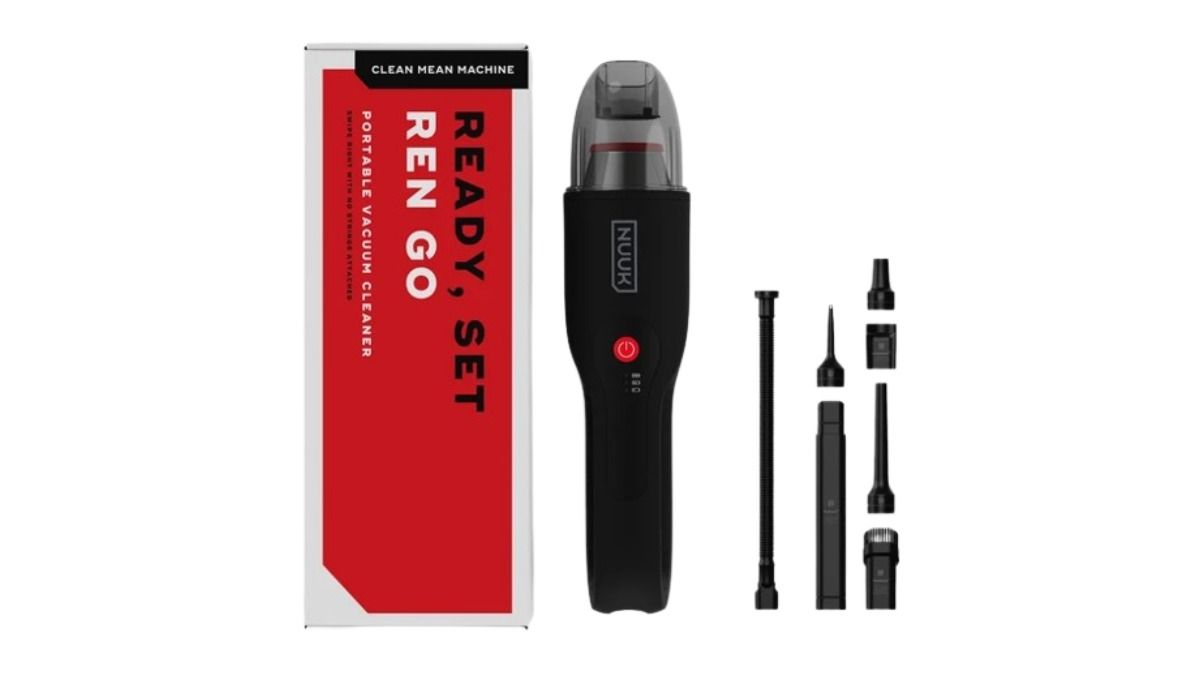
The strategy places Nuuk in a closely contested part of the market. It is not chasing the lowest possible price, but it must still persuade buyers that design, usability and build quality justify the difference. At the same time, expanding offline and localising production will test whether its service and quality-control systems can keep pace with growth.
In an exclusive interaction with MySmartPrice, Shalabh Gupta, Co-Founder of Nuuk, explains how the company plans to build its physical presence, service customers beyond major metros, protect its design identity and improve unit economics while competing with established appliance brands.
Excerpts from the interaction:
MySmartPrice: Right now you’re largely online plus one Delhi NCR store. What does the actual expansion plan look like – more physical retail, tier-2/3 penetration, or international markets – and how do you solve after-sales service and repair logistics for appliances sold to non-metro buyers who won’t have a store nearby?
Shalabh Gupta: We’re building towards an omnichannel brand, because that’s genuinely how consumers discover and buy appliances today. Digital remains a strong engine for us, but offline is where we’re investing heavily next – it lets people actually experience the design and build quality before they buy, which matters enormously in this category.
To put numbers to it: we’re targeting 1,000 offline doors over the next three years, expanding into large-format retail chains, alongside our own brand stores. We already have pop-up brand stores live across Delhi-NCR, Mumbai, Hyderabad and Pune. The sales performance from our offline touchpoints is very encouraging and proof of genuine brand pull. That gives us real conviction that offline works for us, not just theoretically. International markets are exciting, but our priority right now is building depth in India first.
On after-sales, this is something we’ve deliberately built centrally rather than through physical service centres, specifically because we didn’t want service quality to depend on where someone lives. Every service request goes through a centralised channel where a product specialist connects virtually within 24 hours to try and resolve it remotely, and if a physical fix is needed, we arrange pickup within 24 hours and complete inspection and repair at our Nuuk Quality Lab within 24-48 hours before dispatching it straight back. We’re also building a door-to-door service network that is in testing phase at the moment. The whole model exists so that every Nuuk customer gets the same experience – no dependency on a nearby store or a technician’s calendar.
MySmartPrice: Nuuk Red shows up across fans, blenders, and now the air fryer – it’s clearly meant to be a signature the way. Was this validated with actual Indian consumer research, or is it a founder aesthetic bet? And candidly – a red air fryer is a bold ask for kitchens that skew toward neutral tones; what’s the return data telling you on that colour specifically versus the greys?
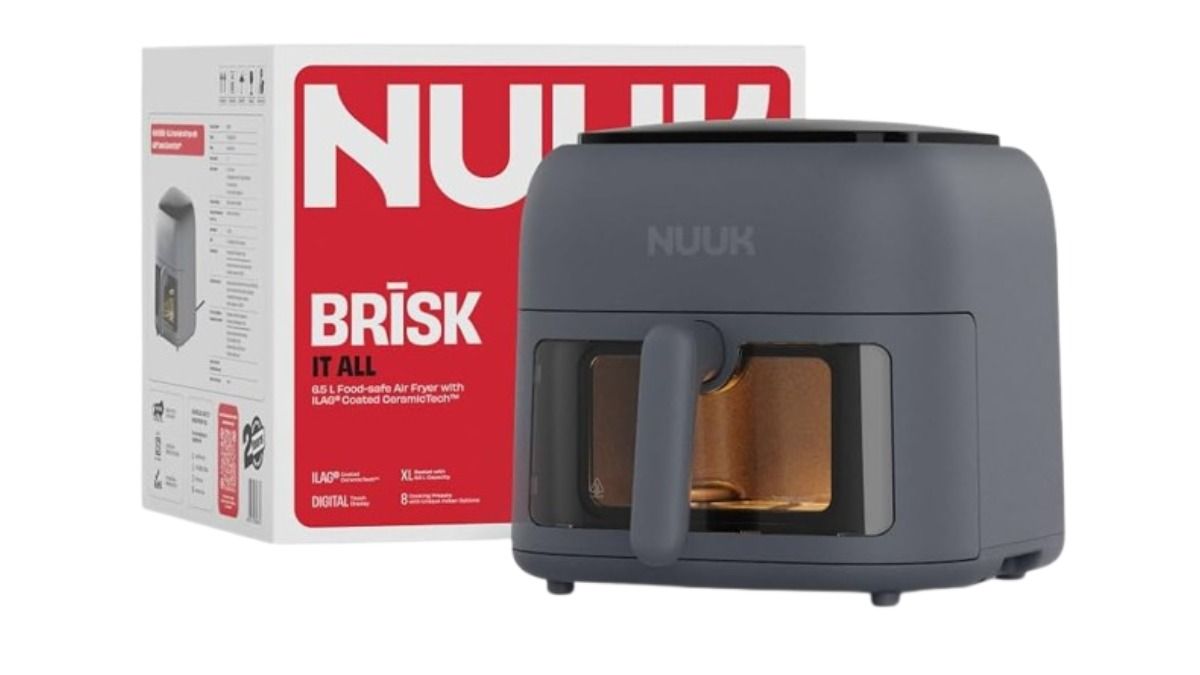
Shalabh Gupta: Nuuk Red was never a trend colour or a personal preference we imposed on the brand. From day one, we wanted a visual identity people could recognise instantly – one that felt confident, contemporary, and unmistakably us. Today, that colour appears thoughtfully across multiple products and touchpoints as part of that broader brand system, rather than as a standalone aesthetic choice.
That said, we don’t design in isolation. Every colour palette goes through consumer validation, internal review, and category-specific consideration before it ships. Because homes and preferences genuinely differ, our air fryer and most of our range are also available in Serene Grey, Sesame Grey, and other shades. The goal was never to make everyone choose bold; it’s to offer personality without sacrificing versatility.
We’re also seeing something bigger happening in the category: appliances are becoming visible parts of the home, not things tucked away in a cabinet, and as people invest more thoughtfully in their spaces, they’re more open to products that reflect personality. In that context, colours also become a part of self-expression. And for Nuuk Red specifically, the response has been pretty encouraging.
MySmartPrice: You’ve gone from four categories to six in under two years. What’s the discipline behind choosing the next category – and is there a risk that a small design team spread across fans, vacuums, garment care, kitchen appliances, and heating ends up shallow everywhere instead of deep somewhere?
Shalabh Gupta: Category expansion for us has never been about adding more line items; it’s about solving more real problems inside the home. The question we start with every time is: where is the consumer still compromising? If we believe design, technology, and better user experience can genuinely change that everyday experience, it becomes worth exploring.
We don’t think of ourselves as running six separate categories. We think of ourselves as building one design-led home appliance brand, where every product, regardless of category, is built on the same principles: human-centred design, intuitive usability, strong engineering, and lasting quality.
Knowing what not to build matters just as much. We’re deliberate about where we invest our time and resources, and we don’t believe every adjacent category is worth entering simply because it’s large. Every launch goes through a 9-step product development process – consumer research, design iteration, engineering validation, and quality testing – before it reaches the market. That discipline is what’s let us launch across 14 products in 21 months without diluting what Nuuk actually stands for.
MySmartPrice: Losses grew six-fold even as revenue scaled fast. When you’re up against Philips, Bajaj, and Atomberg – companies with decades of distribution, service networks, and manufacturing scale – what does the actual path to unit-level profitability look like, and how many more funding rounds does that path assume?
Shalabh Gupta: Building a consumer brand from the ground up, particularly in a category where trust is earned over years rather than months, requires significant upfront investment. In our case, we’ve consciously invested in product development, design, supply chain capabilities, brand building, and after-sales service to create the right consumer experience. We see these as foundational, not discretionary.
As we scale, our focus is on strengthening unit economics through sharper demand forecasting, a more diversified product mix and increasing operating leverage, and we’re already seeing that play out.
We expect these efficiencies to strengthen further. We also think that competing with established incumbents isn’t about matching their scale overnight. Our opportunity lies in building a differentiated proposition around design, consumer insight, and agility – areas where younger brands can often move faster and respond more closely to evolving consumer expectations.
On future fundraising, we’ve been fortunate to have investors who share our long-term vision of building a design-led home appliance brand. We remain well capitalised for our current growth plans and will evaluate future fundraising based on business requirements and market opportunities.
MySmartPrice: From the looks of it, Nuuk isn’t fighting the Rs 500 entry-level fan and isn’t fighting the premium brands on the other side of the spectrum either. Isn’t that the hardest position to defend long-term – too pricey for value buyers chasing the lowest cost per unit, not prestigious enough for buyers who want the ultra-premium name? What’s the actual moat that keeps you there rather than getting squeezed from both sides?
Shalabh Gupta: We actually see that exact space as one of the most exciting opportunities in the market right now. Indian consumers today aren’t making a binary choice between the cheapest option and the most expensive one; they’re looking for products where thoughtful design, quality, performance and longevity genuinely justify the price. That’s the space between mass and luxury we’ve deliberately built for.
Our moat is human-centred design paired with real relevance to how people actually live – energy efficiency, ease of use, safety, compactness, design that fits a modern Indian home. When someone experiences that same philosophy and attention to detail across multiple categories, they start trusting the brand itself, not just the individual product. That trust compounds in a way price alone never does.
The numbers back this up – 4.5 average rating across website and Amazon, 500,000+ products sold, 30% repeat purchase rate, and 16% of buyers now own three or more Nuuk products. We’re not building a discount brand or chasing prestige for its own sake. We’re building a distinctly Indian, design-led home appliance brand for how India actually lives today. As the category premiumises further, we think that position gets stronger, not harder to hold.
MySmartPrice: You’re targeting 50%+ domestic manufacturing by FY27 while design stays in-house and production is outsourced to third parties. How do you guarantee the fit-and-finish that’s core to your design pitch doesn’t slip as you scale local manufacturing partners?
Shalabh Gupta: Design doesn’t end at the drawing board for us – it extends all the way to the product that reaches someone’s home. We work with manufacturing partners, but the product vision, design intent, engineering specs, and quality benchmarks stay firmly owned by Nuuk. Manufacturing is a partnership; accountability for the final experience is entirely ours.
As we scale domestic manufacturing, we’re choosing partners who share that quality bar. Our partnership with Zetwerk for vacuum manufacturing is proof of that. Every product goes through multiple stages of engineering validation, prototyping, material evaluation, and quality testing before launch, specifically so what the design team envisioned actually survives the transition into mass production.
The results back this up: 1.64% rejection rate on our Made in India products against an industry average of 3-5%, and 0.68% field failure rate against an industry benchmark of 3-5%. Localisation for us isn’t just about cutting import costs – it enables faster iteration, tighter collaboration with our manufacturing partners, and a more resilient supply chain. And as India’s manufacturing ecosystem continues to mature, we’re excited about building products that are not only designed for India but increasingly made in India to global quality benchmarks.
We are on track to transition over 80% of our product portfolio to domestic manufacturing by end of FY27.
MSP Takeaway
Nuuk’s design-first pitch is easy to understand; scaling it will be the harder part. A target of 1,000 offline doors will put its product finish, service turnaround and manufacturing consistency under much more pressure than an online-led model. The centralised service setup is a practical workaround today, but it will need to prove itself as volumes grow outside major cities. The 80% domestic manufacturing target could help Nuuk iterate faster and control costs, provided the rejection and field-failure rates it cites hold at scale.
Note: The above conversation has been edited for length and clarity. All sales, service, rating and quality-control figures cited below have been shared by Nuuk.