LG Electronics is sharpening its focus on the next wave of consumer and enterprise technology, with robotics, AI-powered homes, and cooling solutions emerging as central pillars of its future strategy.
At a recent shareholder interaction, CEO Lyu Jae-cheol made it clear that 2026 will be a defining year for LG's robotics ambitions, positioning the segment not as an experimental category but as a core business vertical going forward.
The shift signals a broader transformation at LG, where the company is moving beyond traditional home appliances towards a more integrated, AI-driven ecosystem.
From Appliances to ‘AI Home' Ecosystems
LG's strategy is increasingly built around what it calls the AI home, a connected environment where appliances, robotics, and automation work together to reduce manual intervention.
This builds on the company's long-standing strength in home appliances but pushes it into a more intelligent, software-led direction. The idea is not just to sell individual products like washing machines or air conditioners, but to create a cohesive system where devices interact seamlessly.
In that sense, LG is following a path similar to other global tech players, but with a key difference: its hardware-first legacy gives it tighter control over how these experiences are delivered inside the home.
Why Robotics Is Now Central to LG's Playbook
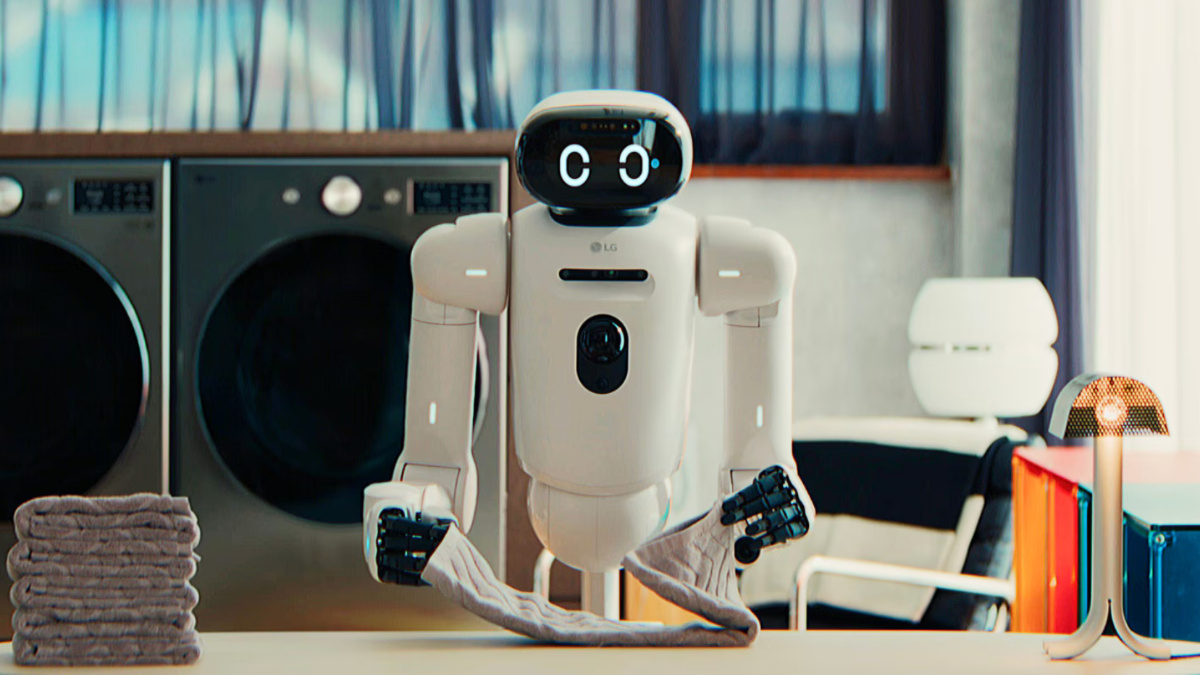
What stands out in LG's latest messaging is the level of emphasis on robotics. The company is aiming to make 2026 the starting point for large-scale deployment of its robot business, backed by advancements in what it describes as "physical AI."
Unlike earlier consumer robot experiments, LG is now looking at robotics across both consumer and enterprise use cases, including smart homes, factories, and service environments.
A key part of this strategy is vertical integration. LG is exploring in-house production of critical components like actuators, which account for a significant portion of robot costs. This not only improves margins but also gives the company tighter control over performance and scalability.
A Broader Portfolio Reset Around High-Growth Segments
Alongside robotics, LG has identified cooling solutions, smart factories, and AI-driven home appliances as the four core growth areas that will define its next phase.
This reflects a deliberate portfolio shift. Instead of spreading investments across too many categories, LG is focusing on segments where it already has manufacturing strength and can layer AI capabilities on top.
Cooling solutions, for instance, are becoming increasingly important in markets like India, where rising temperatures and regulatory changes around energy efficiency are reshaping demand. At the same time, smart factories and B2B solutions offer more stable, long-term revenue streams compared to cyclical consumer electronics.
Hardware Companies Move Up the Value Chain
LG's pivot mirrors a broader industry trend where traditional hardware companies are moving up the value chain by integrating software, AI, and services.
As product differentiation based purely on hardware becomes harder, companies are increasingly focusing on ecosystems, automation, and recurring value. Robotics, in particular, sits at the intersection of all three, making it a natural next step for companies with strong manufacturing DNA.
This also reflects the growing importance of what many are calling "physical AI," where intelligence is embedded not just in apps and devices, but in machines that interact with the real world.
What This Means for India and Emerging Markets
For markets like India, LG's strategy could play out in phases. While robotics may take time to reach mainstream adoption, the AI home and cooling segments are more immediate opportunities.
LG already has a strong brand recall in appliances in India, and layering AI-led features on top of that could help it strengthen its premium positioning further.
At the same time, its push into B2B segments like smart factories and infrastructure solutions could open up new revenue streams that are less dependent on consumer demand cycles.
A Strategic Shift Towards ‘Quality of Growth'
What ties all of this together is LG's emphasis on what it calls improving the "quality of growth" amid global uncertainties.
Instead of chasing volume alone, the company is focusing on areas where it can build long-term differentiation, whether through deeper integration, proprietary components, or ecosystem-level control.
In that sense, LG's roadmap is less about launching more products and more about redefining where future value will come from.