The India AI Impact Summit 2026 at Bharat Mandapam, New Delhi feels less like a conference and more like a timeline you can walk through.
At one end, the near-present: Jio's AI-powered glasses blending into everyday wearables, Qualcomm's humanoids and mobile robots bringing "physical AI" into view, and ASUS ExpertCenter PN-series mini PCs compressing AI-ready desktops and edge machines into palm-sized boxes. A few aisles away, IBM's towering Quantum System Two installation points to a very different future. A future where compute that most people will never touch directly, yet may eventually sit behind large-scale AI and scientific workloads through the cloud.
The sessions mirror the floor: keynote stages, packed pavilions, and parallel tracks covering India's AI compute push, local model development, and "AI for All" demonstrations from both global and domestic players. Students, builders, policymakers and curious visitors all move through the same space, shifting constantly between finished products, concept machines, infrastructure plans and research prototypes.
You walk in expecting an expo. You walk out feeling like you've seen a layered snapshot of technology, what's already shipping, what's about to arrive, and what's still quietly being built for the next phase.
Event Details:
- Venue & dates: Bharat Mandapam, New Delhi, February 16–20, 2026.
- Scale: 600+ startups, 300+ exhibitors and 13 country pavilions across ~70,000 sq.
- Line‑up: Global tech and AI leaders, Indian industry and government, plus a large public expo.
Jio Frames (Smart Glasses): India‑First AI Wearable
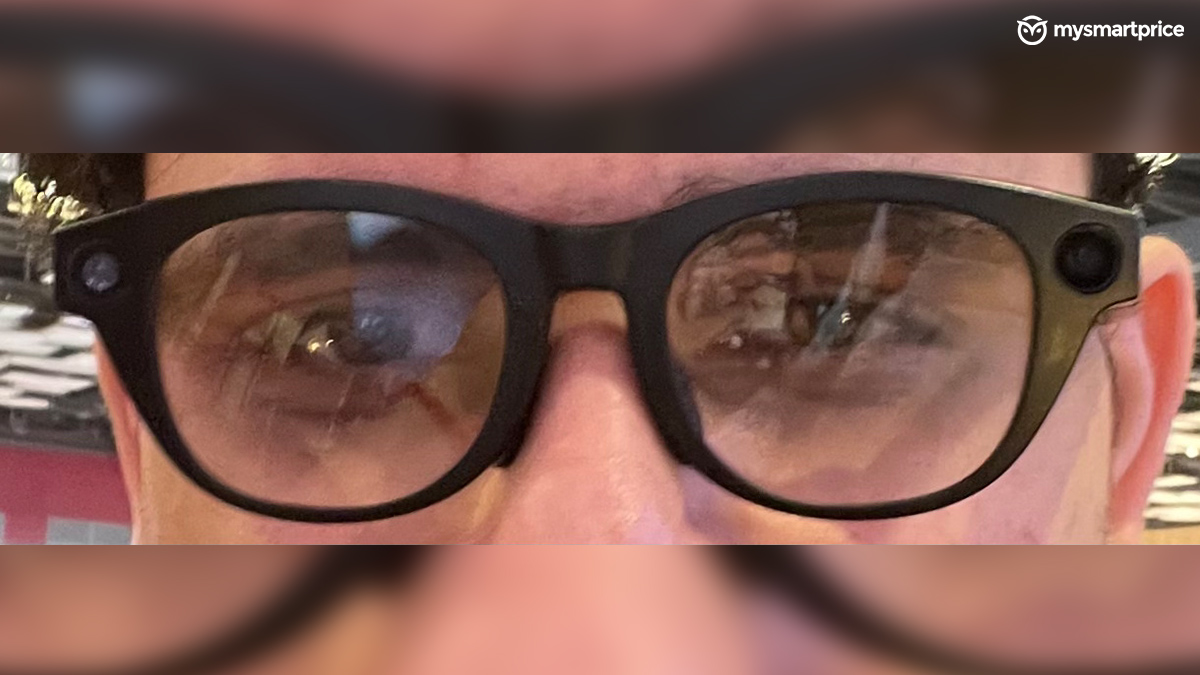
On display at the AI Summit, Jio Frames signal Reliance Jio's serious intent to make AI wearables mainstream in India. At a glance, the glasses look like regular eyewear, but the temples house the full computing stack, including microphones, open-ear speakers and a forward-facing camera. This lets users take calls, capture photos and videos, issue voice commands, get translations, or run quick searches entirely hands-free, without pulling out a phone. The multilingual AI assistant, tuned for Indian languages, is a clear differentiator, especially for real-world use beyond metro, English-first scenarios.
Positioned against Ray-Ban Meta and Lenskart's upcoming AI glasses, Jio Frames lean less on premium branding or health and payments, and more on communication, content capture and deep Jio ecosystem integration via Jio AI Cloud. While pricing is unannounced, early expectations point to an aggressive ₹10,000–₹15,000 range, undercutting global rivals and framing this as a mass-market AI wearable. From a reviewer's lens, the idea is compelling; the real verdict will depend on battery life, comfort, and camera performance once retail units move beyond demo floors and into everyday Indian use.
Qualcomm Robotics & "AI For All" Pavilion
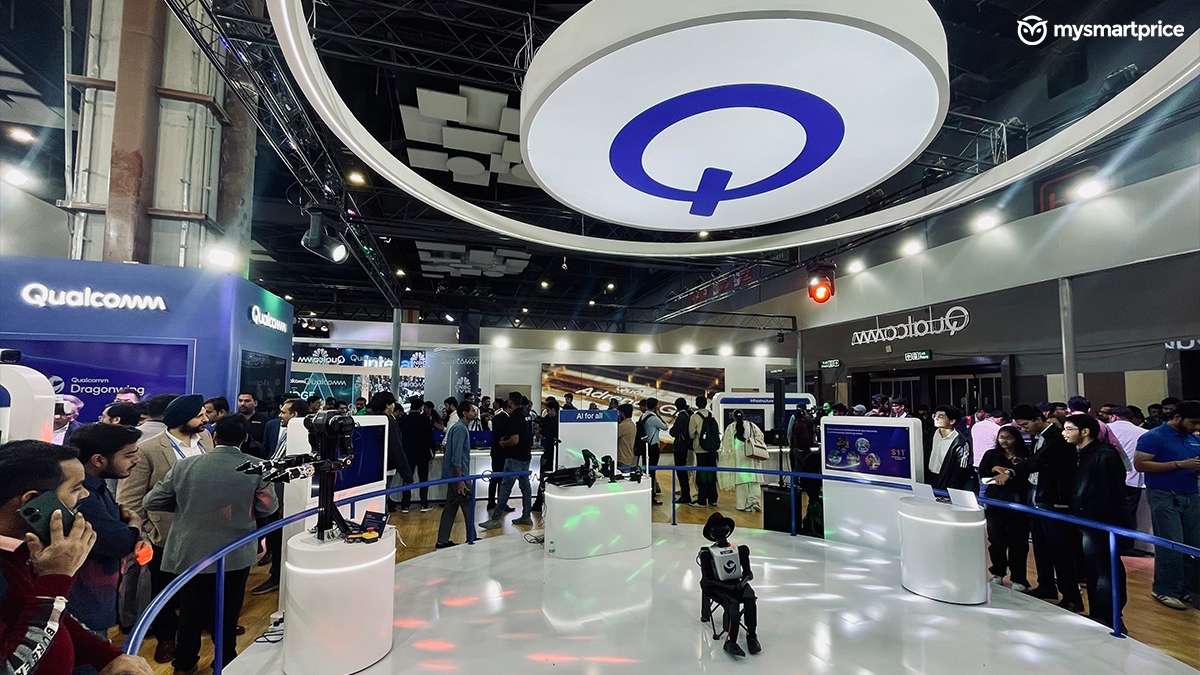
Qualcomm's pavilion is one of the most crowded sections of the expo, themed around "AI for All" with live robotics and edge‑AI demos running throughout the day. At the centre is a ring‑shaped stage where humanoid and mobile robots perform choreographed movements, object‑interaction routines and navigation demos, all powered by Qualcomm's latest robotics platforms.
The highlight on the spec sheet side is Qualcomm's new Dragonwing IQ‑10 processor for full‑size humanoids and advanced autonomous mobile robots, coupled with a full stack of software, AI models and tools. Qualcomm is basically turning its phone‑chip skills into full robot brains.
The same low‑power AI, mixed CPU/GPU/NPU setup and smart sensor handling it uses in mobiles and cars is now packaged for robots that can do practical work like picking items, stacking boxes and tracking stock in warehouses and shops.
ASUS ExpertCenter PN55 / PN54: Compact AI Mini PC
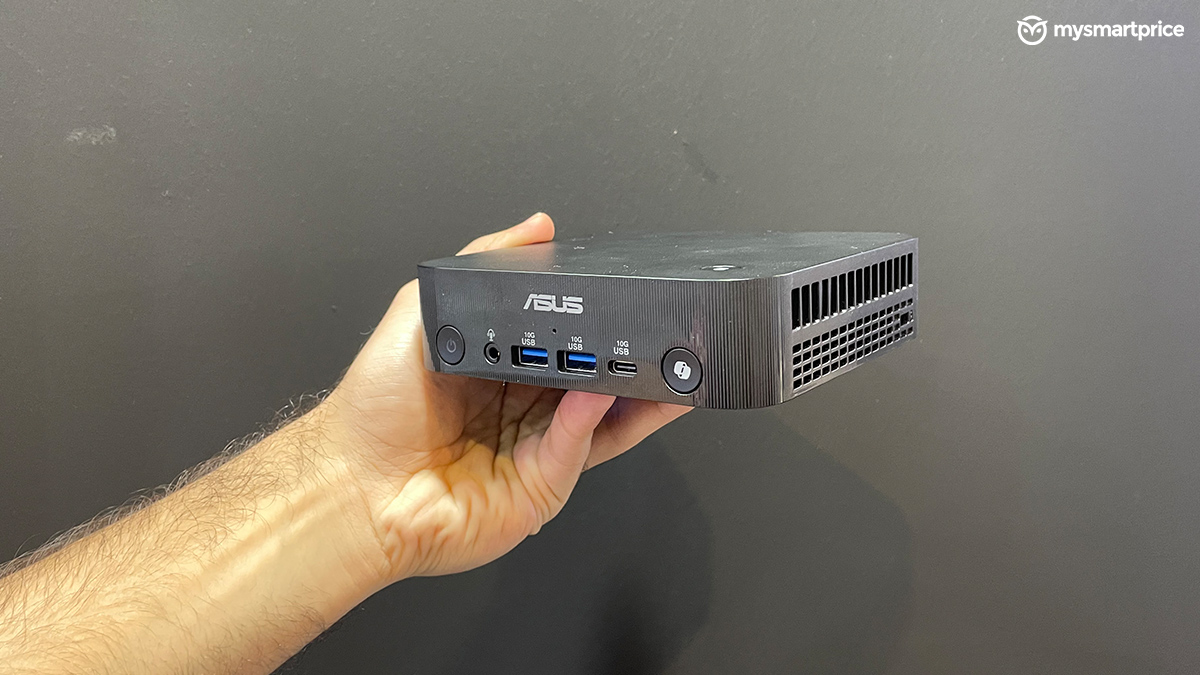
ASUS' ExpertCenter PN55 and PN54 are compact mini PCs designed for office desktops, dashboards, and edge deployments, rather than gaming rigs. Built on AMD's Ryzen AI platform, they squeeze CPU, GPU and NPU acceleration into a chassis that can be VESA‑mounted behind a monitor or tucked into tight spaces.
ASUS ExpertCenter PN55 / PN54 — key points
- AMD Ryzen AI 400 series processor with up to 55 TOPS local AI acceleration
- Radeon 800M integrated graphics
- DDR5-5600 RAM support up to 96 GB
- Can run four 4K monitors at once
- Compact mini-PC with tool-less upgrades
It's basically a small desktop meant for office work, coding, dashboards and light AI tasks that run directly on the device instead of the cloud. Connectivity includes modern Wi-Fi, Bluetooth 5.4 and plenty of ports, and the chassis is built to commercial durability standards. Because it relies on integrated graphics, it's not intended for heavy 3D or high-end gaming workloads.
IBM Quantum System Two: Future Compute, On The Floor
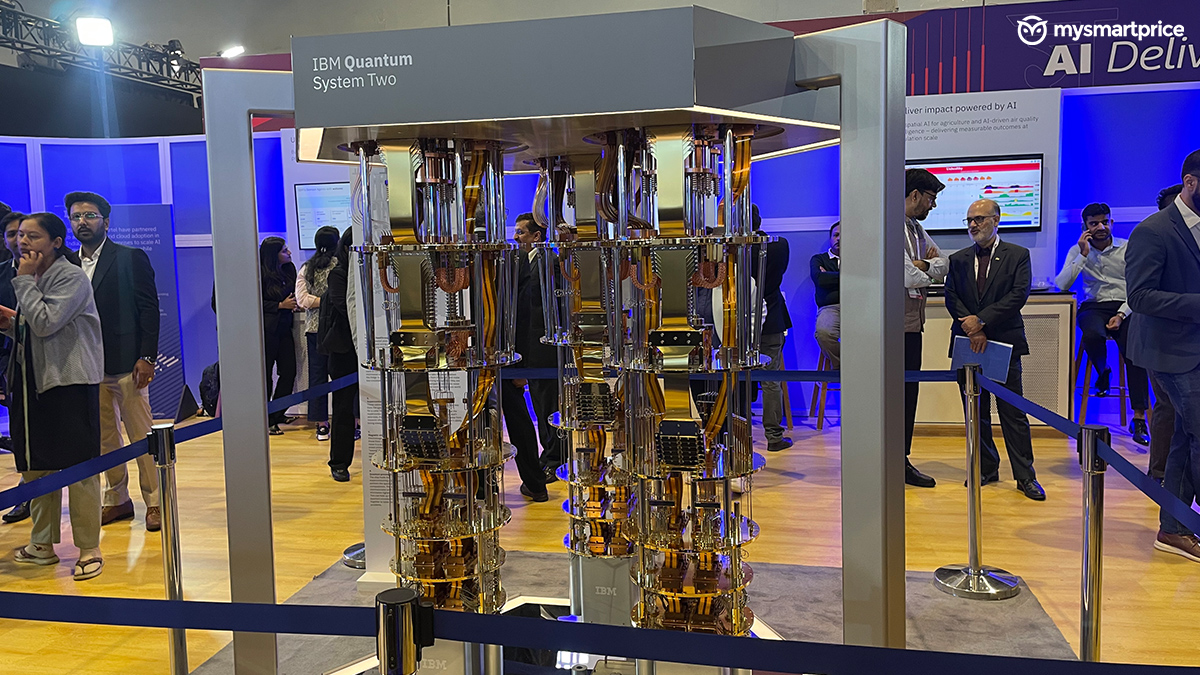
This isn't a normal computer with a CPU and RAM inside a box. The shiny, chandelier-like structure hanging down is the most important part: the dilution refrigerator.
What those parts actually do
1) Cooling stack (golden cylinders)
- A dilution refrigerator cools the processor to ~10–15 millikelvin (colder than space).
- At higher temperatures, qubits lose quantum behavior and act like normal circuits.
Extreme cold preserves superposition and entanglement.
2) Control wiring (plates & cables)
Microwave lines that:
- manipulate qubits (operations)
- measure their states (readout)
- shield them from external noise
Even tiny heat, vibration, or electromagnetic interference ruins the calculation.
3) Quantum chip (at the bottom)
- Only a few millimetres in size
- The entire machine exists to stabilize and protect this chip
Small processor, massive support system.
In one sentence:
A quantum computer is a tiny chip that works only near absolute zero, surrounded by a large machine whose sole job is to keep the environment from disturbing it.