Phone buyers have always had to choose. A bigger screen meant a heavier phone. A thinner body meant a shorter battery. Early folding phones asked you to give up a bit of everything, and charged more for it.
Every once in a while, though, a device arrives that declines the trade. The Galaxy Z Fold8 is one of those. Samsung has redesigned the shape of the phone entirely, and this is the company’s first wide format folding device.
It does not replace the taller Fold. The Fold8 Ultra does that job, for people who want the biggest screen and the longest camera reach. Samsung has split the range in two. The question is no longer whether a foldable is worth it. It is which shape fits the way you use a phone.
The Phone Got Shorter. The Screen Got Bigger.
Start with the weight. The Fold8 weighs 201 grams. Samsung says that makes it not just its lightest folding phone, but the lightest book style foldable on sale in India today. That number covers a lot: two screens, a titanium hinge, a 4800mAh battery and two 50MP cameras. Plenty of ordinary phones weigh more.
Closed, it measures 81.9 by 123.9 by 9.7 millimetres. Look at the order of those numbers. It is wider than it is tall.
Usually a phone gets lighter and shorter by losing something. A smaller battery. A dimmer screen. A body that starts to feel hollow. The Galaxy Z Fold8 does none of that. It does the opposite. The screen inside is bigger than the phone looks like it could hold. The outer screen went from somewhere you glance to somewhere you can work. And the camera got a screen that shows a photo properly. The Fold8 did not get smaller by doing less. It got smaller and does more.
The shape changes how you carry it. It sits shorter in a pocket, so it does not bulge in a jacket, a suit or traditional attire. It drops into a clutch or a small handbag, where a tall phone usually has to lie flat across the bottom and take up most of the space. It is about the size of a passport.
It also changes how you hold it. Your thumb reaches the far side of the screen, even if your hands are on the smaller side. You can use it while walking through an airport, holding a coffee, or getting out of a car.
Then you open it, and a 7.6 inch screen comes out of a phone that was shorter than the one in most people’s pockets.
The bezels around both screens are thin, and that matters more than it sounds. The 5.5 inch outer screen and the 7.6 inch inner one both feel bigger than their numbers suggest. Closed, it is a proper one handed phone. Open, it is a comfortable workspace.
Two Screens. Neither One is a Spare.
On most foldables, the outer screen handles calls and notifications. You deal with quick things there, then open the phone for anything real.
The Fold8 works differently. The 5.5 inch outer screen is wide enough to scroll social media, frame photos, watch videos, play games and read articles without feeling cramped. You can type on it with both thumbs without catching the wrong key.
Apps have started to use that width. Open Instagram on the inner screen and the navigation rail moves to the left of the video while the like and share buttons move to the right, so a reel plays with nothing sitting on top of it. On a tall phone those same controls are stacked over the picture.
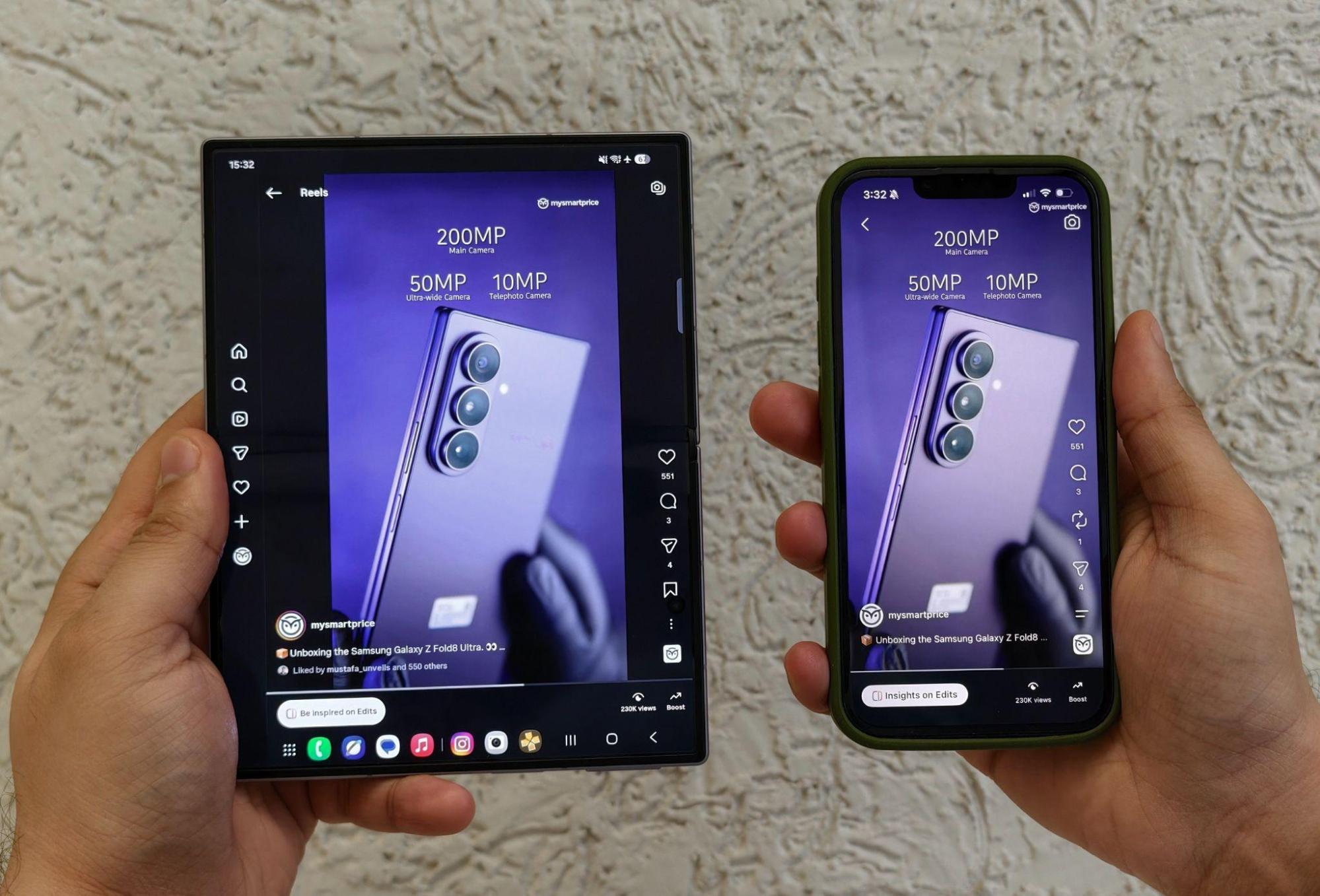
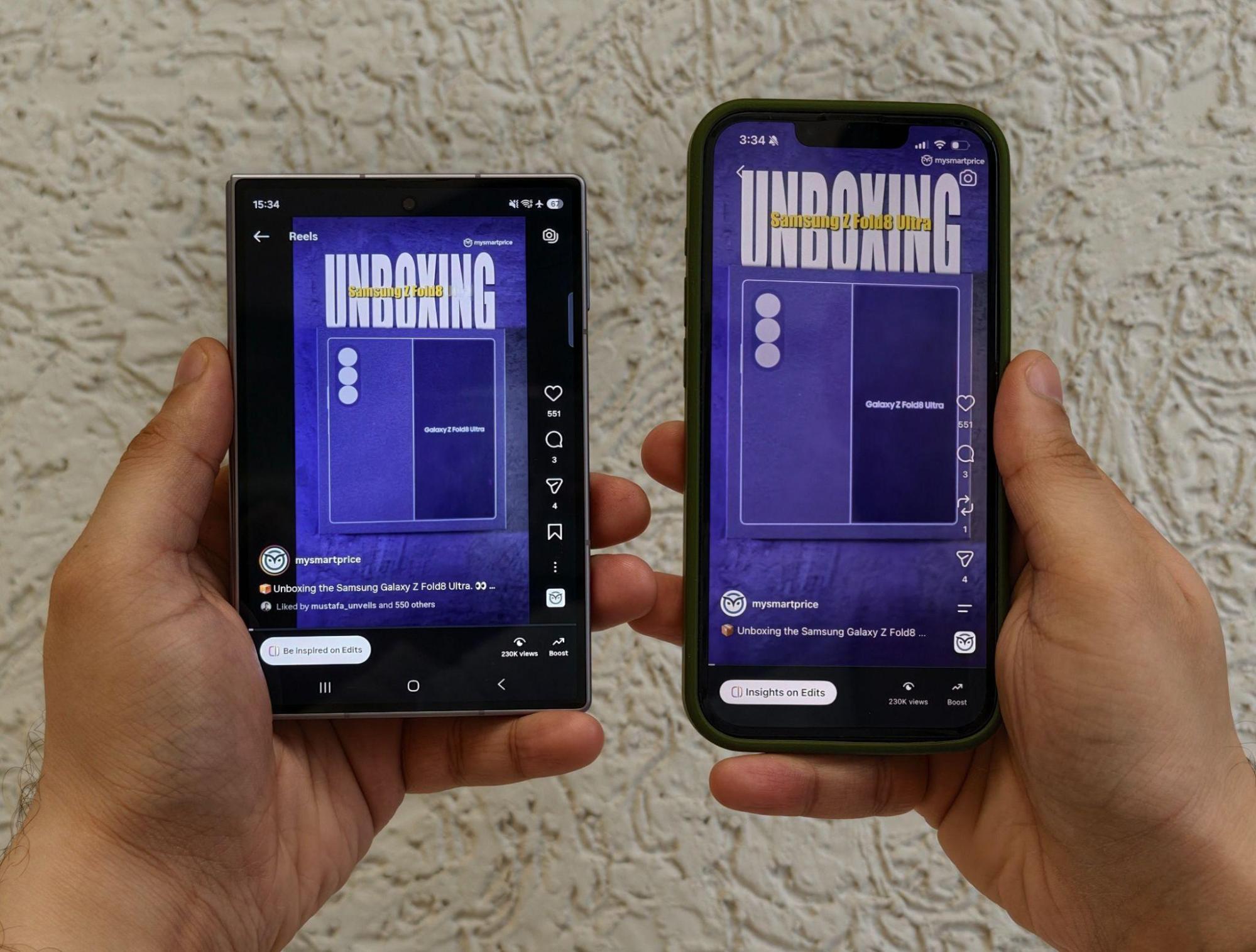
Open the phone and the 7.6 inch screen changes what the device is for. Put a presentation next to your notes. Compare two spreadsheets. Keep a stock chart open beside a chat. It works just as well when you are not working: a cricket match or a show on a flight looks far better on a screen this size, and the stereo speakers help.
Both screens work on their own. You open the phone because you want the bigger screen, not because the smaller one has run into a limit.
The Screen That Finally Fits Your Photos
Phone cameras shoot in 4:3 or 3:4, depending on how you are holding the phone. That comes from the sensor itself, which is physically that shape. Shoot this way and you are using every megapixel it has.
Phone screens are a different shape. Most have an aspect ratio of around 20:9 today, far taller than any photo, so a picture never fills the display. There are bars above and below it and a lot of screen doing nothing.
The Fold8’s inner screen is 1,848 by 2,448 pixels, which is almost exactly 4:3. It is the same shape as your photo. Held the way it naturally sits, wider than tall, a landscape shot fills it corner to corner. Turn the phone ninety degrees and a portrait shot does the same.
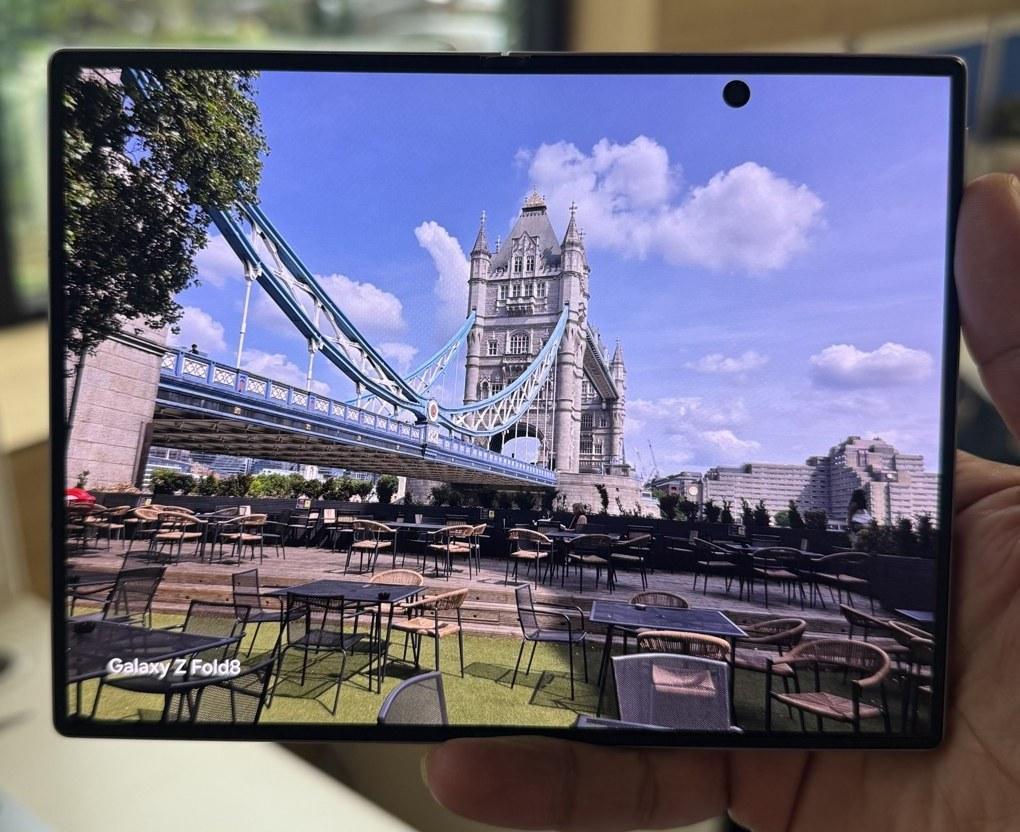
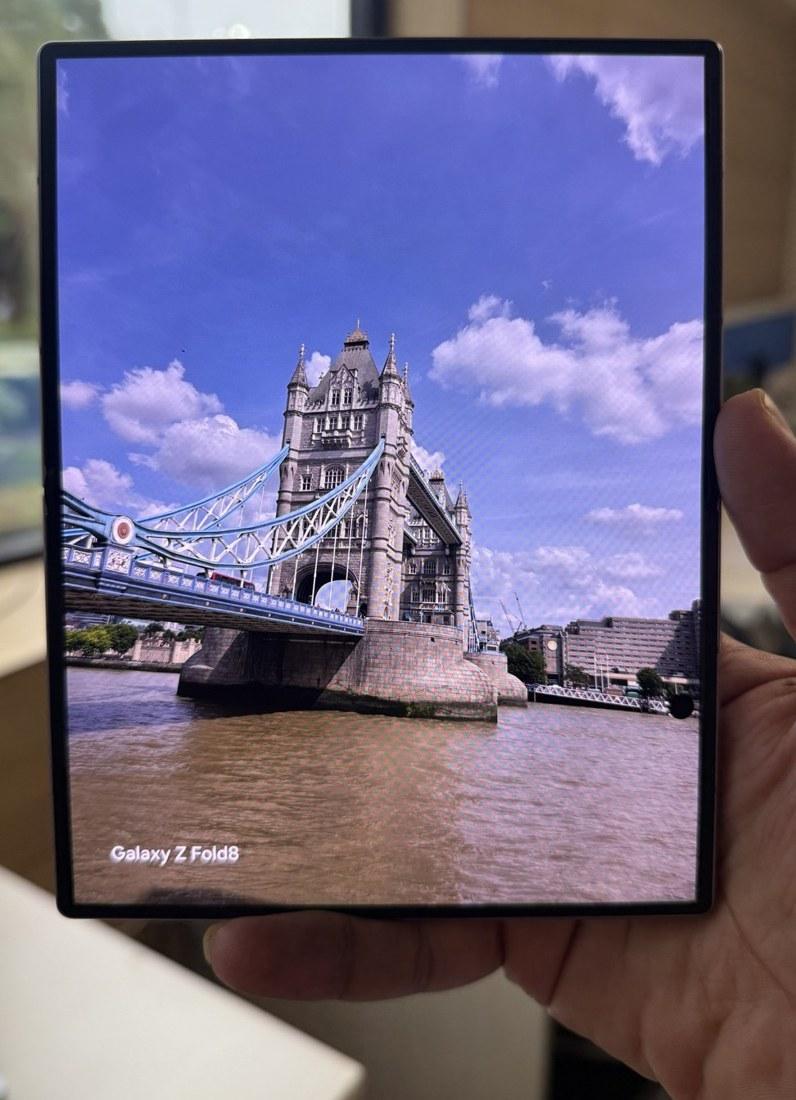
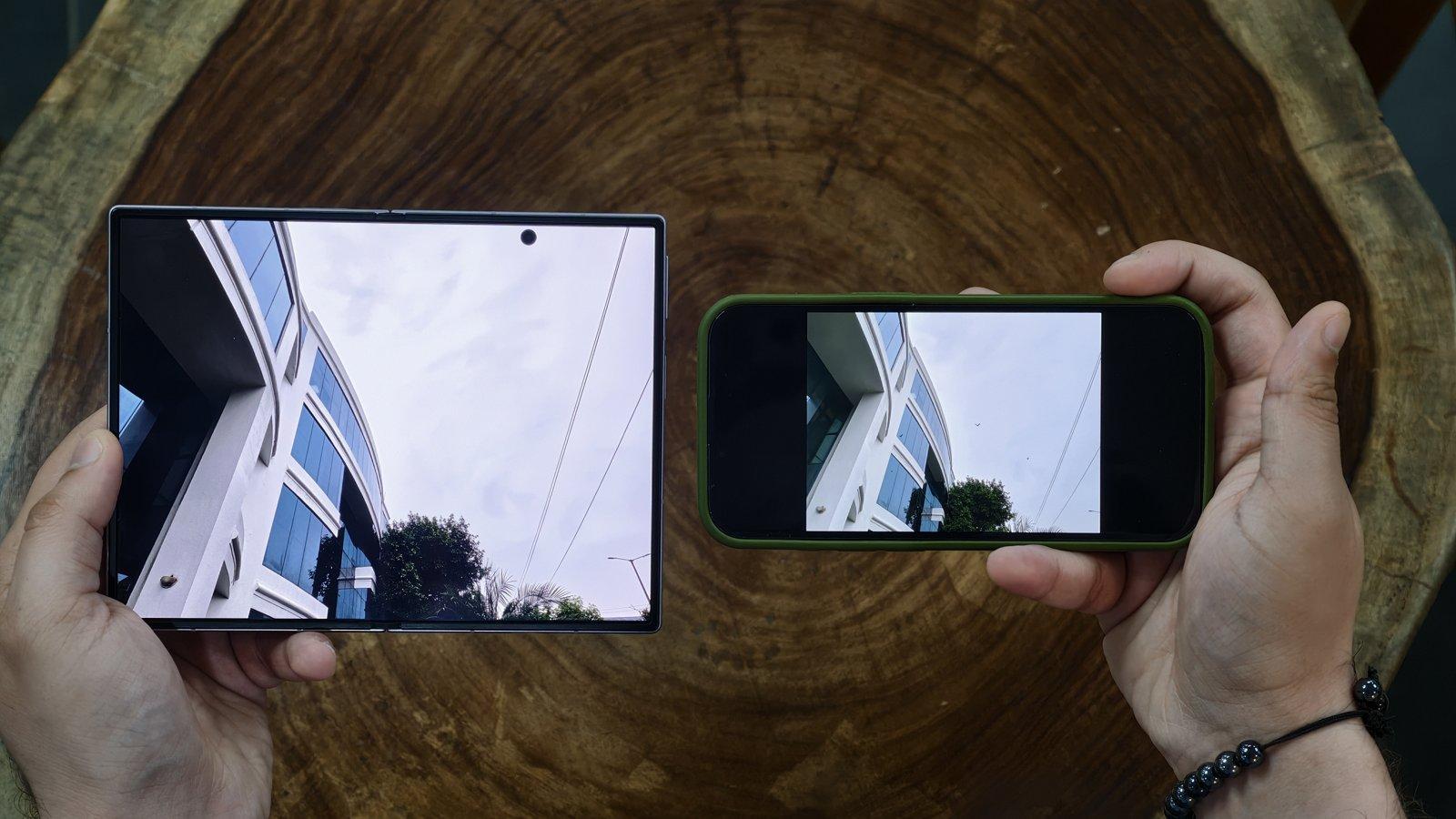
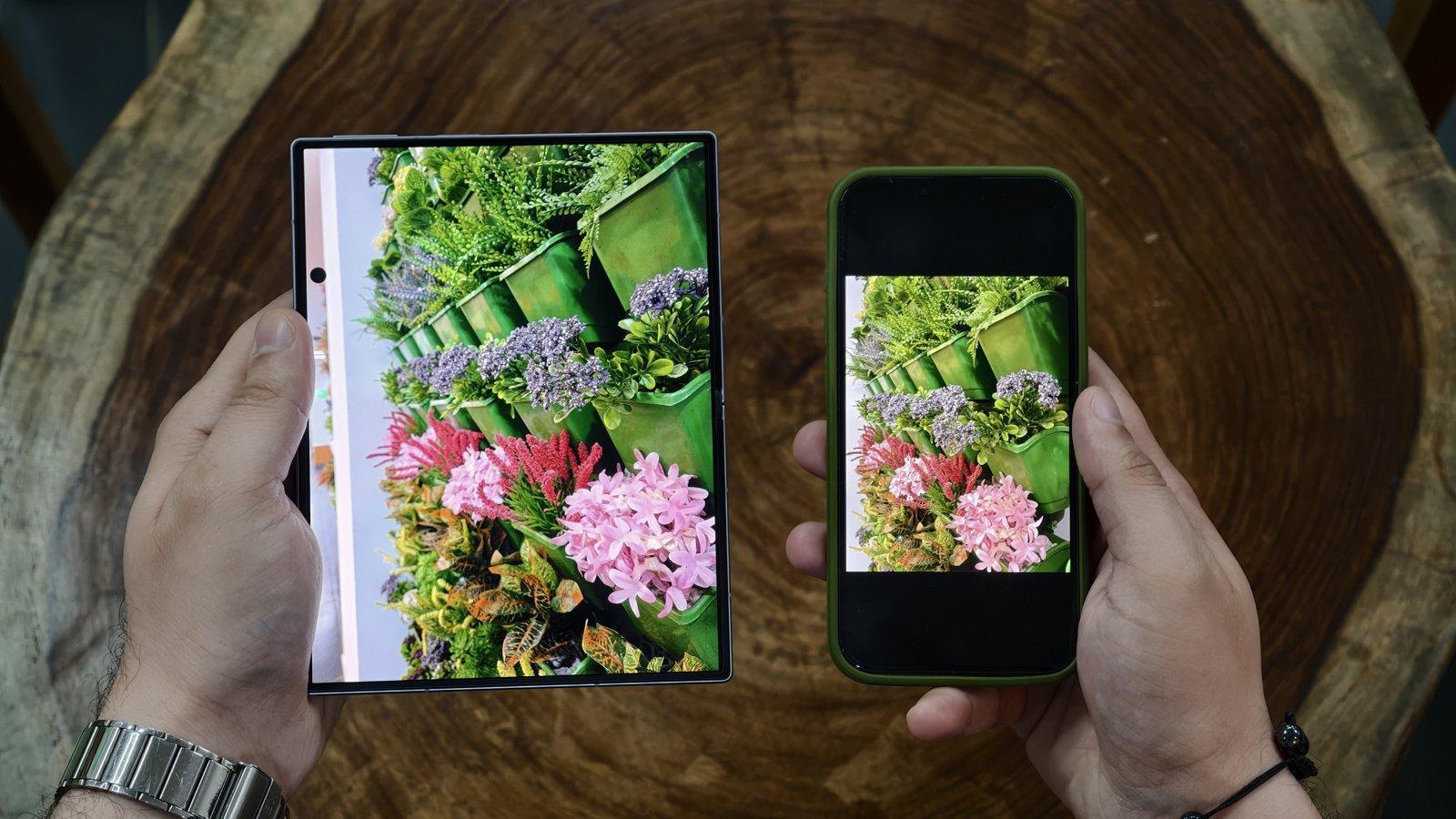
So in Gallery your photos are full screen, with no bars, whichever way you shoot them. That is what the shape gives you: a smaller footprint in your pocket, a much bigger picture on the screen. Editing happens on the same screen: cropping, straightening or brightening a face, with the photo at full size and the controls beside it instead of on top of it.
It works with the phone closed too. The cover screen gives a photo most of the display rather than a strip in the middle, so a quick check does not need the phone open at all.
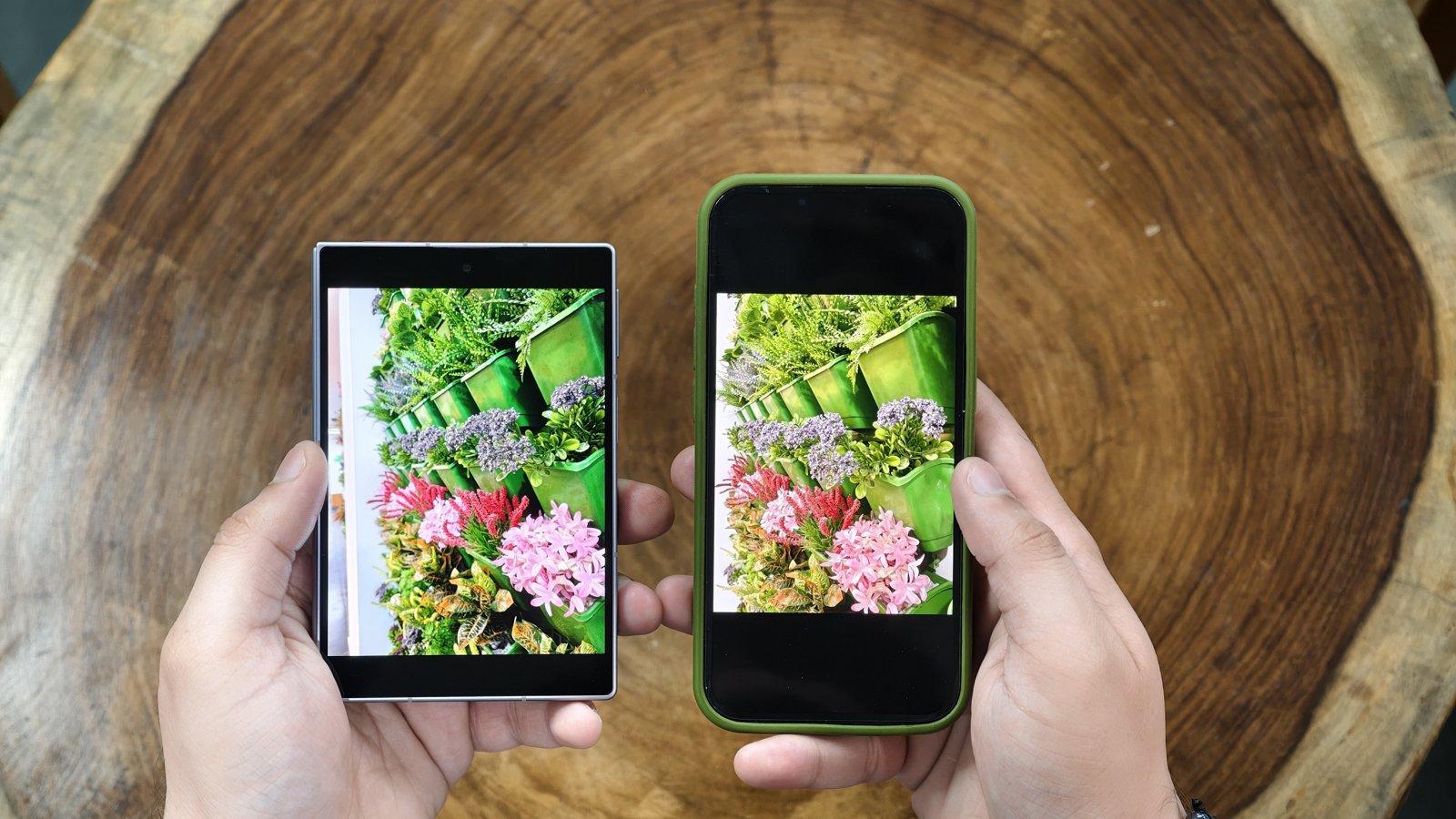
The preview while you are shooting is better too, especially with the phone closed. Hold it sideways and the cover screen shows the frame right across the display, where a tall phone leaves thick black pillars down both sides and squeezes the picture into a band in the middle.
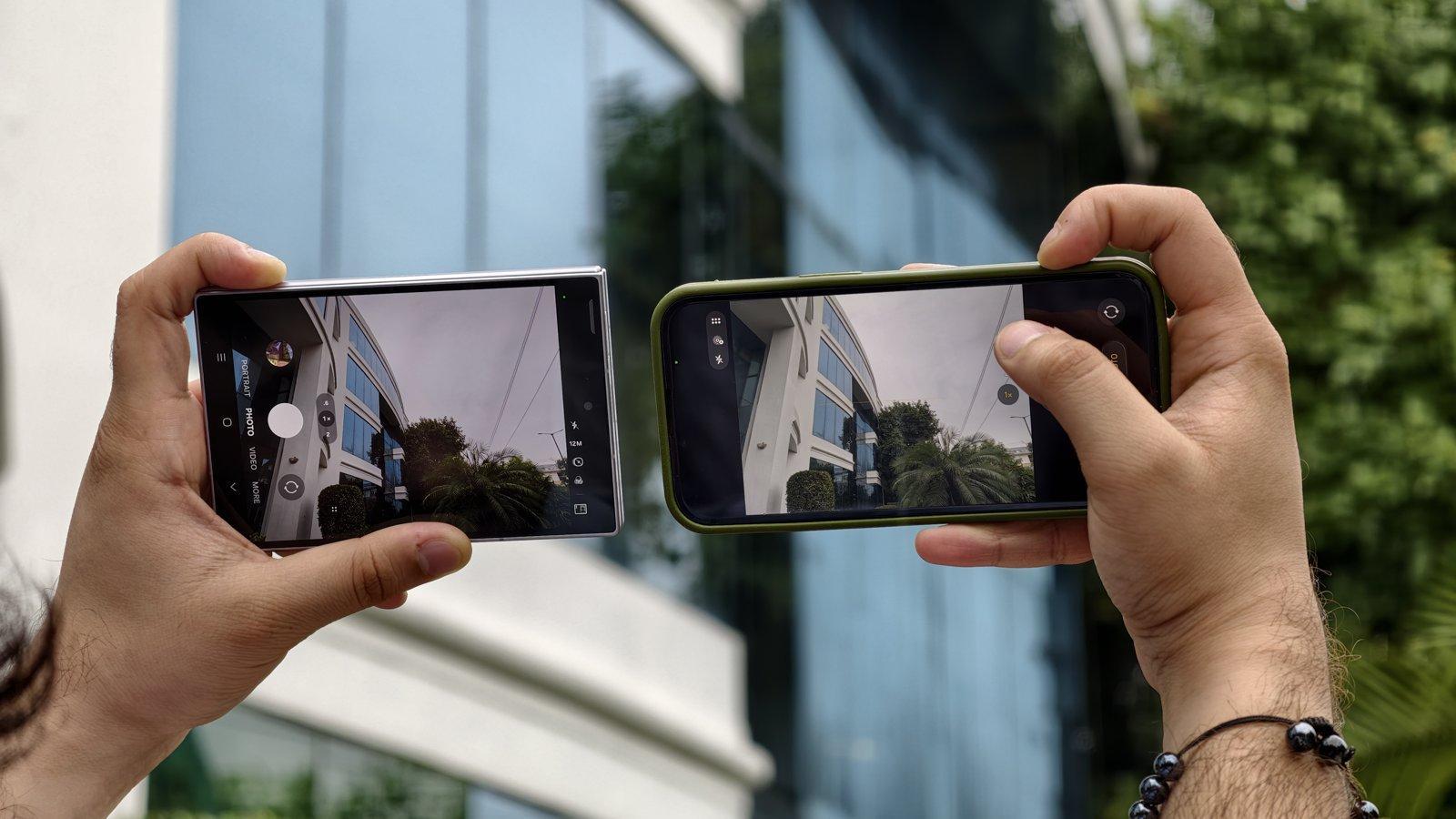
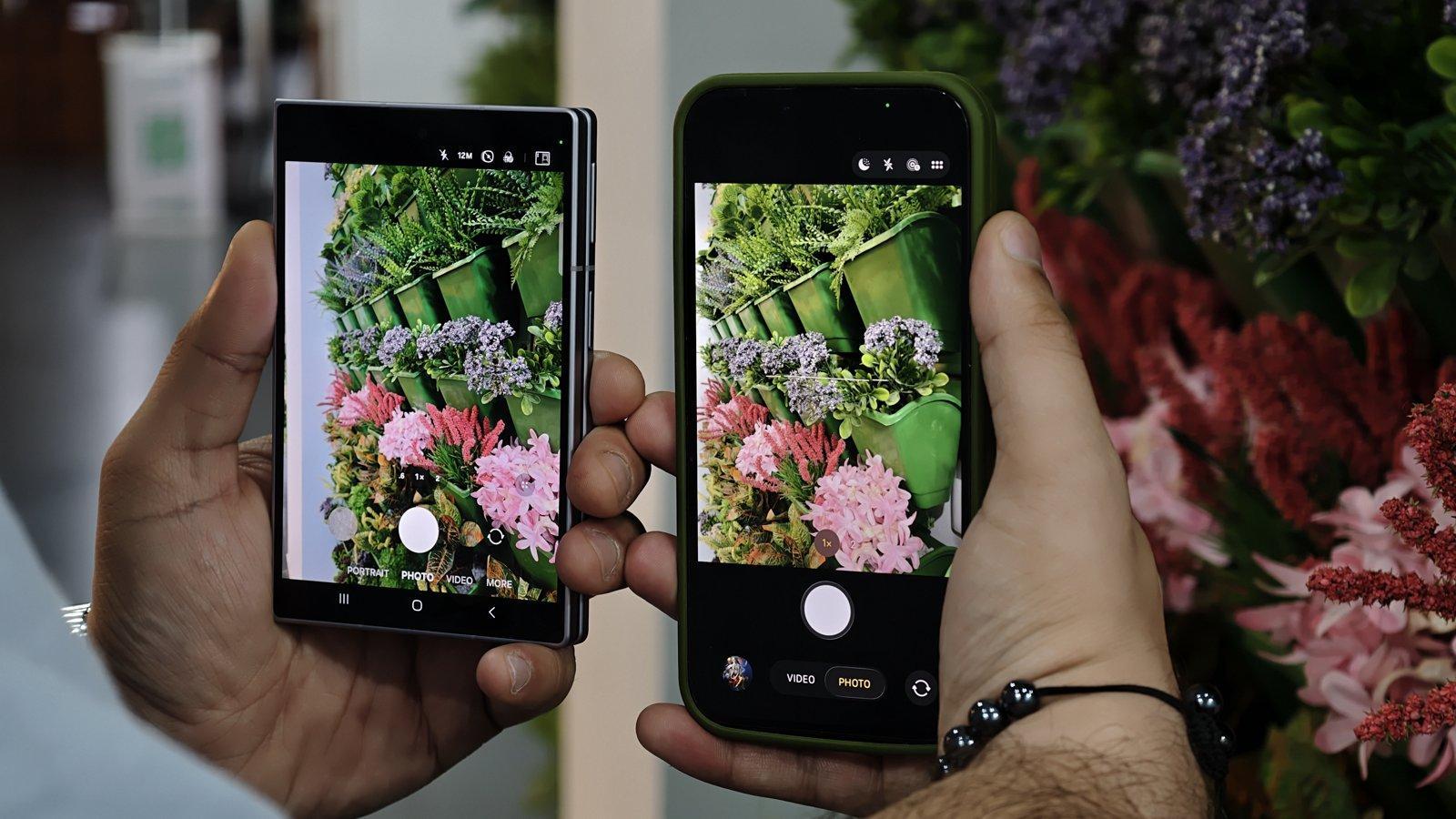
That helps at a wedding or a Diwali gathering. You take the group photo, and before everyone scatters you can check it properly. Did the person at the edge blink? Did the decorations make it in? On a tall phone you squint at a small preview and find out at home.
The cover screen has a use here too. Open the phone fully and shoot with the rear cameras: the outer screen faces your subject, so they can see themselves while you take the photo. They get a 50MP portrait instead of a selfie, and you get fewer retakes.
Then there is what happens to the photo afterwards. Instagram moved its profile grid to 3:4 in January 2025 and added support for 3:4 photos that May. So the shape you shot, the shape you looked at full screen, and the shape Instagram wants are all the same. Video gets the same treatment. My FanCam is a Galaxy AI feature inside the Gallery app, and it works on clips you have already recorded. Open one, tap the person you want to follow, and it crops the whole video around them and keeps them centred as they move. You choose the shape it comes out in, 3:4 and 1:1 among them.
Small Phone. Flagship Specs. Big Impact.
Compact phones usually come with a list of the things they had to leave out. The Fold8 is a complete flagship.
At the centre is the Snapdragon 8 Elite Gen 5 for Galaxy. Qualcomm builds this version to Samsung’s specification rather than selling it off the shelf. The idea is to tune the chip around one device instead of a whole category, so heat management, app scaling and camera processing are all optimised for this exact phone.
None of this is a step down from the rest of the range. That processor is the same flagship part Samsung fits to its other 2026 flagships, not a lower tier version of it. Memory starts at 12GB and storage goes up to 1TB, the highest Samsung offers on any Galaxy. The 4800mAh battery charges at 45W over a cable. The IP48 rating covers dust and water, and on any folding phone, sand and grit near the hinge are the bigger risk. One UI 9 puts Galaxy AI across the camera, the Gallery and both screens.
Phones used to make you pick. The size or the specification. The pocket or the screen. The Galaxy Z Fold8 does not ask you to choose.
Galaxy Z Fold8: Specifications at a Glance
| Cover display | 5.5 inch, 1248 x 1972, 10:16 |
| Main display | 7.6 inch, 1848 x 2448, 4:3 |
| Folded dimensions | 81.9 x 123.9 x 9.7 mm |
| Weight | 201 g |
| Processor | Snapdragon 8 Elite Gen 5 for Galaxy |
| Memory | From 12GB |
| Storage | Up to 1TB |
| Rear cameras | Dual 50MP |
| Battery | 4800mAh, 45W wired |
| Water and dust | IP48 |
Galaxy Z Fold8: Price and Availability in India
The Galaxy Z Fold8 starts at Rs 1,79,999 for 12GB and 256GB, rising to Rs 1,99,999 for 12GB and 512GB and Rs 2,39,999 for 16GB and 1TB. Colours are Graphite, Cream, Lavender and Pistachio, the last of those online only. The Fold8 Ultra starts at Rs 1,99,999, which is what the taller screen and the third camera cost over the wide format model.
The largest saving is on exchange. Samsung pays an assured bonus of Rs 13,000 on a device in any condition from any major brand, in addition to the trade-in value itself, which goes up to Rs 1,17,000 for a Galaxy Z Fold7, Rs 95,700 for a Fold6 and Rs 88,000 for a Galaxy S25 Ultra. Buying direct from Samsung adds a Rs 2,000 first purchase benefit. Pistachio is sold only there.
Galaxy Forever changes what the phone costs you.
| Monthly payment | Rs 8,584 for the 12GB + 256GB variant, covering both the device and the programme fee |
| Term | 24 no cost EMIs |
| Included cover | Samsung Care Plus worth Rs 32,999: accidental and liquid damage, zero deductibles, one claim a year for two years |
| Buyback under this plan | 40 to 55 per cent of invoice value including taxes, depending on when you return the phone |
| Upgrade or return window | 10th to 25th month |
The percentage is highest in months 10 to 11 and lowest in months 19 to 25. Returns require the phone to power on, pass IMEI validation and be free of tampering. A courier collects the device and the buyback is paid to your account or set against your loan. Galaxy Forever cannot be combined with Samsung Assured Buyback. That is a separate scheme with no financing or damage cover attached to it, and it quotes up to 70 per cent of resale value.
Not sure which shape suits you? Read our Samsung Galaxy Z Fold8 series buying guide to get all the answers you need. And, if you’ve made the upgrade decision, Samsung’s latest Smart Switch software will make the move smooth and incredibly efficient, it’s wireless!
Disclaimer: This is a Promotional post. The content and opinions expressed are those of the sponsor and do not necessarily reflect the views of our editorial team.