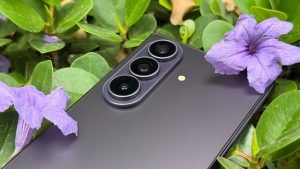
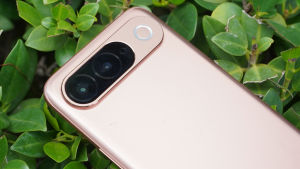
Samsung’s Galaxy FE series has developed a strong identity around a simple proposition: give buyers much of the premium Galaxy S-series experience without requiring them to spend flagship-level money.
That formula has worked particularly well for the Indian market. Over successive generations, the FE series has become an accessible entry point into Samsung’s premium Galaxy ecosystem, bringing together premium design, capable cameras, high-quality displays, flagship-class software and the latest Galaxy AI experiences at a lower price than the main Galaxy S-series flagships.
Samsung has built the FE formula around that balance. Samsung launched the Galaxy S26 FE, carrying that formula forward with a stronger focus on camera and video creation, Galaxy AI, performance and long-term usability.
At ₹79,999 for the 8GB RAM and 256GB storage variant, the Galaxy S26 FE brings flagship-level camera, display and Galaxy AI features to a competitive price point. Eligible buyers get an effective cost of ₹72,999 after ₹7,000 bank cashback. Alternatively, Samsung offers an exchange upgrade bonus of up to ₹8,000 or EMI options, including up to 30 months of no-cost EMI through select NBFC partners.
The value proposition can become even stronger during festive and sale periods, when discounts, bank offers and exchange benefits typically bring FE phones into more attractive price bands. This has traditionally made the FE series particularly relevant for buyers who want to move into the premium segment without spending considerably more on a flagship.
That positioning is even more relevant in 2026. Smartphone prices are moving upwards across segments, and several phones that previously occupied one price category are now moving into the next. For someone looking for a premium phone without going much beyond the ₹80,000 segment, getting the right balance of hardware, software and long-term support is becoming increasingly important.
Against this backdrop, the Galaxy S26 FE brings several experiences previously introduced on Samsung’s flagship Galaxy S and Galaxy Z devices. For existing Galaxy S23 FE and Galaxy S24 FE users, the changes span camera capabilities, performance, charging and long-term software support.
Samsung Galaxy S26 FE Key Specifications
| Specification | Samsung Galaxy S26 FE |
| Display size | 17.11cm (6.7-inch) |
| Display | FHD+ Dynamic AMOLED 2X, 2340 × 1080 |
| Refresh rate | 120Hz |
| Peak brightness | Up to 1,900 nits |
| Pixel density | 382ppi |
| Screen-to-body ratio | 89.69% |
| Processor | 3nm Exynos 2500 |
| CPU | Deca-core, clocked at up to 3.3GHz |
| GPU | Xclipse 950 (Galileo) |
| RAM | 8GB |
| Storage | 256GB |
| Storage type | UFS 4.0 |
| Cooling | Vapour chamber with a 7% larger graphite sheet |
| Wide camera | 50MP, f/1.8, OIS, 1/1.56-inch sensor |
| Ultrawide camera | 12MP, f/2.2, 1/3.2-inch sensor |
| Telephoto camera | 8MP, f/2.4, OIS, 3x optical zoom, 1/4.4-inch sensor and 1µm pixel size |
| Front camera | 12MP, f/2.2 |
| Rear video recording | Up to 8K at 30fps |
| Battery | 4,900mAh |
| Battery type | Lithium-ion |
| Charging | 45W wired charging, 15W wireless charging and Wireless PowerShare |
| Software | One UI 9 based on Android 17 |
| Software support | Seven generations of OS upgrades and seven years of security updates |
| Network and connectivity | 5G, LTE, Wi-Fi 6E, Wi-Fi Direct, Bluetooth 5.4 and NFC |
| Dimensions | 161.6 × 76.9 × 7.4mm |
| Weight | 193g |
| Build | Aluminium alloy frame; Gorilla Glass Victus+ on the front and back |
| Protection | IP68 dust and water resistance, tested for submersion in up to 1.5 metres of freshwater for up to 30 minutes |
| Fingerprint sensor | Optical in-display fingerprint sensor |
| Other sensors | Accelerometer, barometer, gyroscope, geomagnetic sensor, Hall sensor, light sensor and proximity sensor |
| Colours | Blueberry, Graphite and Pistachio |
Premium Design Remains an Important Part of the FE Formula
The FE proposition works only if the phone still looks and feels like it belongs to the Galaxy S family.
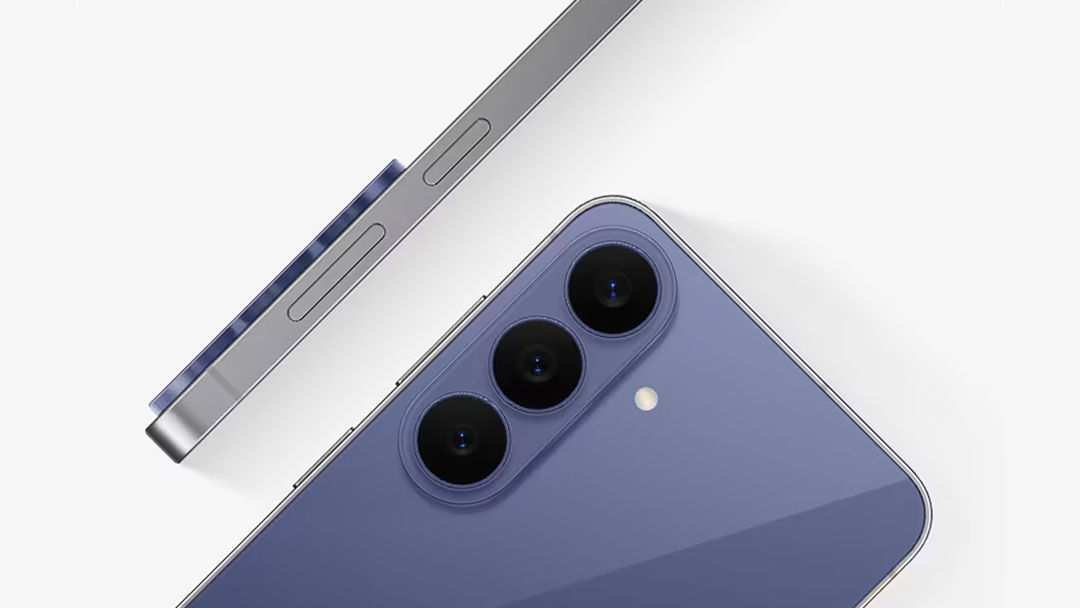
The Galaxy S26 FE adopts Samsung’s latest design language, including the redesigned camera island that visually brings it closer to the current Galaxy S series. The overall approach continues to be premium rather than making the FE feel like a conventional mid-range device.
The aluminium frame and Gorilla Glass Victus+ protection on the front and back further support that positioning. The phone also carries an IP68 rating based on laboratory testing for submersion in up to 1.5 metres of freshwater for up to 30 minutes.
At 7.4mm, the S26 FE also maintains a slim profile despite using a large 6.7-inch display. The new Blueberry, Graphite and Pistachio finishes add more choice, with Pistachio in particular giving the phone a more distinctive look in a segment where neutral colours remain common.
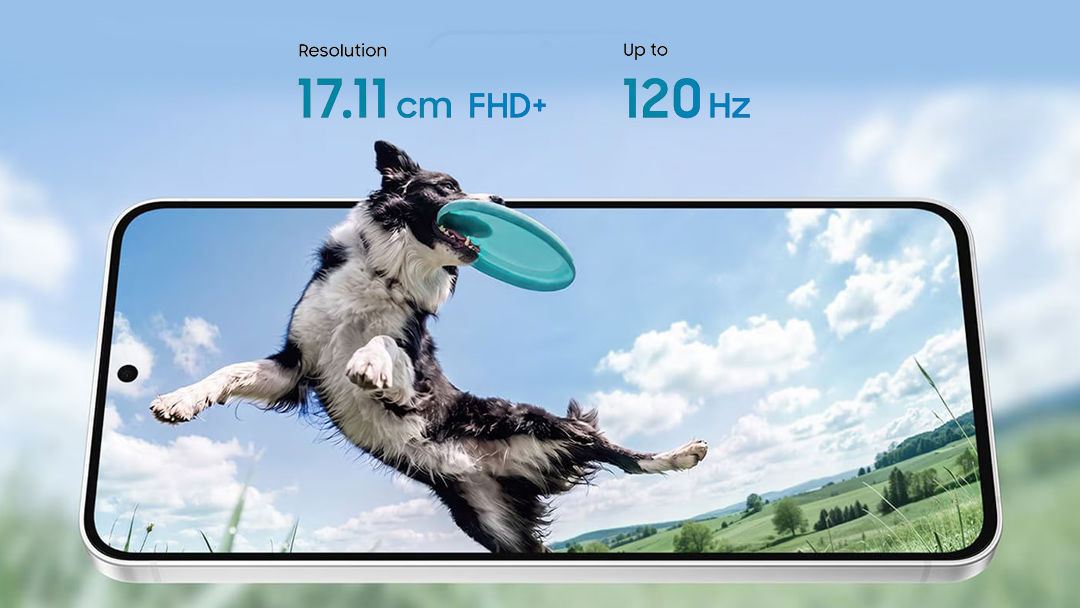
Up front, the Galaxy S26 FE gets a 17.11cm (6.7-inch) Dynamic AMOLED 2X display with FHD+ resolution, a 120Hz refresh rate and a pixel density of 382ppi. The display has an 89.69% screen-to-body ratio and can reach up to 1,900 nits of brightness. An optical in-display fingerprint sensor handles biometric authentication.
But design and display are only one part of the story. The more interesting changes are around the camera and what users can do with it.
The S26 FE Camera Is Increasingly About What You Can Do With It
The Galaxy S26 FE comes with a 50MP wide camera with OIS and a 1/1.56-inch sensor. It is joined by a 12MP ultrawide camera with a 1/3.2-inch sensor and an 8MP telephoto camera with OIS, 3x optical zoom, a 1/4.4-inch sensor and 1µm pixels. The 12MP wide-angle front camera helps fit more people into group selfies and also handles video calls.
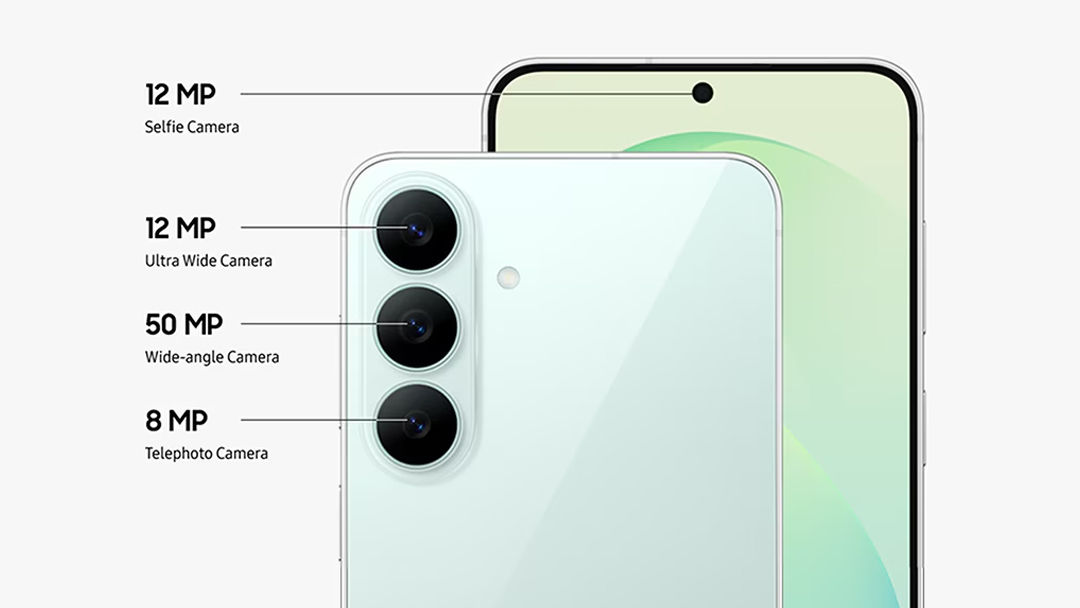
The camera hardware itself is not necessarily the biggest change this generation. Samsung’s stronger argument is the experience built around those cameras.



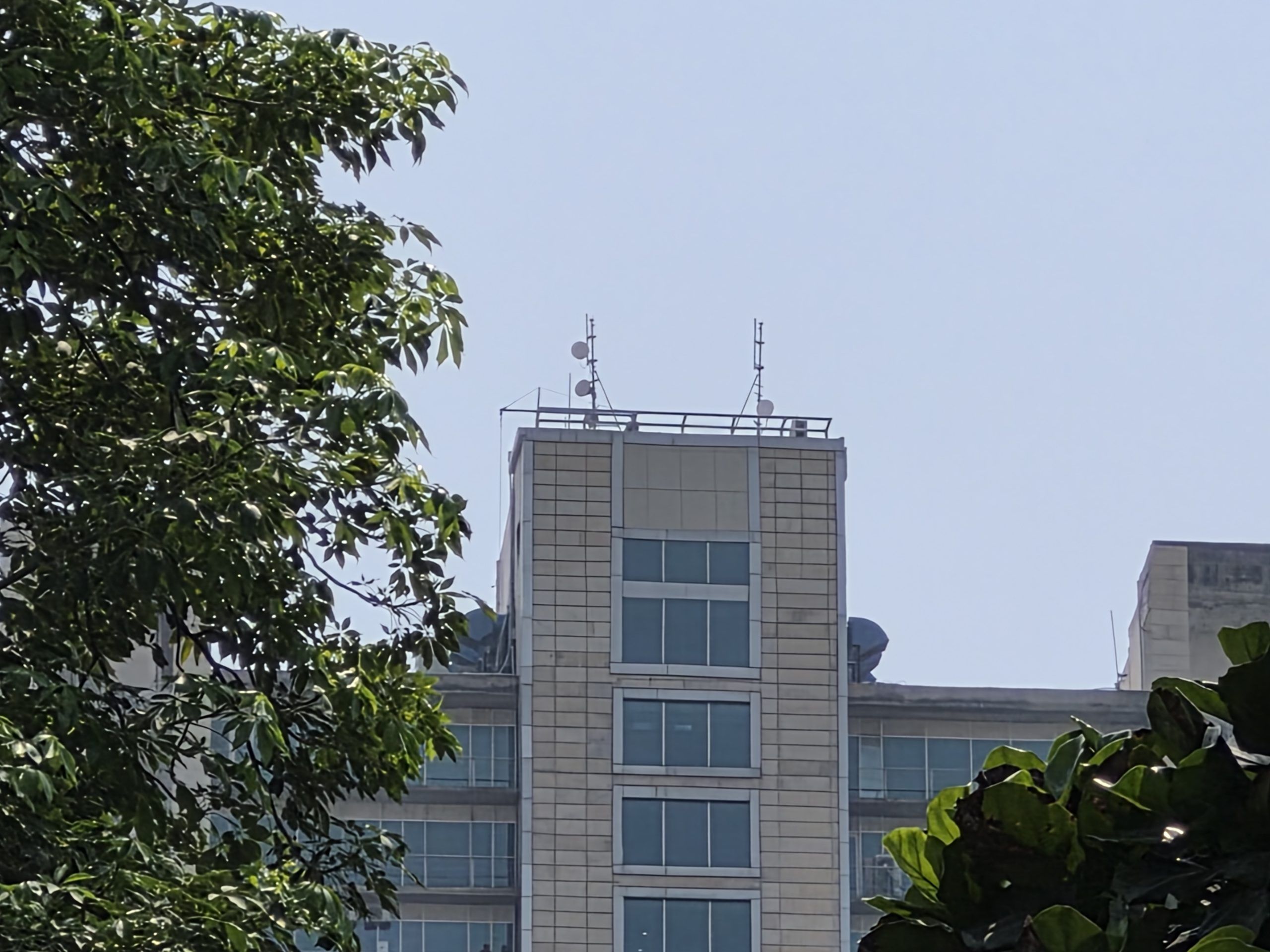
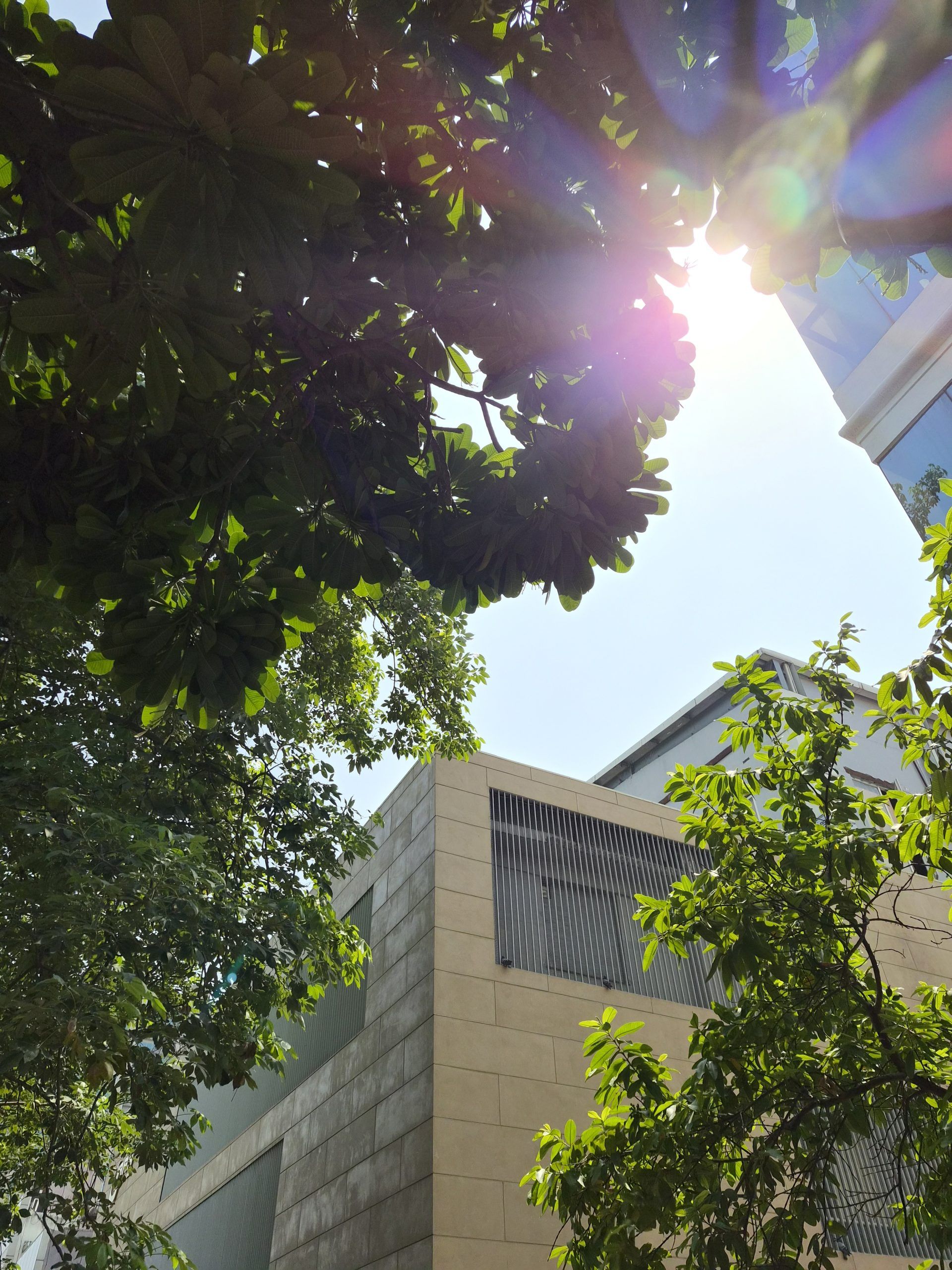
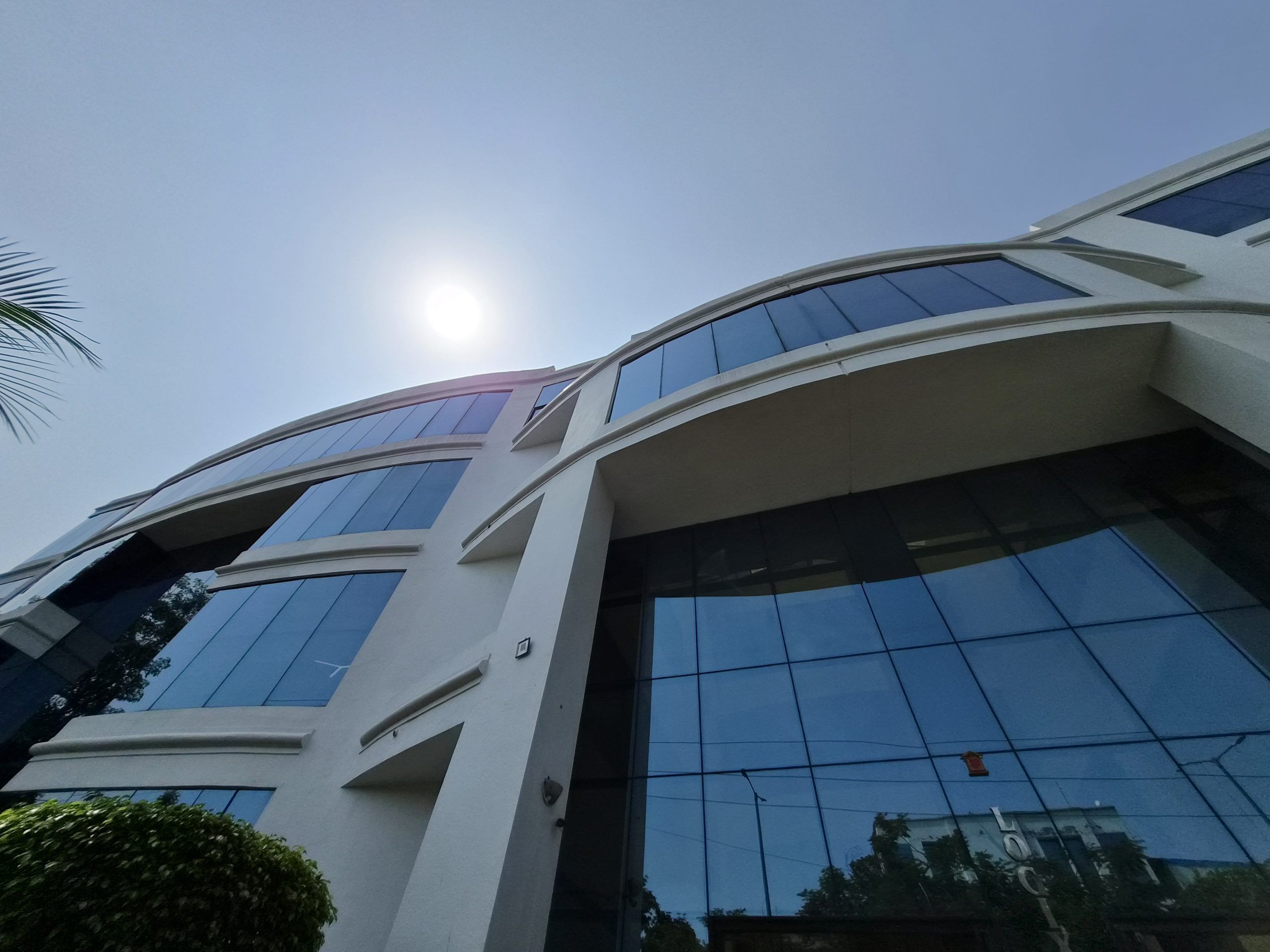

The S26 FE brings several camera and creator capabilities from Samsung’s flagship Galaxy portfolio, making the overall camera proposition more about practical shooting, editing and sharing than simply comparing megapixel numbers.
Horizontal Lock Makes Active Video Easier to Shoot
Consider recording a dance video, running alongside someone, or shooting while walking through a crowded place. The subject is moving, you are moving, and the phone naturally tilts while you try to keep everything framed.
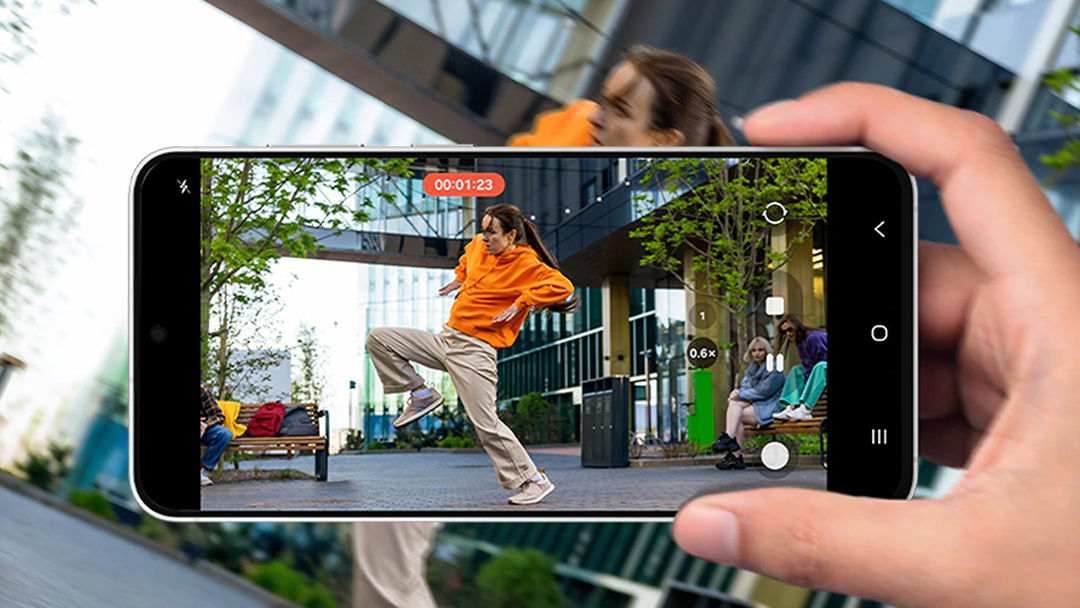
Super Steady with Horizontal Lock is designed for exactly this kind of situation.
The feature uses the phone’s motion sensors to understand the direction of gravity and automatically keep the horizon level, even as the device rotates. The implementation can compensate through a full 360-degree rotation, bringing the type of horizon correction usually associated with dedicated stabilisation equipment directly into the phone.
For people shooting Reels, Shorts, dance clips, running videos, travel content or children playing, the advantage is straightforward. Instead of concentrating on keeping both the subject and horizon perfectly aligned, the user can focus on framing the action.
For casual creators, it can also reduce the need for a separate smartphone gimbal in many situations. A dedicated gimbal will still provide more control, but having this level of stabilisation available directly from the phone makes spontaneous video creation considerably easier.
My FanCam Lets You Decide Who to Follow after Recording
My FanCam addresses another common video problem.
Suppose you are recording your child’s school performance, a dance routine or a concert. Normally, you have to decide during recording who to follow. If that person moves unexpectedly, you either lose them from the frame or spend the entire video trying to pan and zoom smoothly.
My FanCam lets you take a different approach.
You can record the wider scene first and make the decision afterwards. Once the clip is in Gallery, Galaxy AI identifies people in the video. You select the person you want to follow, choose the required aspect ratio, and My FanCam generates another version that keeps the selected person at the centre of the frame.
The original wide recording remains available.
That creates several practical use cases. Parents can record an entire school stage and later create a version focused on their child. A dance performance can be recorded once and reframed around a particular performer later. At a concert, users can capture the complete performance instead of constantly trying to follow the artist while recording.
It is a useful example of AI addressing something that is genuinely difficult to get right at the moment of capture.
ProVisual Engine, Nightography and Zoom Cover Everyday Photography
Most photographs will still be considerably more conventional.
People, pets, food, holidays, portraits and low-light scenes make up most smartphone photography, and this is where Samsung’s Nightography and zoom processing become important.
ProVisual Engine handles much of the processing between capturing the image and seeing the final photograph. It works on areas such as detail, colour, dynamic range and noise, reducing how much manual work is required from the user.
Nightography extends that approach to challenging lighting conditions, using computational processing to improve clarity and control noise when there is less light available.
The S26 FE’s 3x optical telephoto camera also adds useful flexibility. Apart from getting closer to subjects at concerts or sporting events, this focal length works well for portraits because it gives a more natural perspective than relying entirely on the main camera.
This is an important part of Samsung’s FE strategy. Buyers are not simply getting one capable primary camera. They are getting a more complete combination of ultrawide, main and telephoto perspectives, backed by Samsung’s camera-processing experience.
Photo Assist Makes Editing Part of the Camera Experience
The camera experience does not end after pressing the shutter.
Photo Assist lets users add or remove objects and change the background of a photo using AI-assisted editing tools. These options give users more control over the final image, whether they want to remove a distraction or give the scene a different look.
Natural-language editing makes that process even easier because users do not always need to find the correct editing control manually.
If an unwanted object appears in a photograph or the background does not suit the image, Photo Assist lets users make those changes after capture. Users can add or remove objects and change the background directly on the phone, without switching to a separate editing app.
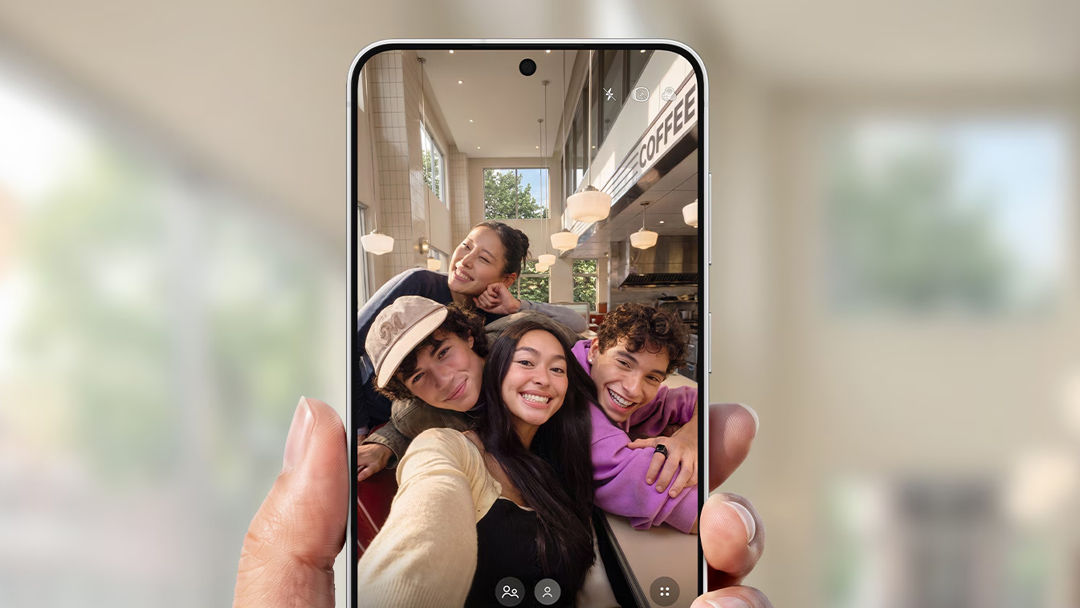
This is where bringing flagship Galaxy software to the FE series becomes particularly valuable. The hardware may sit below the main S-series flagships in some areas, but much of the software capability and everyday experience remains available.
Gemini Omni Expands What Creators Can Do After Capture
The S26 FE’s creator proposition also extends beyond conventional photo editing through Gemini Omni.
Gemini Omni can work across different types of media, including text, images, audio and video, allowing users to interact with creative content through natural-language instructions.
For someone creating content on the phone, that can mean starting with footage captured on the S26 FE and then using conversational instructions to modify or develop it further.
The overall workflow is what makes this useful. Samsung handles capture through tools such as Super Steady with Horizontal Lock and My FanCam. Photo Assist helps with editing, while Gemini extends that workflow further into generative creation.
Instead of treating these as separate AI features, they increasingly work as different parts of the same content-creation process.
Circle to Search Makes Visual Discovery Quicker
Circle to Search covers another increasingly common smartphone behaviour: seeing something and immediately wanting to know more about it.
If you see an outfit, pair of shoes, watch or another product you like in an image or video, you can circle it and search without leaving what you are viewing.
The “find the look” use case is particularly straightforward. Instead of taking a screenshot, opening another application and manually trying to describe what you saw, visual search reduces the number of steps between discovery and result.
These smaller conveniences are increasingly important to the overall software experience because they make things users already do faster and easier.
The 3nm Exynos 2500 Powers the Camera, AI and Gaming Experience
The Galaxy S26 FE is powered by the 3nm Exynos 2500, replacing the 4nm Exynos 2400 used by the Galaxy S25 FE. The India variant pairs the chipset with 8GB of RAM and 256GB of UFS 4.0 storage. The new chipset uses a deca-core CPU clocked at up to 3.3GHz and an Xclipse 950 GPU. Samsung claims the S26 FE delivers 11% faster CPU processing, 24% better GPU performance and 51% faster NPU performance than the S25 FE.
The gaming proposition is equally important.
Samsung has also equipped the phone with a vapour chamber and a graphite sheet that is 7% larger than the one used in the S25 FE to help manage heat during sustained workloads. Combined with the 120Hz Dynamic AMOLED display, the phone has a strong base for popular titles such as BGMI and Call of Duty Mobile, while heavier titles such as Genshin Impact will be useful for judging sustained performance. Actual frame rates, temperatures and throttling will require proper testing, so those conclusions belong in the full review rather than this feature.
4,900mAh Lithium-ion Battery and 45W Charging Support Its All-round Premium Positioning
The Samsung Galaxy S26 FE comes with a 4,900mAh lithium-ion battery, along with 45W wired and 15W wireless charging.
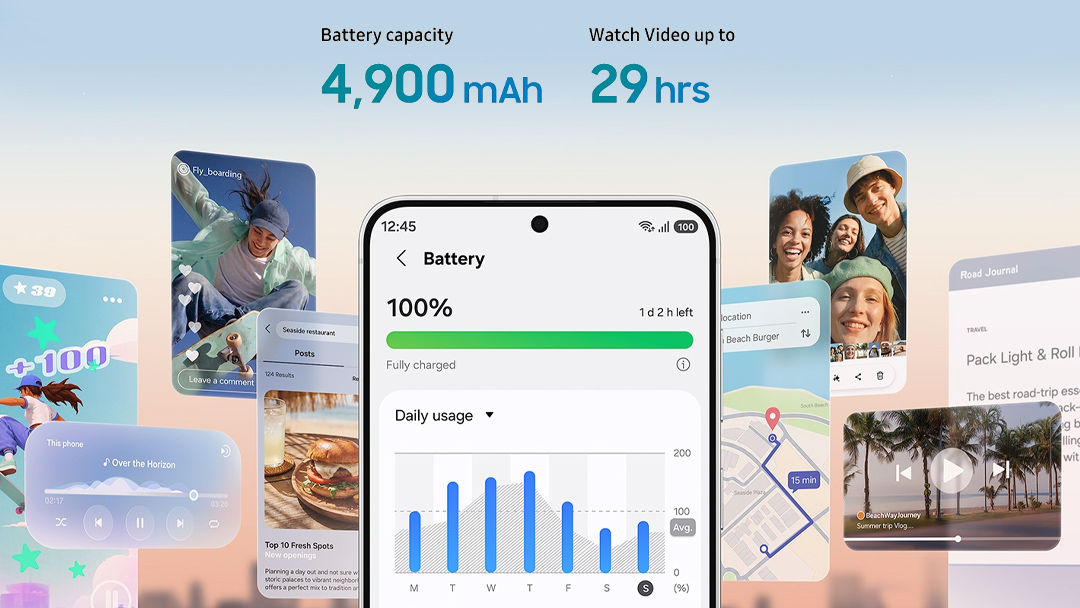
Those specifications are important because the phone is expected to handle several demanding workloads, including a high-refresh-rate display, cameras, video recording, gaming and AI features.
The objective is not simply to offer those capabilities, but to make them practical to use regularly.
Actual endurance will depend on display efficiency, processor behaviour and software optimisation, so battery life will also require real-world testing.
Galaxy AI Is Where the FE Gets Particularly Close to the Flagship S-Series Experience
Software has become one of the biggest strengths of Samsung’s FE proposition.
Samsung has increasingly brought its flagship Galaxy AI capabilities to FE devices rather than treating the software experience as another major point of differentiation between the FE and S series.
The S26 FE brings features including Now Nudge, Now Brief, Now Bar, Document Scanner and Gemini Live.
Now Nudge understands information displayed on screen and suggests useful next actions. If somebody asks for photographs from a recent trip, for example, it can help surface the relevant images. If an event or meeting comes up in a conversation, it can recognise that context and help move the information into Calendar.
Now Brief brings personalised information and reminders together through the day, while Now Bar makes relevant ongoing information easier to access.
Document Scanner is another practical addition. It can help clean up photographed documents, remove distractions from scans and organise multiple captured pages into a single PDF.
Gemini Live adds multimodal assistance through the camera and screen. Users can show Gemini something in front of them or share what is visible on the display and ask questions about it conversationally.
These may not all be headline features individually, but together they help the FE retain much of the software capability associated with Samsung’s more expensive Galaxy devices.
Google AI Pro Further Strengthens the AI and Creator Proposition
The Galaxy S26 FE includes a six-month Google AI Pro trial for eligible users, along with 5TB of cloud storage. For creators, that matters because the phone’s AI proposition is not limited to Samsung’s own camera and editing tools. Google’s more advanced Gemini capabilities become another part of the workflow for people who want to create, edit or work with different types of content directly from their phone.
This combination of Galaxy AI and Google’s AI ecosystem is an increasingly important part of Samsung’s premium smartphone proposition.
Against the iPhone 17e, the S26 FE Looks Like the More Balanced Package
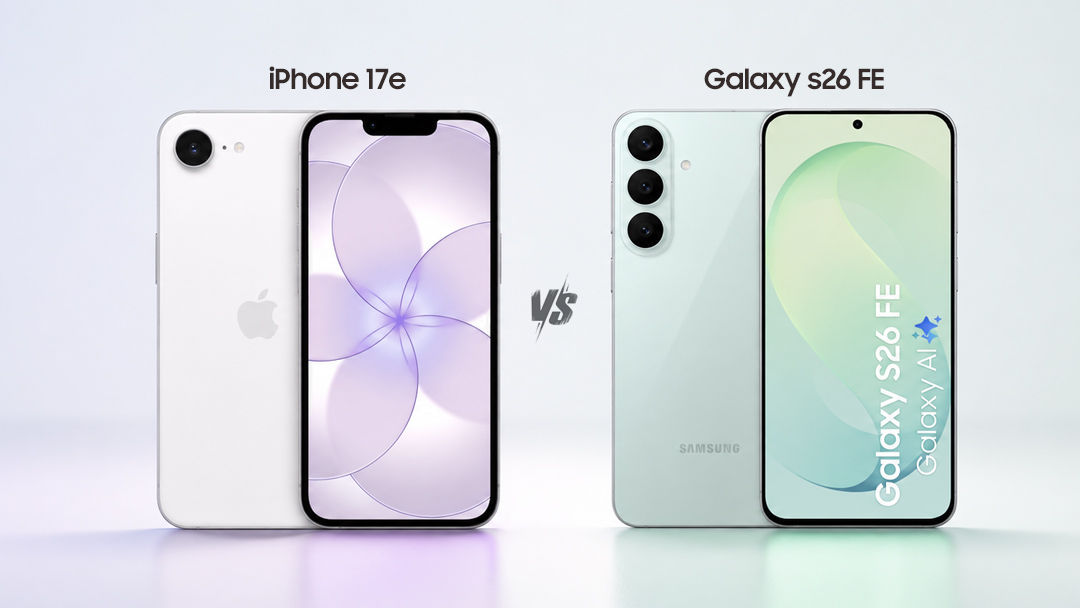
The Samsung Galaxy S26 FE’s broader appeal becomes clearer when it is compared with Apple’s iPhone 17e. The S26 FE is priced at ₹79,999 in India for 8GB + 256GB, while the 256GB iPhone 17e is priced at ₹79,900.
The iPhone 17e has some advantages, including Apple’s A19 processor, MagSafe and access to Apple’s ecosystem. However, the hardware differences become more noticeable when both phones are available at almost the same price. The value proposition looks a lot more convincing and in favour of the Samsung S26FE.
The iPhone 17e uses a single 48MP Fusion rear camera. Apple uses that sensor to provide a 2x optical-quality option, but there is no dedicated ultrawide camera or separate telephoto. The Galaxy S26 FE, in comparison, offers a 50MP wide camera, 12MP ultrawide and 8MP 3x telephoto camera. That gives Samsung more flexibility for group photographs, landscapes, portraits, travel and distant subjects.
The display comparison also shows how the S26FE has a better display at the same price point. The iPhone 17e comes with a 6.1-inch OLED display but misses out on the 120Hz ProMotion experience of the regular iPhone 17. The S26 FE uses a 6.7-inch 120Hz Dynamic AMOLED 2X display, offering both a larger screen and a higher refresh rate at the same price.
Samsung also offers a broad feature set around creation and AI. Horizontal Lock, My FanCam, ProVisual Engine, Nightography, Photo Assist, Circle to Search, Gemini and the wider Galaxy AI experience add to the camera and creator proposition. All of which deliver a software AI experience closer to the flagship Samsung Galaxy S16 Ultra.
The comparison becomes even more interesting against the regular iPhone 17. The iPhone 17 addresses many of the 17e’s compromises with a 120Hz ProMotion display and a more capable dual-camera system, but the 256GB model is now priced at ₹99,900 in India.
That creates a difference of nearly ₹20,000 compared with the 256GB Galaxy S26 FE. Samsung offers a 120Hz AMOLED display, three rear cameras including a dedicated 3x telephoto, creator-focused video features, Galaxy AI and seven generations of OS upgrades while remaining below ₹80,000.
For buyers looking at premium smartphones around this price, the S26 FE therefore offers more camera and display flexibility than the similarly priced iPhone 17e, while the regular iPhone 17 requires a considerably higher spend.
The S26 FE delivers a balanced flagship experience
The Samsung Galaxy S26 FE continues the FE formula by combining a flexible triple-camera system, a 120Hz AMOLED display, Galaxy AI and the Exynos 2500 chipset in a more accessible package than Samsung’s main Galaxy S-series flagships.
Tools such as My FanCam and Horizontal Lock expand its camera and video capabilities, while seven generations of OS upgrades and seven years of security updates add to its long-term usability.
Pricing also works in its favour against Apple. At ₹79,999 for 256GB, the S26 FE costs almost the same as the 256GB iPhone 17e while offering a 120Hz display, an ultrawide camera and a dedicated 3x telephoto. The 256GB iPhone 17, meanwhile, is priced at ₹99,900.
For buyers looking for a premium smartphone without moving close to the ₹1 lakh mark, the Galaxy S26 FE offers a balanced combination of cameras, display, AI features and long-term software support.
So if you are looking forward to upgrading your phone to the latest S26 FE, you can check out more here.