From building a value-driven electronics brand to expanding into global markets, Elista has quickly carved out its space in India's increasingly competitive appliance landscape, one that's seeing an accelerated shift toward local manufacturing, smart connectivity, and affordable innovation. Founded by Saket Gaurav, who also chairs the Dubai-based TeknoDome Group, Elista represents the new wave of Indian-led brands blending global design with domestic production. In this conversation with MySmartPrice, Gaurav discusses Elista's manufacturing push in Andhra Pradesh, how its strategy around first-time buyers in Tier 2 and rural markets is shaping product design, and what sets its smart TVs, air conditioners, and refrigerators apart in a market long dominated by Korean and Japanese majors. He also offers an inside view of what Indian consumers truly prioritise today, which includes value, reliability, and after-sales trust.
Q. You've now shifted smart TV manufacturing to India. What does that change mean for Elista?
We've moved all smart TV production to our factory in Andhra Pradesh. This means everything that was earlier sourced internationally is now being supplied domestically. Around 60% of our production is geared toward exports, while 40% goes to the Indian market. This shift will significantly improve our supply chain efficiency and cost structures.
Q. Elista operates in a space dominated by legacy Indian and Korean brands. How do you differentiate?
Our focus has always been on first-time buyers, especially in rural and Tier 2 markets. That's where we've seen the most traction. While overall AC sales this year have been subdued for many brands, we've sold almost twice as much as last year by targeting these first-time buyers.
Q. Apart from ACs, what other categories are driving growth for you in 2025?
ACs and smart TVs remain the key pillars. Our in-house manufacturing gives us better control over design and production for TVs, and we expect strong growth there. We also plan to launch updated models with software enhancements in time for the festive season.
Q. Despite a milder summer this year, your AC sales are up. What's driving that?
We take a conservative demand-planning approach. We plan for 80 when we expect 100. That way, demand always outpaces supply, and we end up hitting or surpassing our targets. It keeps us agile and grounded.
Q. What are the top factors that matter to your AC customers?
Energy savings are the biggest lever. Since cooling capacity is mostly standardized by compressor size, we focus on the efficiency angle. Another big differentiator for us is service. We spend time educating installers so that units are correctly set up, reducing service calls.
Q. What are the challenges and opportunities in serving rural vs. urban customers?
In rural markets, price and quality matter most. Our products are affordable yet meet high standards. In urban areas, service becomes non-negotiable. So we've built our approach around strong post-sale support. I personally make 10–15 cold calls a month to check service quality.
Q. Let's talk about smart TVs. What can we expect from the brand next?
We're gearing up to launch new models pre-Diwali. While hardware changes are minimal, we're focusing on a more intuitive user interface and software updates that improve recommendations and user flow.
Q. In refrigerators, what are the trends you're seeing?
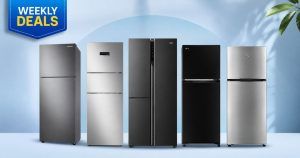
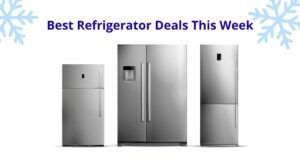
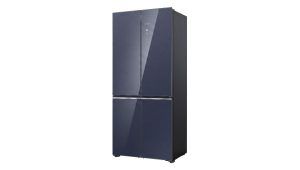
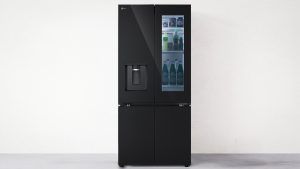
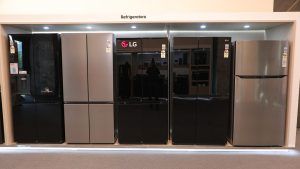
Urban buyers are shifting to multi-door and side-by-side models. In rural markets, people are moving from single-door to double-door units. Still, most of our current sales come from single-door models. Features like energy efficiency and design finish matter across the board.
Q. Do Indian consumers really care about advanced features like convertible modes, anti-bacterial coatings, etc.?
We find that practical features matter more. People want good air flow, long-lasting cooling, and low electricity bills. Some features like bottom freezers or water dispensers are still more relevant in metros.
Q. How important is online and quick commerce for your business today?
Quick commerce doesn't suit our category. You might get an AC in 10 minutes, but it's just a box unless someone installs it. We are still largely offline-focused. Online contributes around 5–7%, mostly from IT and accessories.
Q. What role do finance and EMI options play in your sales strategy?
They're crucial. Most buyers today prefer EMI plans. We've partnered with leading finance companies, and we actively offer these options in Tier 2 and Tier 3 cities.