Samsung has announced the 2025 software update for its Family Hub refrigerators, bringing smarter AI capabilities, a refreshed design, and stronger security features. The rollout will start in October for existing Family Hub owners, expanding the connected experience that has made Samsung a leader in the smart home appliance space.
The Family Hub series was first introduced at CES 2016 and marked a major shift in how refrigerators were perceived. Instead of just being a food storage unit, the Family Hub became a digital control centre for the modern home, equipped with a 21.5-inch touchscreen, internal cameras, and Samsung’s Bixby voice assistant. Over the years, it has evolved into a platform that helps manage groceries, sync family calendars, stream entertainment, and integrate with Samsung’s SmartThings ecosystem.
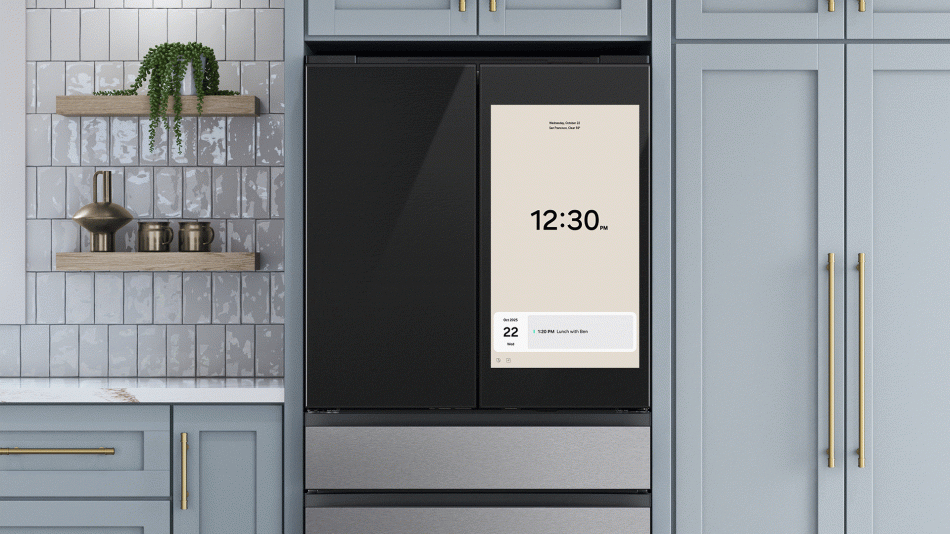
With the 2025 update, Samsung is focusing on creating a more unified experience across its devices. The refreshed One UI design, seen on the company’s latest Bespoke AI appliances, will now be available on Family Hub models, offering intuitive navigation and consistent visuals across Samsung’s ecosystem of TVs, smartphones, and appliances. Users will get easier access to features like Family Care, Pet Care, and Home Care, while the new Daily Board theme on the Cover screen will provide quick access to useful information at a glance.
The upgrade also improves AI Vision Inside technology, which enables the fridge to recognise a wider range of fresh produce and packaged foods. It can now identify up to 37 types of fruits and vegetables and 50 commonly used packaged items.
Another key improvement comes with Bixby’s new Voice ID capability, allowing the refrigerator to recognise who is speaking and tailor responses accordingly. Users can access their individual calendars, view personal photos, or even locate their misplaced Galaxy phones. The update also improves accessibility by syncing the fridge’s display with a user’s phone’s visual settings, like grayscale or colour inversion. It introduces a quicker way to activate Bixby with a double-tap.
Samsung is also piloting a new widget for select Cover screen themes that displays day-to-day information such as weather, news, and calendar events, along with curated advertisements. Users can turn these ads off in settings or dismiss specific ones directly from the screen.
Security has been further strengthened with the inclusion of Knox Matrix, Samsung’s blockchain-based security platform. It allows connected appliances to monitor each other’s security status and extends protection to Wi-Fi-enabled Samsung refrigerators, washers, and dryers from 2024 onwards. Users can also access a new Knox Security Dashboard to monitor the real-time security status of connected devices.
The update will be available via an on-screen notification on compatible Family Hub refrigerators, and users can install it after accepting the terms.
The India Story
In India, Samsung has been a key driver of smart appliance adoption, leading the premium refrigerator market with its connected and AI-integrated models. Smart features are increasingly becoming standard in Indian homes, as customers these days want the convenience of internet-connected devices. Companies like LG and Whirlpool are also introducing advanced smart refrigerators with internal cameras and app-based controls, intensifying the competition.
The Indian refrigerator market continues to expand, fuelled by growing urbanisation, changing lifestyles, and rising disposable incomes. While premium smart models appeal to tech-savvy consumers, energy efficiency, cooling performance, and reliability remain top priorities across all segments.
When buying a new refrigerator, Indian consumers should look for practical smart features such as internal cameras for remote monitoring, voice assistant integration, and app-based temperature management. Features like large touchscreen interfaces and personalised profiles are good additions, but not essential. Entertainment apps, though eye-catching, may not add much everyday value. Ultimately, factors such as energy efficiency, capacity, cooling technology, and after-sales service should carry more weight in the decision-making process.