Intel has announced a range of new data centre technologies at Computex 2026, including the Intel Xeon 6+ processor family, Intel Ethernet E835 networking solutions, and fresh details about its next-generation AI accelerator, codenamed Crescent Island. The company says the announcements are aimed at supporting the growing shift towards agentic AI workloads, where orchestration, data movement, and large-scale inference are becoming increasingly important across modern infrastructure.
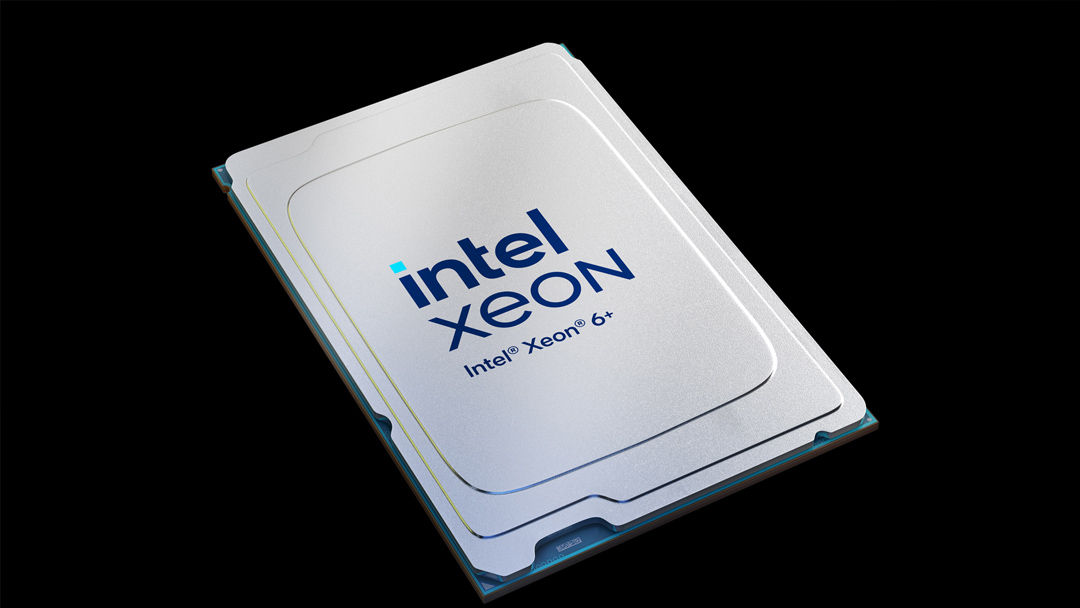
Xeon 6+ Brings Up to 288 Efficient-Cores on Intel 18A
The new Intel Xeon 6+ processors extend the Xeon 6 family and are built on Intel's 18A process technology, marking the first time the node has been used in a data centre CPU. Intel says the processors are designed for cloud-native applications, AI inference, telecom workloads, and large-scale infrastructure deployments.
The flagship configuration offers up to 288 Efficient-cores, with Intel claiming up to 2.5x higher performance compared to the previous generation and up to 45 percent better performance per thread per watt versus competing solutions. The processors also feature 12-channel DDR5 memory support, 96 PCIe Gen 5 lanes, CXL connectivity, Intel Application Energy Telemetry (AET), and built-in security technologies including Intel SGX and Intel TDX.
Intel says the platform can deliver up to 9:1 server consolidation compared to 2nd Gen Xeon platforms, potentially helping enterprises reduce both rack space and operational costs.
Ethernet E835 Targets AI and Cloud Networking
Alongside the new processors, Intel expanded its 800 Series Ethernet portfolio with the Intel Ethernet E835 controllers and network adapters.
The E835 supports networking speeds ranging from 10GbE to 200GbE, with configurations including 2x25GbE, 4x25GbE, 2x100GbE, and 1x200GbE. Intel claims its E835-CQDA2 adapter delivers up to 1.9x better performance per watt than NVIDIA ConnectX-6 DX and up to 1.4x better efficiency than Broadcom's BCM957508-P2100G.
The platform also supports RDMA technologies such as RoCEv2 and iWARP, Dynamic Device Personalisation for packet processing optimisation, Hardware Root of Trust security, and a lifecycle support commitment of more than 10 years. Intel says the solution is already supported by ecosystem partners including Cisco, Dell, HPE, Lenovo, and Supermicro.
Crescent Island GPU Designed for Large AI Models
Intel also shared additional technical details about Crescent Island, its next-generation data centre GPU built on the Xe 3P architecture.
The accelerator is equipped with up to 480GB of LPDDR5x memory and features a 350W air-cooled PCIe design. Intel says the large memory pool is designed to support token-intensive AI workloads while reducing deployment costs and improving efficiency.
Crescent Island supports data formats ranging from FP4 and MXFP4 to FP64 and is designed to work with Intel's open AI software stack. The company also highlighted compatibility with its Arc Pro ecosystem, allowing developers to build and validate workloads before deploying them on future Crescent Island hardware.
New Xeon 6300 Option for Entry Servers
Intel also announced a new 12-core addition to the Xeon 6300 family, expanding the entry-server lineup beyond eight cores for the first time. The processor is available immediately through OEM partners and remains compatible with existing platform designs, allowing small and medium-sized businesses to upgrade without changing infrastructure.
Intel Positions CPUs at the Centre of Agentic AI
The broader message behind Intel's Computex announcements is clear. While much of the AI industry conversation remains focused on GPUs, Intel is making the case that CPUs remain critical as the control layer for AI infrastructure.
The company argues that as AI systems become more agentic, challenges increasingly shift from raw compute to workload orchestration, concurrency management, memory access, and network traffic handling. That is where Intel believes Xeon processors can continue to play a central role.
The launch is also notable because it represents one of Intel's first major data centre products built on its 18A process technology. If the company can successfully scale production and deliver the performance improvements it is claiming, Xeon 6+ could become an important milestone in Intel's effort to regain momentum in the data centre market.
At the same time, the Ethernet E835 and Crescent Island announcements show that Intel is attempting to build a more complete AI infrastructure portfolio rather than competing solely on CPUs. Whether that broader strategy can help it gain ground against NVIDIA, AMD, and Broadcom will become clearer as these products move from announcements to large-scale deployments.