I recently attended the launch of Ai+ Smartphone’s Nova Series, and while the company introduced a full range of devices across smartphones, wearables, and audio, one product clearly defined the direction of the event – The Nova Flip.
Priced at ₹29,999, it brings the foldable form factor into a segment that has largely remained out of reach for most buyers. In a lineup filled with multiple devices, this is the one that feels like a deliberate market move rather than just another addition.
The company also claimed that it has crossed one million users within its first year, setting the context for this expansion into a broader ecosystem.
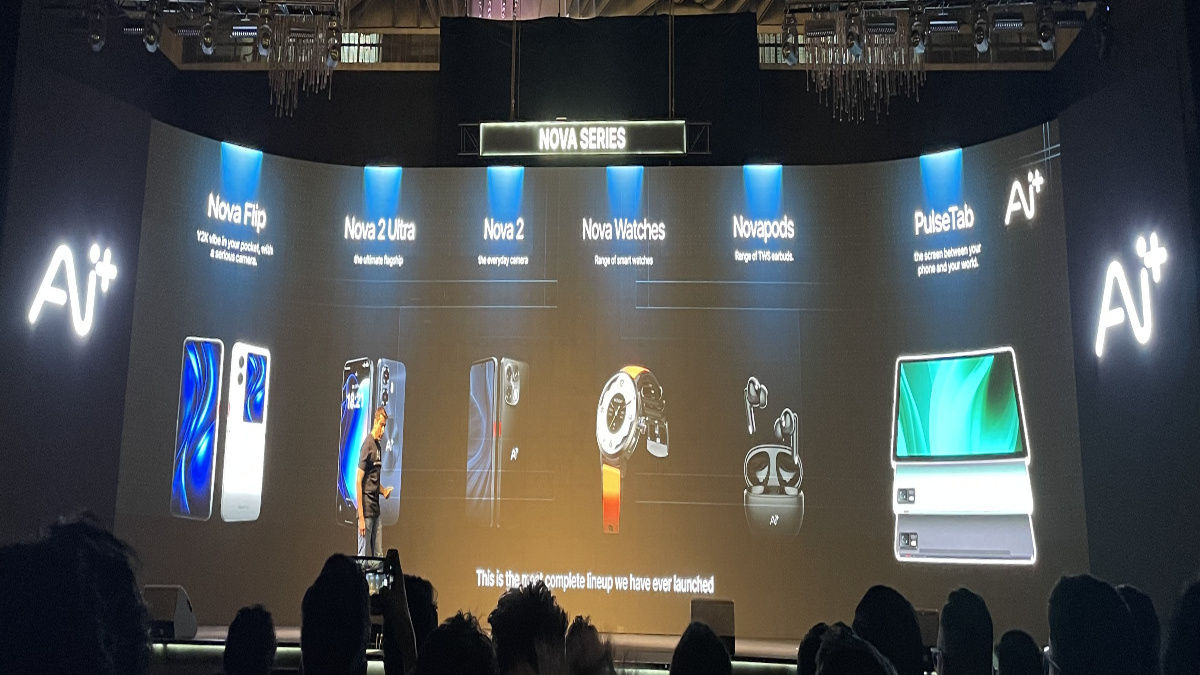
Nova Series and the Budget Battleground
The Nova Series forms the backbone of the lineup, with the Nova 2 and Nova 2 Ultra targeting the lower and mid-budget segments.
The Nova 2 focuses on everyday usability with a 50MP camera and a 6000mAh battery, while the Nova 2 Ultra adds a Dimensity 7400 chipset, OIS-enabled camera, and additional performance tuning. Both devices run on Android 16 with NxtQuantum OS, which the company positions around simplicity and privacy.
On paper, the approach is familiar. Strong battery numbers, high refresh rate displays, and competitive pricing are now standard expectations in this segment. The challenge here is less about features and more about consistency, especially in software optimisation and long-term performance.
Nova Flip and the shift
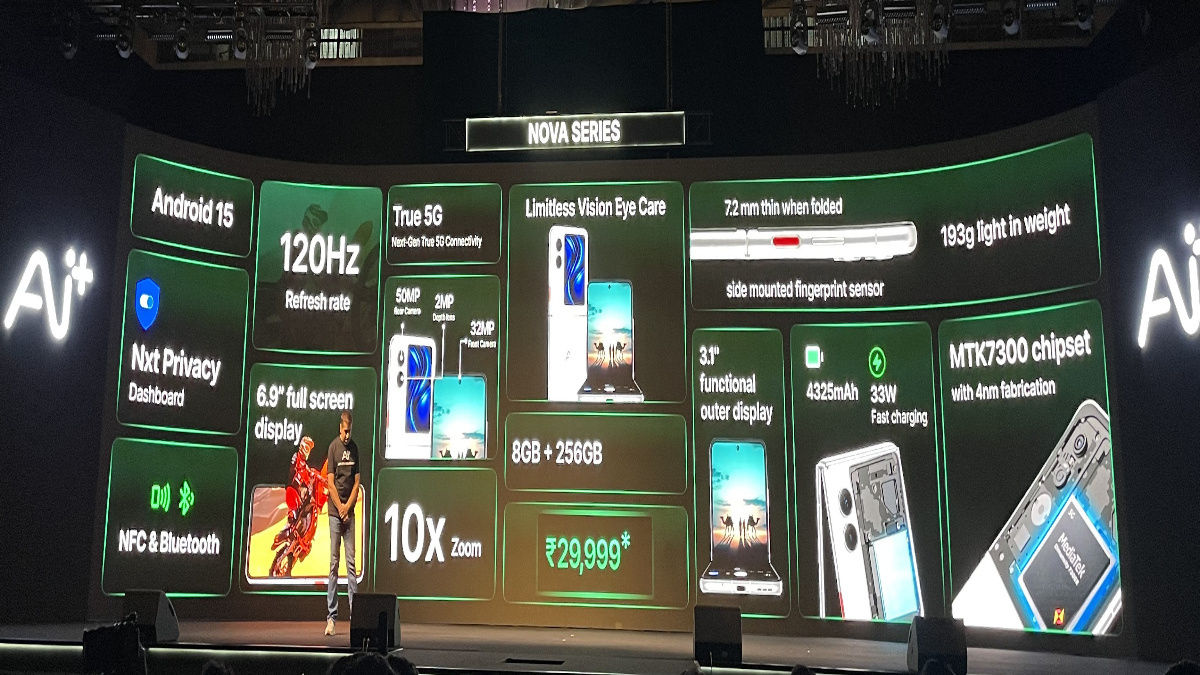
The Nova Flip is not trying to compete with flagship foldables on raw specifications. Instead, it shifts the conversation toward accessibility.
With a 6.9-inch AMOLED inner display, a functional outer screen, and a design that leans into the familiarity of flip phones, the device is positioned as an entry point rather than an aspirational upgrade.
That distinction matters. Foldables have spent years positioned as premium showcases, technologically impressive but commercially limited. By bringing the price down to ₹29,999, Ai+ Smartphones is effectively testing whether the appeal of the form factor can extend beyond early adopters.
If it works, this is less about one product and more about resetting expectations around what foldables should cost.
Expanding Into Tablets and Accessories

The ecosystem push includes PulseTab, priced at ₹9,999, along with a range of earbuds and smartwatches. On the surface, this is about building a connected experience. In practice, it is also about increasing touchpoints with users.
Products like NovaPods Air and NovaPod Beats sit in highly competitive categories where differentiation is minimal, and pricing plays a major role. The RotateCam 4G smartwatch, with its built-in rotating camera and standalone connectivity, is one of the more unconventional additions, though its real-world use case remains to be seen.
Wearables and the Parenting Angle
The Nova Watch Kids 4G is one of the more interesting ideas in the lineup. With features like video calling, geo-fencing, and an integrated camera, it is clearly positioned as a tool for parental monitoring and communication.
But the execution feels less assured. The regular watches come across as functional rather than refined, the kind of devices that look fine from a distance but don't quite hold up under closer inspection. The kids' watch, while practical in intent, leans heavily into a very familiar, almost generic build quality that prioritises utility over design confidence.
It's a contrast that becomes hard to ignore, especially when placed alongside the phones.
Software and Ecosystem Ambition
Ai+ Smartphone is building this ecosystem around NxtQuantum OS and a planned "super app" layer. The idea is straightforward: one interface to manage multiple devices and interactions.
It's a direction the broader industry has been moving toward for years. The difference lies in execution. Building an ecosystem is less about launching multiple products and more about how seamlessly those products work together over time.
Pricing and Availability
- Nova 2 starts at ₹8,999
- Nova 2 Ultra starts at ₹14,999
- Nova Flip is priced at ₹29,999 (launching in May)
PulseTab is priced at ₹9,999, while other ecosystem products range between ₹899 and ₹4,999, with sales beginning in May.
When Pricing Becomes the Product
The most interesting part of this launch is not the ecosystem. It's the pricing strategy behind the Nova Flip.
At ₹29,999, Ai+ Smartphone is not just introducing a device; it is questioning whether foldables still need to be premium products. If the experience holds up even reasonably well, this could be the point where flip phones move from niche curiosity to a viable mainstream option. The rest of the lineup feels more conventional. Solid, competitive, but largely expected.
The Flip is different. It's a calculated risk.
And in a market where most devices compete on iteration, that alone makes it the one product from this launch that actually attempts to change the conversation.