At the India Mobile Congress 2025, MediaTek showcased the capabilities of its flagship Dimensity 9500 chipset, first detailed in MySmartPrice’s earlier coverage. The company demonstrated how the platform’s AI and graphics improvements can redefine on-device computing for next-generation smartphones.
During the showcase, MediaTek ran a series of live demos, including image style conversion, 4K text-to-image generation, and real-time 3D rendering using Unreal Engine’s Nanite and MegaLights technologies.
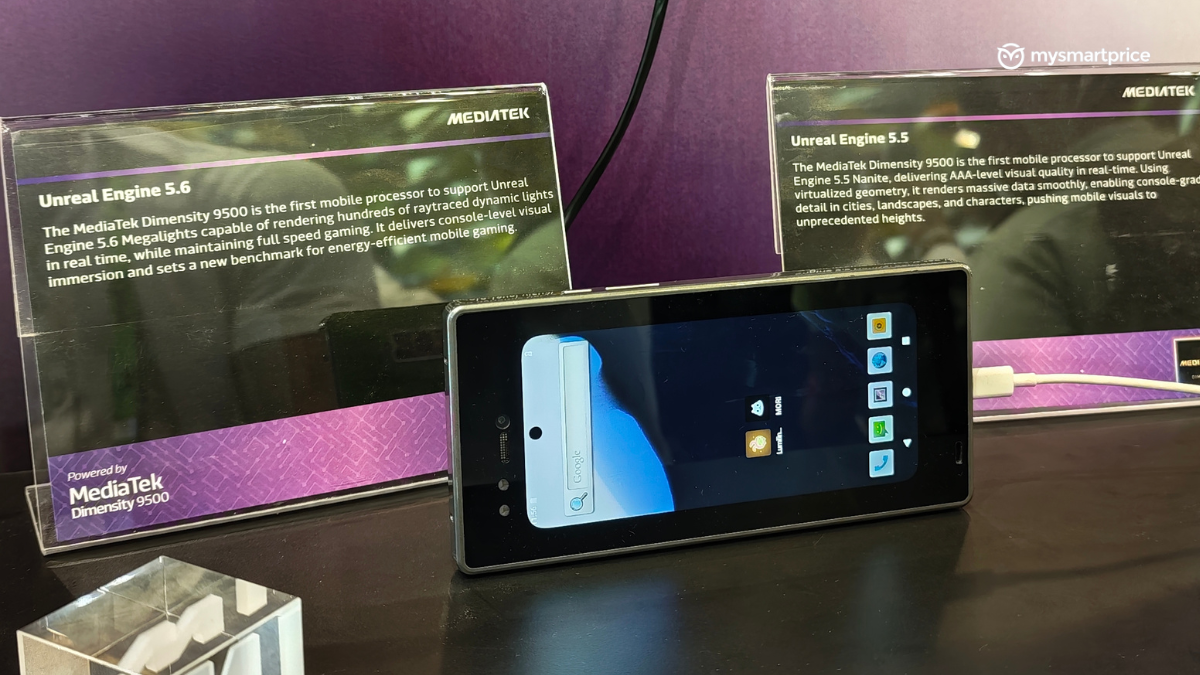
These examples illustrated how the Dimensity 9500’s architecture can deliver high-fidelity visuals and faster inference directly on a mobile form factor.
The chipset continues to highlight MediaTek’s advances in compute-in-memory design, where AI data is processed within memory arrays to reduce latency and energy use. The integrated Generative AI Engine 2.0 and NPU 990 enable complex workloads such as 4K image synthesis and large-model token processing at improved speed and lower power consumption.
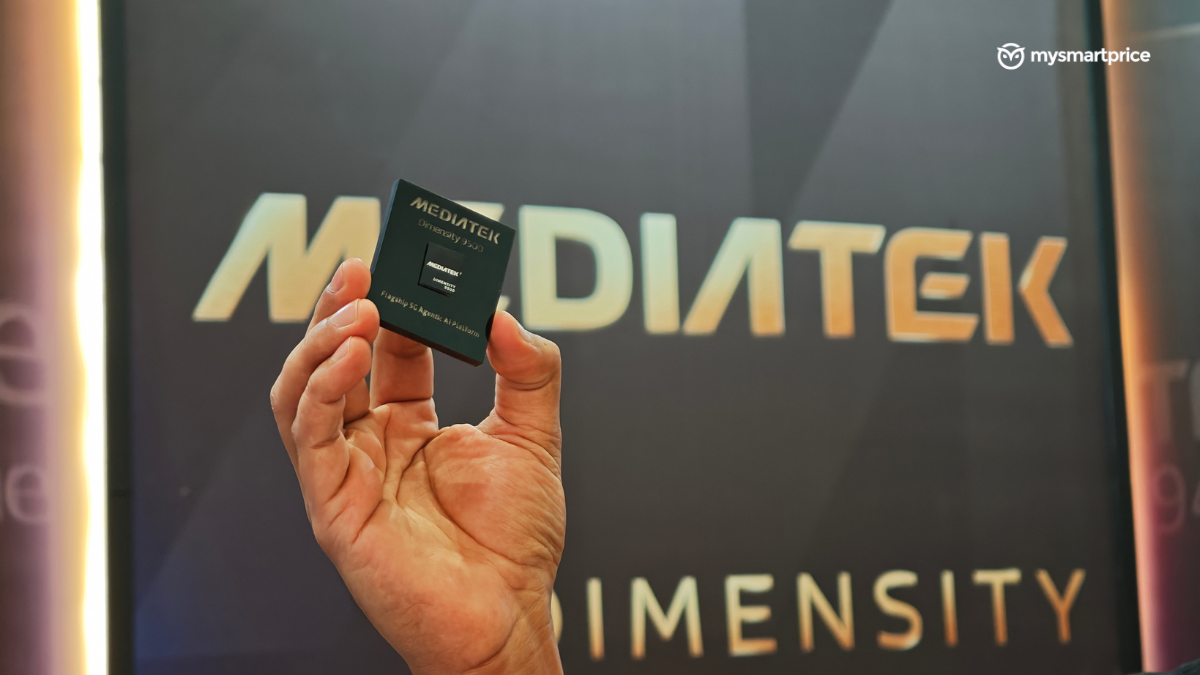
MediaTek also reiterated its collaboration with TSMC on the enhanced N2P process node, aimed at future flagship SoCs with better transistor density and efficiency. This partnership underlines the company’s long-term roadmap toward higher performance and lower energy draw across devices.
The Dimensity 9500 will be seen in the upcoming OPPO Find X9 series, marking one of the earliest commercial integrations of the chipset. OPPO’s implementation, featuring its in-house Trinity Engine, is designed to optimize computing and power management for sustained real-world performance.
At IMC, MediaTek positioned the chipset as a reflection of its broader strategy around AI-driven computing, advanced imaging, and localized innovation. With compute-in-memory efficiency, refined GPU capabilities, and continued collaboration with manufacturing partners, the company is emphasizing both performance and sustainability in its next wave of mobile platforms.