After teasing for months, OnePlus has finally launched its brand-new OnePlus 15. Undoubtedly, this smartphone is a feature-studded product with all the hallmarks of being a trendsetter in the ultra-premium range.
However, amid rising component costs, the real question is whether OnePlus has prioritised gimmicks to make its flagship device tantalising at the expense of core aspects. The impact of soaring component prices has already become evident in the OnePlus 15’s price. It will be sold at Rs 72,999, a Rs 3,000 increase from the launch price of the OnePlus 13.
So, what’s packed inside the OnePlus 15 for that price? Let’s start with the star of the show: performance. At the heart of this OnePlus flagship lies the Snapdragon 8 Elite Gen 5 SoC, which is honestly a pinnacle of smartphone processors.
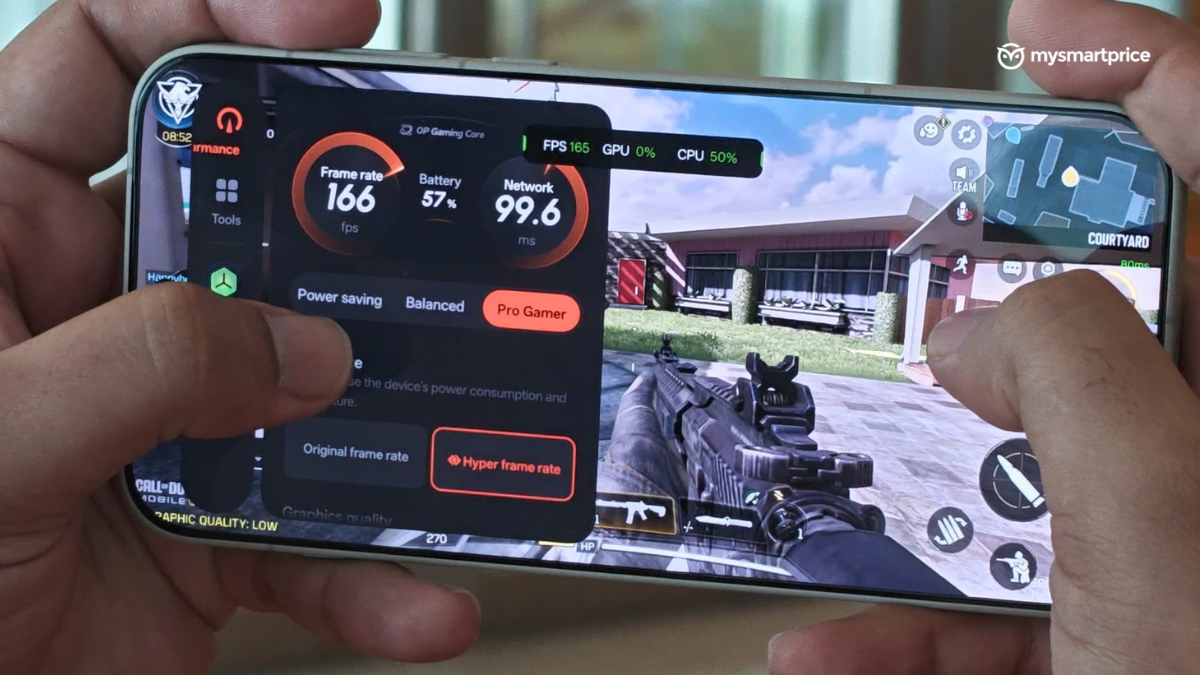
To begin with, it brings a significant boost to Ray Tracing, offering graphics that feel close to Xbox or PS5, along with compatibility for Unreal Engine 5. Its AI capabilities allow large language models to operate directly on the phone, making tasks like summarising text, editing photos, and generating code almost instantaneous, even offline. On top of that, the Agentic AI feature adapts to your routines and can autonomously handle simple actions within apps. Apart from this, it is armed with up to 16GB LPDDR5X Ultra+ RAM and 512GB UFS 4.1 storage.
However, this is just the beginning, as the OnePlus 15 leverages its latest Performance Tri-chip to deliver a never-before-seen gaming experience. We have already discussed this impressive innovation in detail, which you can check out here. That said, for those who want the essentials at a glance, here’s a quick summary. This configuration elevates gaming performance, sharpens touch responsiveness with a 3200Hz sampling rate, and optimises connectivity for a smoother, more fluid experience.
What’s interesting about the OnePlus 15 is that it houses a rather smaller vapour chamber compared to the OnePlus 13, measuring 5,731mm2 to be exact. For those unaware, the OnePlus 13 relies on a 9,925mm2 vapour chamber to maintain a cool temperature for an extended period. I assume OnePlus has optimised the OnePlus 15’s system to allocate a heavy workload to the performance tri-chip smartly, whenever it senses a temperature rise. In turn, it would help keep the temperature stable, despite the smaller size of its vapour chamber. However, a real-world test will help us determine how effectively this smaller vapour chamber manages heat under sustained gaming and heavy multitasking.
Display is where the OnePlus 15 also tries to turn everyone’s head. It has a 6.78-inch OLED display with a 1.5K resolution. However, what’s truly special about its screen is that its refresh rate has jumped from 120Hz in the OnePlus 13 to 165Hz, which also utilises LTPO technology. While the number appears too big, even trained eyes struggle to distinguish between the two.
After discussing the screen, the next significant upgrade worth noting is the battery, as the OnePlus 15 now packs a 7,300mAh silicon-carbon battery. It is 1,300mAh more than what the OnePlus 13 had offered, which is 6,000mAh to be exact.
Looking back at the OnePlus 13, we found it could easily provide around eight hours of screen-on time with moderate use, including scrolling through social media, binge-watching hour-long shows, and playing a few rounds of battle royale.
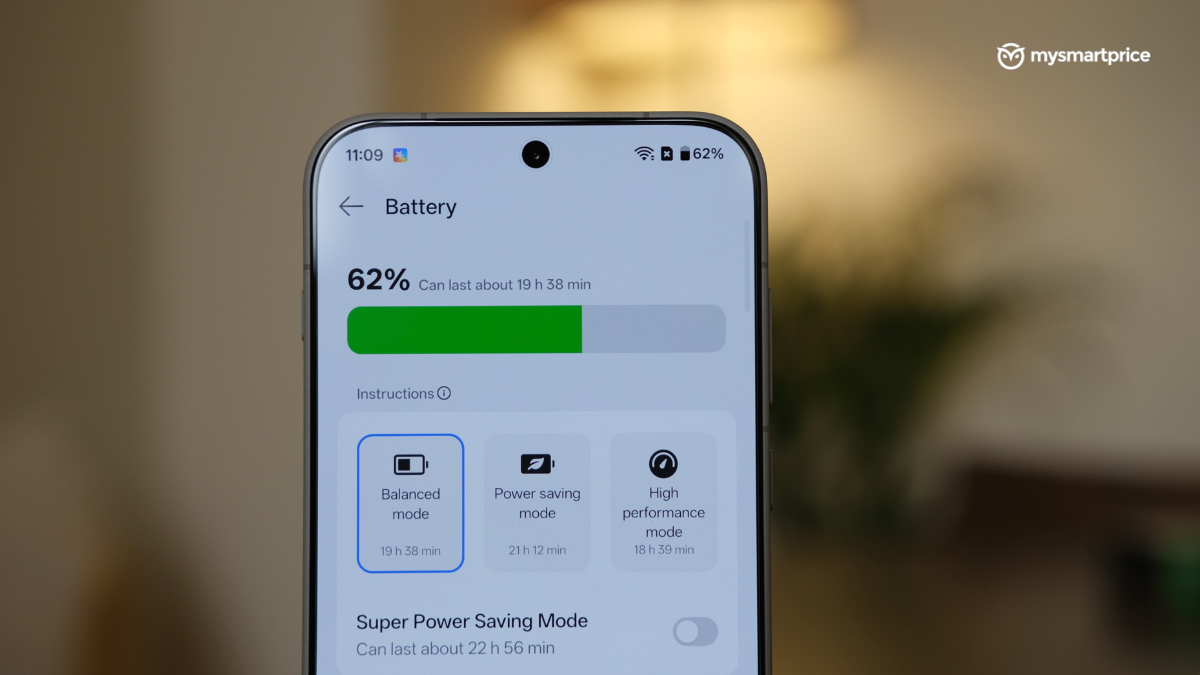
If OnePlus achieves similar optimisation with the OnePlus 15, the battery could comfortably last through three days or more under typical usage. We will thoroughly evaluate it to determine its standing, so stay tuned to MySmartPrice for updates on this revelation. On the charging side, the OnePlus 15 is expected to support 120W SUPERVOOC wired charging and 50W AIRVOOC wireless charging.
However, it’s time to finally talk about an aspect of the OnePlus 15 that OnePlus has mostly kept quiet about: the cameras. First, let’s address the elephant in the room. Earlier, I mentioned rising component costs and their impact. This is where the cost factor becomes apparent, as the camera hardware and sensors feel balanced between performance and price.
The primary camera on the OnePlus 15 is a 50-megapixel Sony IMX906 sensor with an f/1.8 aperture and OIS. This is slightly narrower than the f/1.6 aperture on the OnePlus 13. The telephoto module has been upgraded to a 50-megapixel Samsung S5KJN5 sensor with 3.5X optical zoom. Its f/2.8 aperture is tighter compared to the f/2.6 on the previous flagship. The ultra-wide snapper remains a 50-megapixel sensor with an f/2.0 aperture, but the field of view is slightly narrower.
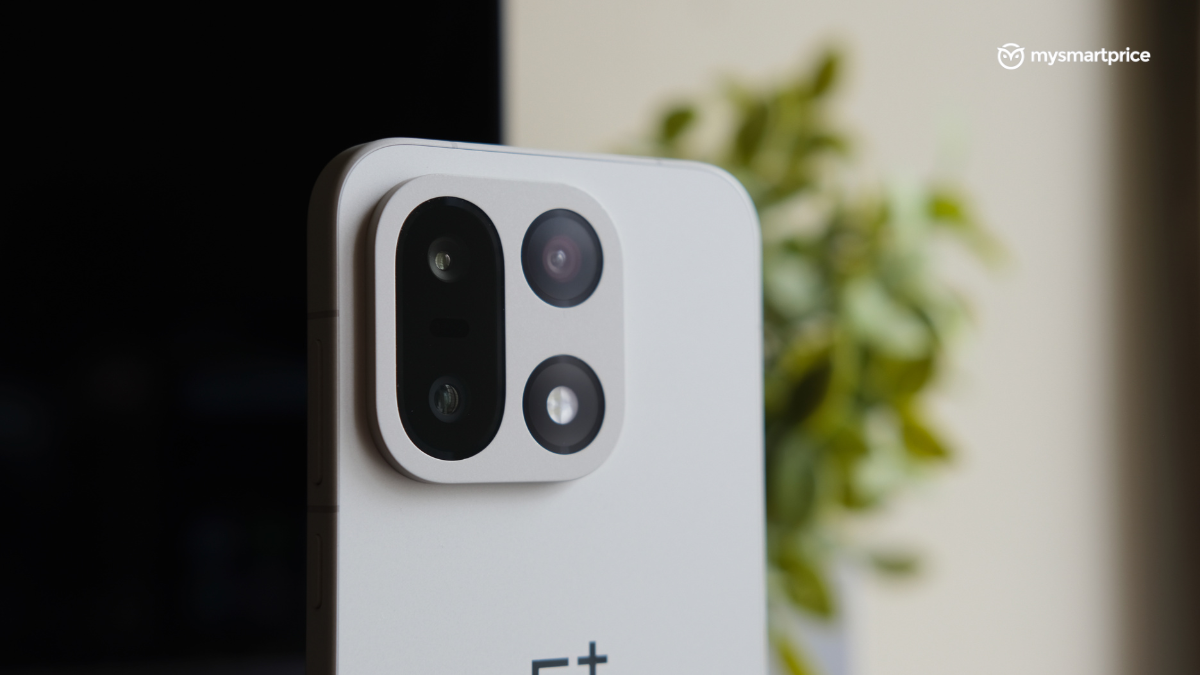
OnePlus has ended its collaboration with Hasselblad. Instead, it introduced its own DetailMax imaging engine with the OnePlus 15. The brand has likely tuned the cameras and engine to capture maximum detail, balance colours naturally, and deliver a strong overall imaging experience despite the narrower apertures. However, a real-world test will be needed to see how these cameras perform in different lighting conditions and daily use.
With imaging out of the way, let’s explore the software that powers the OnePlus 15. It runs on OxygenOS 16, which is based on Android 16. The software is designed to feel intuitive and effortless. OnePlus has emphasised smooth transitions, a bright and airy interface with subtle glowing accents, and AI-driven features that are both functional and easy to navigate.
OnePlus 15 vs The Next Big Thing
At a glance, the OnePlus 15 appears to lean more towards being a performance-centric phone, rather than having a well-rounded approach we saw in the OnePlus 13. In turn, it is poised to compete with the upcoming iQOO 15. The iQOO 15 is expected to drift slightly away from its performance-oriented image and instead focus on providing a holistic experience. Based on their specifications, the OnePlus 15 and iQOO 15 appear evenly matched in a few key areas, including performance and cameras. Both are powered by the Snapdragon 8 Elite Gen 5 SoC and house a 50-megapixel triple camera array.
However, the OnePlus 15 pulls ahead of the iQOO 15 in both battery and screen refresh rate. The iQOO 15’s 7,000mAh battery feels slightly smaller next to the OnePlus flagship. Additionally, the OnePlus 15 offers a faster 165Hz refresh rate, while the iQOO 15 tops out at 144Hz.
That said, the iQOO 15 has yet to be officially launched, so its pricing remains unclear. Additionally, this comparison is purely based on specifications. It would be too early to judge which smartphone ultimately delivers a better overall experience. Real-world usage, software optimisations, and camera performance may lead to very different results once both devices are available.
All said and done, the OnePlus 15 clearly demonstrates that the brand is aiming high in the ultra-premium segment. With top-tier performance, a vibrant display, a massive battery, and a capable camera setup, it shows that OnePlus is committed to delivering a flagship experience worth its price. While real-world testing will reveal its true strengths, there’s no denying the excitement it brings. For fans and tech enthusiasts alike, the OnePlus 15 promises an impressive combination of innovation, style, and power.