The Redmi Note series has spent years trying to be the phone that gives you a little bit of everything. The Note 17, however, feels like Redmi has finally decided that it doesn’t need to do that.
Redmi Note 17
Rs 27,999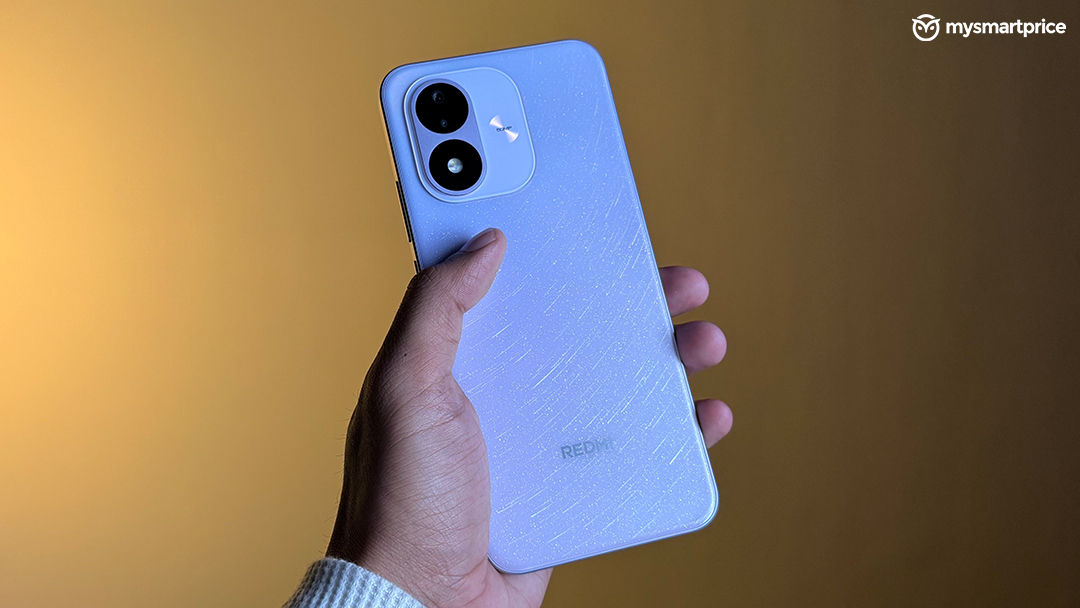
What Is Good?
- Excellent 8,000mAh battery
- Good everyday performance for regular apps
- Useful reverse wired charging and IR blaster
- Strong thermal management
What Is Bad?
- Snapdragon 4 Gen 4 is relatively weak for the price
- No ultrawide camera
- Video recording limited to 1080p at 30fps
- Single bottom-firing speaker instead of stereo speakers
Instead, this phone has a rather simple philosophy: give people a big screen, a huge battery and software that they can keep using for years. Everything else is secondary. That becomes apparent pretty quickly when you look at the specifications. There’s a nearly seven-inch AMOLED display running at 120Hz, an 8,000mAh battery, and a promise of four Android OS upgrades with six years of security updates. But powering all of this is the Snapdragon 4 Gen 4, and the camera setup is about as straightforward as it gets.
So the Note 17 is not trying to be the fastest phone you can buy around this price. It is not trying to be the best camera phone either. It’s trying to be the phone that keeps going. And after using it for a while, I think that distinction is important.
Design
There is nothing particularly experimental about the Redmi Note 17’s design, and honestly, I don’t think there needs to be. It’s a fairly large phone, and you notice that immediately. At around 225 grams and 8.4mm thick, this is not something I would describe as compact. But considering Redmi has managed to fit an 8,000mAh battery and a 6.99-inch display inside, the size is hardly surprising.
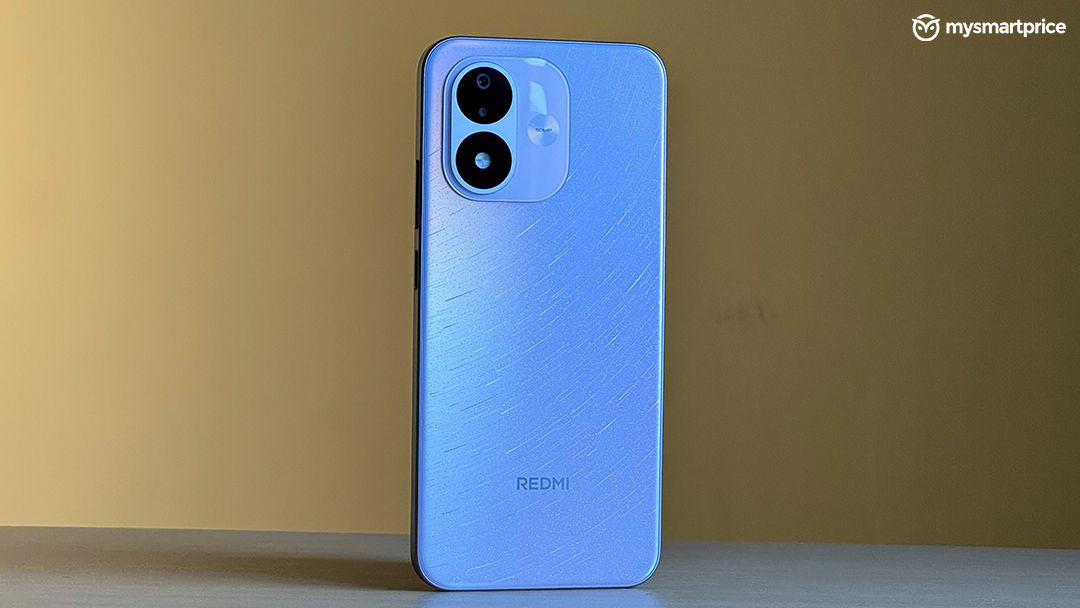
The matte back is a good decision. It keeps fingerprints under control and gives the phone a more understated appearance, which I personally prefer over glossy finishes that look great for about five minutes.
The build itself feels reassuringly solid, with Gorilla Glass 7i protecting the front and an IP65 rating adding some protection against dust and water. Nothing about the phone feels particularly cheap, although you are constantly reminded that this is a large device. And that’s really the story with the design that is not meant to turn heads but be practical.
Display
The first thing I would point someone to in Note 17 is the display.
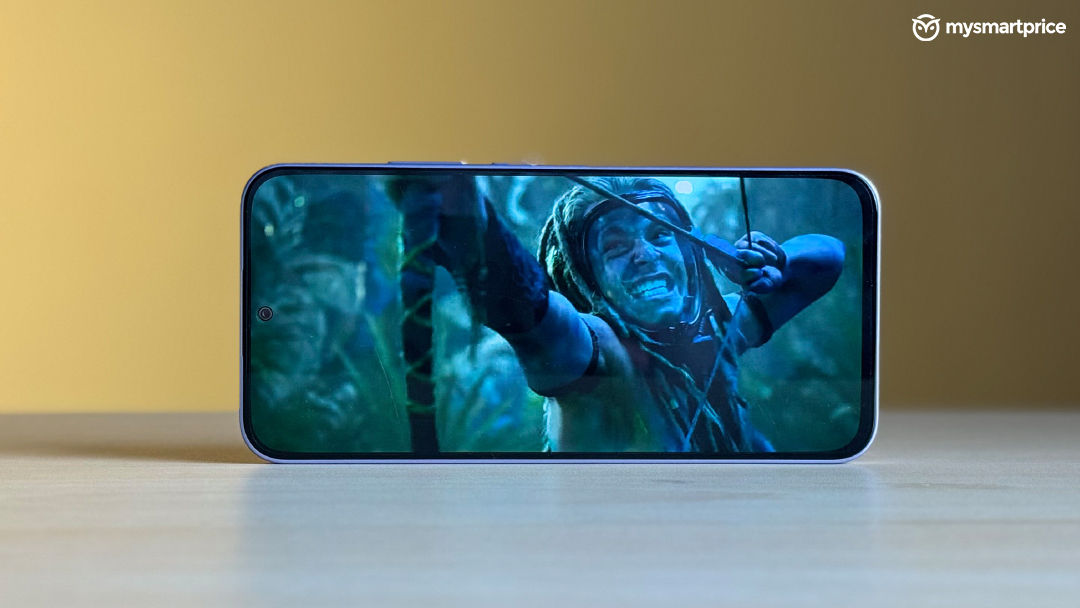
A 6.99-inch FHD+ AMOLED panel running at 120Hz is a very nice combination for a phone whose primary purpose is everyday use. The screen is large enough to make watching videos genuinely enjoyable, and the AMOLED panel gives you the contrast and deep blacks you would expect.
The 120Hz refresh rate helps too. Scrolling through Instagram, browsing Chrome, or simply moving around HyperOS feels considerably smoother than it would on a conventional 60Hz panel. We measured around 889 nits during our testing, while Redmi claims up to 1,800 nits of peak brightness. Outdoor visibility is therefore quite decent, although I wouldn’t buy this phone specifically for its brightness numbers.
There is one odd limitation, though. YouTube tops out at 1080p and doesn’t offer HDR playback. That’s not a problem with the physical panel itself, but rather a limitation associated with the chipset. Widevine L1 is supported, so supported OTT services can still stream in Full HD. And this is an important distinction because the display is arguably better than the processor underneath it.
Performance
The Snapdragon 4 Gen 4 tells you almost everything you need to know about this phone.
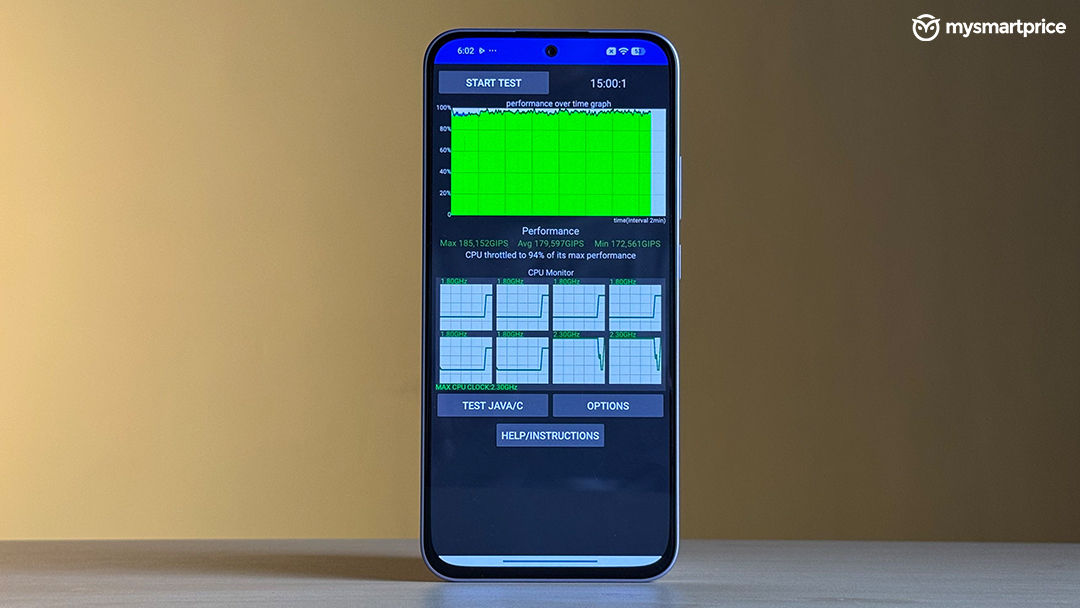
In our testing, the Redmi Note 17 scored 618,785 on AnTuTu, with Geekbench 6 scores of 950 single-core and 2,322 multi-core. PCMark Work returned 11,446. None of these numbers are particularly exciting for a phone at this price, but that’s also not the point.
Use Note 17 normally, and it does what you would expect. WhatsApp, Instagram, Chrome, YouTube, Spotify and the usual collection of everyday apps work without any major problems. The 120Hz display makes the phone feel faster than it actually is, which is a useful advantage. But start asking it to do too much at once, and you can feel the limitations. There are occasional moments of hesitation when switching between heavier applications so I won’t recommend it to someone who regularly edits video, plays demanding games, or simply wants the fastest possible performance.
Redmi has fitted a 10,416mm² vapour chamber, and that does help the phone maintain performance without excessive thermal behaviour. But good cooling can’t completely change the character of the Snapdragon 4 Gen 4. This is an efficient chip first, a powerful one second. The Note 17 can obviously play games. The question is how much you’re willing to compromise. That’s perfectly acceptable for someone who plays occasionally. The problem is that the 120Hz AMOLED display creates expectations that the chipset can’t really fulfil.
You see 120Hz on the box and naturally expect the phone to make use of it everywhere. It doesn’t. The good news is that the large vapour chamber helps with sustained thermals, and our 3DMark Wild Life stability result was around 99%. So the phone is not falling apart under sustained graphics workloads. It’s simply not particularly powerful to begin with. If gaming is something you do occasionally, there’s nothing to worry about. If it’s one of the main reasons you are buying the phone, this one may disappoint you a bit.
The Realme P4 Power is the better choice if you want a phone that can comfortably handle heavier applications and gaming. The Moto Edge 70 Fusion sits even further up the performance ladder and feels much closer to what you can expect from a proper upper-mid-range phone. The Redmi is the one I pick if your idea of performance is opening your usual apps every day and not thinking about the processor at all. That sounds like a criticism, but it is not. It’s just important to understand what Redmi has prioritised. The Note 17 isn’t trying to win the performance race.
Camera
The camera setup tells a similar story.
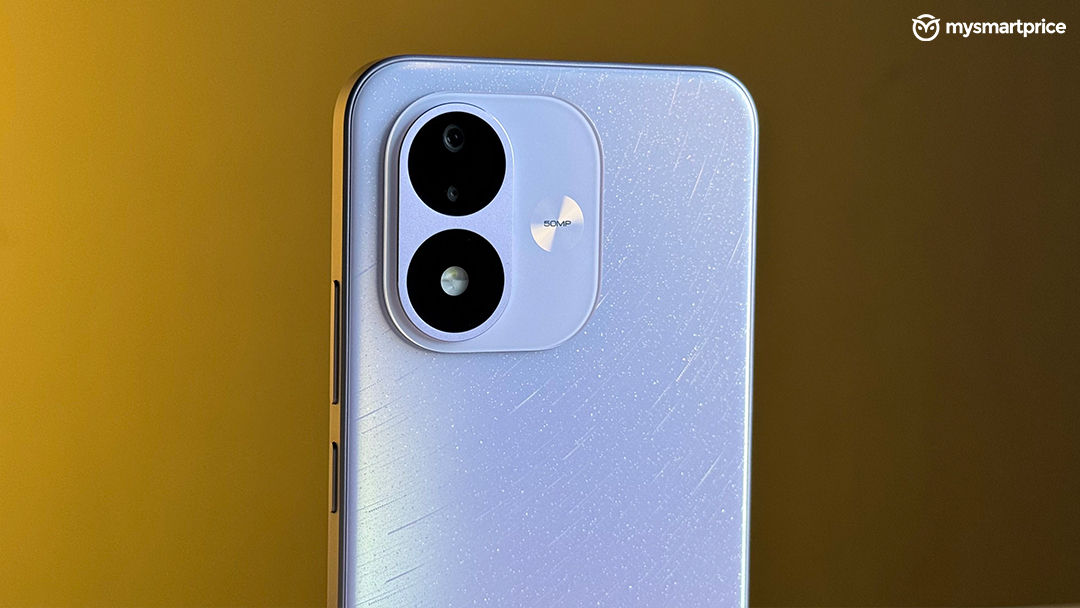
There’s a 50-megapixel primary camera on the back and an 8-megapixel selfie camera, with no ultrawide. In good daylight, the main camera is actually quite pleasant. Colours are generally natural, exposure is sensible, and there’s enough detail for the kind of photographs most people take every day. Portraits are also reasonably convincing, particularly with skin tones and subject separation.


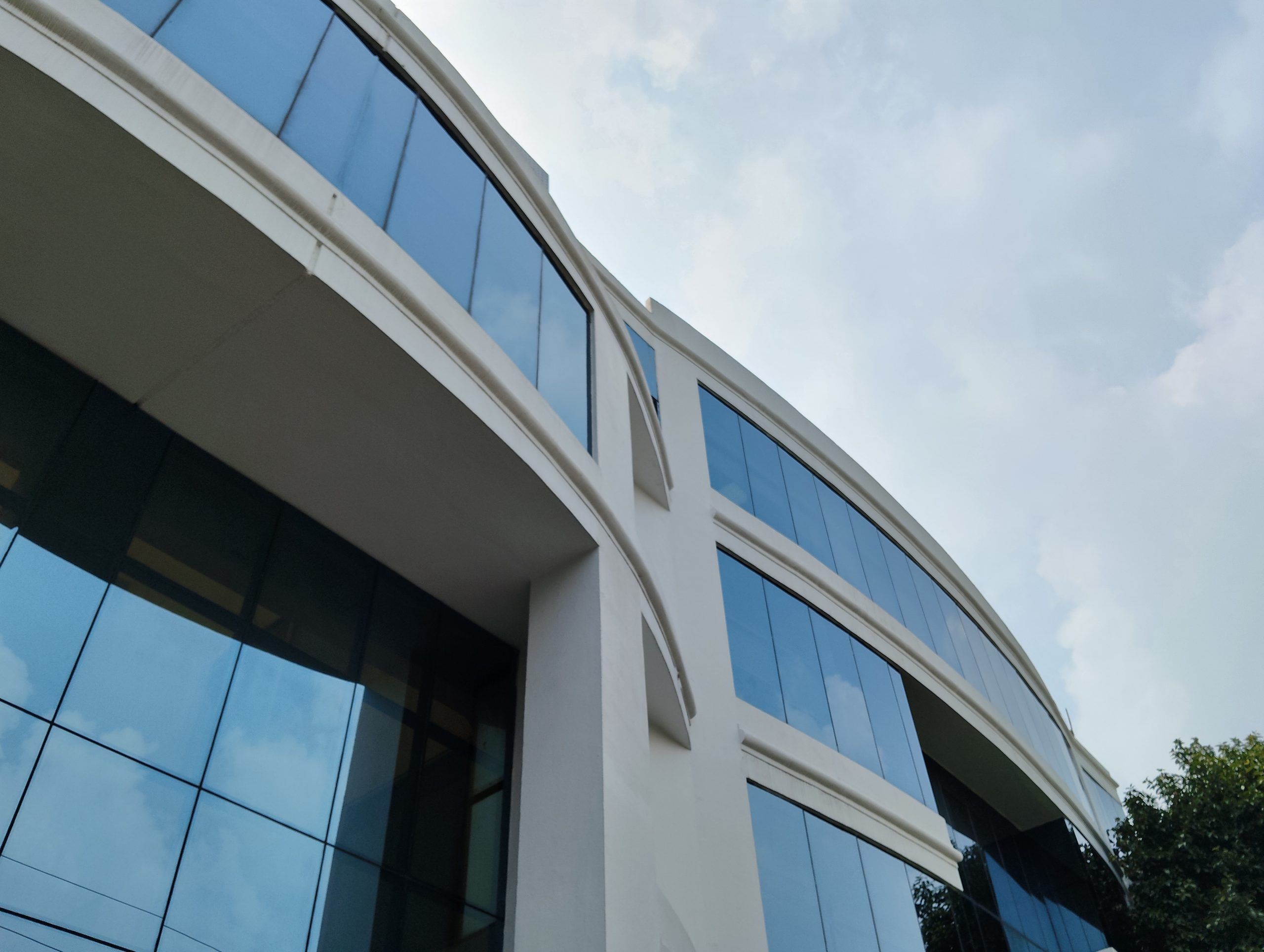
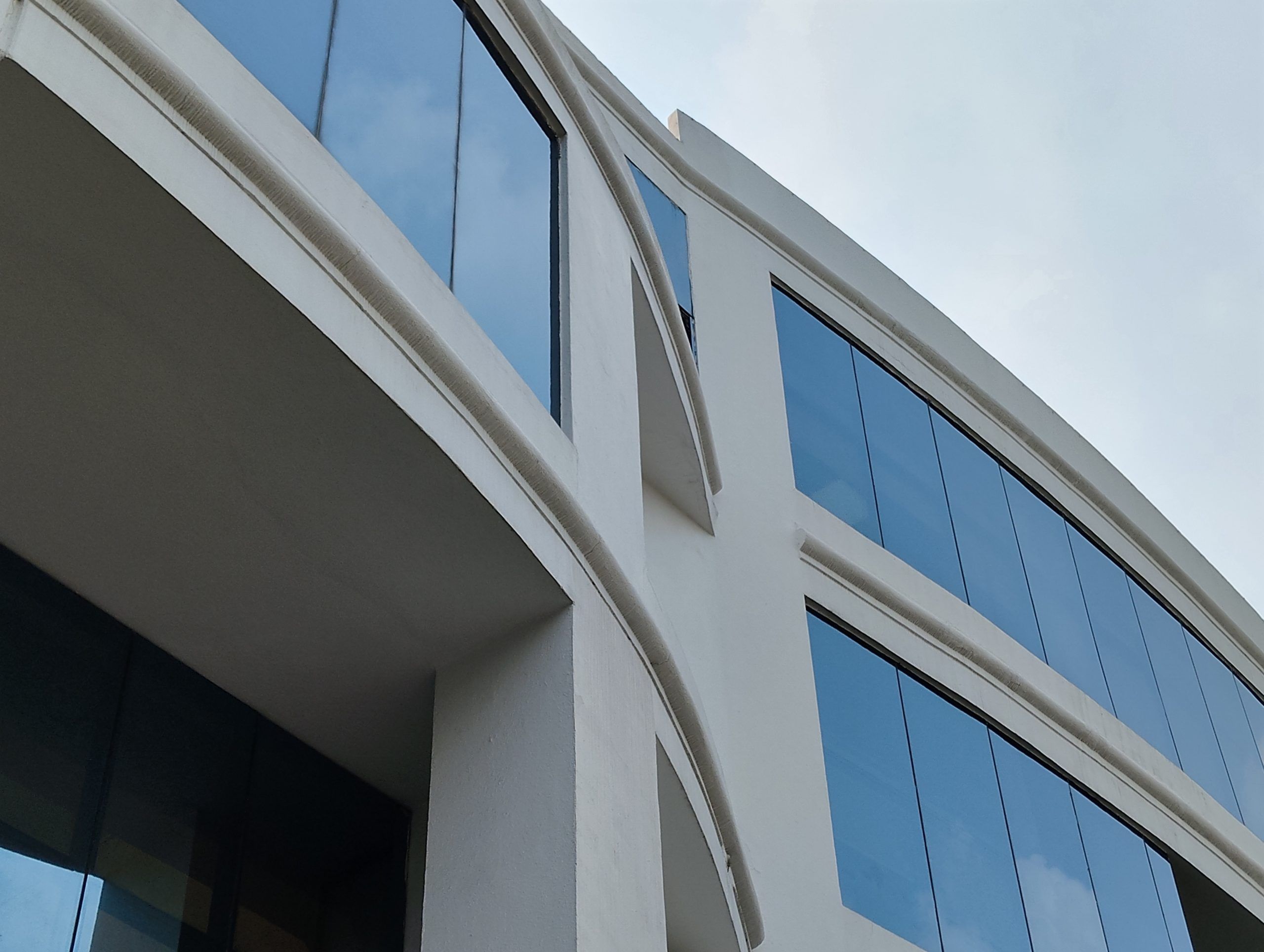
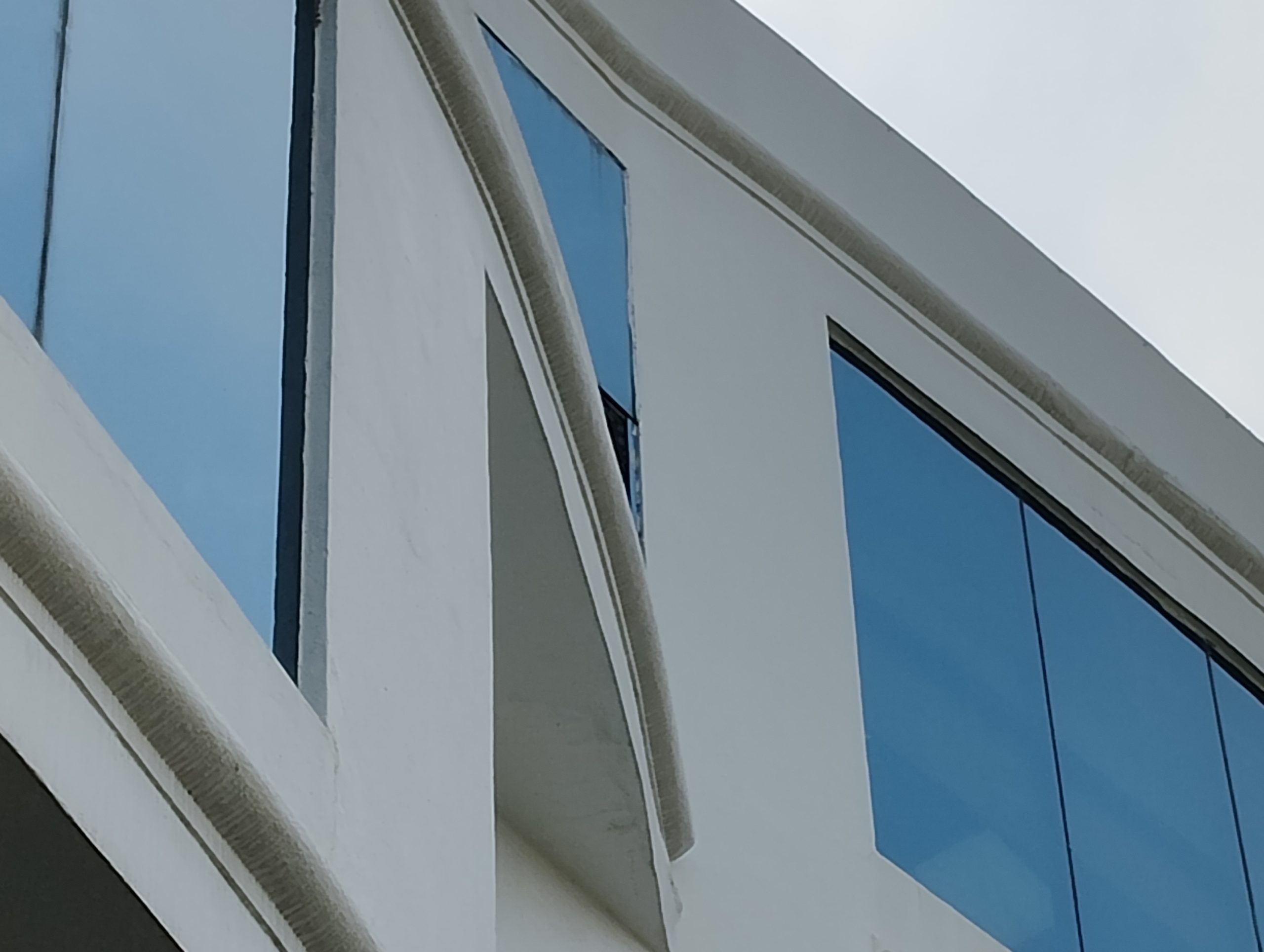




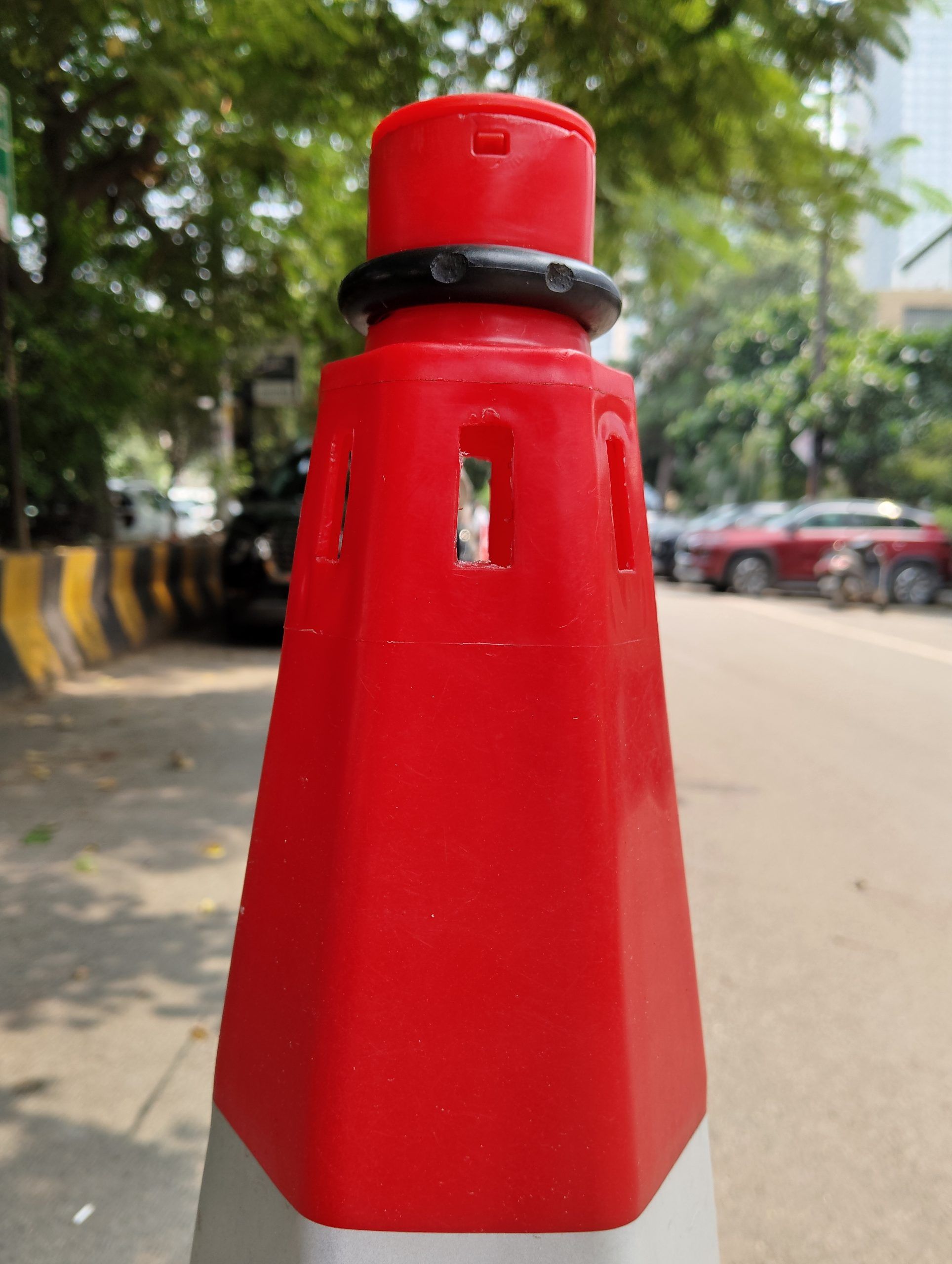

It’s when the lighting gets difficult that you start seeing where Redmi has saved money. Without OIS and with a relatively small sensor, low-light photographs don’t have the same level of detail. Shadows can become messy, fine textures disappear, and the camera has to work harder to produce a clean-looking image. And then there’s the obvious missing camera: an ultrawide.
That’s something you don’t necessarily miss until you need it. Architecture, large groups, and tight indoor spaces are all situations where having a second, wider perspective is useful. Video is also basic. You’re limited to 1080p at 30fps, with no 4K recording. So yes, the Note 17 takes photographs. Quite decent ones, in fact, when the lighting is on its side. But if you’re the sort of person who chooses a phone partly because of its camera, this isn’t the one I will suggest you.
Battery
Now we get to the feature that changes the character of this phone.
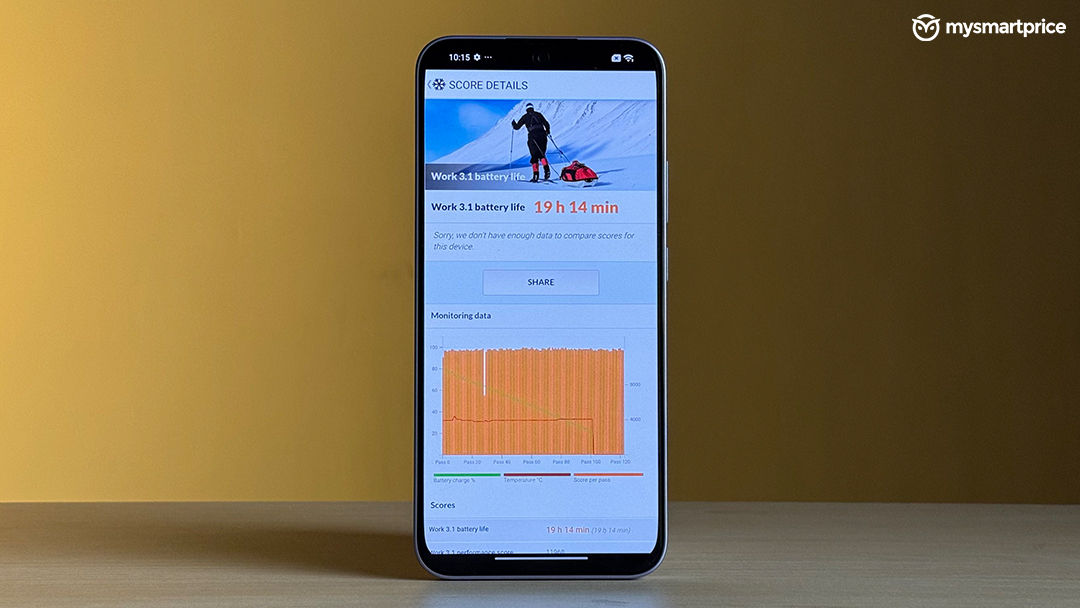
The 8,000mAh battery is enormous. In our PCMark battery test, the Note 17 ran for 19 hours and 14 minutes. More interestingly, the phone barely seemed to care about relatively light workloads. An hour of gaming consumed roughly 5%, while an hour of video streaming also resulted in around a 3% drop. That kind of efficiency is what makes Note 17 interesting.
You are not constantly checking the battery percentage. You can watch videos on a long journey, spend hours scrolling through social media, use navigation, make calls, and still have plenty left at the end of the day. With moderate usage, two days is a realistic expectation. Charging also disappoints you. The phone supports 45W charging, and we measured around 1 hour and 12 minutes to go from 20 to 100%. That’s reasonable considering the sheer size of the battery, but it’s not going to win any charging-speed contests. You also get reverse wired charging, which is a nice little bonus when you need to give another device some emergency power.
Software
Here’s something I think is more important than it initially looks.
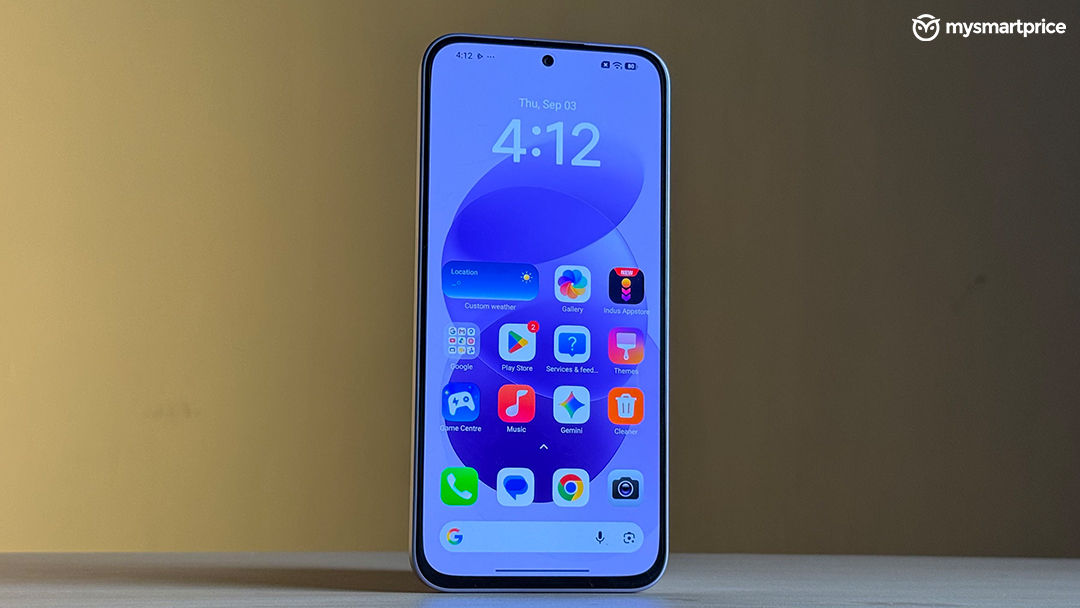
The Note 17 runs HyperOS 3 based on Android 16, but Redmi is promising four Android OS upgrades and six years of security updates. That’s a long time. And it changes the way I look at the phone’s weaker hardware. If you’re buying a phone specifically to keep for several years, having a predictable software-support window is genuinely valuable. The problem is that the Snapdragon 4 Gen 4 may start feeling its age sooner than the software does. HyperOS itself is familiar territory. There’s plenty going on, including a fairly generous collection of pre-installed applications. Thankfully, most can be removed or disabled, so the experience can be cleaned up considerably after setup. There is also an IR blaster with Mi Remote, which remains one of those small Xiaomi features that you don’t think you’ll use until you suddenly need to control a TV or air conditioner without finding its remote.
Audio
The large AMOLED display makes the Note 17 a good phone for watching content, but the audio setup doesn’t quite keep up. There’s only a single bottom-firing speaker, so you don’t get the stereo experience that you ideally want from a phone with such a large display. It’s loud enough for casual use, but watching movies or YouTube videos in landscape orientation isn’t particularly immersive. It’s a small example of the same broader compromise we’ve seen throughout the phone. Redmi has prioritised the things it believes matter most here, and multimedia hardware beyond the display clearly wasn’t one of them.
Verdict
So, the Redmi Note 17 is a little difficult to recommend at this price, because the competition is simply too strong. The 8,000mAh battery is undoubtedly its biggest advantage, and if battery life is your number-one priority, the Note 17 makes a very strong case for itself. You also get a great AMOLED display and, more importantly, four years of OS updates and six years of security updates, which makes this a phone you can comfortably hold on to for a long time. But put it next to the realme P4 Power, and things start getting complicated. The P4 Power gives you considerably better performance, faster charging and a more capable overall hardware package, while still keeping battery life as a major focus. The Redmi’s advantage here is mainly its software support and display experience. And then there’s the Moto Edge 70 Fusion, which makes the Note 17 look even less appealing if you’re after an all-rounder. Motorola offers a much stronger performance and camera experience, along with a more premium overall package. The Redmi simply can’t compete with it in those areas.
So, if I had around ₹30,000 to spend and wanted the best overall phone, the Redmi Note 17 wouldn’t be my first pick. I’d lean towards the P4 Power for performance and battery, or the Edge 70 Fusion if I wanted a more balanced experience.
The Note 17 makes sense for a very specific kind of user: someone who doesn’t care about gaming or having the best cameras, but wants a massive battery, a big AMOLED display and software support that will keep the phone relevant for years. And that’s ultimately what the Redmi Note 17 is. Not the most powerful phone, not the best camera phone, and definitely not the most versatile phone in this segment. It’s an endurance-focused phone, and if that’s exactly what you’re looking for, the Note 17 gets the job done really well.