The premium smart TV market has become increasingly crowded, with brands competing on everything from display technology and gaming features to AI integration and smart software. QLED panels, Dolby Vision, HDMI 2.1, and Google TV are no longer standout features on their own. The challenge today is delivering a complete experience where picture quality, audio performance, gaming capabilities, and software all come together without obvious compromises.
Haier P7 Pro 65-inch QLED TV
Rs 69,999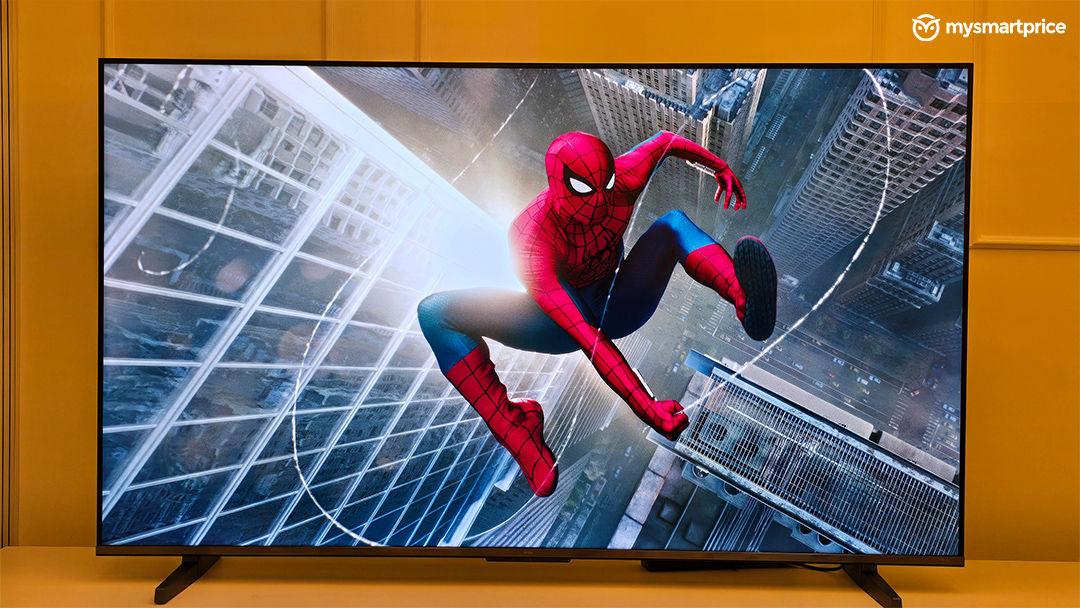
What Is Good?
- Excellent 65-inch QLED display with natural and well-balanced colours
- Good HDR performance with Dolby Vision and HDR10+
- Redesigned remote offers convenient side-mounted volume controls
- Premium, minimalist design with slim bezels
- Google TV interface is smooth and responsive
What Is Bad?
- Some noticeable light bleeding in darker scenesSome noticeable light bleeding in darker scenes
- Brightness could be higher for demanding HDR content
- Built-in audio, while good, still can't replace a dedicated soundbar or home theatre system
It seems Haier aims to achieve that with the P7 Pro series, which is available in multiple screen sizes starting from 43 inches at around ₹37,000; the 65-inch variant reviewed here sits at roughly ₹70,000. On paper, it packs a compelling feature set, including a QLED display with 93% DCI-P3 colour gamut coverage, Google TV with built-in Google Gemini, HDMI 2.1 gaming support, MEMC, Dolby Vision, and a 2.1-channel speaker system with an integrated subwoofer. We spent time using the TV across movies, streaming, gaming, and everyday content consumption to find out whether it delivers where it matters most.
Design: Understated Yet Premium
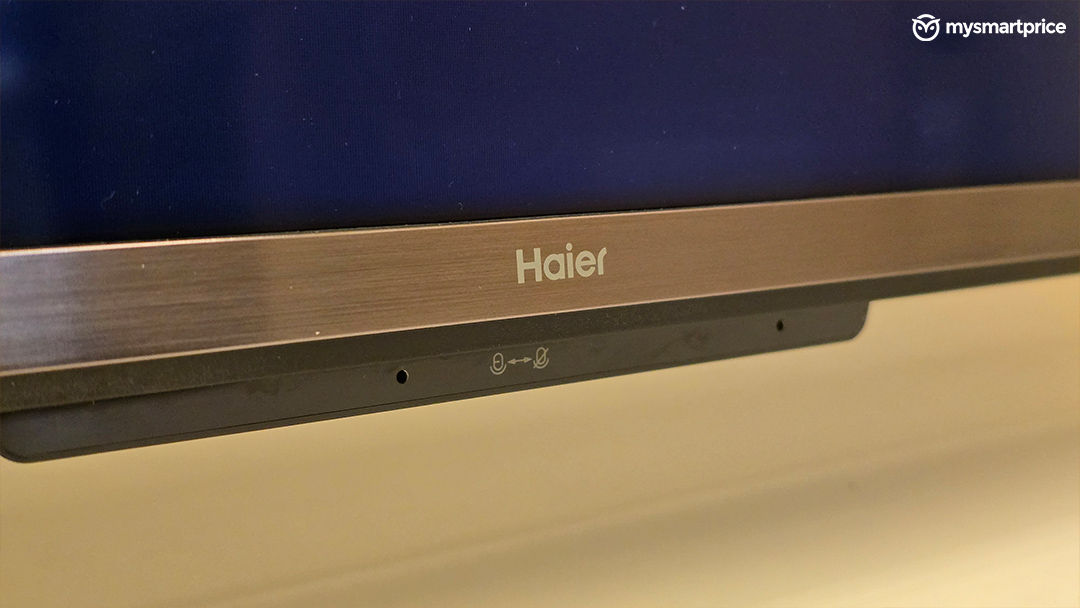
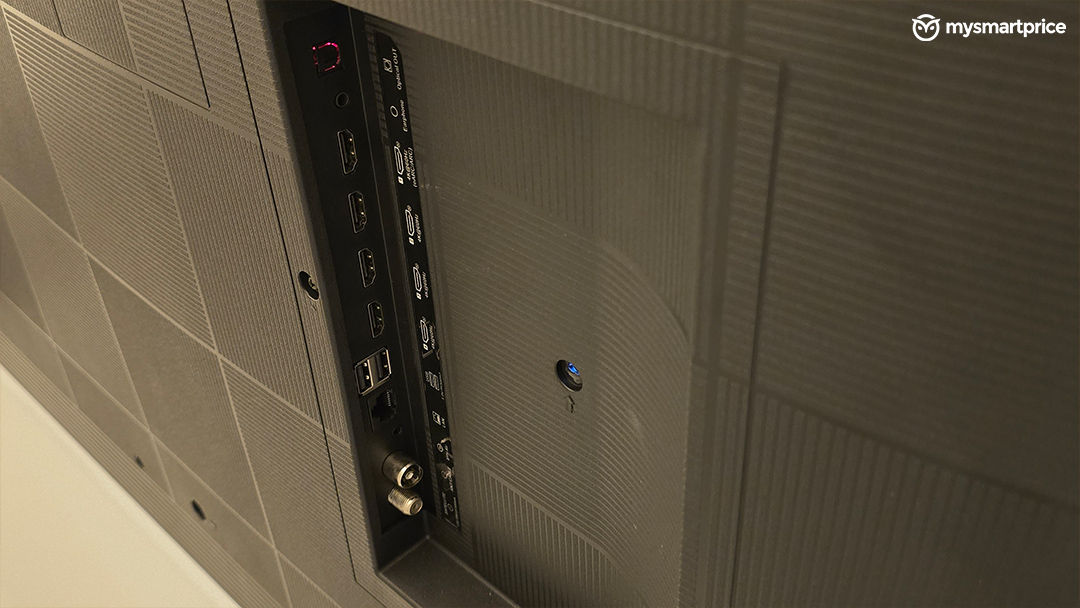
Haier hasn’t tried to reinvent television design, and that’s probably a good thing. The P7 Pro features slim bezels on all four sides, allowing the large 65-inch panel to take centre stage. The metallic stand feels sturdy and keeps the TV stable, while the overall construction inspires confidence. Around the back, you’ll notice the dedicated subwoofer enclosure, a subtle reminder that Haier has paid attention to the audio hardware instead of relying solely on software tuning. Although a wall-mount bracket isn’t included in the box, the TV features a relatively slim profile and clean rear panel, ensuring it sits neatly against the wall when paired with a compatible VESA wall mount.
The television doesn’t look flashy or overly aggressive. Instead, it follows a minimalist design language that should fit comfortably into both modern apartments and larger living rooms. One surprisingly thoughtful addition is the redesigned remote.
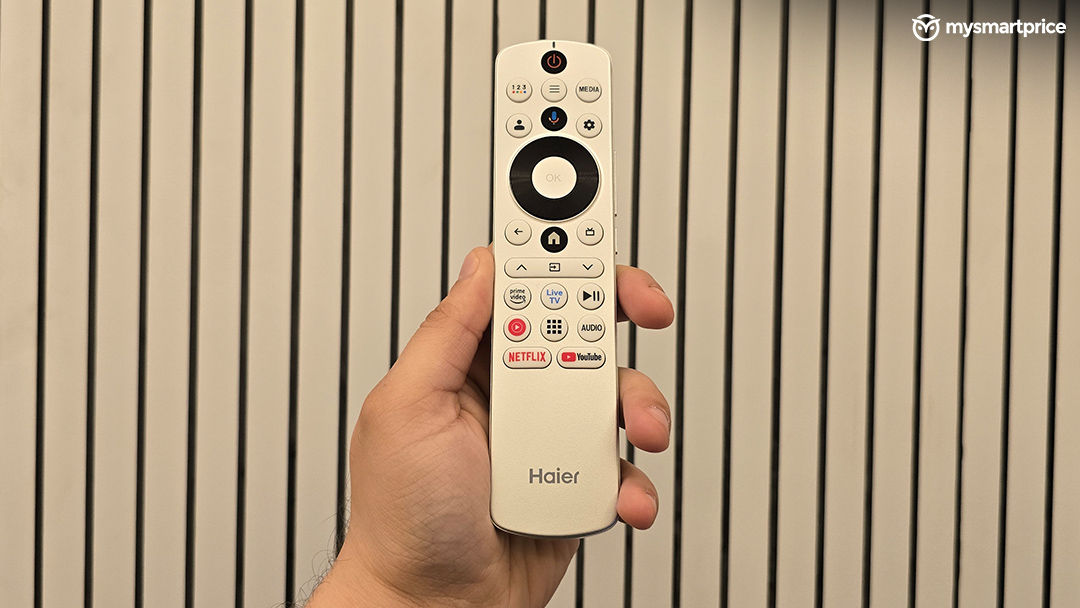
Instead of placing the volume controls on the front like most television remotes, Haier has positioned the volume rocker and mute button on the right-hand side, giving it a distinctly smartphone-like feel. When I first held this remote in my hand, I had to hunt where the volume button was, and honestly, it did take a few minutes to get used to; after that, it actually becomes easier to adjust the volume without looking at the remote.
Display Quality: Natural Colours Over Artificial Punch
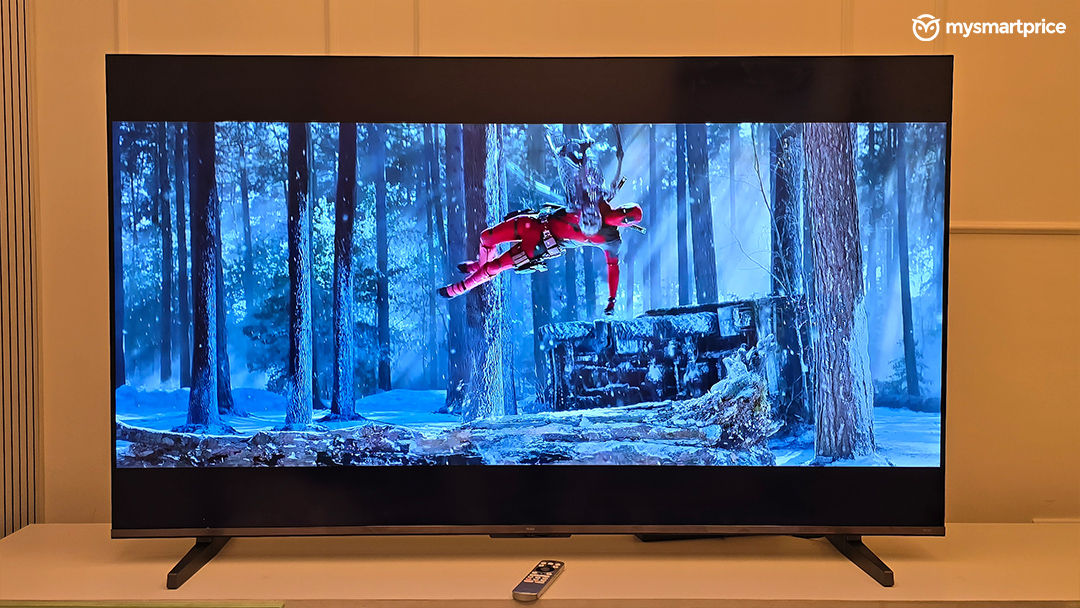
The display is undoubtedly the biggest strength of the Haier P7 Pro.
It uses a QLED panel with support for 93% DCI-P3 High Colour Gamut, Dolby Vision, HDR10+, and HLG. While these specifications are impressive on paper, what matters more is how the television actually looks in day-to-day viewing. The first thing we noticed was the colour calibration. Unlike many televisions that push saturation to make colours appear more vibrant on showroom floors, the P7 Pro opts for a more natural presentation. Skin tones appear realistic, landscapes retain depth without looking exaggerated, and overall colour reproduction feels well-balanced. Whether we were watching movies, sports, or YouTube content, the television consistently delivered an image that felt clean and refined rather than artificially processed. Brightness is another area where the P7 Pro performs well. Even in rooms with significant natural lighting, the panel remained bright enough for comfortable daytime viewing. During our testing, we measured brightness at roughly 410 nits in its default picture mode, which proved more than adequate for regular home usage. One area where the television particularly impressed us was HDR playback. Compared to several televisions we’ve tested in this segment, shadow details remained more visible, and the picture maintained consistent contrast without constantly shifting brightness levels depending on the scene. Dark areas retained detail while brighter portions never felt overly aggressive.
That consistency makes movies and long-form content far more enjoyable to watch. Motion handling is often overlooked until you start watching sports or fast-paced action films. The Haier P7 Pro includes MEMC (Motion Estimation and Motion Compensation), which smooths lower frame-rate content. Many televisions tend to overprocess motion, creating the infamous “soap opera effect,” but Haier’s implementation is much more controlled. Watching 24fps movies felt noticeably smoother, almost as though they were running at a higher frame rate. More importantly, Haier allows users to customise the level of motion smoothing according to their preference, something enthusiasts will certainly appreciate. Whether you prefer cinematic motion or ultra-smooth playback, the television gives you enough flexibility to choose.
Audio And Gaming Performance: Better Than Others
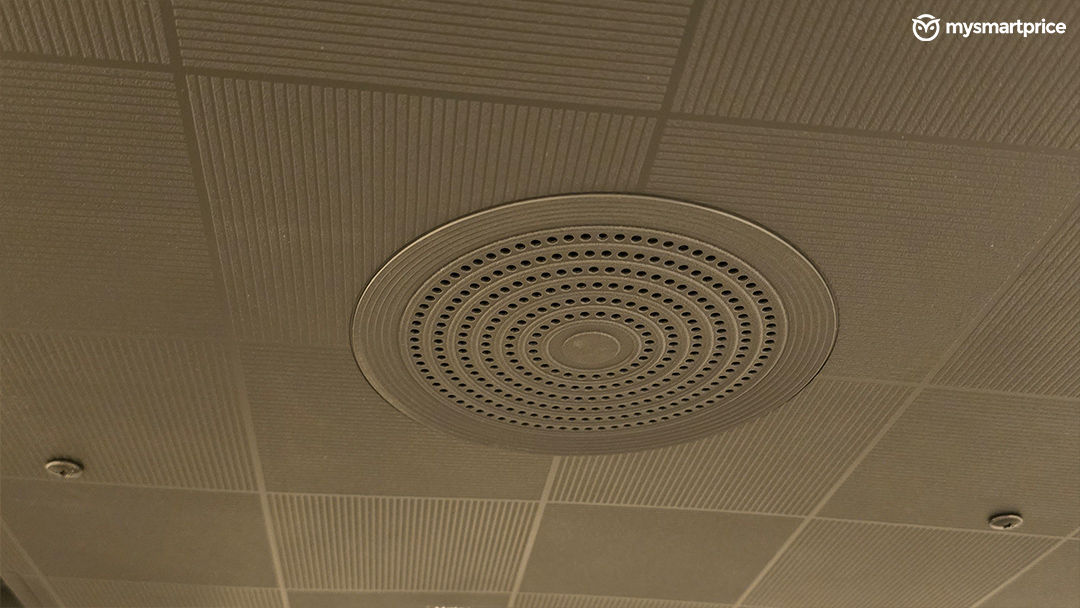
Audio is another area where the P7 Pro performs surprisingly well. The television features a 2.1-channel speaker system with a dedicated built-in subwoofer, delivering a total output of 50W. That extra subwoofer makes an immediate difference. Dialogue remains clear even during action-heavy sequences, while the bass has enough depth to give movies and music a fuller sound without becoming overwhelming. Explosions carry weight, background scores feel richer, and everyday streaming content benefits from the additional low-end presence. While dedicated home theatre enthusiasts will still prefer an external sound system, many users may find the built-in speakers more than sufficient for regular entertainment.
The P7 Pro also checks most of the right boxes for console gamers.
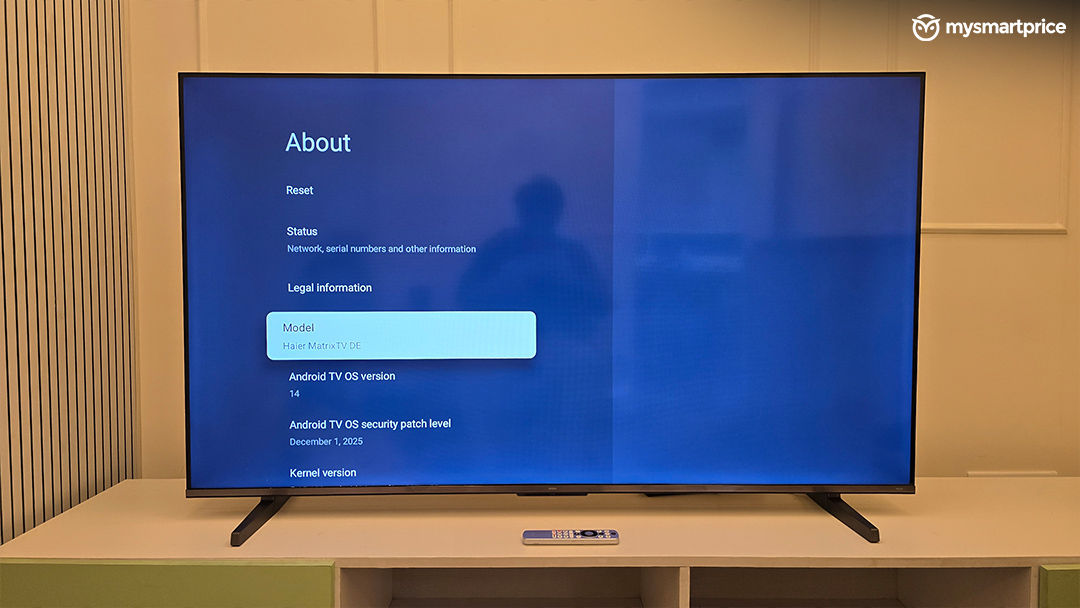
Support for HDMI 2.1, ALLM (Auto Low Latency Mode), VRR, and 120Hz refresh rate ensures compatibility with modern gaming consoles like the PlayStation 5 and Xbox Series X. Gameplay felt smooth and responsive during our testing, with low input latency contributing to an enjoyable overall experience. One thing worth mentioning, however, is that the television requires users to manually enable Gaming Mode from the display settings to unlock its 120Hz refresh rate. It’s a minor inconvenience rather than a major drawback, but automatic switching would have made the experience more seamless. Once enabled, though, the gaming experience remains fluid and enjoyable across both competitive and story-driven titles.
The Haier P7 Pro runs Google TV, giving users access to all the major streaming platforms, personalised recommendations, Chromecast built-in, and the familiar Google ecosystem. The TV is powered by 2GB of RAM and 32GB of internal storage, which proved sufficient during our testing. Apps launched reasonably quickly, multitasking remained smooth, and navigating through the interface didn’t present any noticeable slowdowns during everyday usage. You can ask questions, search for content, control smart home devices, or navigate the interface entirely hands-free by simply saying “Hey Google.” Unlike many AI integrations that feel experimental, Gemini actually adds value to the overall experience and is one of the television’s more distinctive features. Navigation throughout the interface also remained smooth during our testing. Applications launched quickly, and day-to-day operation felt responsive enough for regular users. The Haier P7 Pro succeeds because it doesn’t rely on one standout specification to carry the product. The display produces natural colours without sacrificing vibrancy, brightness is sufficient for bright living rooms, HDR performance remains consistent, MEMC is genuinely useful, and the 2.1-channel audio system is among the better implementations we’ve experienced in this price segment. The smart software feels polished, Google Gemini adds practical functionality, and the redesigned remote is one of those small quality-of-life improvements that you begin appreciating after a few days of use. It’s a television that quietly gets the fundamentals right.
Verdict
The Haier P7 Pro doesn’t attempt to impress through exaggerated specifications or gimmicky features. Instead, it focuses on delivering a balanced premium television experience, and for the most part, it succeeds.
Its well-calibrated QLED panel with 93% DCI-P3 colour coverage produces natural, consistent visuals that work equally well for movies, sports, and everyday content. The built-in 2.1-channel speaker system with its dedicated subwoofer offers audio quality that comfortably outperforms most televisions in this segment, while HDMI 2.1 support, ALLM, VRR, and 120Hz gaming ensure it’s well equipped for current-generation consoles. The inclusion of Google Gemini further strengthens the package by adding genuinely useful AI capabilities instead of treating AI as a marketing checkbox. It isn’t perfect. We did notice slightly more light bleeding in darker scenes than we’d ideally like, and manually enabling the 120Hz gaming mode feels like an unnecessary extra step. However, neither issue significantly impacts the overall ownership experience. At around ₹70,000 for the 65-inch model, the Haier P7 Pro delivers a polished, well-rounded package that prioritises accurate picture quality, strong audio performance, useful smart features, and reliable day-to-day usability. If you’re looking for a premium television that feels equally comfortable handling movies, sports, gaming, and streaming without obvious compromises, the P7 Pro deserves to be on your shortlist.