The modern TV landscape is crowded, to say the least. While incumbent players such as Sony, Samsung and LG still hold their place at the top of the food chain, newer brands like Xiaomi, OnePlus, and Vu are chipping away at their lead. Within this melee, the old-guard brands like Onida and BPL are barely a blip on the radar, while some, like Videocon, are gone.
Toshiba Z670SP TV
Rs 79,990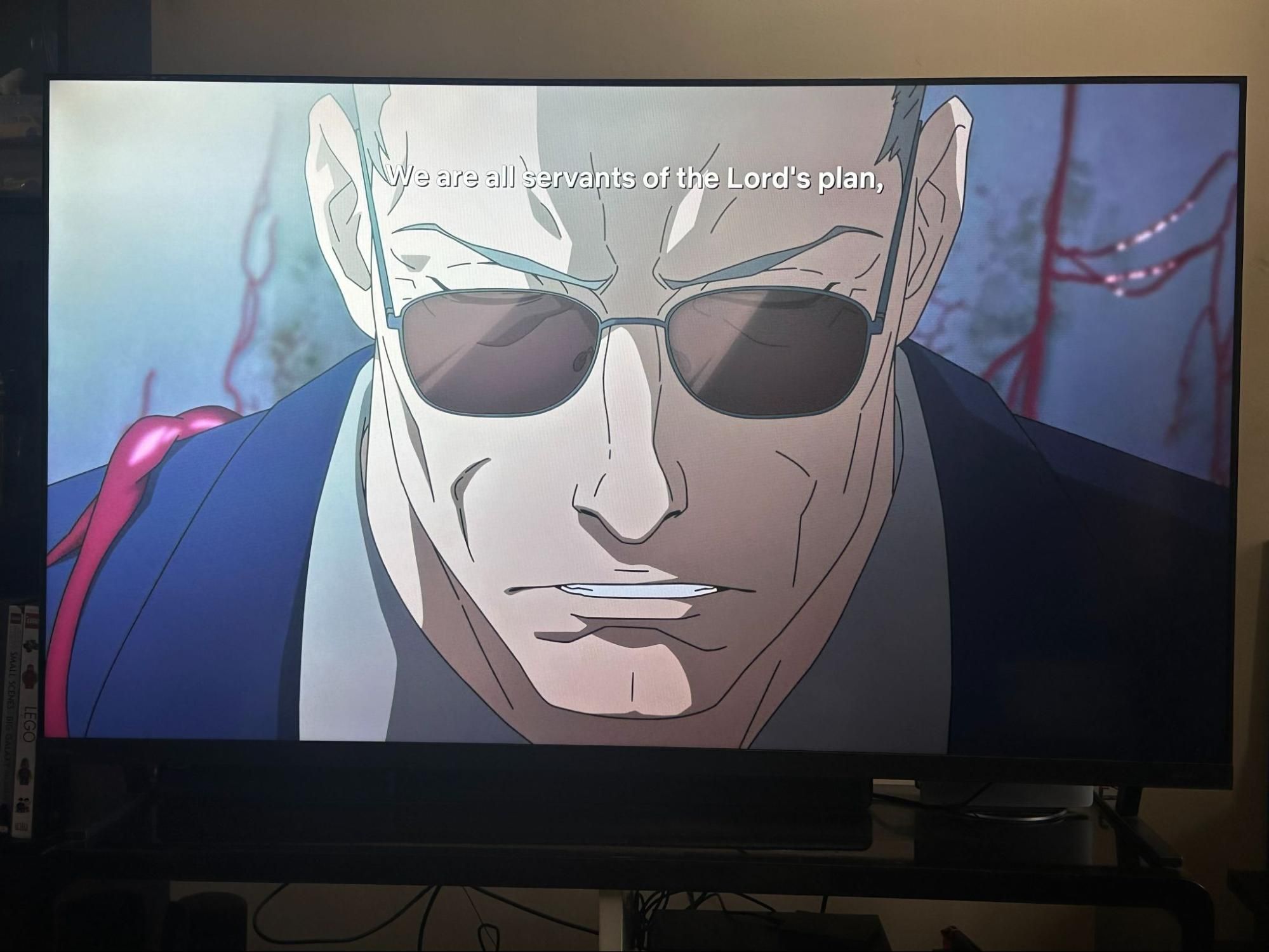
What Is Good?
- Excellent picture quality
- Very good audio
- Decent number of ports
- Good for gaming
- AI features are actually useful
What Is Bad?
- Questionable port placement
- Unnecessarily large remote
Then there is Toshiba, a giant that was all set to exit the Indian market, but was given a new lease of life by Hisense, which purchased 95% of its television business. Now, with the backing of one of the world’s largest TV manufacturers, Toshiba is making rapid strides, and its new Z670SP series of MiniLED TVs means business.
The Toshiba Z670SP is available in five different sizes:-
55- inch TV: INR 64,990
65- inch TV: INR 79,990
75- inch TV: INR 1,14,990
85- inch TV: INR 1,69,990
100- inch TV: INR 2,99,990
This review will be conducted on the 65-inch variant of the TV.
Key Specifications
Panel Type: 65-inch QLED
Resolution: 4K Ultra HD (3840 x 2160)
Refresh Rate: 144Hz
OS: VIDAA U9
HDR Support: Dolby Vision IQ, HDR10+ Adaptive, HLG
Sound: 54W 2.0ch 4-speaker system with Dolby Atmos
Connectivity: 4x HDMI, WiFi 5
Gaming Tech: VRR, ALLM
Special Features: REGZA Intelligence
Design
The Toshiba Z670SP does not try and immediately wow you with a flashy design, and that isn’t a bad thing. It’s a giant black piece of glass that disappears into the living room. It does not call attention to itself, and at a time when many manufacturers are trying to make their TVs look as premium as possible, Toshiba has stuck to the basics. Call me old-fashioned, but I like that.
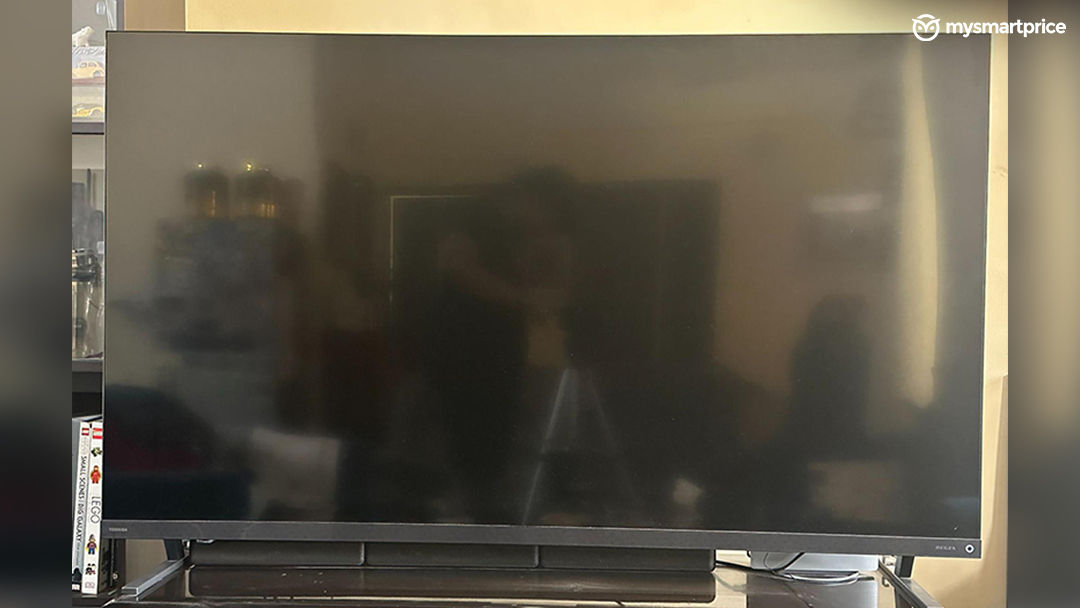
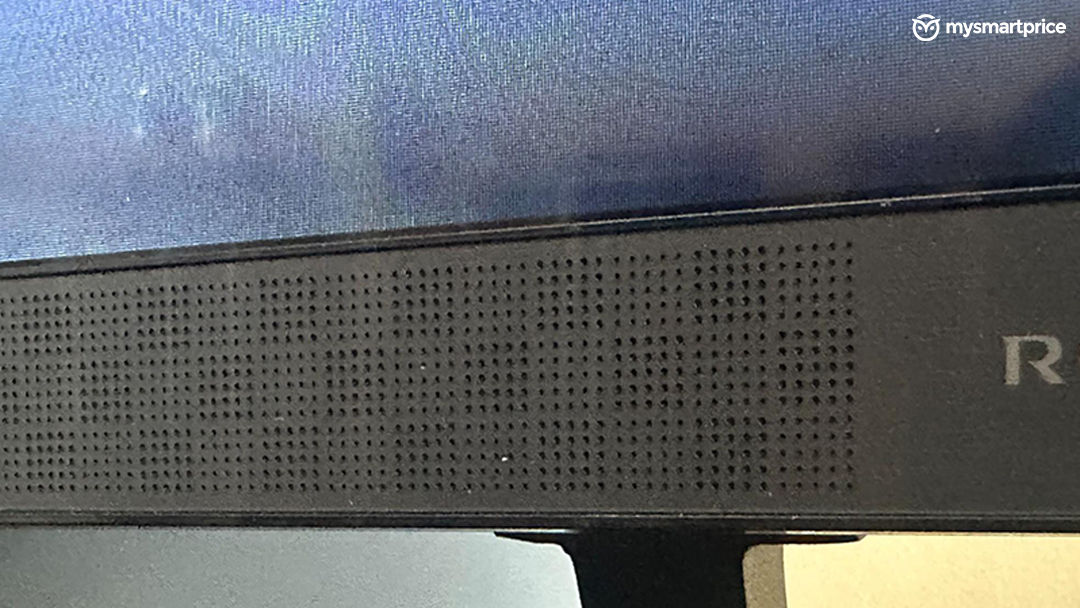
That being said, it is still a great-looking TV. Thin bezels on three sides, while the thicker bottom bezel features a grill. This isn’t just for design, as it also houses the front-firing speaker.
In fact, I have only two nitpicks regarding the design. The first is that this TV begs to be wall-mounted. Why do I say that? Well, the legs of the TV are placed all the way to the edges. So you will need a pretty big entertainment console to ensure it sits on top of it. I would have preferred a large central stand, as this would give users greater flexibility. To be fair, Toshiba isn’t the only one doing this. Xiaomi LED TV that I reviewed also has two stands, but it has a much better balance. Hope that Toshiba takes this feedback into consideration and we get an improved design in the next iterations. 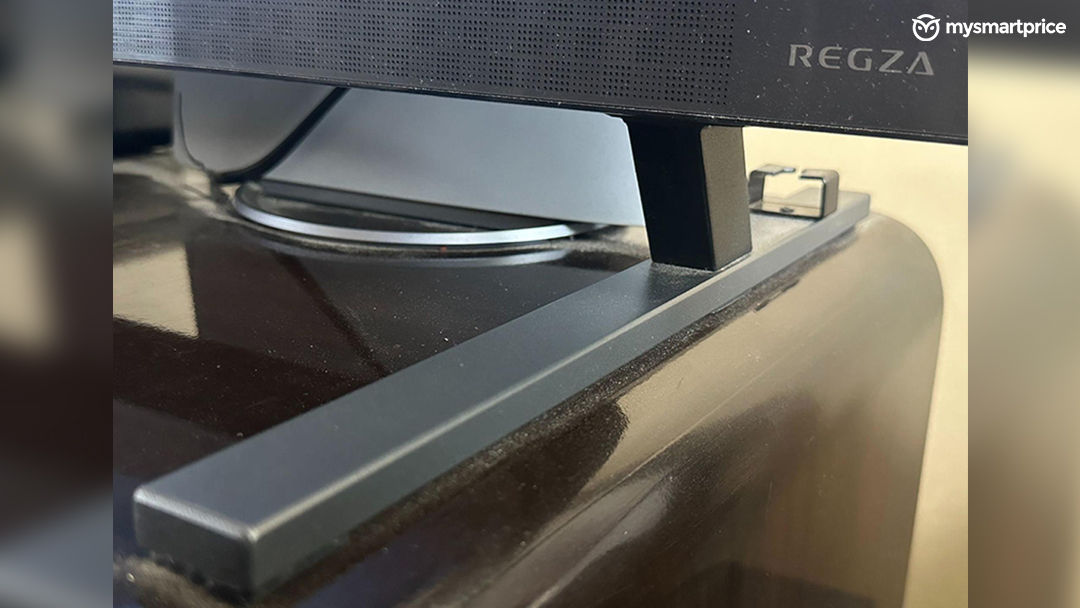
On top of this, the TV wobbles quite a bit if you bump into it or the console it’s resting on. By itself, it doesn’t seem to be that much of a problem, as the feet seem wide enough to ensure stability, but it did lead to a lot of ‘heart in my mouth’ moments.
The second nitpick is that the ports face sideways and are on the left side of the TV. Nothing wrong with that. But the whole thing is sort of recessed into the body of the TV. So if you do wall-mount it, users will have trouble accessing the ports as they won’t have a direct line of sight.
Remote
The Toshiba Z670SP comes with a remote that seems like it’s from an older generation and is clunky. In the age where OTT is the default watch mode, I’m not sure if users still need a remote with a complete number pad.
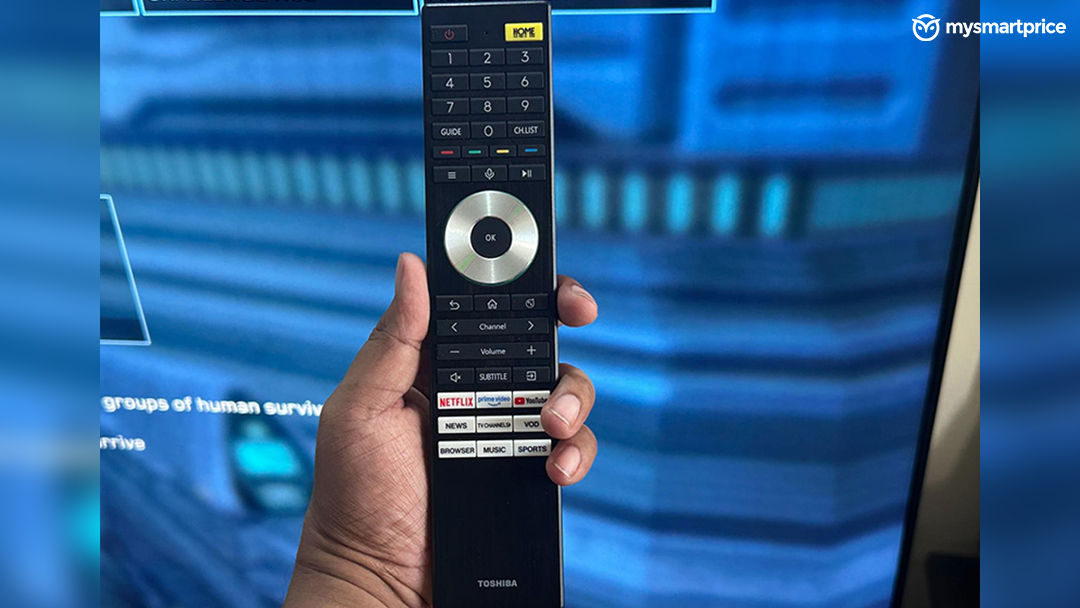
That being said. The most-used keys are grouped towards the centre of the remote, which makes using it comfortable. Further, the direction pad is a metal disk that feels quite nice.
Connectivity
The TV features 4 HDMI ports, which is a good thing in my opinion, as it does offer users extra versatility. I can never have enough HDMI ports. But then again, I am an outlier when it comes to the sheer number of devices I want connected to the TV.
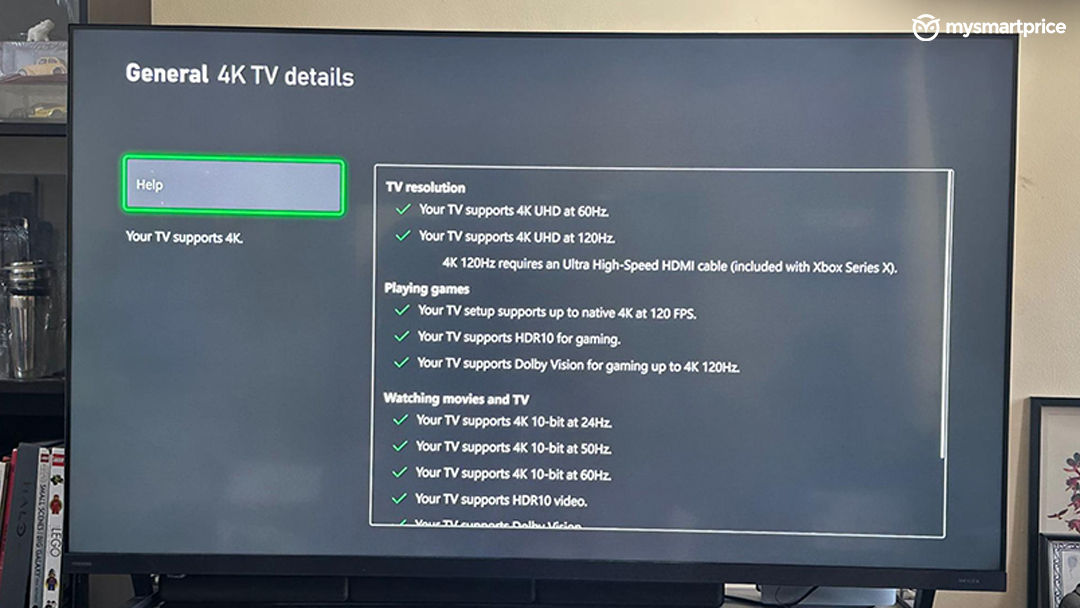
Note that only two of the four HDMI ports support a 120Hz input. And one of these is an eARC port. This means that if, like me, you have an Xbox Series X, a PlayStation 5, and a home theatre system, you will have to choose which console you want to sacrifice to the mediocrity of lower FPS.
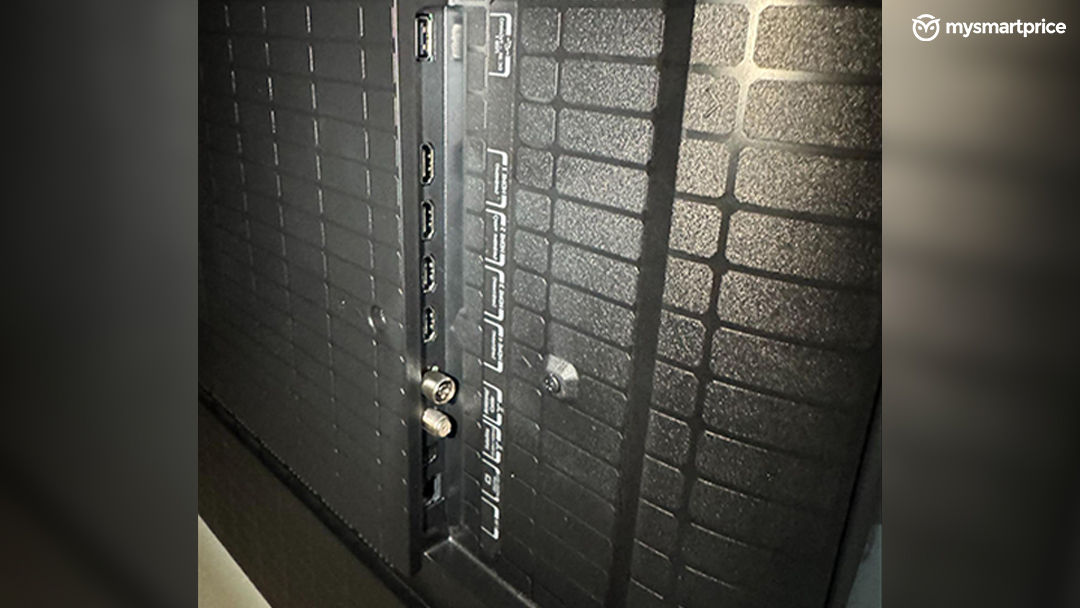
In terms of wireless connectivity, you get WiFi 5, which is pretty much on par with what else is offered.
Video and Audio
The Toshiba Z670SP features a MiniLED panel and, as one might expect, offers pretty good contrast with deeper blacks. While it might not be at the same level as an OLED panel, it balances that out by offering better value. This is then further amplified by the front-facing speakers, boosting picture quality with excellent sound. During the entire time with the TV, I rarely had to increase the volume more than 20.
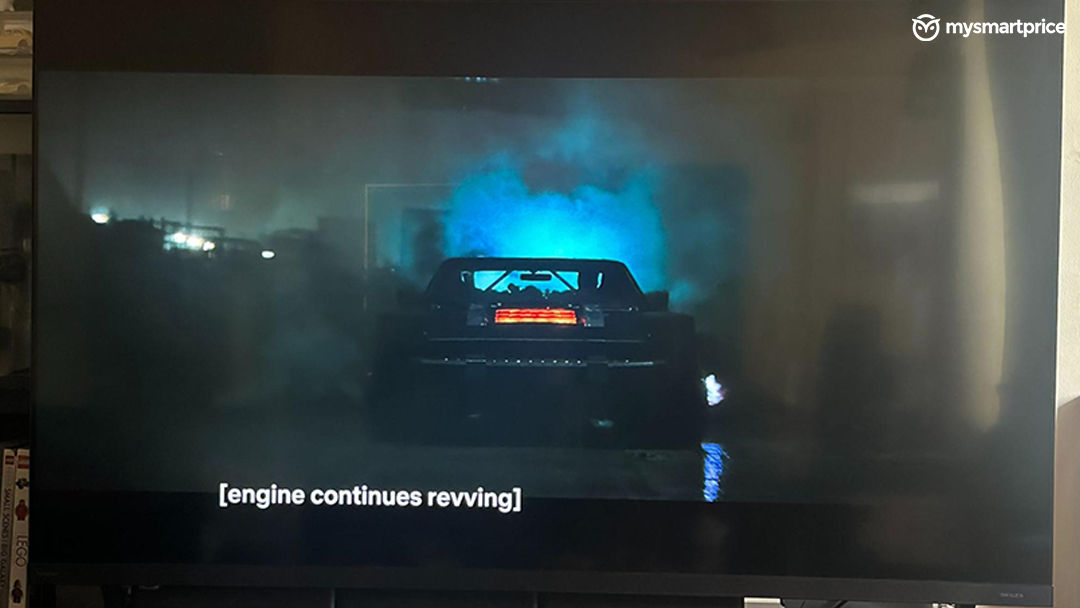
As such, watching content on the TV is a blast. When watching The Batman, the iconic scene where the Batmobile is first shown looks epic. The silhouette of the car clearly stands out against the bright light from the vehicle’s jet engine, while the details of the surrounding alley remain visible.
Watching HDR content on the TV is a genuine treat. When watching shows like The Secret Lives of Animals on Apple TV, the different hues of green in a forest and the deepening blues of the ocean were excellent.
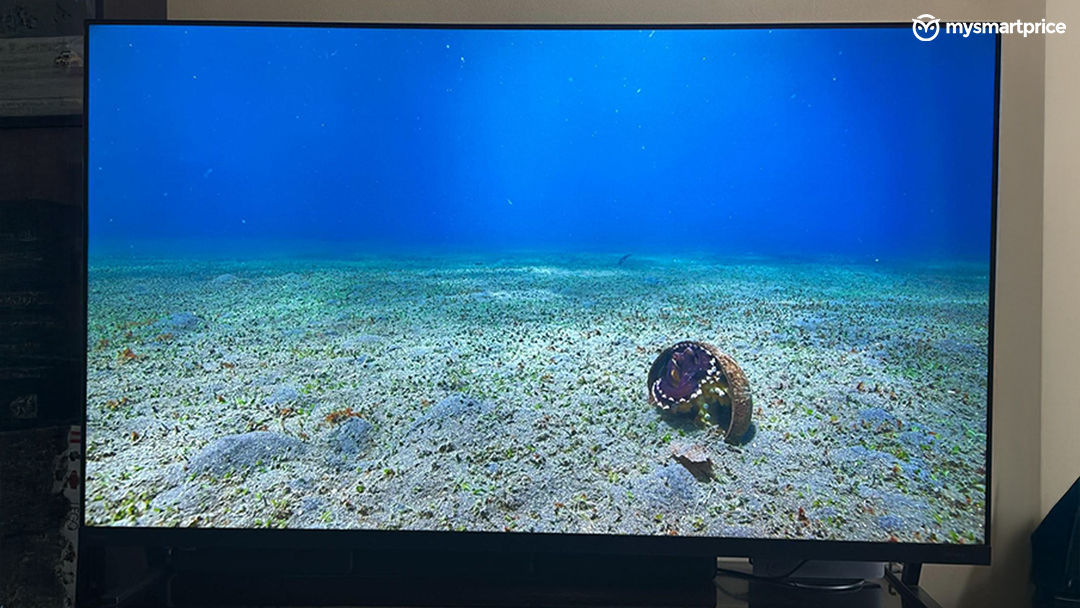
Gaming is also a great experience on the TV. With support for VRR and ALLM, the games run fluidly, making them a great option for those with the latest-generation consoles. The TV also comes with a number of gaming-centric features. Users can bring up the game menu at any time by pressing the menu button on the remote while in-game. This brings up the FPS counter as well as other details, such as HDR-type and more. Users can also overlay a targeting reticle or toggle AMD FreeSync.
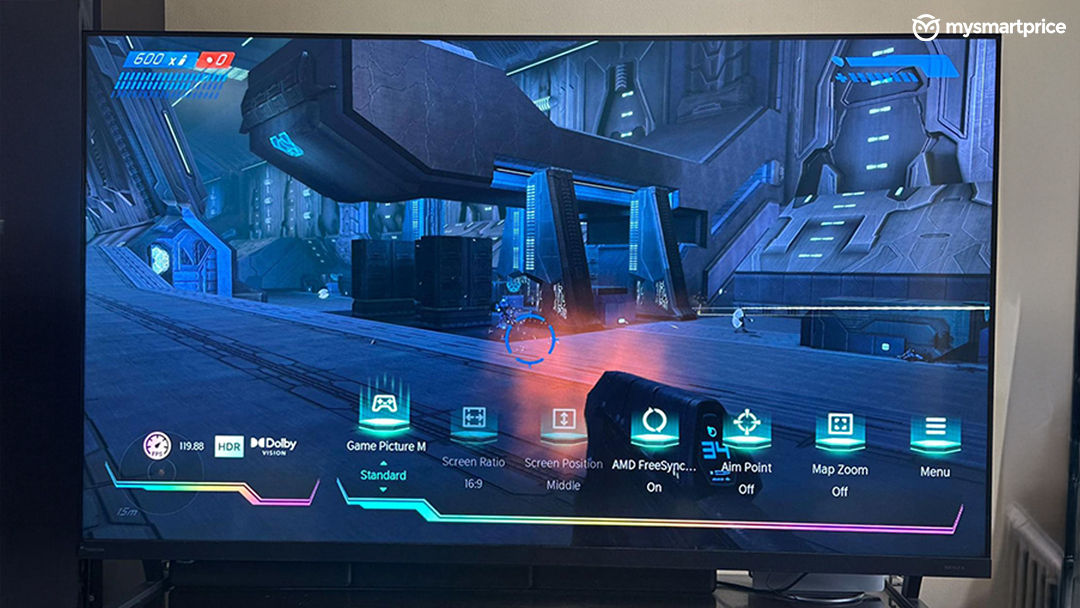
There is also the option to turn on Map Zoom, which enables a PiP mode with a portion of the screen showing a zoomed-in view. I personally found this to be of little use, but i can see this being useful in situations wherein the user is sitting far from the screen and cannot make out details in certain HUD elements, such as the map.
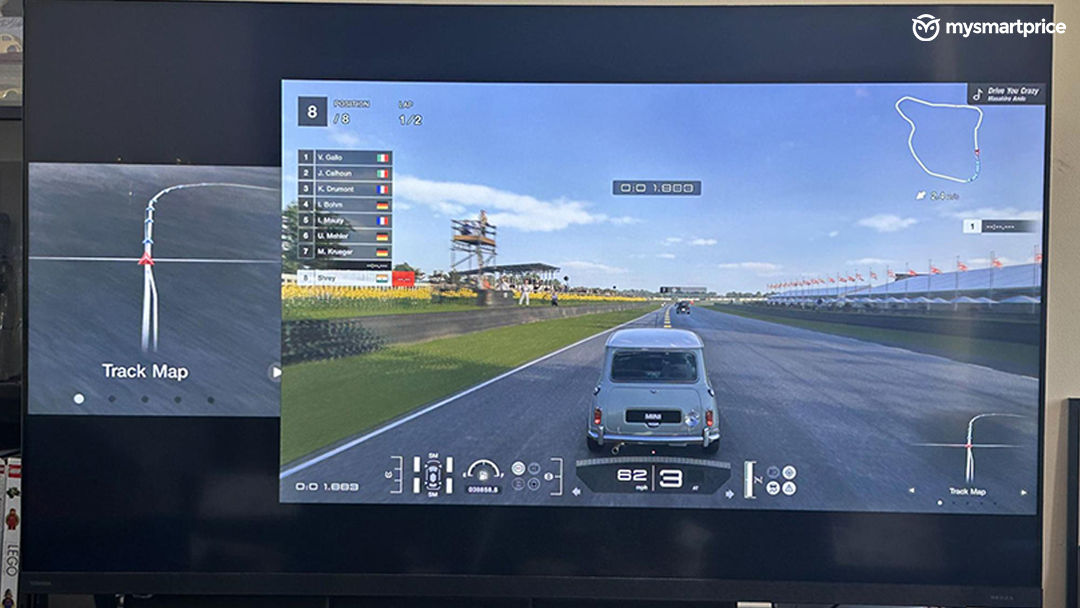
Games themselves run pretty smoothly. When playing a fast-paced FPS like Halo: The Master Chief Collection, I never saw the FPS drop below 110fps. Meanwhile, things are slightly different when playing Gran Turismo 7 on the PS5. The game offered up to 120 fps only when focusing on performance rather than ray tracing. Otherwise. It dips to around 95fps. During the entire time, I did not notice any screen tearing or stuttering.
UI
The TV, understandably, comes with HiSense’s own VIDAA OS. The OS comes with pretty much all the apps a user would want, including your standard set of OTT apps, as well as others like Spotify. Furthermore, there is VIDAA Art, which lets users display art on the TV, similar to Samsung’s The Frame series.
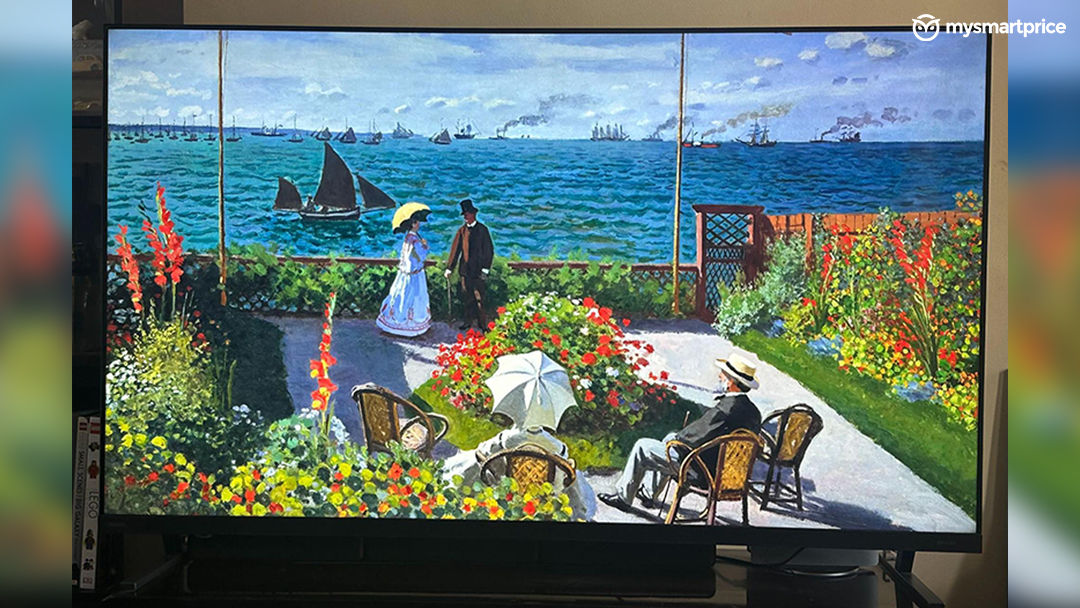
That being said, the app store isn’t as mature as Google TV, so niche apps might not be available. Furthermore, the home screen has a giant advert banner that occupies almost half the screen.
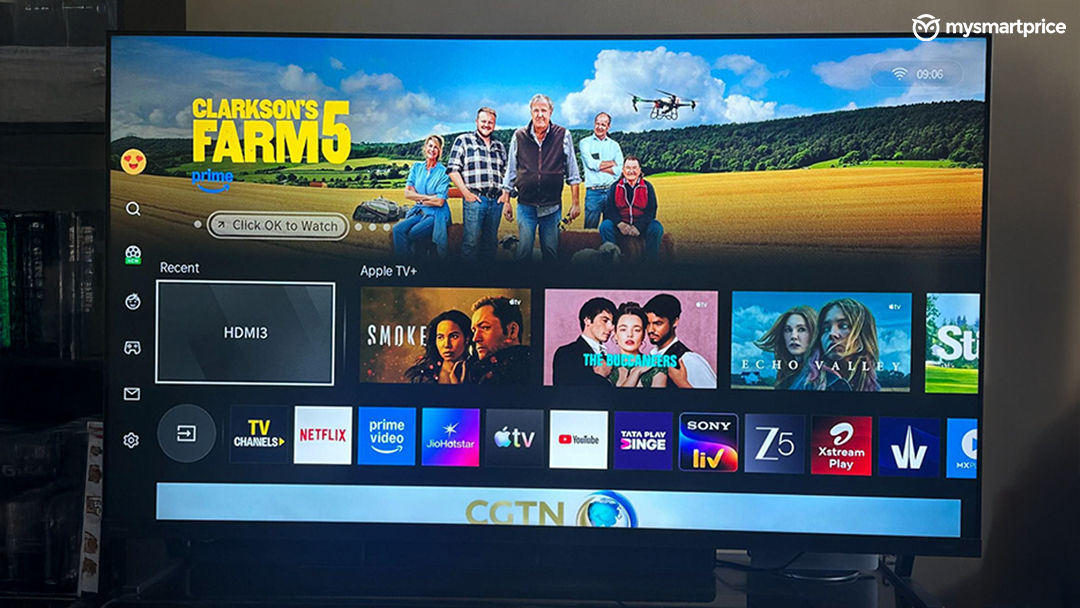
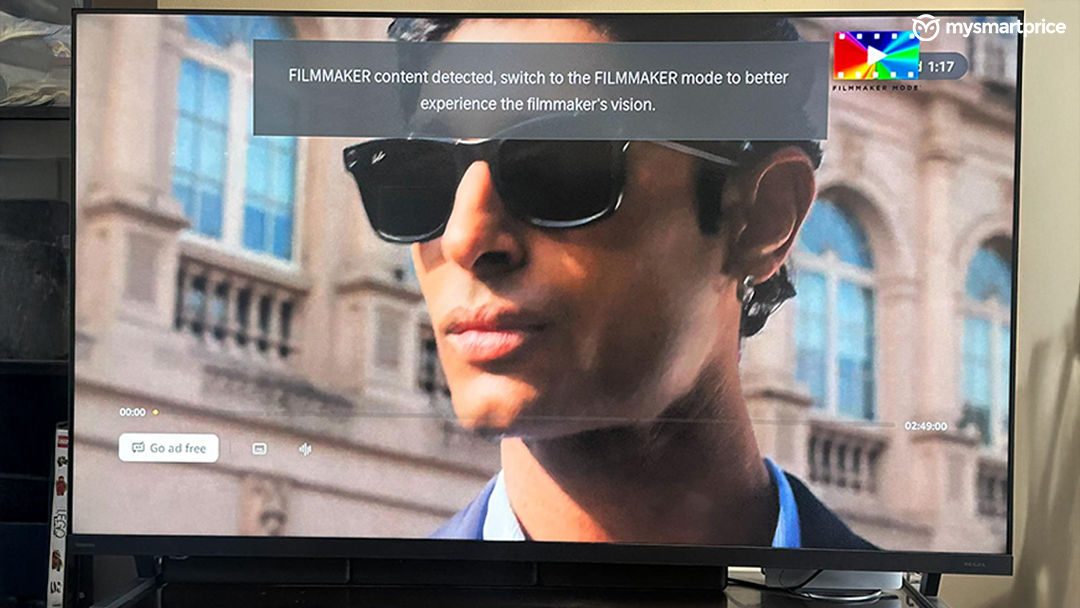
One of the most notable additions is REGZA Intelligence, which automatically tweaks the picture and sound settings to match the content being consumed. For example, when switching to movie content on OTT platforms like Amazon Prime, it switches to Filmmaker Mode. Similarly, turning to any of my consoles switches the TV to Game Mode. This is perfect for guys like me, who tend to set up the TV once and then rarely tweak the settings ever again.
Verdict
At nearly Rs 80,000, the 65-inch Toshiba Z670SP is an extremely impressive value. The MiniLED technology does give it an edge over the QLED TVs that used to be the norm at this price point. On top of this, it also offers a high refresh rate, which adds to the value. Overall, the Toshiba Z670SP offers exceptional value for buyers looking for a TV that can do it all. Sure, it has its little niggles, but the overall video and audio quality more than make up for it.
That being said, it isn’t the only one to offer such features at this price. The Xiaomi TV FX Mini LED and Lumio Vision 9 offer a similar set of features. But Toshiba offers an extra HDMI port, which does offer greater flexibility for users. Further, the front-facing speakers on the Toshiba do dilute the need to purchase a separate soundbar.