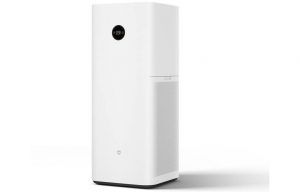
Xiaomi has expanded its smart home portfolio in China with the launch of the Mijia Air Purifier 6 Pro, a high-performance air purifier designed for large living spaces. The new model sits at the top of Xiaomi's consumer air purifier lineup and focuses on faster air circulation, formaldehyde removal, and deeper integration with the company's HyperOS ecosystem.
At a time when air quality concerns are no longer limited to peak winter months or metro cities alone, the Mijia Air Purifier 6 Pro positions itself as a large-room solution rather than a bedroom-focused device.
Designed For Large Spaces, Not Just Bedrooms
The Mijia Air Purifier 6 Pro is rated for spaces between 87 and 150 square metres, making it suitable for large living rooms, open kitchens, and combined dining areas. Xiaomi claims a particulate CADR of up to 1,461 cubic metres per hour, while formaldehyde CADR goes up to 1,000 cubic metres per hour, figures that are significantly higher than most consumer air purifiers sold in the mid-range category.
According to Xiaomi, the purifier can refresh the air in a 150 square metre space in under two minutes under ideal conditions. This places it firmly in the large-room category, an area where options remain limited in many markets.
Dual-module, 13-layer Filtration System
One of the key differentiators of the Mijia Air Purifier 6 Pro is its dual-module purification architecture. The upper filtration module focuses on everyday pollutants such as PM1 and PM2.5 particles, while the lower module is specifically designed to target formaldehyde and volatile organic compounds, which are common in newly furnished or renovated homes.
Together, the system uses a 13-layer composite filtration setup, combining pre-filters, high-efficiency particulate filtration, and specialised adsorption layers. Xiaomi says the filters are rated to last between 8 and 14 months, depending on pollution levels and usage patterns.
The purifier features a front-mounted display that shows real-time readings from six built-in sensors, including PM1, PM2.5, dust concentration, formaldehyde levels, temperature, and humidity. These readings also feed into Xiaomi's Mi Home app, allowing users to monitor air quality remotely and automate purification schedules.
As per the company’s claims, noise levels drop to around 32 dB in sleep mode, making it suitable for continuous overnight use. The device also supports Xiao Ai voice control and integrates into Xiaomi's broader HyperOS smart home ecosystem. Hopefully, if it makes its way to India or other global markets, it will allow integration with Alexa or Google Gemini.
Pricing and Availability
The Mijia Air Purifier 6 Pro has been launched in China at 2,399 yuan, which roughly translates to roughly Rs 31,000. There is currently no official confirmation on availability outside the Chinese market.
India's Air Purifier Paradox
The absence of products like the Mijia Air Purifier 6 Pro in India remains difficult to explain, especially as air pollution is no longer a Delhi-only problem. Cities across Maharashtra, Punjab, West Bengal, Uttar Pradesh, and even parts of the South now routinely report unhealthy AQI levels across multiple months of the year.
India's ₹10,000 to ₹20,000 air purifier segment still has limited options for large rooms and high CADR requirements. Xiaomi's older Mi Air Purifier 4 has proven that there is demand for reliable, app-connected air purifiers at accessible prices, yet meaningful upgrades in capacity and coverage have not followed.
At the lower end, Indian brands such as AGARO, Eureka Forbes, and Qubo are aggressively targeting the sub-₹10,000 category. While this has helped expand adoption, high-CADR, living-room-grade purifiers remain rare, leaving a clear gap between entry-level models and expensive premium imports.
This is not limited to Xiaomi. Korean brands such as Coway, despite showcasing advanced air purification products globally, have also been slow to introduce their latest large-capacity models in India. Regulatory complexity, certification timelines, and cautious go-to-market strategies may play a role, but the result is the same. One of the world's most polluted consumer markets continues to wait for products that already exist elsewhere.
For Indian consumers, the demand is clear. The question now is how long global brands will continue to treat India as a secondary market for air purification, even as air quality becomes a year-round health concern rather than a seasonal crisis.