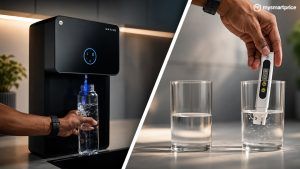
Aquaguard remains the market leader and the category-defining name for many Indian homes, backed by the familiarity and service reach that smaller brands still struggle to match. Yet the buying decision itself has become harder. A single home may receive municipal water one day and higher-TDS tanker or borewell water the next, making source-specific purification less straightforward. The Aspire Halo is Eureka Forbes’ answer for such mixed-water homes. It combines RO and UV purification with a stainless steel storage tank, live input and output TDS readings, and a claimed two-year filter life. More importantly, it has the right fundamentals. In our tests, it reduced TDS from 814 ppm to 64 ppm and returned clean, neutral-tasting water, although dispensing speed and water recovery left some room for improvement.
Aquaguard Aspire Halo
Rs23,999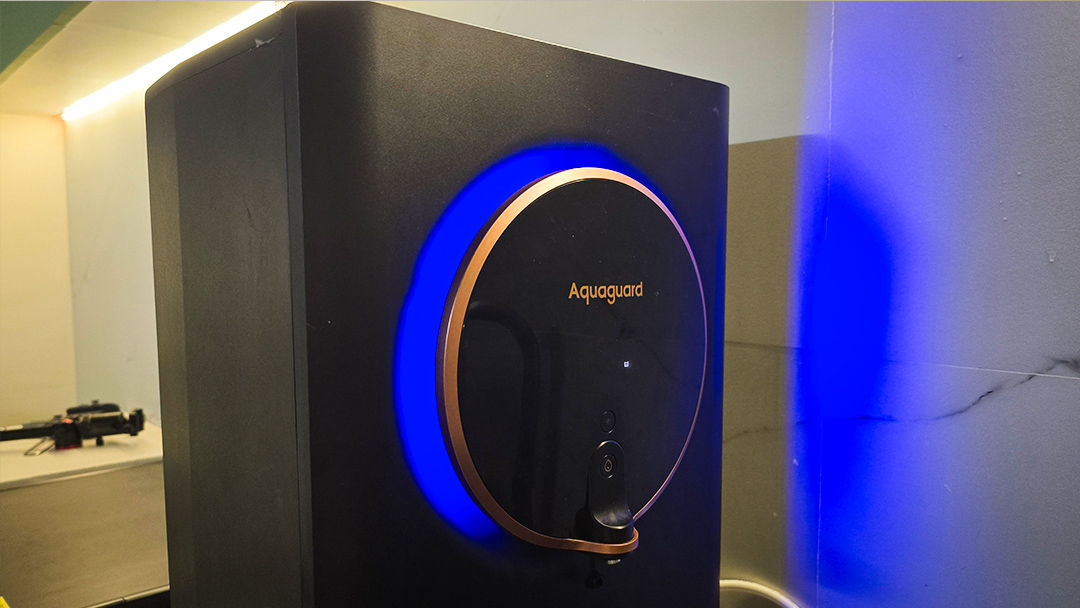
What Is Good?
- Excellent TDS reduction with clean, neutral-tasting output water
- Fast 10-minute 32-second tank refill and stable flow consistency
- Accurate storage capacity, sturdy construction and a stainless steel tank
- Useful input and output TDS display with clear status lighting
What Is Bad?
- One-litre dispensing time is slower than the quickest purifiers we have tested
- A 1:2 purification-to-reject ratio is functional, but not water efficient
- On-screen TDS readings are close to our meter, but not completely accurate
Design and Everyday Usability
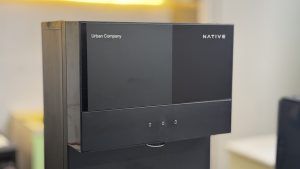
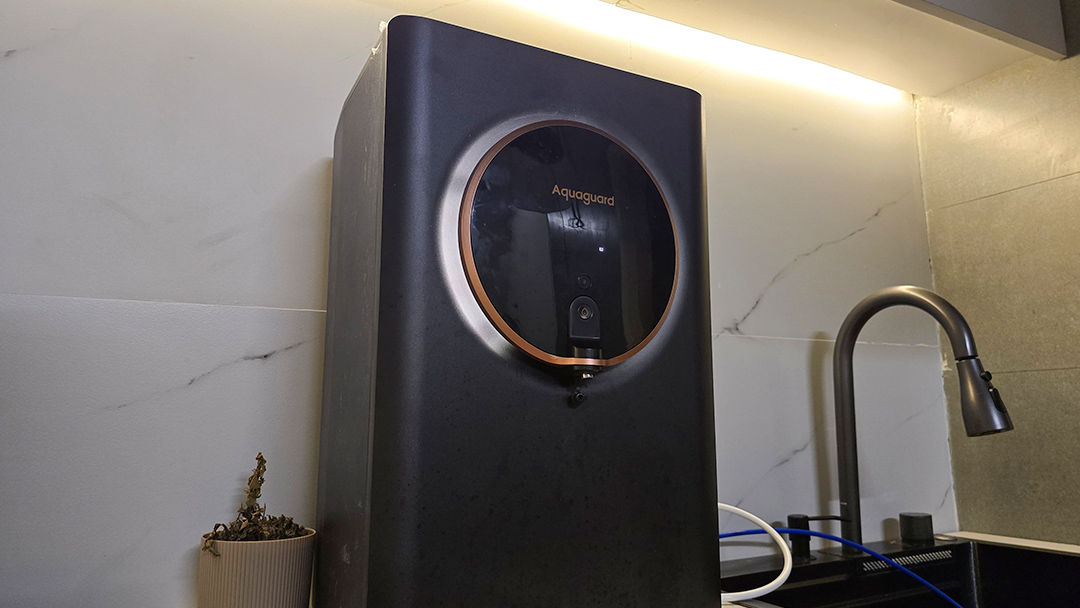
The Aspire Halo takes a more contemporary approach than the boxy white purifiers that still dominate the category. Its black exterior and illuminated front panel give it a cleaner, more upmarket presence, while the overall construction feels sturdy enough for everyday kitchen use. Most of the body remained rigid during inspection. Only the top section showed a small amount of flex, which does not affect operation but keeps the finish from feeling completely seamless.
A 5-litre stainless steel tank sits inside the purifier. Our capacity check measured between 95% and 100% of the claimed figure, earning an Excellent rating for storage accuracy. Five litres may sound modest next to the 7- or 8-litre tanks available elsewhere, but the Aspire Halo compensates with quick automatic refilling. For a small or medium-sized household with regular power and water supply, the usable capacity should rarely feel restrictive.
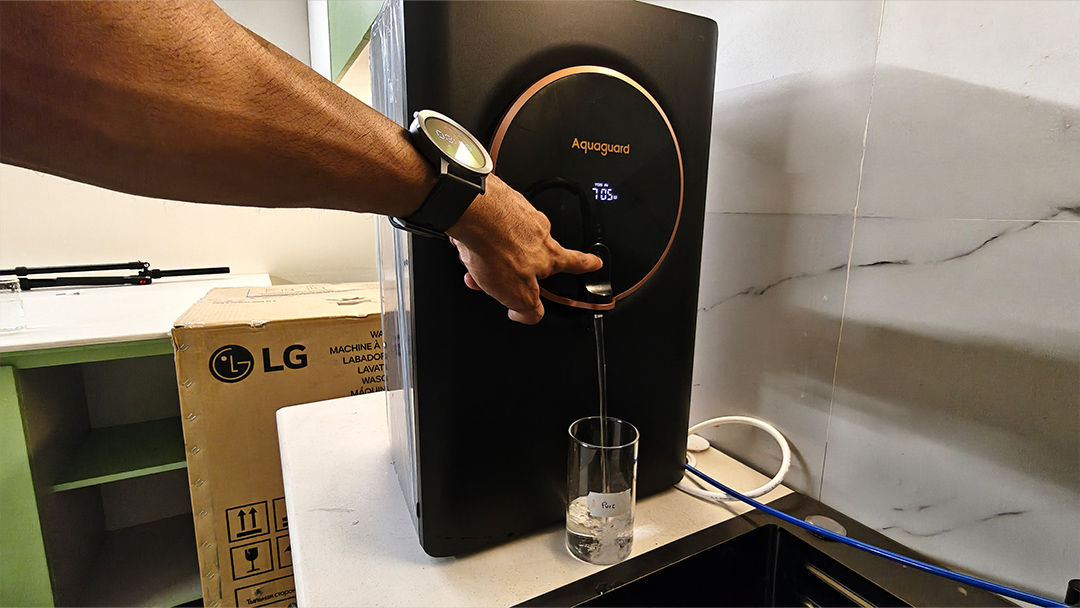
The front lighting is easy to understand without repeatedly referring to the manual. In our unit, the Halo panel turned blue once the tank was full and blinked while the purifier was refilling. The LCD indicator also blinked during the refill cycle, while its input and output TDS readouts offered a quick view of what the purifier was doing. Auto shut-off prevents unnecessary operation once the tank reaches capacity.
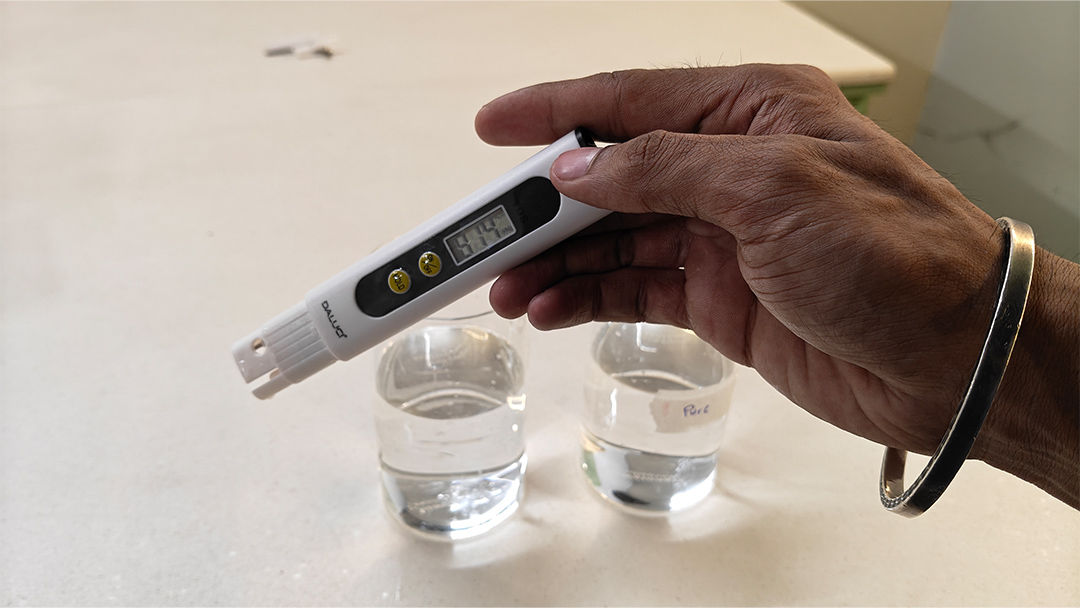
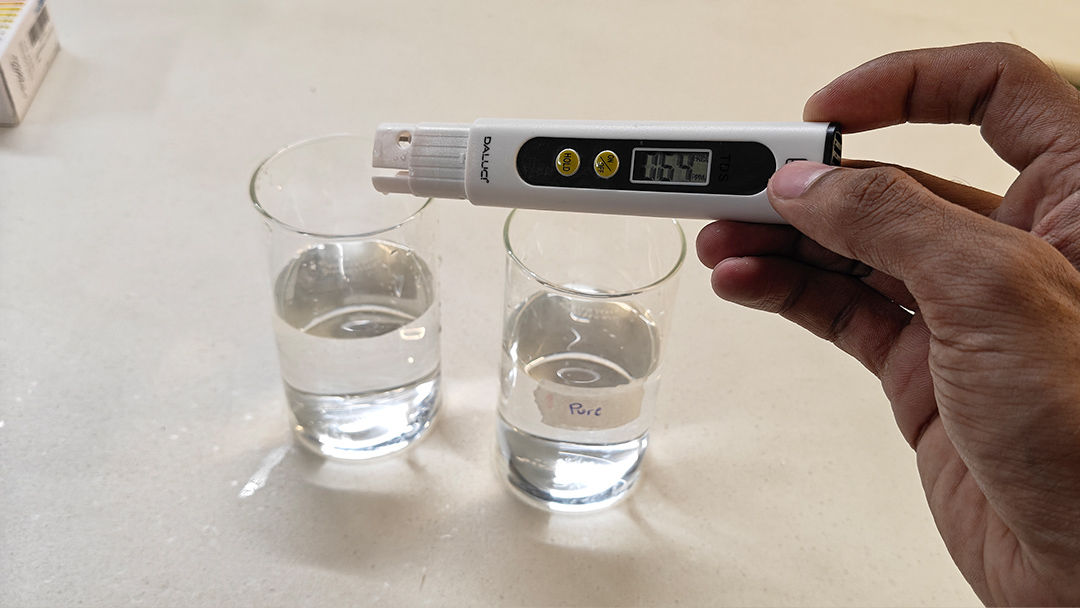
The displayed TDS numbers did not match our independent meter exactly, although the difference was small enough for the screen to remain useful as a directional indicator. Buyers should treat the display as an everyday reference rather than a laboratory-grade measurement.
Purification Performance
Purification is where the Aspire Halo makes its strongest case. Our input water measured 814 ppm, representing the kind of high-TDS supply for which an RO purifier is relevant. The output dropped to 64 ppm, a reduction of a little over 92%. More importantly, the treated water tasted clean and neutral, without a chemical smell or an unpleasant flatness.
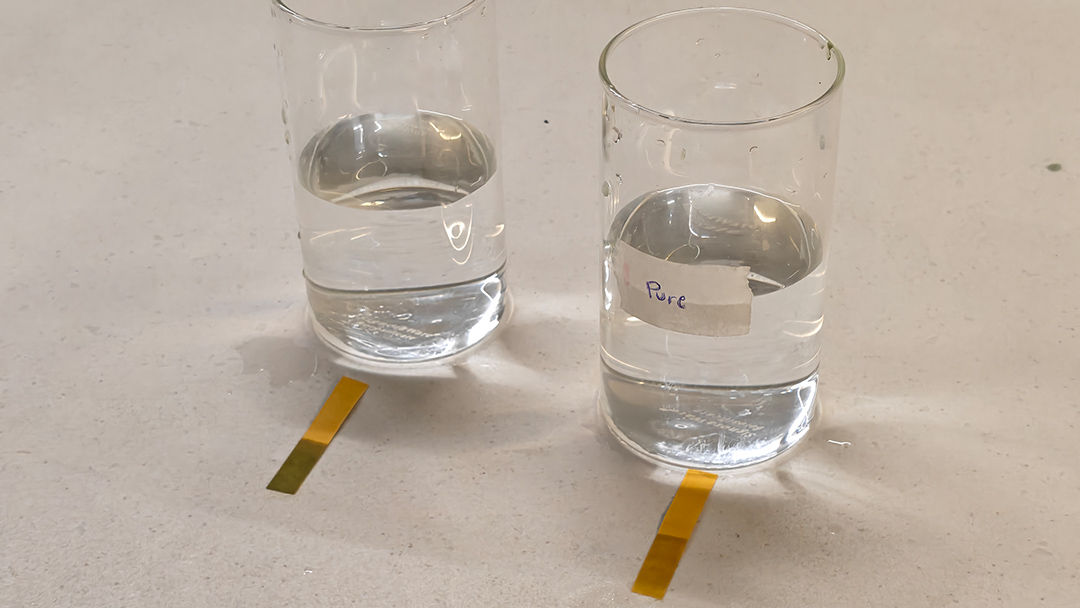
Output pH measured 7, placing it in the neutral range. The result is reassuring from a taste and balance perspective, although it does not show a distinctly alkaline reading in our test. Eureka Forbes markets the model with Active Copper and Alkaline Boost technologies, but we did not independently measure copper, zinc, calcium or magnesium concentration. The verified takeaway is therefore the strong TDS reduction and clean taste, rather than the mineral-infusion claims.
The company also lists a 12-stage purification system, fifth-generation UV LED treatment and support for municipal, borewell and tanker sources with input TDS up to 2,000 mg/L. Those specifications make the Aspire Halo relevant to homes where the source changes through the year, but the purifier should still be selected after checking the local water supply rather than by counting purification stages alone.
Water Flow and Tank Refill
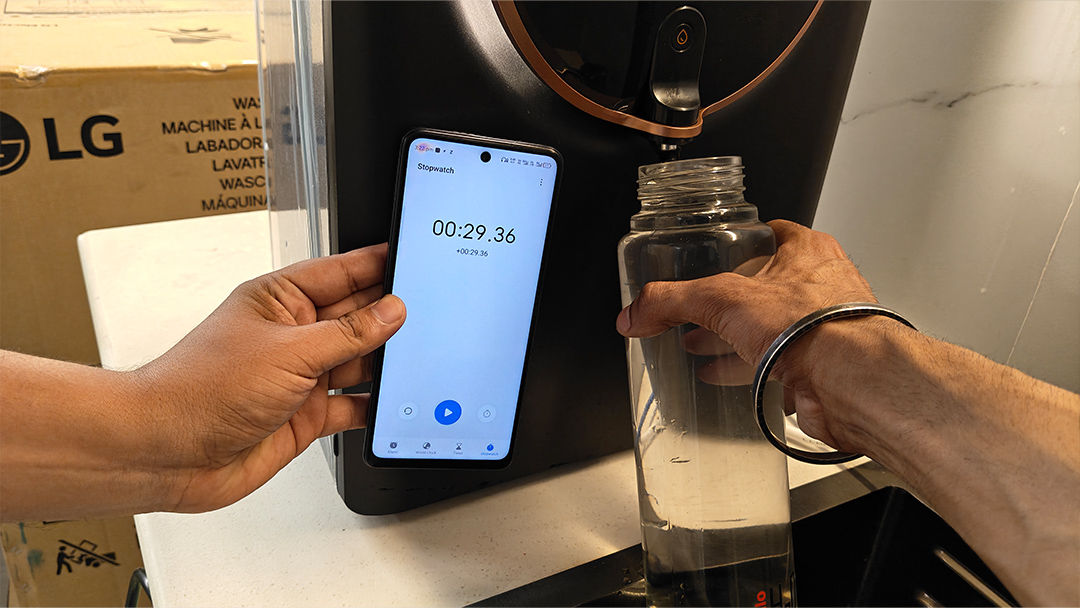
Filling a one-litre bottle took 29 seconds. The result is perfectly usable for daily drinking water, but it is slower than the 18- to 25-second range recorded by some of the quicker purifiers we have tested. Eureka Forbes claims up to 20% faster flow, yet the Aspire Halo did not produce a category-leading bottle-fill time in our setup. Repeated dispensing remained consistent, with no noticeable drop in flow.
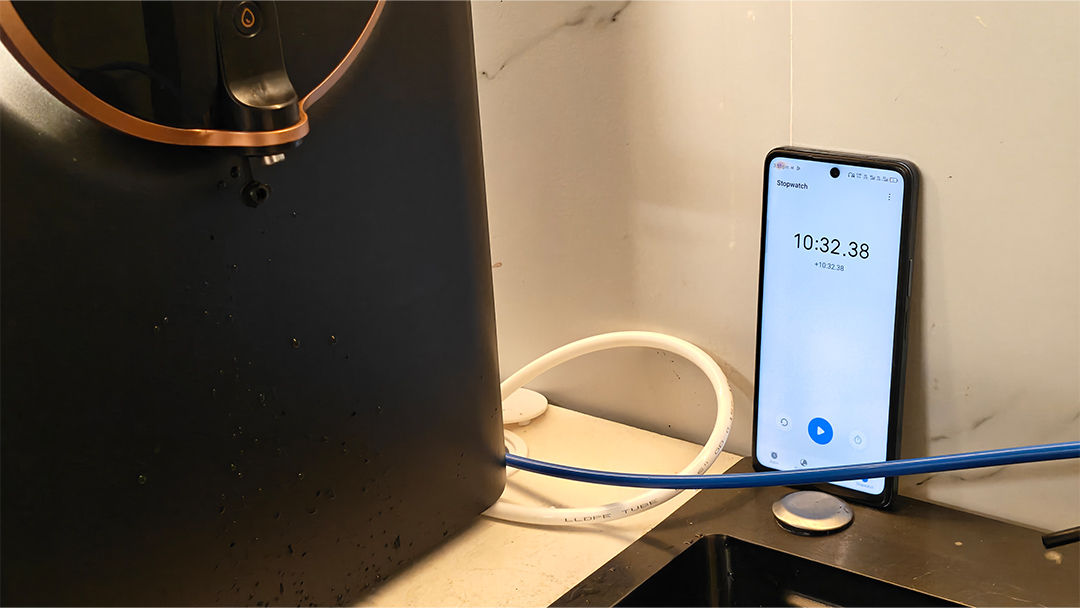
Tank recovery was considerably more impressive. The purifier replenished its storage in 10 minutes 32 seconds, one of its strongest test results. The combination changes how the purifier feels in use: individual bottles take a few seconds longer to fill, but the tank is ready again quickly after a family draws several litres for drinking or cooking.
Water Efficiency, Maintenance and Ownership
The measured water rejection ratio was 1:2. In practical terms, producing one litre of purified water sent roughly two litres through the reject outlet, translating to a recovery rate of about 33%. The result is adequate for a conventional RO purifier, but it is not especially efficient. Households purchasing the Aspire Halo should plan to collect the rejected water for floor cleaning, washing outdoor areas or other non-drinking uses instead of letting it run directly into the drain.
Maintenance is a stronger part of the ownership pitch. Eureka Forbes claims a filter life of up to two years or 12,000 litres and includes a Mega Sediment Filter. The official listing also mentions free installation, one maintenance visit, unlimited repair visits under the bundled service plan and a one-year product warranty. Actual filter life will vary with water quality and usage, but the longer replacement cycle can reduce early ownership anxiety if local service support is responsive.
Service matters more for a purifier than the launch-day feature list. As Eureka Forbes told MySmartPrice in an earlier interaction, the relationship continues through filter changes, maintenance and repairs. Aquaguard’s service reach remains an important advantage here, although buyers should still check technician availability and future filter pricing in their own pin code before purchasing.
Value for Money
At its current official price of Rs 23,999, the Aspire Halo is not an entry-level RO purifier. The cost places it against models offering app connectivity, larger storage or lower advertised water wastage. Aquaguard’s counter is a well-rounded hardware package: strong purification, a stainless steel tank, quick refill, useful TDS visibility, a long filter-life claim and an established service ecosystem.
The value equation is strongest for households dealing with high-TDS or changing water sources. Homes receiving consistently low-TDS municipal water should first consider whether a UV purifier is sufficient, since an RO model adds both cost and reject water. Eureka Forbes itself recommends RO when input TDS is above 200 ppm and UV when it is below 200 ppm, provided the source remains consistent.
Verdict
The Aquaguard Aspire Halo gets the fundamentals right. It produced the strongest result where a water purifier matters most, reducing 814 ppm input water to 64 ppm while retaining a clean, neutral taste. Its quick tank refill, accurate storage capacity, sturdy body and clear status indicators make the daily experience dependable rather than complicated.
A slower 29-second bottle-fill time and the 1:2 rejection ratio prevent an unqualified recommendation. The TDS display is useful but should not be treated as an exact meter either. Even so, households with high-TDS, borewell, tanker or mixed-source water will find a reassuring combination of purification performance and ownership support here. Buyers with consistently low-TDS municipal supply can save money and water by looking at a suitable UV-only alternative.