Air fryers have become a crowded category, with enough similar-looking appliances and overlapping features to make choosing one surprisingly difficult. Glass baskets bring something immediately useful to the mix: a clearer view of what is happening to your food. Having used glass-basket models before, though, my first question was about handling. Watching dinner cook is welcome, but less so if the bowl becomes awkwardly hot to manage afterwards.
With the Nester Home Cook 6.2L Glass Air Fryer, I wanted to find out whether the glass bowl would be as practical to handle as it was useful to look through. We tried fries, frozen momos, day-old pizza and cooked Haldiram's samosas. Its distinctive design gets your attention, but bringing leftovers back to the table turned out to be its most convincing skill.
Design and Everyday Handling
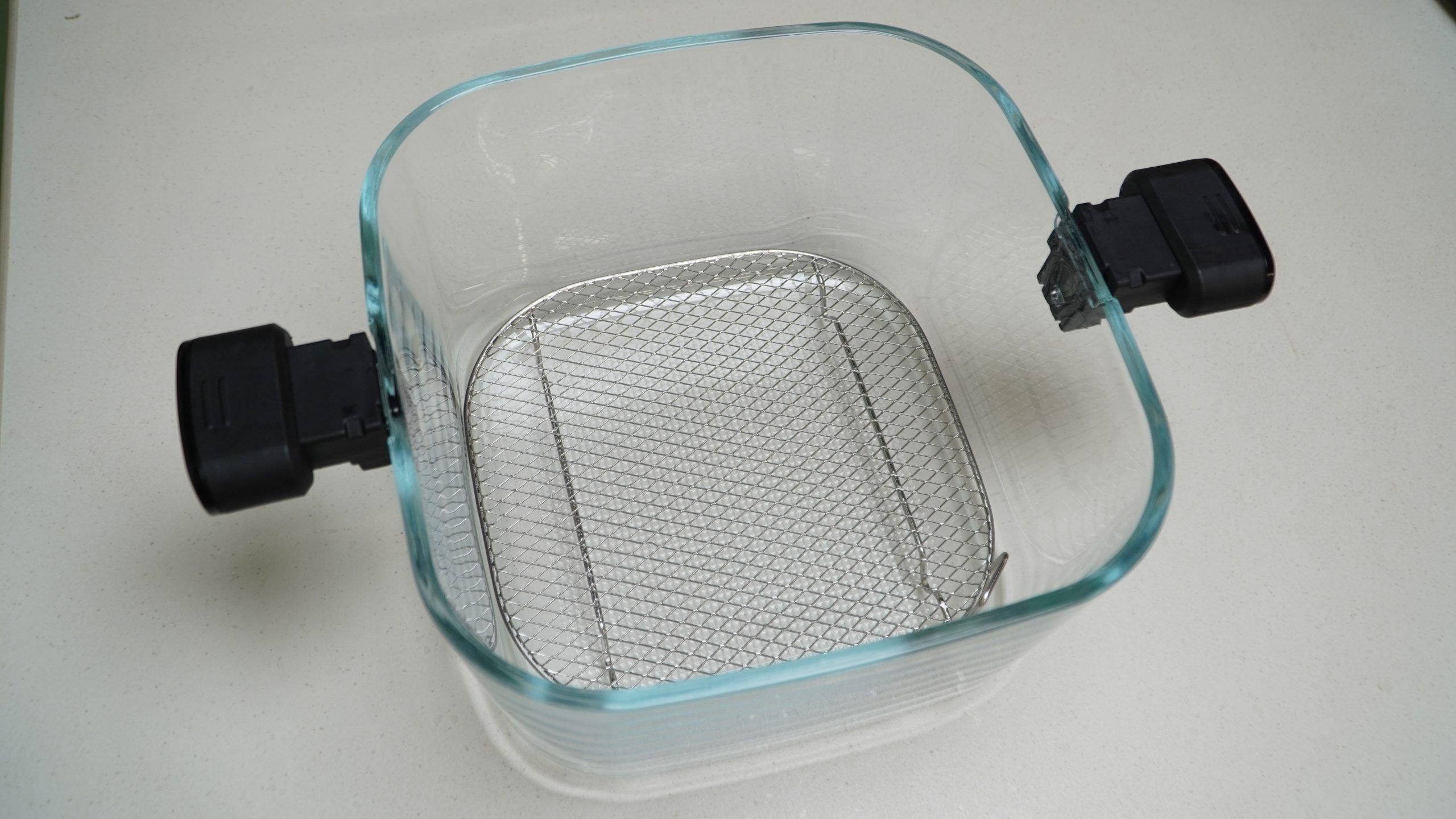
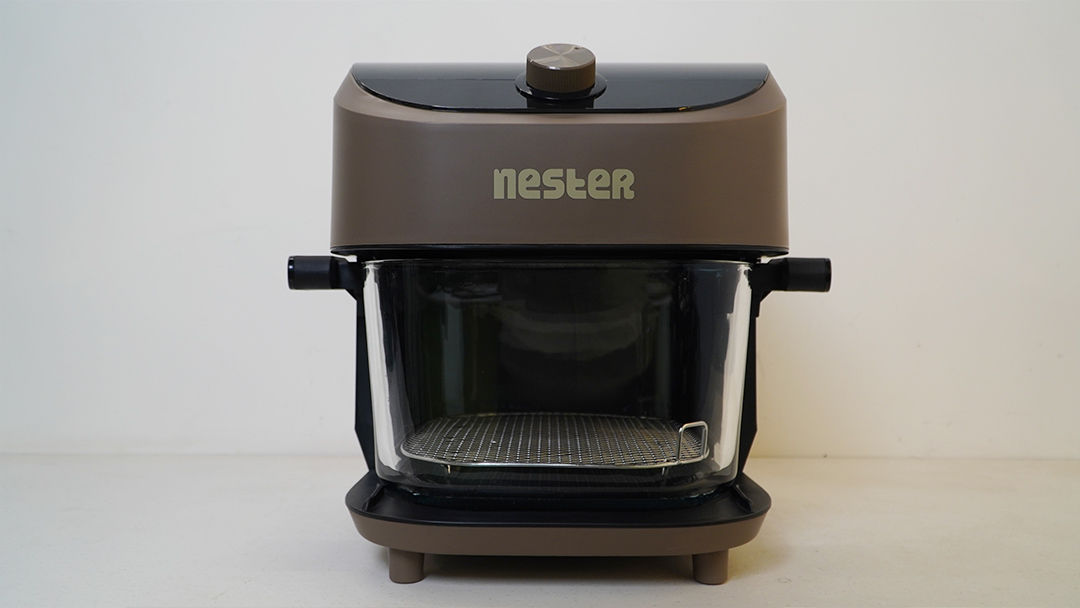
From almost any angle, the Nester looks different from the usual drawer-style air fryer. Its unconventional shape gives it a presence of its own, while the thick, transparent glass bowl makes the food clearly visible.
Visibility goes well beyond what a small viewing window offers. You get a broader view of the food, making it easier to follow its progress without repeatedly opening the appliance. For fries in particular, where a few extra minutes can make a noticeable difference, that is a useful advantage.
Handling also proved more comfortable than I had expected. The basket needs to be lifted from both sides, much like a cooking pot, rather than pulled out using a single front handle. I found the arrangement manageable during testing, and heat around the bowl was less troublesome than my previous experience with glass air fryers had led me to expect.
Lifting the bowl requires both hands, so anyone accustomed to pulling out a conventional basket by its front handle will need to adjust. My experience was reassuring, although it does not mean the glass stays cool throughout cooking.
Controls and Presets
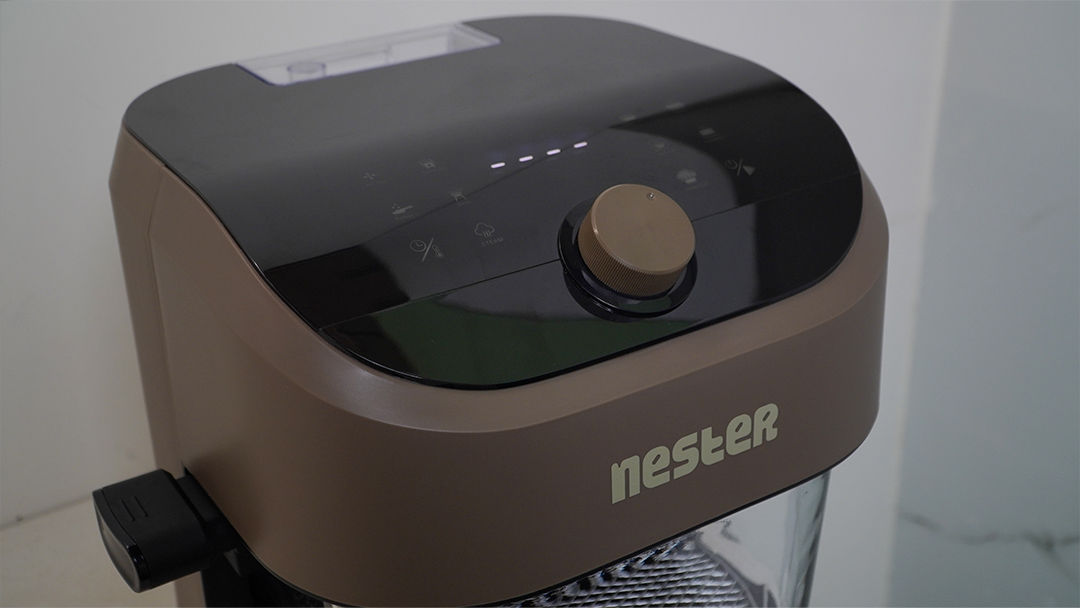
Operating the Nester takes a little familiarisation. It combines a knob with touch controls, and working out when to turn the dial and when to use the touch inputs involves a learning curve. The relationship between the two could be more intuitive.
Placement and legibility could also be better. The controls sit on top of the appliance, and the markings are not as easy to read as I would have liked. Clearer labels would make a difference when selecting a mode or quickly adjusting the cooking time.
Nine modes cover functions including Snacks, Air Fry, Bake, Grill and Reheat. Our testing focused on everyday snacks and reheating rather than working through the entire menu. We plan to explore the remaining modes during festive cooking.
Cooking Performance
Fries were the obvious starting point. We followed them with frozen momos and reheating tests to see how comfortably the Nester could fit into an everyday kitchen routine.
| Food tested | Settings used | Our experience |
|---|---|---|
| 412g of fries | Snacks mode at 200°C; 14 minutes initially, followed by approximately six more | Satisfactory results after 20 minutes in total |
| Frozen momos | Air Fry mode | Turned out well |
| Day-old thin-crust pizza | Reheating test | Cheese, crust and protein toppings warmed well |
| Cooked Haldiram's samosas | Reheating test | Warm through the outer shell and filling |
Fries Needed Extra Time
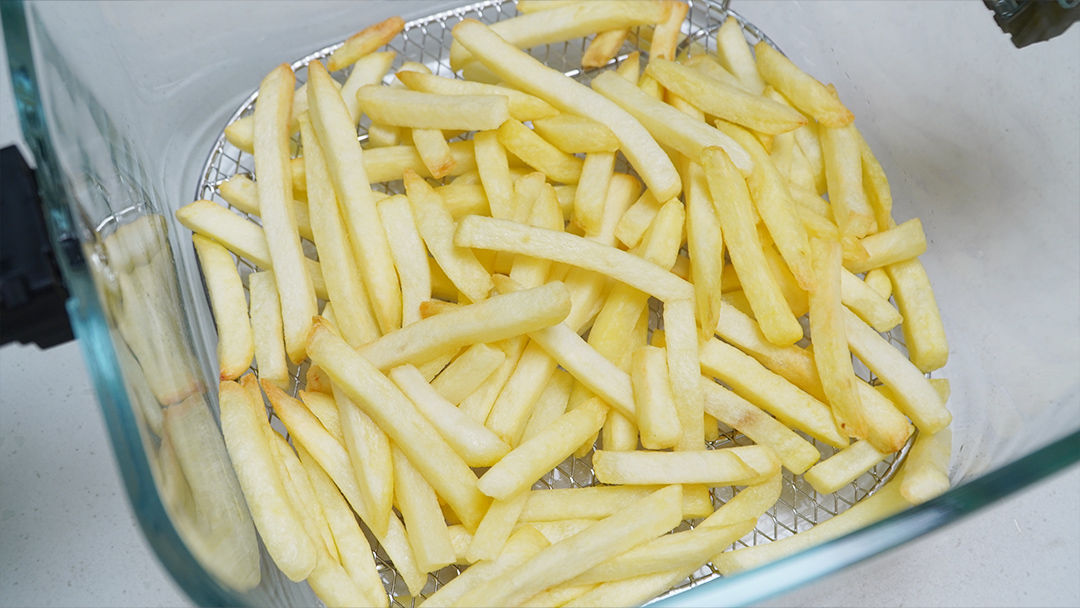
Our 412g batch went into Snacks mode at 200°C for 14 minutes. The first run was not enough, so we added approximately six minutes at the same temperature, bringing the total cooking time to 20 minutes.
The final result was satisfactory, although fries were not the standout of our testing. Getting there required checking the food and extending the cooking time rather than simply letting the initial cycle finish.
Presets are useful starting points, but the quantity being cooked still matters. For our batch, the extra six minutes were necessary, and the clear bowl made it easier to keep an eye on progress.
Frozen Momos Turned Out Well
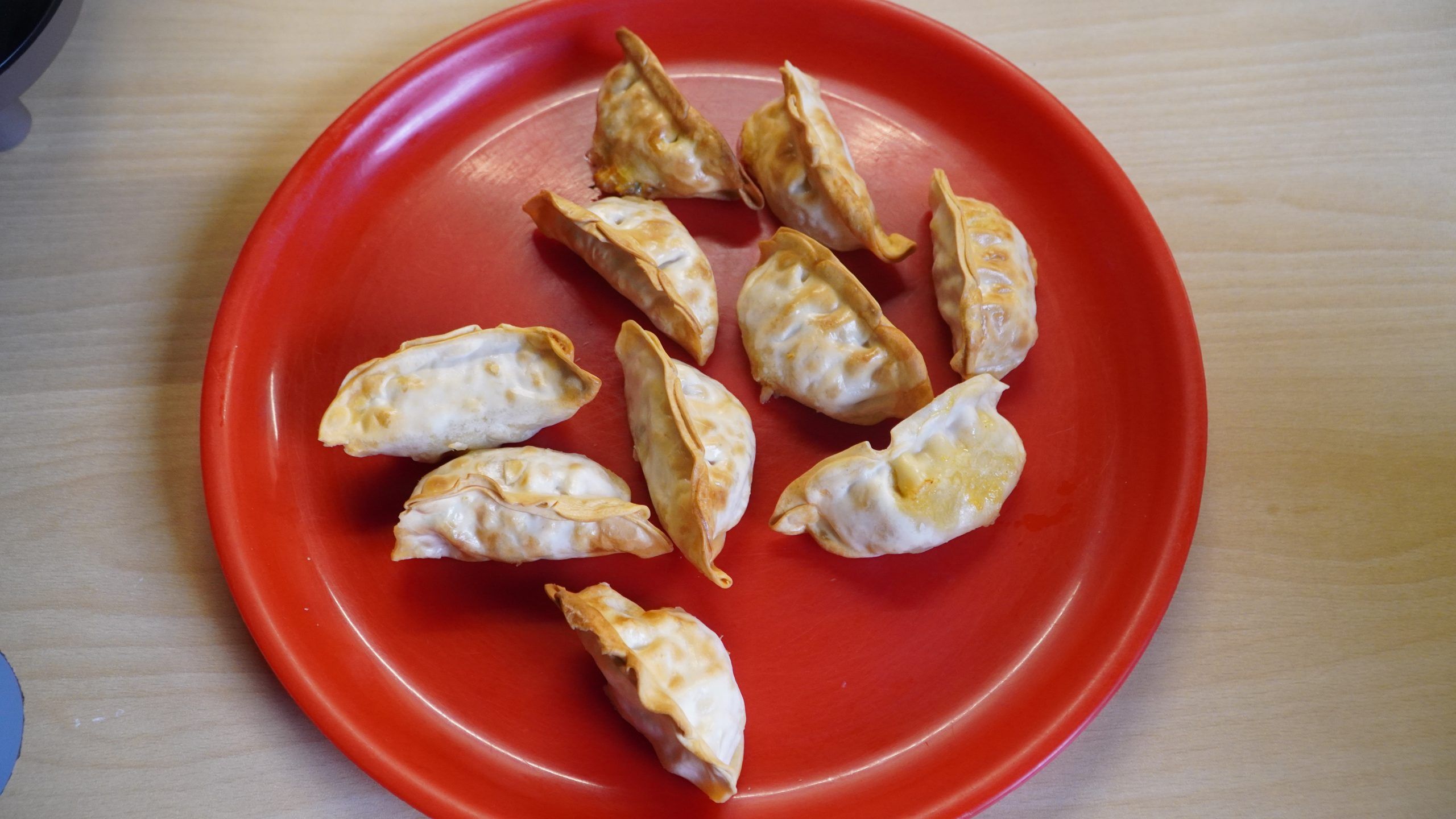
Using Air Fry mode for frozen momos gave us a pleasing result. They were one of the more successful snacks we tried, adding to the Nester's usefulness for quick bites alongside reheating.
Our testing here was limited to the momos, so there is still more to explore before judging how it handles a wider range of frozen snacks.
Reheating Was the Highlight
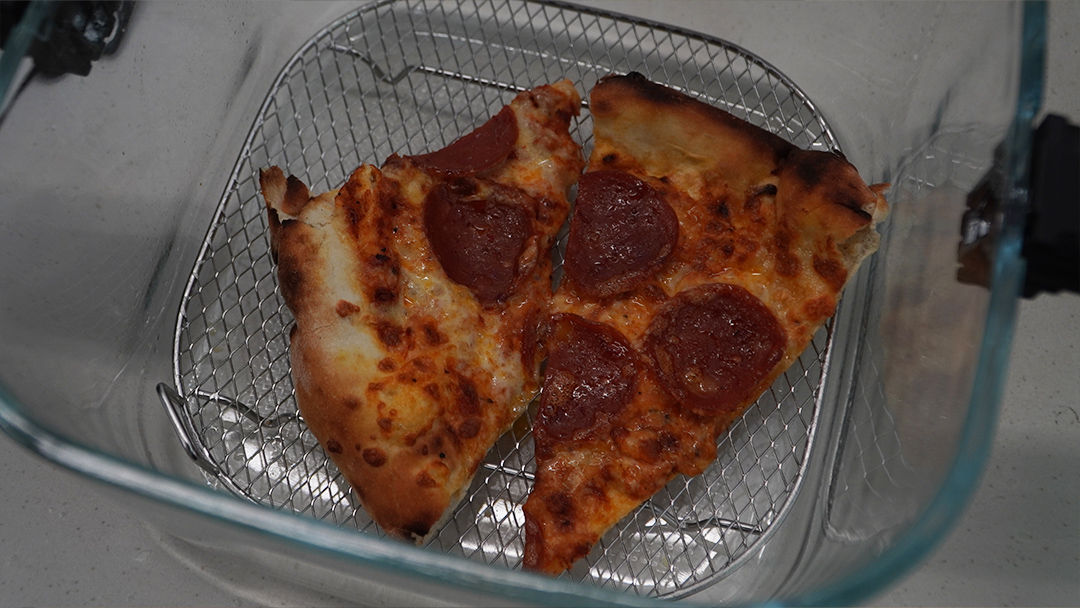
Day-old thin-crust pizza was the most convincing example of what the Nester does well. The cheese warmed nicely, along with the crust and protein toppings. Crucially, the protein did not become unpleasantly tough or chewy after reheating. The slice remained enjoyable rather than merely hot.
Cooked Haldiram's samosas were another success. Heat reached both the outer shell and the filling, giving us a samosa that was warm throughout instead of leaving a cooler centre.
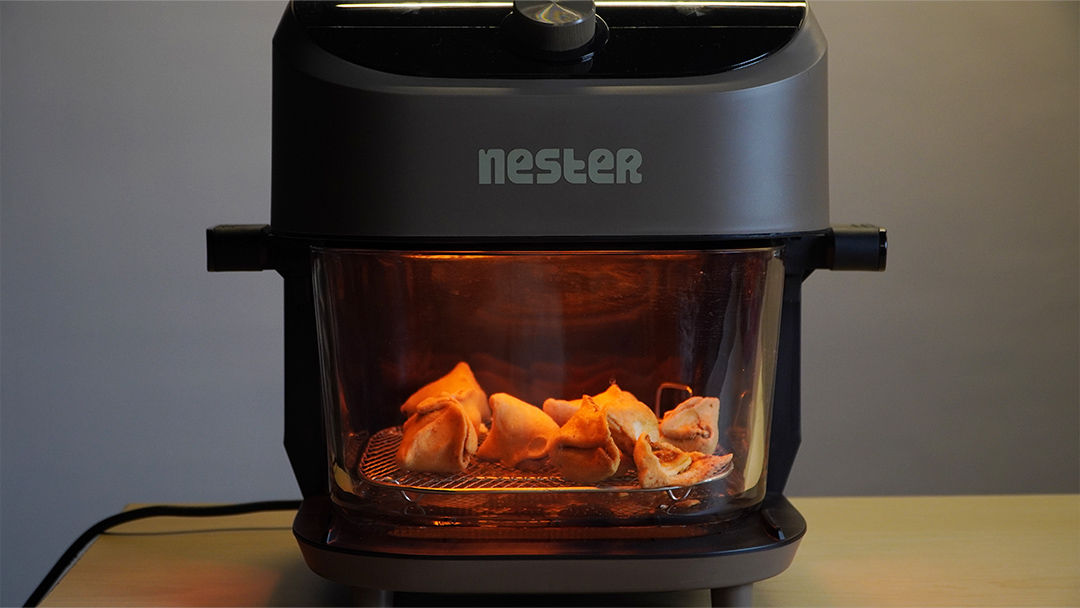
Both tests highlighted a useful everyday strength. An air fryer may initially find its way into the kitchen for fries and frozen snacks, but reheating is often what keeps it in regular use. Based on our experience, the Nester handles that job convincingly.
Verdict: Strong Reheating and Useful Visibility, With Controls That Need Polish
Reheating gave me the clearest reason to keep using the Nester Home Cook 6.2L. Day-old pizza remained enjoyable, samosas warmed through properly, and frozen momos turned out well. Fries were satisfactory after 20 minutes at 200°C, though they were less of a highlight.
Beyond appearance, the glass bowl adds something useful: a clear view of the food as it cooks. Its two-sided handling also proved more manageable than I had expected. The controls need more polish, however, particularly the legibility of the top panel and the coordination between touch inputs and the knob.
For someone who regularly reheats food and prepares snacks, the Nester Air Fryer is worth considering. We still need to explore its baking, grilling and other modes before judging its full versatility, but the everyday tasks tested so far reveal practical strengths alongside its unusual design.