The Honeywell Move Pure 5 purifier enters the scene at a time when each breath, indoors or outdoors, feels like losing 1XP to an invisible yet wicked force we dread as air pollution. While we have plenty of air purifiers for our homes and offices, options for our daily commute remain scarce.
Honeywell Move Pure 5
Rs 7,159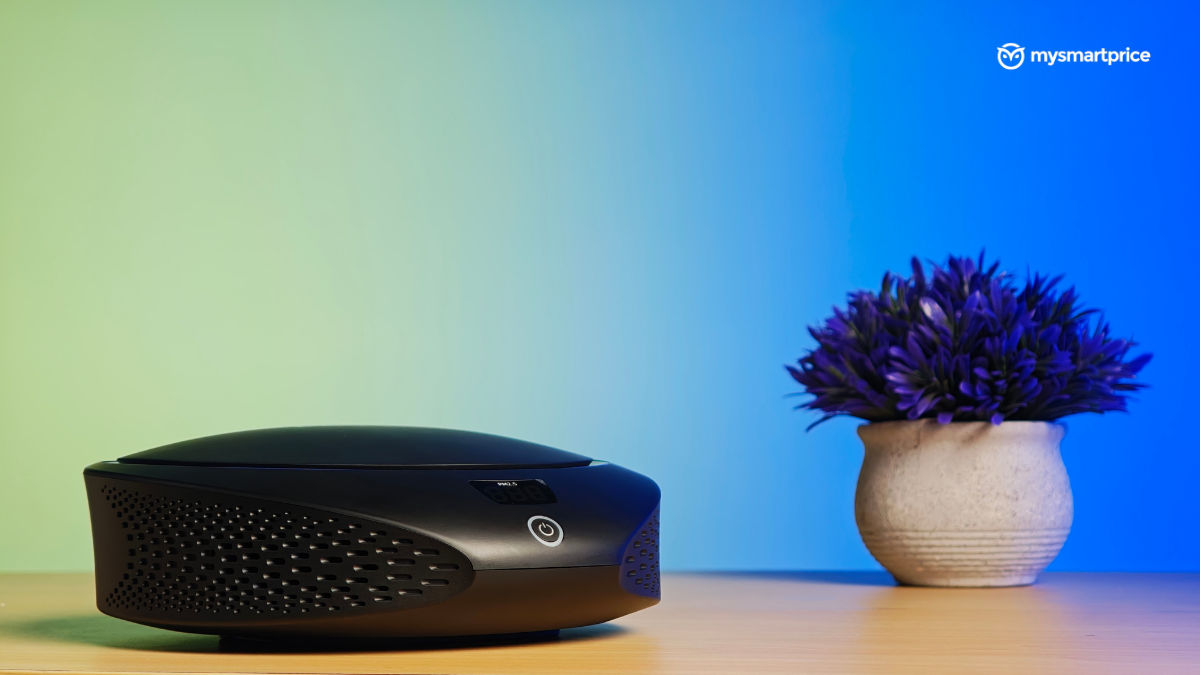
What Is Good?
- Utilitarian design
- Excellent air purification
- Easy filter replacement
What Is Bad?
- Performance in auto mode is modest
- It needs a CLA charger to operate
- New filters are currently unavailable
Honeywell aims to bridge the gap with its Move Pure 5 car air purifier. It is said to be engineered from the core to tackle any severe air pollutants and safeguard passengers. A quick look at its feature set certainly seems to back Honeywell’s claim. It offers a 4-in-1 filtration system, including formaldehyde crystals and a nano-silver antibacterial layer, along with a real-time monitoring setup.
On paper, the Move Pure 5 ticks all the right boxes with its specifications. The real question is whether it can live up to its claims once it hits the road. Let’s find out in my review.
Build Quality and Design
Honeywell has excelled in designing the Move Pure 5 purifier. It features a functional design ethos that is also evident in its smaller model, the Move Pure 4 purifier, which we reviewed earlier. Owing to this, the Honeywell purifier merges well with the modest ambience we see in nearly every Indian car.
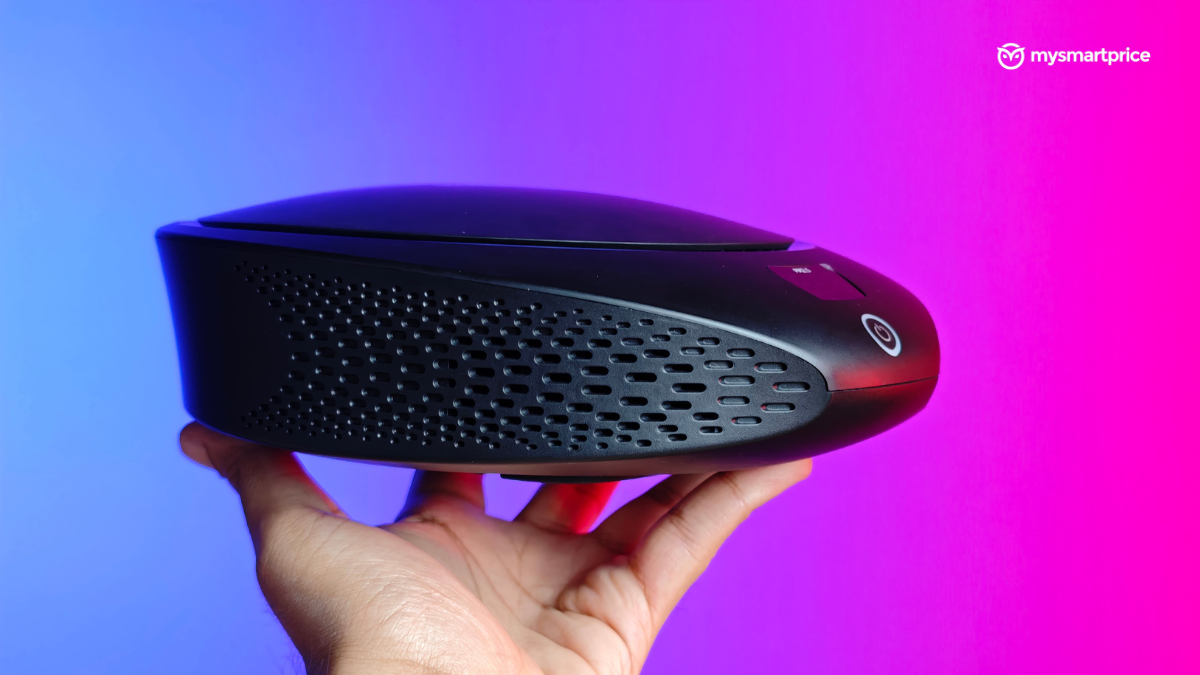
However, I’d like to highlight that I personally lean more towards the Move 4 purifier aesthetically, as the golden accent around its air inlet lends it an elegant look. On the other hand, the Move Pure 5 opts for a simpler look, which doesn’t feel as polished as the Move 4’s more elegant finish. However, some of my colleagues leaned toward the design of the current generation.
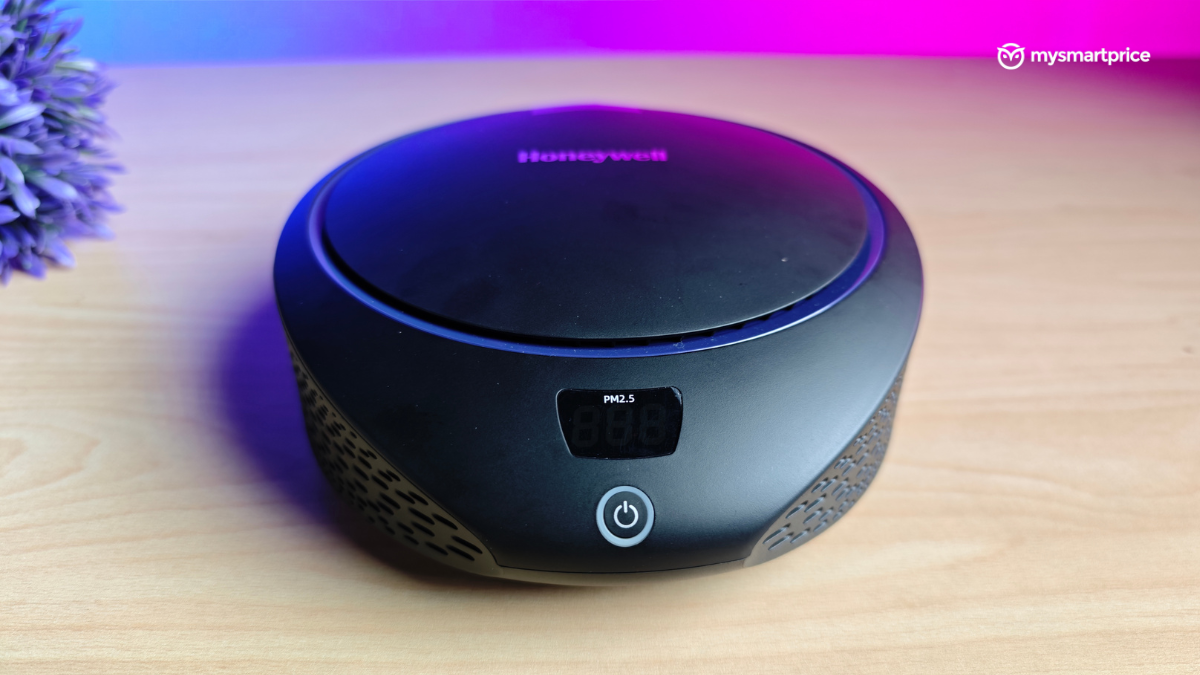
For me, I think that Move Pure 5’s less appealing appearance is partly due to the front tapering, which gives it a more compact but less confident look. The Move Pure 4, on the contrary, carries itself with a more balanced and assured visual presence.
That said, the silver lining is that the Move Pure 5‘s utilitarian design carries over to its control, making it easy to switch fan modes with a single press. The reason is that it only features a single button.
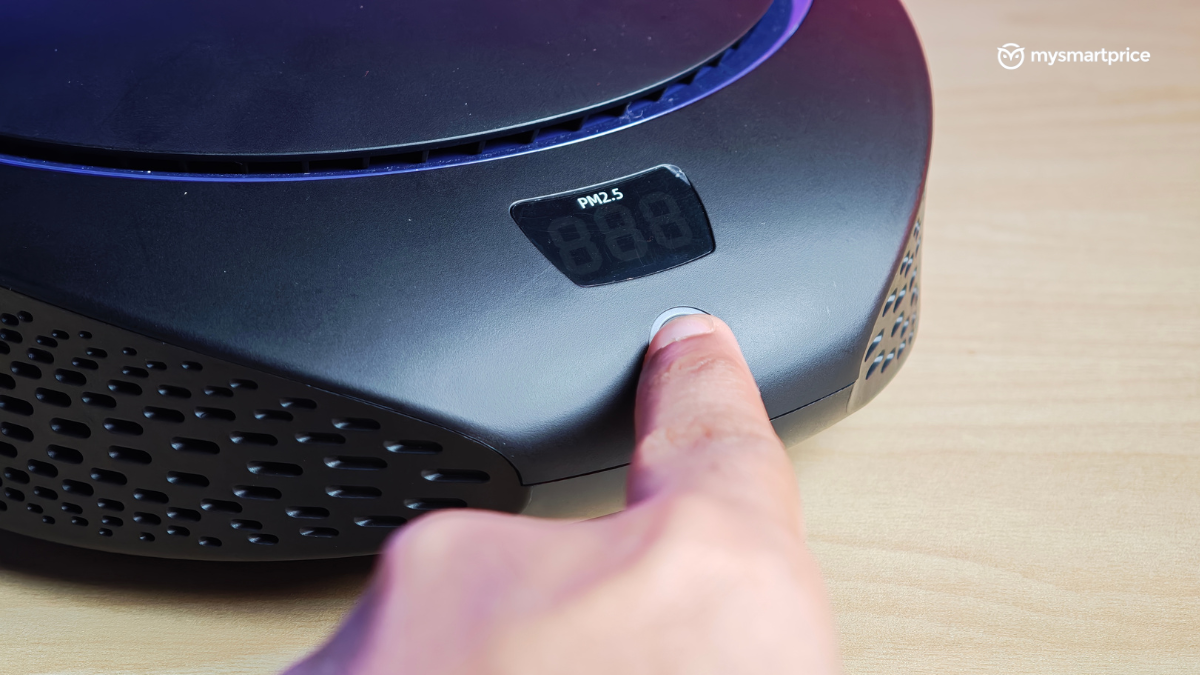
By the way, besides powering on the device, it doubles as an indicator, glowing green once the air is purified and flashing yellow when it’s time to replace the filter. Above it sits the real-time monitoring system, which tracks how much the PM2.5 it has effectively reduced.
One surprising aspect of the Move Pure 5 is that it is slightly shorter than the Move Pure 4. Yet, it incorporates an additional filtration system alongside the three usual filtration modules we have seen in the latter. However, it still poses the same risk to the car occupants as I noted for the Move Pure 4.
Even in the Move Pure 5’s manual, the brand recommends placing it on the dashboard, which might not be the safest option. Car manufacturers often warn against keeping any objects there, as they could turn dangerous during a collision. Both the Move Pure 4 and Move Pure 5 can also be mounted on the back of a seat’s headrest using a loop. Since neither is battery-powered, they rely on a CLA charger for operation. This setup can cause the wire to hang loose, sometimes getting in the way while changing gears.
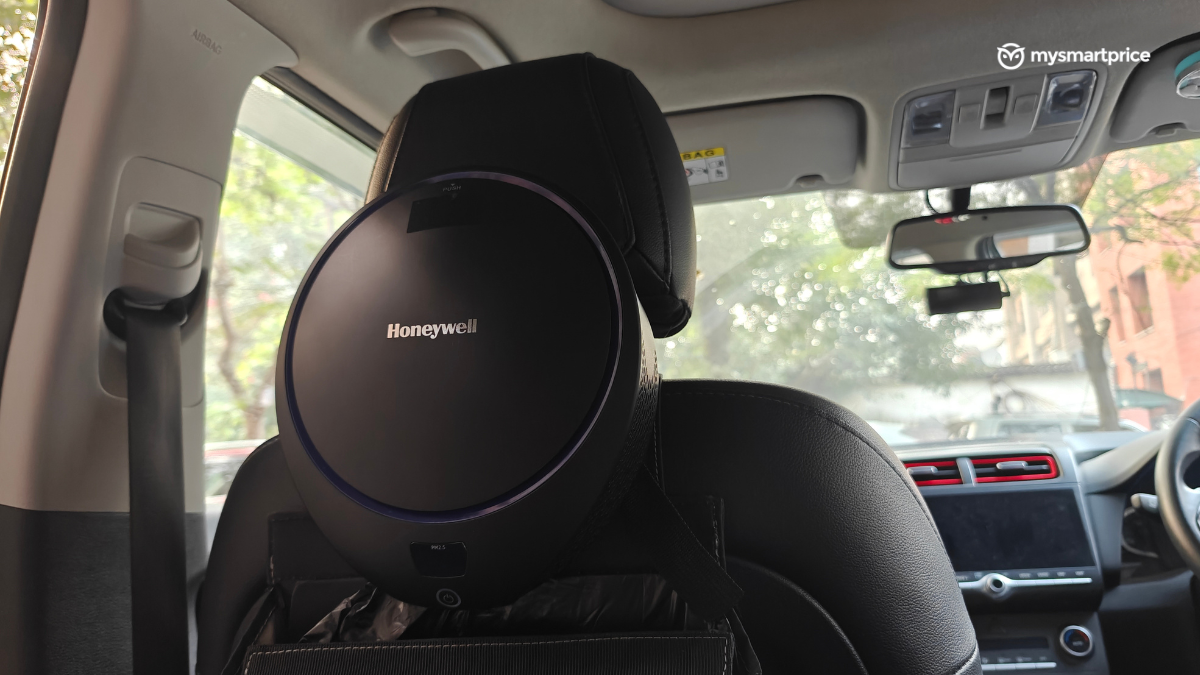
So, if you plan to keep it running throughout the year, I recommend mounting it on the back of the co-passenger’s seat. As I pointed out earlier, it may interfere when changing manual gears; however, most trained drivers can eventually learn to avoid it once they become accustomed to it. Furthermore, the popularity of automatic transmission cars is rapidly increasing among Indians. These vehicles don’t require motorists to shift their gears constantly. As a result, the dangling wires of the Move Pure 5 won’t be a dire issue for people behind the wheel of automatic cars.
On the contrary, brands like Sharp and Qubo offer a few air purifiers designed for cars, which can easily slip into the cup holders. The Sharp IG-GC2E and the Qubo Car Air Purifier Pro are excellent examples. Once placed inside the cup holders, they come a lot closer to the auxiliary power outlet, which effectively reduces the intrusion of dangling wires when shifting gears. However, they do take away spaces meant for the coffee cup, which may not sit well with caffeine connoisseurs.
Filters and Air Purification
Building on what I said earlier, the Move 5 features a setup of four filtration modules, including a pre-filter, a nano-silver antibacterial layer, formaldehyde crystals and an H12 HEPA filter. Let’s briefly discuss what purpose each filter serves.
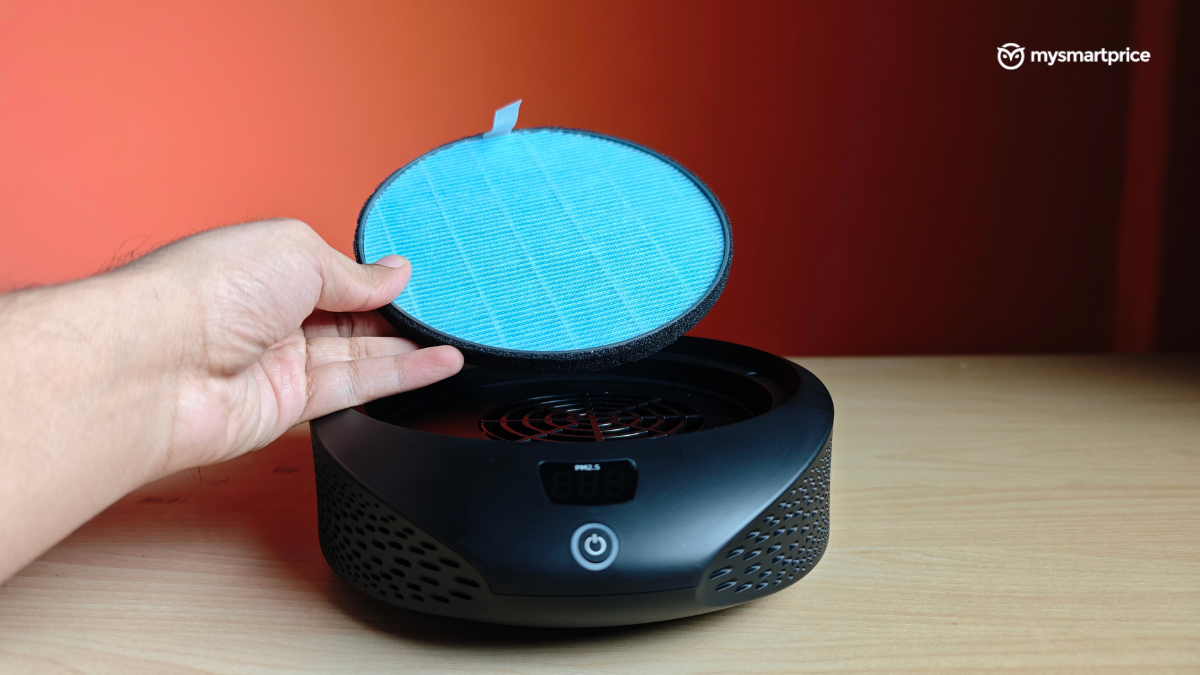
The pre-filter captures larger airborne particles such as dust, pet hair, and lint, preventing the remaining filters from getting clogged. The nano-silver antibacterial layer eliminates bacteria and microorganisms in the air, reducing the chances of their growth.
The formaldehyde crystals act as a dedicated layer to trap or break down this harmful gas. They are usually made of specialised materials, such as activated carbon or catalytic coatings, which either absorb formaldehyde molecules or convert them into harmless compounds such as water and carbon dioxide.
Finally, the H12 HEPA filter serves as the last line of defence, trapping up to 99.99% of fine particles as small as 0.3 microns. Together, these layers maintain cleaner and safer air inside the cabin.
Performance and Real-World Testing
I tested the Move Pure 5 inside a 2023 Hyundai Creta, chosen for its SUV-like dimensions. It represents the majority of the new cars on Indian roads. The test involved two occupants, including myself, and was carried out in a stationary vehicle.
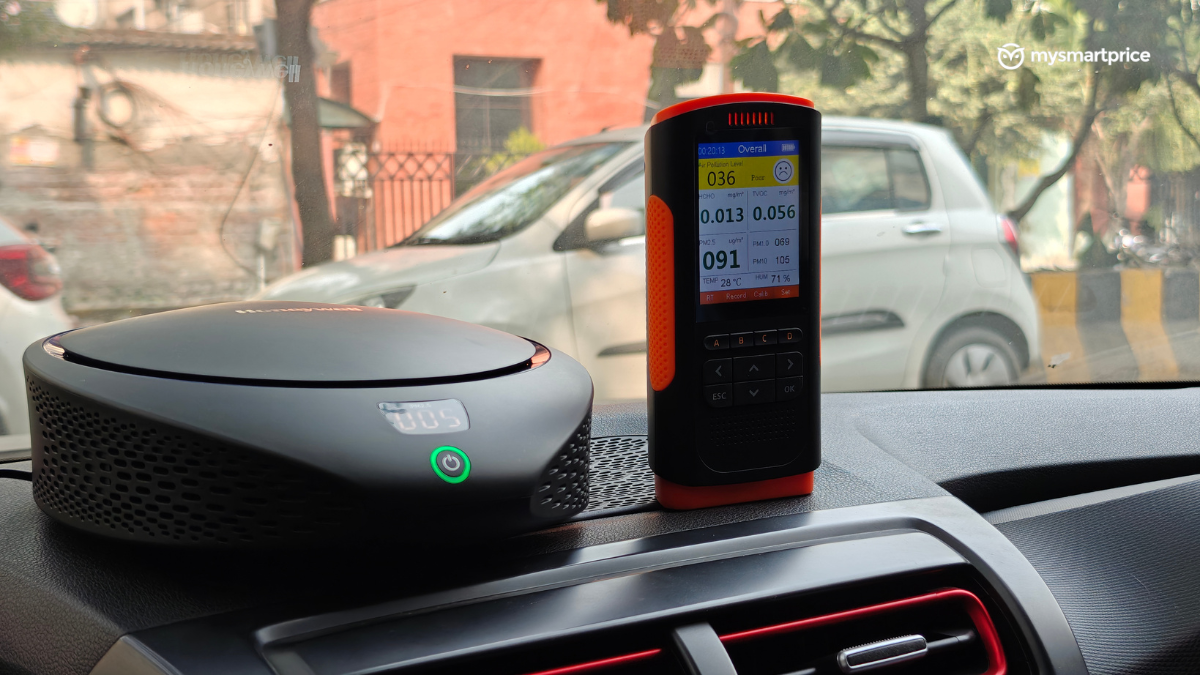
Despite the AQI reaching 647 in Noida and PM2.5 levels rising to 503 µg/m³, we created a simulated environment using incense sticks to better assess the purifier’s real capabilities. This approach also allowed us to compare its performance with rival and upcoming products on similar grounds.
The air purifier was placed above the central infotainment system, and the air conditioning remained off during testing. An air quality monitor tracked PM2.5 and AQI levels throughout the process. With the testing setup clarified, the next step is to evaluate how the Move Pure 5 performed in both auto and maximum fan modes and how effectively it improved cabin air quality. Here are our findings
Auto Mode
| AQI at the start of the test | AQI after 5 minutes | PM2.5 (ug/m3) at the start of the test | PM2.5 (ug/m3) after 5 minutes | |
| Move Pure 5 | 100 | 72 | 999 | 180 |
| Move Pure 4 | 100 | 46 | 999 | 117 |
As you can see, during our evaluation, the Move Pure 5 yieldedwas noted to yield modest results compared to the Move Pure 4 in auto mode. So, our testing lab re-conducted the test to see if it was an occasional occurrence. Upon re-assessing both air purifiers, our speculation turned out to be positive, indicating that the Move Pure 5 cleans the air at a speed somewhere between low and medium. Since the ideal air quality is said to be 50 AQI, I recommend using the Move Pure 5 at its max mode, a choice I’ll justify shortly. On the contrary, the Move Pure 4 can be used in auto mode without worrying much about the air quality.
On the PM2.5 front, the Move Pure 5 was again observed to perform modestly in comparison to the Move Pure 4 in auto mode. So, if you are concerned about invisible particulate matter that causes diseases like asthma, then using the Move Pure 5 in auto mode may not be the best move.
Max Mode
| AQI at the start of the test | AQI after 5 minutes | PM2.5 (ug/m3) at the start of the test | PM2.5 (ug/m3) after 5 minutes | |
| Move Pure 5 | 100 | 36 | 999 | 91 |
| Move Pure 4 | 100 | 17 | 999 | 44 |
Here, the Move Pure 5 has finally moved a few inches closer to the Move Pure 4 in terms of air-cleaning efficiency. In the max fan mode, it brought down the AQI from 100 to 36 in about 20 minutes, which is a clear improvement over its performance in auto mode. However, the Move Pure 4 still holds an edge, as it managed to reduce the same AQI to 17 within a similar duration. This suggests that while the Move Pure 5’s filtration system has potential, it needs sustained operation to reach its peak efficiency. Since the ideal in-cabin air quality is claimed to be below 50 AQI, users can finally rely on the Move Pure 5 in max mode to achieve healthier air levels. That wasn’t the case with its auto mode, where the purifier often plateaued early and failed to bring down the AQI to safe limits.
One possible reason behind this gap could be the revised airflow dynamics of the Move Pure 5. Its slightly tapered front design, while modern, may have restricted the air intake compared to the more open structure of the Move Pure 4.
Another contributing factor could be the additional filtration layer. While it improves purification, it slightly slows down the overall air circulation rate.
As a result, it takes longer for the purifier to process and clean the same volume of air. It’s also worth noting that both models rely on the same type of fan motor, which limits any performance gain from the redesigned body. Together, these factors explain why the Move Pure 5, despite being technically more advanced, doesn’t always outperform its predecessor in real-world conditions.
Ease of Changing Filters and Cost
Changing the filter inside the Move Pure 5 is simple. The top cover can be pushed down to remove it, giving easy access to the filter inside.
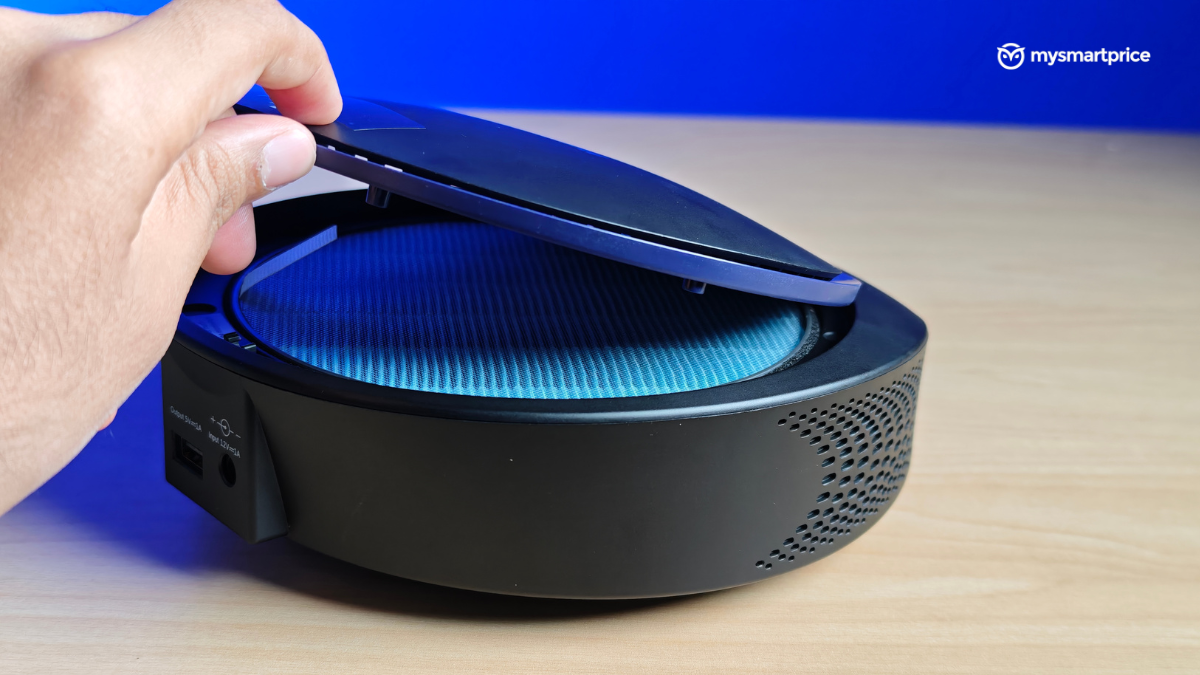
The process is straightforward and doesn’t require any tools. However, just like the Move Pure 4, the replacement filter for the Move Pure 5 is currently unavailable through major online platforms such as Amazon or Flipkart. Even Honeywell’s website doesn’t list it at the moment. This means buyers will either need to wait for online availability or check offline stores to get a replacement. Given that the product is relatively new, we think that Honeywell will be working on adding these in due course of time.
Verdict
The Honeywell Move Pure 5 is a capable option for anyone looking to maintain cleaner air during car rides. Its functional design blends well with most car interiors, though it is simpler in appearance compared to the Move Pure 4. The 4-in-1 filtration system, including formaldehyde crystals and a nano-silver antibacterial layer, performs well, especially in max mode, where AQI consistently drops below 50. While auto mode is slower than the Move Pure 4, running it at full power brings out its true potential. Another impressive aspect of this air purifier is that it operates within an acceptable noise range at all modes, so it won’t be a nuisance to car occupants.
To maximise performance, proper placement inside the car is important. Installation is safest on a seat headrest, as dashboard placement can be risky. Like its lower-tier model, it relies on a CLA charger, and replacement filters are not yet widely available online.
Compact alternatives like the Sharp IG-GC2E and Qubo Car Air Purifier Pro can fit in cup holders, reducing dangling wires, though they occupy space for drinks. Despite this, the Move Pure 5 remains a strong performer for cleaner, healthier cabin air.