A denoiser that grows by a fifth in parameter count usually asks for something back at the other end. DLSS 4.5 is built on the argument that it does not have to. The update swaps out the network behind Ray Reconstruction for a second-generation Transformer model, one carrying 20% more parameters and 35% higher compute capability than the version it succeeds, and NVIDIA’s position is that the extra capacity buys finer detail, more accurate lighting and steadier temporal behaviour in ray-traced and path-traced games without taking frames to pay for it.
Cyberpunk 2077 with path tracing enabled is where that argument gets tested hardest on a laptop GPU, which makes it a useful place to look. Preset F, the profile the new model runs under, went head to head there against Preset D, the implementation it replaces, on RTX 50-series notebook silicon. That leaves two questions worth separating. The first is whether the image genuinely holds together better while the camera is moving, and the second is whether the frame rate stays where it was once the heavier network is doing the work.
DLSS 4.5 Test System and Cyberpunk 2077 Path Tracing Settings
All runs took place on a Lenovo Legion 7 built around an Intel Core Ultra 9 275HX, 32 GB of DDR5 memory at 5,600 MT/s and a GeForce RTX 5070 Laptop GPU with 8 GB of GDDR7 and a 115 W TGP.
Graphics settings stayed identical between the two configurations. Resolution scaling ran through DLSS Super Resolution on the Transformer model at the Quality preset, with DLSS sharpness at 0 and Frame Generation disabled. Texture quality sat at High, ray tracing was off and path tracing was on, crowd density was Medium, overall graphics quality was High, and the game ran full screen at an internal resolution of 1920 x 1200. Frame Generation stayed off deliberately so that the measurements describe Ray Reconstruction itself rather than a second variable layered on top of it.
How Preset F and Preset D Were Tested
Performance came from several benchmark passes with each Ray Reconstruction configuration, and the figures below are averages across those passes rather than the output of a single run. For image quality, the same scenes were captured under matched conditions and examined for differences in lighting, shadows, reflections, fine detail and image noise, in daytime and night-time areas alike, with an eye on whether any given change held up across more than one part of the game.
DLSS 4.5 Ray Reconstruction FPS Test: Preset F vs Preset D Performance
| Mode | Average FPS | Variance range |
|---|---|---|
| DLSS 4.5 Ray Reconstruction (Preset F) | 35.80 FPS | 32 – 36 FPS |
| DLSS 4.0 Ray Reconstruction (Preset D) | 34.17 FPS | 32 – 35 FPS |
The gap between the two averages sits well inside normal run-to-run variance, so performance parity holds. Whatever the second-generation model is doing with its extra parameters, it is not taking frames to do it on RTX 50-series silicon.
DLSS 4.5 Preset F Image Quality in Daytime Path Tracing Scenes
With that settled, the interesting part is what the image looks like. The first test scene is the opening desert area on the outskirts of Night City, chosen for its strong sunlight and hard shadows, and it was captured three ways, namely with ray tracing, with path tracing, and with path tracing plus Ray Reconstruction on Preset F.
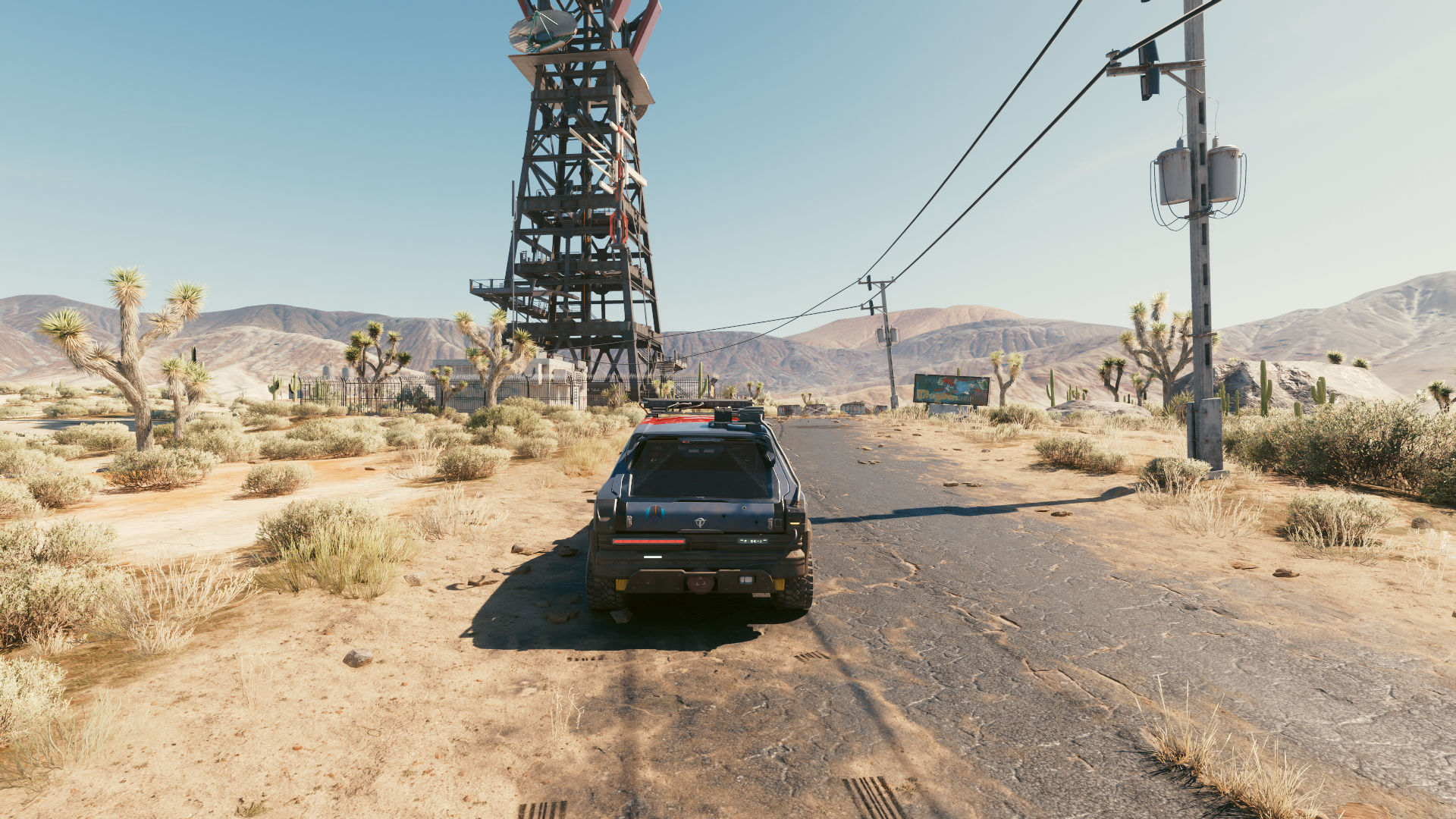
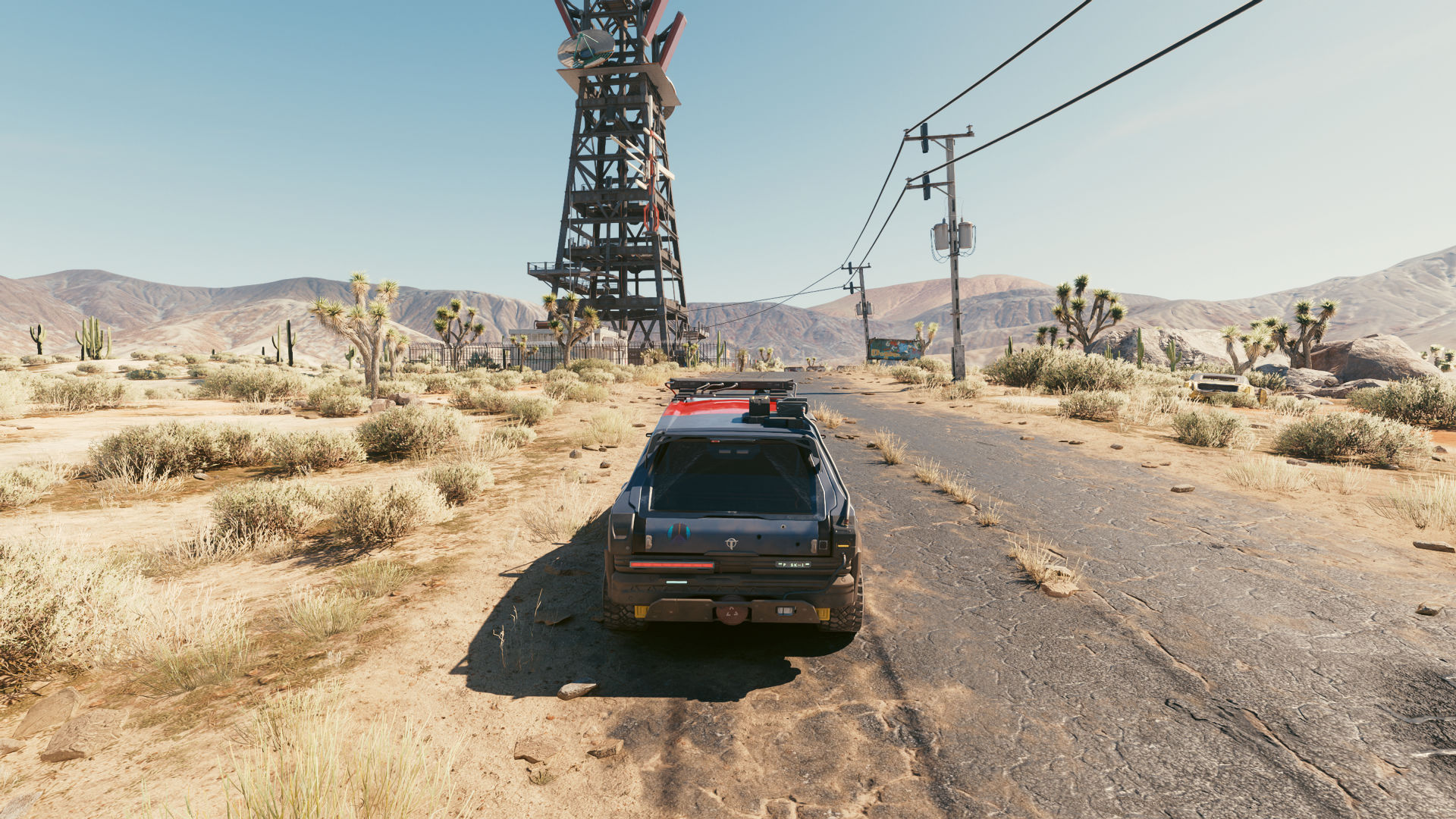
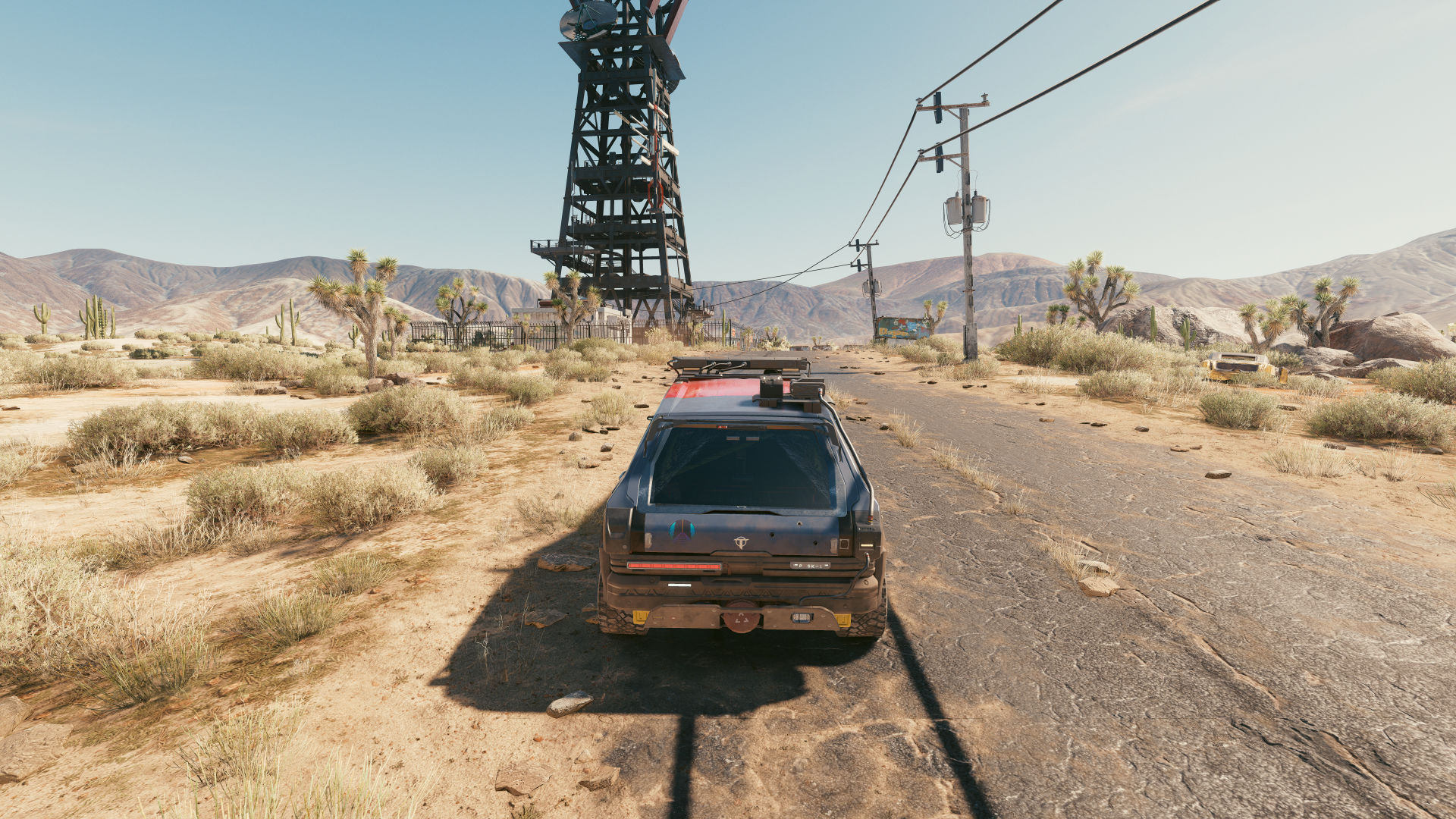
Shadows grow progressively sharper across those three images. V’s car casts a more prominent shadow with a darker shade and cleaner edges by the time Preset F is in play, and the lighting on the vegetation around it is at its strongest there too. The shadow also traces the shape of the bumper and the other exterior parts of the car more faithfully on the ground with Preset F enabled.
The other change worth noting is that areas which previously stayed much darker are now lit. That is easiest to see around the tyres, which read more clearly with Preset F than with standard path tracing. Ray tracing, by comparison, leaves the scene noticeably less illuminated.
Preset F Lighting and Shadow Detail in Open Sunlight
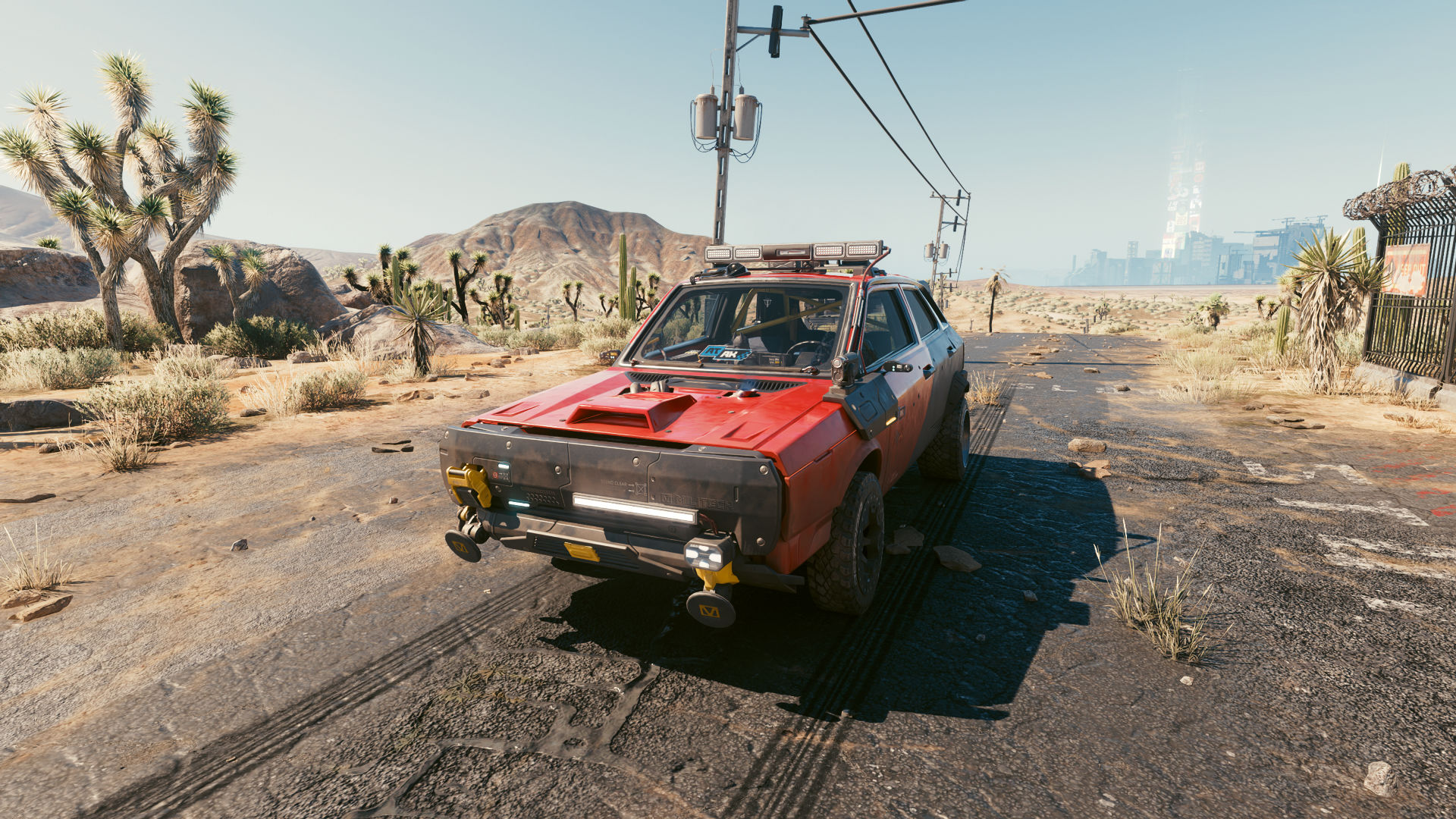
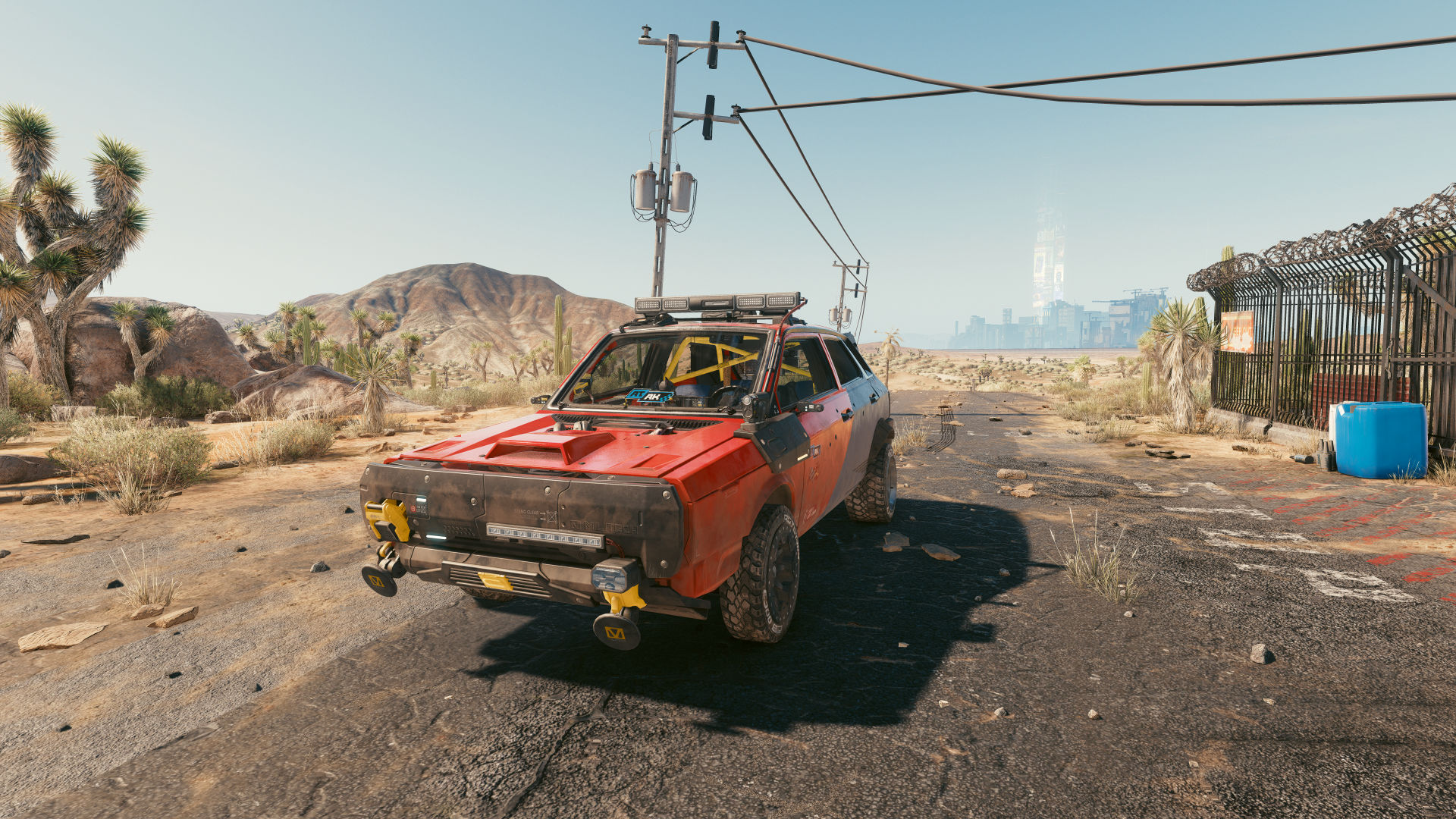
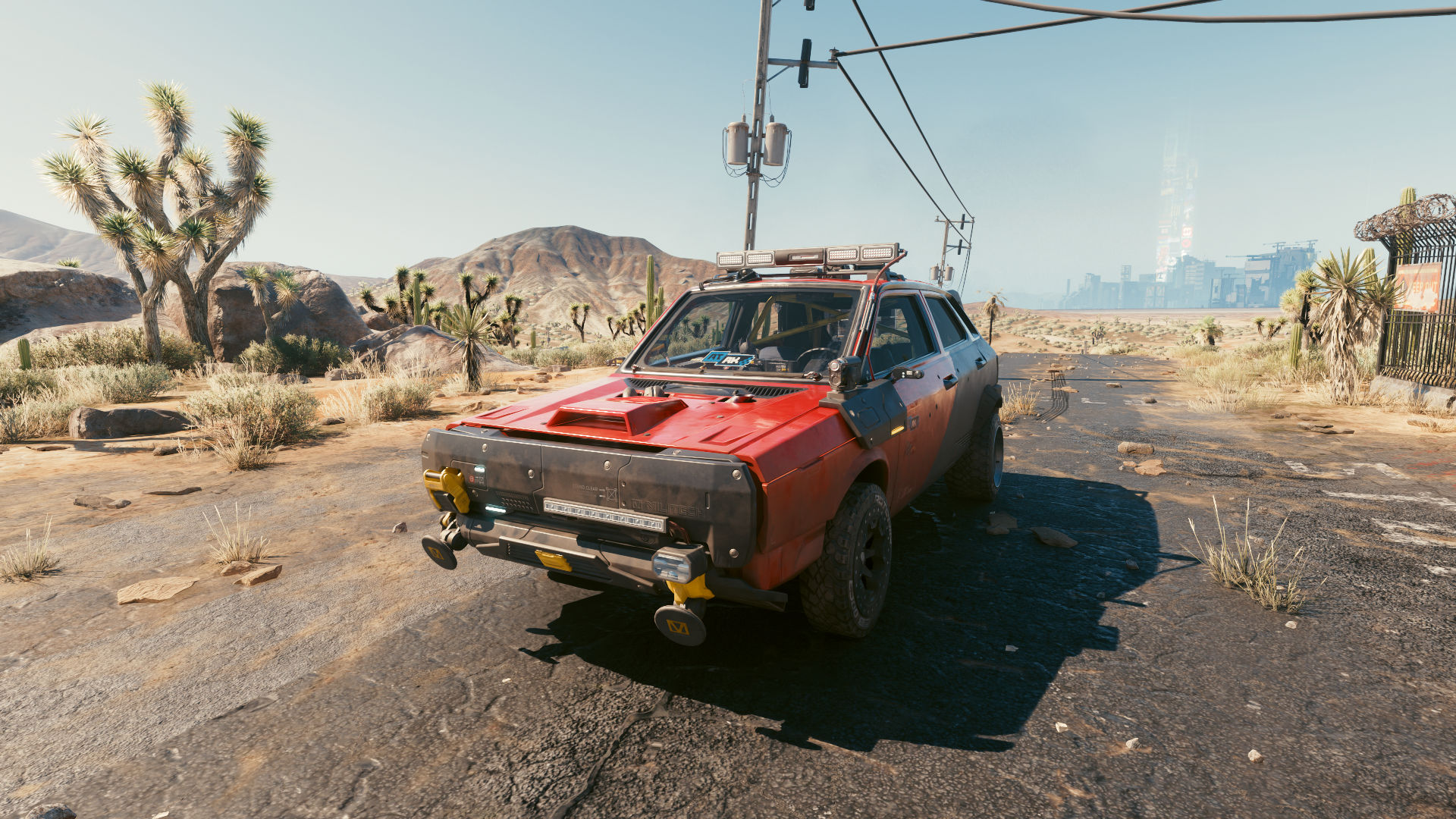
The second set of captures pulls back into a landscape shot with the car sitting in open sun, and the pattern repeats. Shadows are sharper again, and the sunlight reflecting off the bonnet is more pronounced with Preset F. The scene as a whole is simply better lit, and it carries a warmer tone that lands closer to how the light would behave in reality. Sky, vegetation and surrounding landscape all pick up that improved illumination, and because more of the scene is lit, a larger stretch of road stays visible, which brings more surface detail with it and makes the image look sharper overall.
DLSS 4.5 Preset F Night-Time Image Quality and Noise Reduction
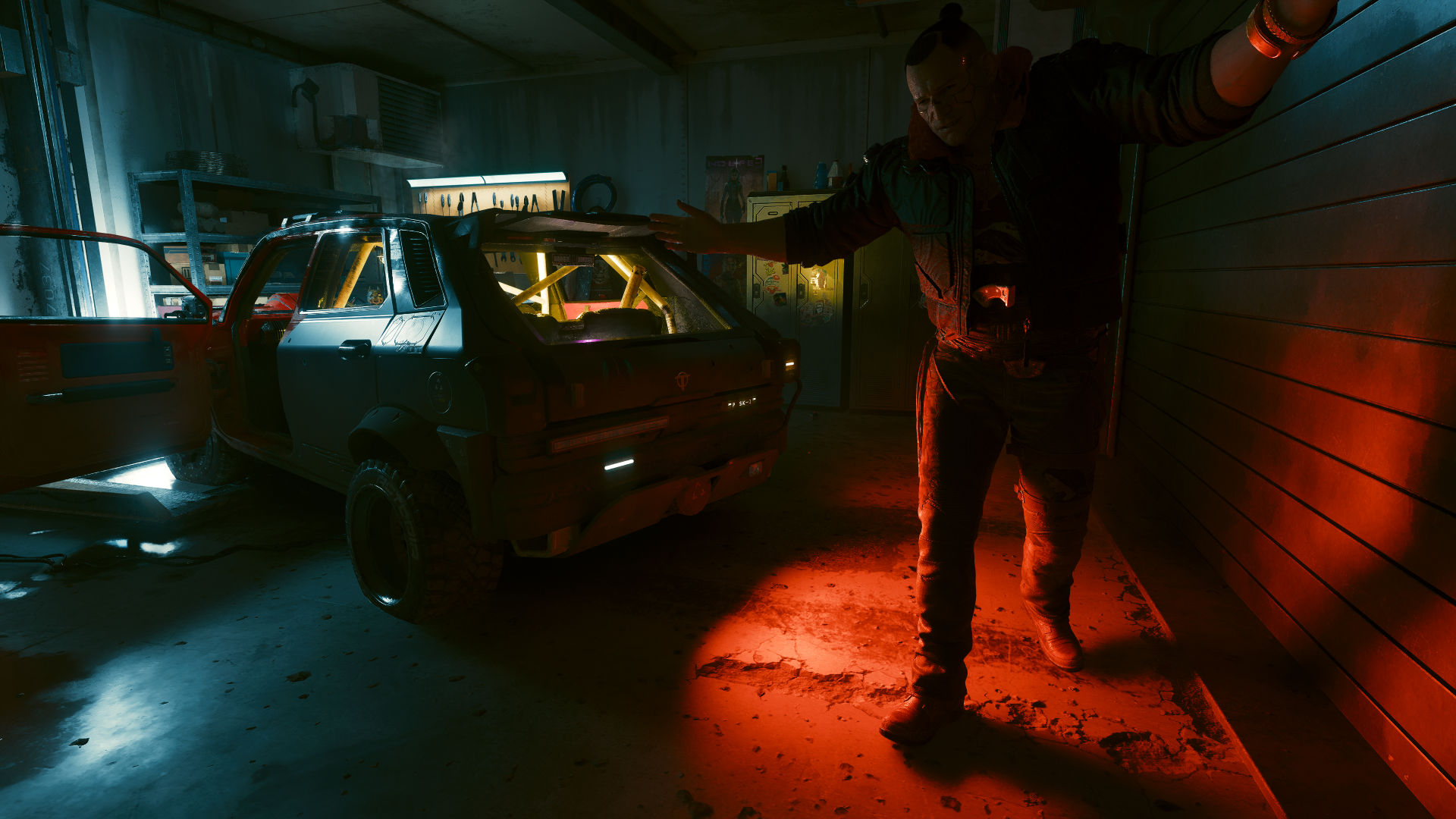
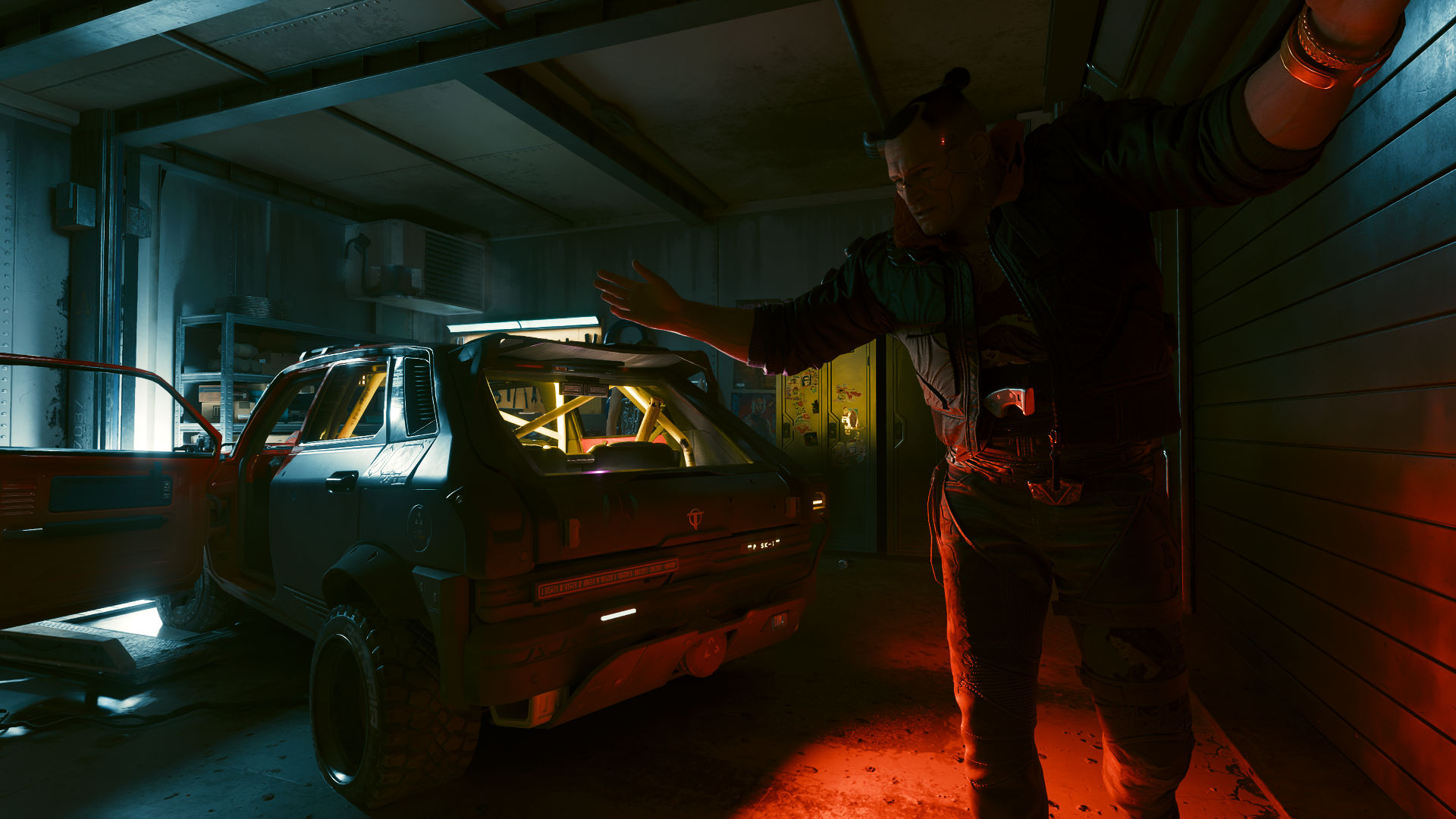
Night scenes tell the same story. Jackie’s weapon picks up not only the red lighting but a yellow tinge thrown by the car’s interior lights, and his belt is both better lit and more detailed. Shadows cast by the tail lights are sharper, and so is the car’s own detailing, including the tyre treads, the bumper and the rear badge. The rear window is the clearest win of the set, showing significantly less noise and a cleaner image for it, and none of that arrives with a frame rate cost attached.
DLSS 4.5 Ray Reconstruction Verdict: Is Preset F Worth Enabling?
Taken together, the move to a second-generation Transformer model shows there is still room to refine how ray-traced and path-traced games are reconstructed. Processing 20% more parameters in service of lighting accuracy and temporal stability, while holding frame rates level against the older model, is a meaningful result rather than a marketing one, and it shows up in motion. Shadows are sharper, environments are lit more naturally and low-light noise is markedly reduced. For anyone running Cyberpunk 2077 on current RTX hardware, DLSS 4.5 removes the trade-offs that heavy denoising used to bring with it, and there is little reason to leave the feature switched off.