Smartphones were once built purely for communication. Today, they also double up as capable gaming devices, with flagship models now pushing frame rates that were once the preserve of PCs and consoles. High refresh rate displays and powerful chipsets have made 120fps mobile gaming a realistic expectation rather than a marketing promise.
Until recently, most brands relied largely on software optimisation to deliver smoother gameplay. That approach is now being supplemented by dedicated gaming chipsets. Companies such as OnePlus and iQOO have begun pairing their main SoC with a secondary gaming-focused chip, claiming more stable frame rates, better motion handling, and reduced load on the primary processor.
This shift raises a straightforward question. Do dedicated gaming chipsets actually make a measurable difference?
To find out, we tested four games, including demanding titles like Wuthering Waves and Genshin Impact, on the OnePlus 15 and iQOO 15. Each game was run with gaming modes enabled and disabled to isolate the real-world impact of these additional chips. Here is what we found.
The Setup and the Playbook
To understand how gaming modes on the OnePlus 15 and iQOO 15 affect real-world gameplay, we focused on three core performance indicators:
- Average frame rate and 5 percent low frame rate
- Display and rear surface temperatures
- Battery drain during gameplay
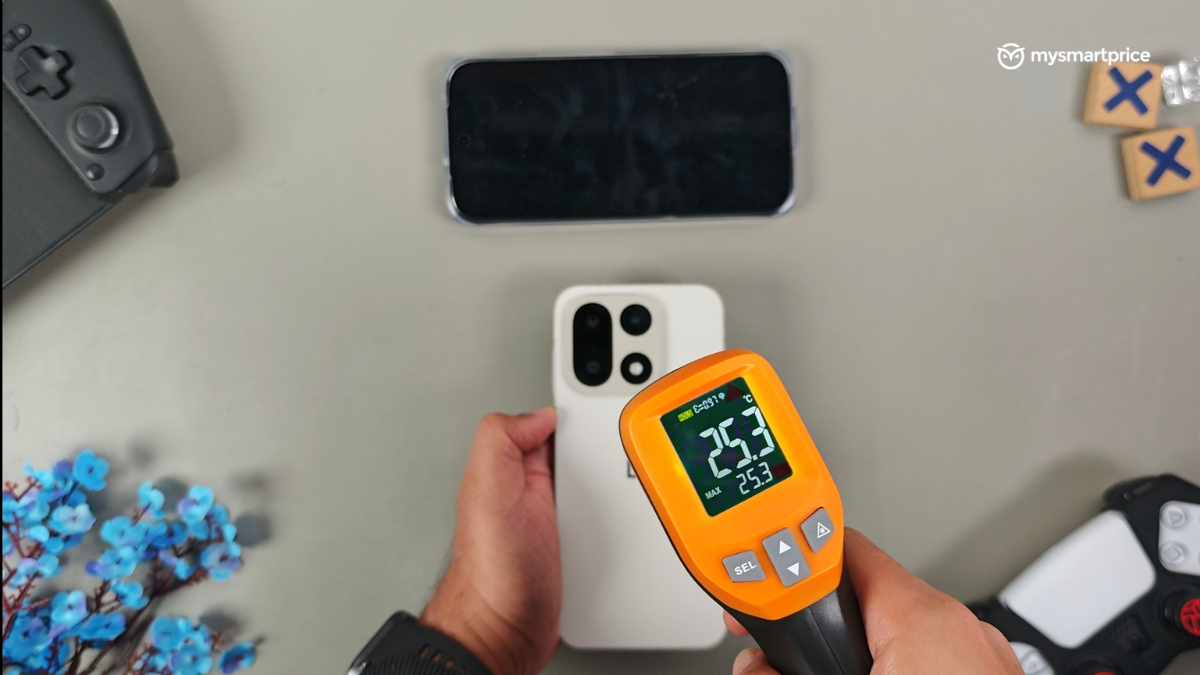
We also followed a consistent set of testing protocols across both the OnePlus 15 and iQOO 15:
- Room temperature was maintained at 22°C, with the air conditioning turned off
- Brightness and volume were set to maximum
- Refresh rate was locked at 165Hz
- Battery level was set to 100 percent at the start of each test
- High-performance mode was enabled
- Software was updated to the latest available version
- Wi-Fi was kept on, with aeroplane mode enabled to eliminate background interference
During testing, the screen recorder was run in the background to capture gameplay footage and further stress the devices. All games were set to their highest visual fidelity. The only exception was BGMI, where graphics settings were lowered to prioritise maximum frame rates.
What the Tests Revealed
With the test environment and parameters established, it is time to examine how the gaming modes on the OnePlus 15 and iQOO 15 influenced real-world performance.
- BGMI
It’s worth noting that both phones support 120fps gameplay on BGMI.
| Parameters | OnePlus 15 | OnePlus 15 (with game mode) | iQOO 15 | iQOO 15 (with game mode) |
| Average Frame Rate | 119.7fps | 119.5fps | 114.9fps | 63.1fps |
| 5% Low Frame Rate | 113.6fps | 115.9fps | 87.3fps | 24.6fps |
| Display Temperature | 39.4°C | 34.7°C | 42.1°C | 33.9°C |
| Rear Temperature | 39.6°C | 36.2°C | 39.6°C | 32.4°C |
| Battery Level | 90% (-730mAh) | 90% (-730mAh) | 94% (-420mAh) | 97% (-210mAh) |
On the OnePlus 15, enabling game mode resulted in noticeably better frame consistency compared to running games without it. Thermal behaviour also improved, suggesting that some of the frame-generation workload was being offloaded from the GPU. Battery consumption, however, remained largely unchanged, with little difference between game mode being on or off.
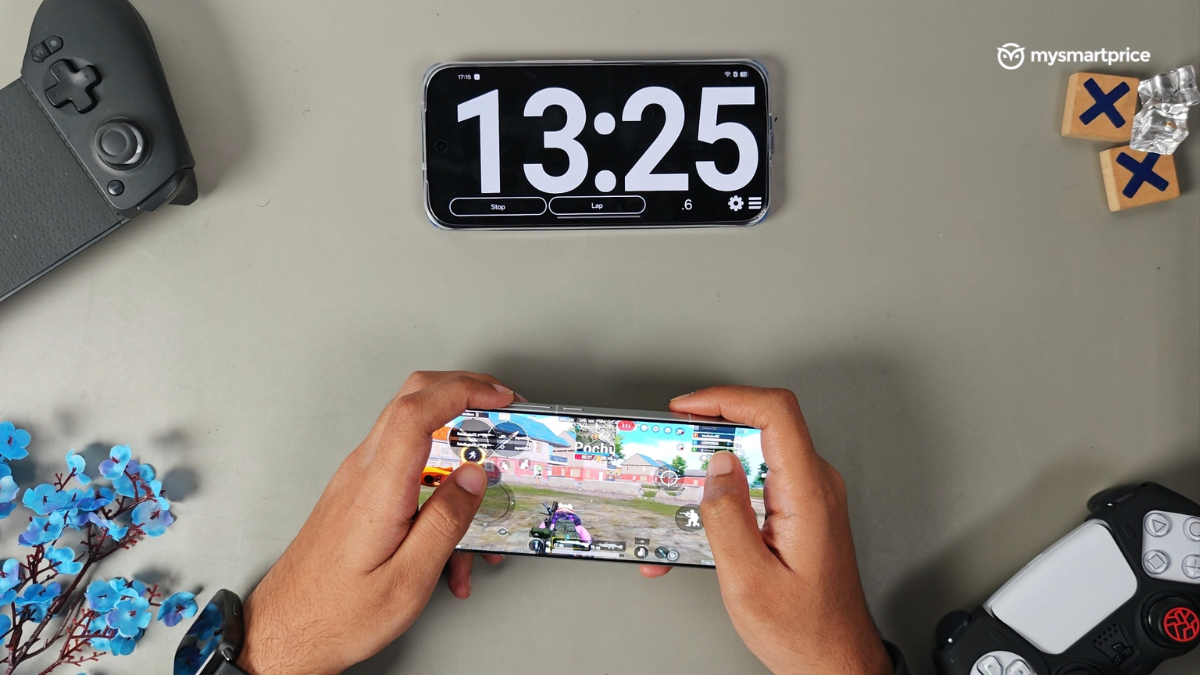
The iQOO 15 delivered a mixed outcome. With game mode enabled, the phone struggled to sustain a consistent 120fps across the test run. Temperature readings and battery drain point to a tuning strategy that prioritises thermal control and power efficiency over frame-rate stability.
Despite the presence of dedicated gaming chipsets and built-in frame interpolation support, neither device was able to push gameplay meaningfully beyond 120fps in sustained use.
- Grid Legends
Grid Legends remains one of the few titles that continues to be capped at 30fps on smartphones, regardless of whether the device is a budget model or a flagship.
| Parameters | OnePlus 15 | OnePlus 15 (with game mode) | iQOO 15 | iQOO 15 (with game mode) |
| Average Frame Rate | 30.1fps | 31fps | 30.5fps | 29.8fps |
| 5% Low Frame Rate | 28.7fps | 29.9fps | 29.2fps | 26.6fps |
| Display Temperature | 40.3°C | 36.1°C | 42.9°C | 36.2°C |
| Rear Temperature | 40.6°C | 35.9°C | 40.3°C | 35.9°C |
| Battery Level | 83% (-511mAh) | 83% (-511mAh) | 86% (-560mAh) | 92% (-357mAh) |
On the OnePlus 15, enabling game mode once again yielded more consistent gameplay compared to standard mode. It also aided thermal management, keeping surface temperatures more controlled. Battery drain, however, showed little variation with game mode turned on.
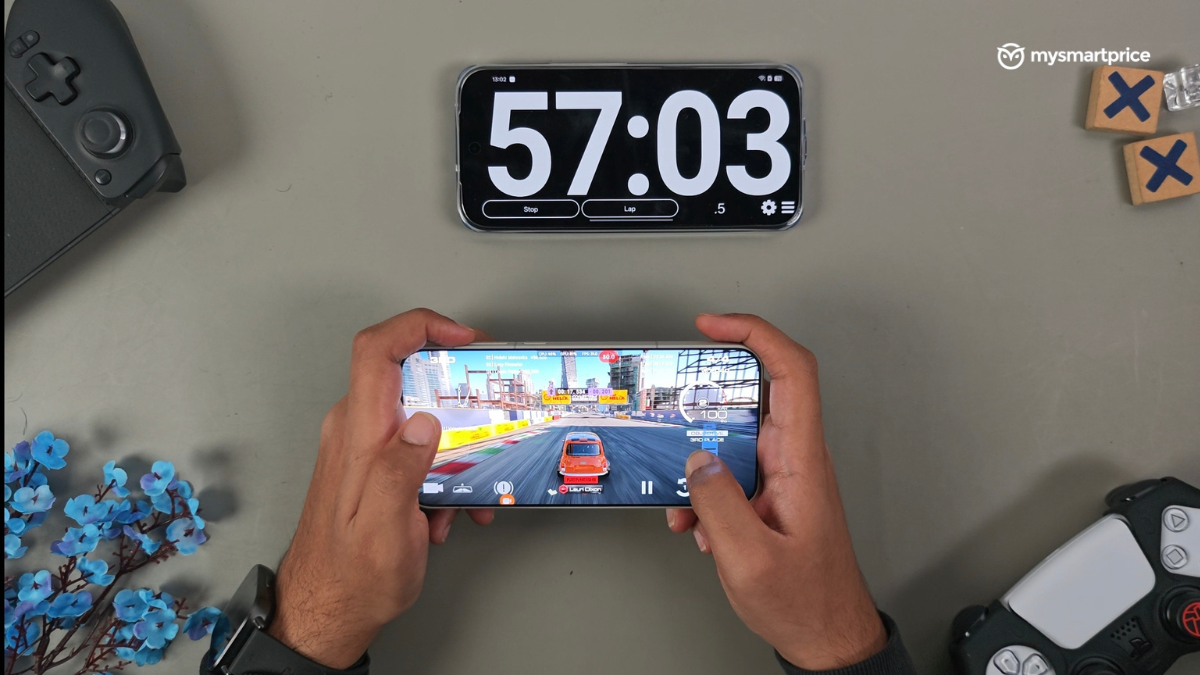
The iQOO 15 told a different story. With game mode enabled, frame-rate consistency was poorer than in standard mode. The trade-off was better temperature control and lower battery consumption, reinforcing iQOO’s more conservative tuning approach.
It is also worth noting that Grid Legends does not support frame interpolation on either device. As a result, achieving 60fps gameplay requires manual internal file tweaks rather than relying on built-in gaming features.
- Wuthering Waves
Wuthering Waves marks the point where testing intensity increases, with sustained 60fps gameplay pushing far heavier graphical loads.
| Parameters | OnePlus 15 | OnePlus 15 (with game mode) | iQOO 15 | iQOO 15 (with game mode) |
| Average Frame Rate | 31.4fps | 40.3fps | 56.3fps | 51.5fps |
| 5% Low Frame Rate | 26.4fps | 28.7fps | 29.5fps | 28.7fps |
| Display Temperature | 41.1°C | 41.7°C | 39.7°C | 36.2°C |
| Rear Temperature | 41°C | 40.6°C | 38.1°C | 35.9°C |
| Battery Level | 73% (-730mAh) | 72% (-803mAh) | 75% (-770mAh) | 78% (-980mAh) |
On the OnePlus 15, enabling game mode resulted in smoother gameplay across the entire run, reflected in a higher average frame rate compared to the standard mode. The standard mode, however, delivered better frame-rate consistency, with a smaller gap between the average frame rate and the 5 per cent low. Higher surface temperatures and increased battery drain indicate that game mode prioritised smoother output over efficiency.
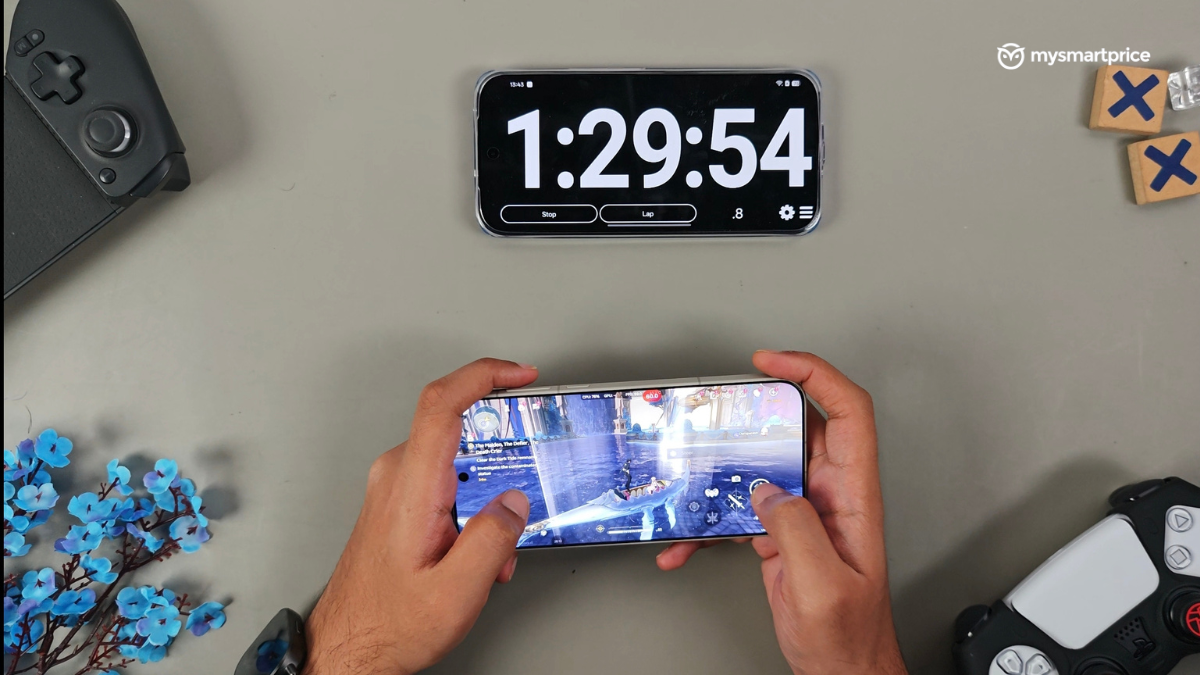
The iQOO 15 showed the opposite behaviour. With game mode enabled, average frame rates were lower than in standard mode, resulting in less fluid gameplay. At the same time, frame-rate consistency improved, as seen in the narrower gap between the average and 5 percent low values. Thermal performance remained controlled, although battery consumption increased.
Wuthering Waves is also among the titles where the dedicated gaming chipsets on both devices fail to unlock frame interpolation support.
- Genshin Impact
Genshin Impact is where the game modes on both devices finally delivered the kind of gains they promise.
| Parameters | OnePlus 15 | OnePlus 15 (with game mode) | iQOO 15 | iQOO 15 (with game mode) |
| Average Frame Rate | 47.4fps | 116.4fps | 58.7fps | 107.9fps |
| 5% Low Frame Rate | 37.1fps | 76.3fps | 54.7fps | 82.1fps |
| Display Temperature | 39°C | 35.5°C | 41.1°C | 40.2°C |
| Rear Temperature | 38.7°C | 37.1°C | 39.2°C | 39.7°C |
| Battery Drop | 66% (-511mAh) | 62% (-730mAh) | 65% (-700mAh) | 65% (-910mAh) |
Typically capped at 60fps, the game was able to sustain close to 120fps for longer on the OnePlus 15 with game mode enabled. That said, frame-rate consistency suffered, reflected in the larger gap between the average frame rate and the 5 percent low compared to the standard mode. While game mode helped the OnePlus 15 manage temperatures more effectively, it also led to higher battery consumption.
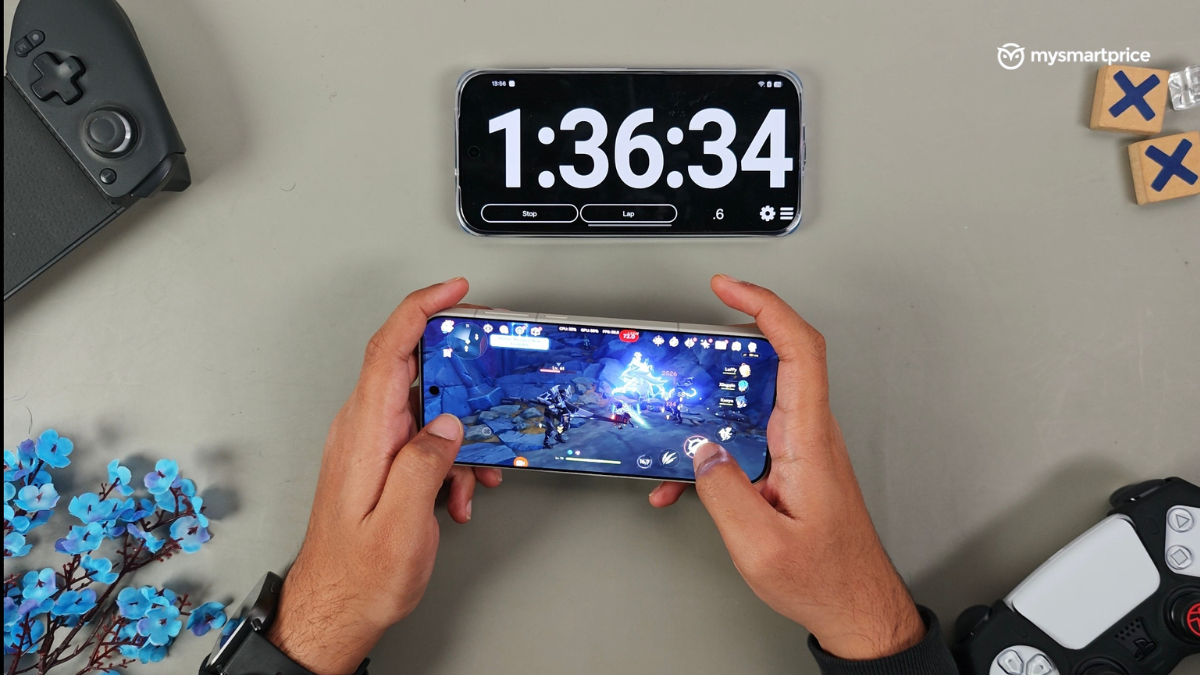
The iQOO 15 followed a similar pattern with different trade-offs. Enabling game mode resulted in smoother gameplay, largely achieved by lowering the game’s resolution. Frame-rate consistency, however, declined sharply, as indicated by the wider gap between the average frame rate and the 5 percent low. Thermal performance remained controlled, with the display temperature even dropping slightly. Battery drain, however, increased noticeably, suggesting higher power draw was required to sustain elevated frame rates.
Verdict
Dedicated gaming chipsets on the OnePlus 15 and iQOO 15 do deliver tangible benefits, but in different ways. On the OnePlus 15, game mode consistently improved frame-rate stability and thermal management, and it did exactly what it was expected to do: boost performance. It was also the only device to sustain higher frame rates in demanding titles like Genshin Impact. The trade-off was higher battery consumption under heavy load.
The iQOO 15 takes a more conservative approach. Its dedicated gaming chipset often prioritises lower temperatures and power efficiency, which led to inconsistent performance in titles such as BGMI and Grid Legends. That said, it was still able to unlock similar high-FPS gains in Genshin Impact, albeit with visible compromises elsewhere.
A common limitation on both devices is inconsistent support for frame interpolation across games, which restricts the full potential of these dedicated chips. Even so, the gains seen here are meaningful. Dedicated gaming chipsets are not a gimmick, but they remain a work in progress rather than a finished solution for sustained high-FPS mobile gaming.