CES 2026 is shaping up to be a defining moment for Samsung's home appliance strategy. At the Las Vegas showcase in January, the company will present a sweeping upgrade to its AI-connected living vision, spanning laundry, air conditioning, robotic cleaning, and now the kitchen. Together, these announcements signal a clear pivot from feature-led appliances to systems that learn, anticipate, and coordinate across the home.
Samsung's focus this year is not novelty AI, but practical intelligence rooted in daily habits. From faster wash-to-dry cycles and adaptive cooling to vision-based food recognition powered by Google Gemini, the company is positioning AI as a background assistant rather than a headline feature.
Laundry and Fabric Care Become More Autonomous
At the heart of Samsung's upgraded home lineup is the 2026 Bespoke AI Laundry Combo, which builds on its 2024 debut with faster cycles and smarter drying. The new Super Speed cycle uses high-pressure Speed Spray to improve detergent penetration, while a Booster Heat Exchanger enhances drying performance. A new Auto Open Door+ feature keeps laundry fresh by circulating air after wash-only cycles, reducing the risk of odour buildup.
Samsung has also expanded its AI Wash & Dry+ system. Multiple sensors now detect load weight, soil levels, and five fabric types, including outdoor wear and denim, allowing the machine to adjust water, detergent, and drying in real time. Importantly, Samsung is also introducing a more affordable variant with a smaller display and jog dial, suggesting a push to bring AI laundry beyond premium buyers.
The upgraded Bespoke AI AirDresser complements this approach. With Auto Wrinkle Care and enhanced Dual JetSteam, it focuses on time-pressed users looking for quick refresh cycles rather than full washes. The deeper integration between the AirDresser and the Laundry Combo through Auto Cycle Link reflects Samsung's larger ambition of appliances that work as a coordinated system rather than standalone products.
Air Conditioning and Cleaning Shift to Context-Aware AI
Samsung's WindFree Pro Air Conditioner shows how AI is being applied to comfort rather than raw cooling power. With three motion blades and seven wind modes, the system adapts airflow based on room conditions and user presence. Radar-based sensing allows the AC to direct or avoid airflow depending on where people are positioned, while AI Energy Mode aims to reduce compressor fluctuations and cut power consumption by up to 30 percent, a claim likely to resonate strongly in energy-conscious markets like India.
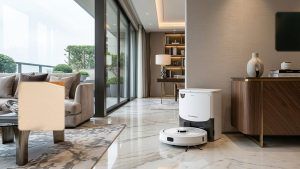
On the cleaning front, the Bespoke AI Jet Bot Steam Ultra introduces object and liquid recognition, enabling it to identify pets, cables, rugs, and even spills. Powered by a Qualcomm Dragonwing processor, the robot vacuum can decide whether to clean or avoid liquid areas based on user preferences, reducing manual intervention. This signals Samsung's intent to compete more aggressively in the premium robotic cleaning segment, where autonomy and reliability matter more than suction numbers alone.
The Kitchen Gets Vision AI With Google Gemini
Perhaps the most significant expansion of Samsung's AI strategy is in the kitchen. At CES 2026, Samsung will unveil its latest Bespoke AI refrigerator with upgraded AI Vision built using Google Gemini, marking the first time the technology is integrated into a refrigerator.
The new system moves beyond fixed food databases. It is designed to recognise more ingredients automatically, including processed foods without manual registration and user-labelled containers. By improving ingredient recognition, Samsung aims to simplify food tracking, reduce waste, and enable more personalised meal planning experiences through SmartThings.
Samsung is extending this vision-based intelligence to a new Bespoke AI Wine Cellar as well. A built-in camera recognises wine labels, tracks bottle placement, and syncs with the SmartThings AI Wine Manager to offer inventory visibility and pairing suggestions. This reflects a growing trend in premium appliances where AI adds value through organisation and recommendation rather than automation alone.
Design, Ecosystem and What It Signals for 2026
Alongside AI upgrades, Samsung is refreshing its kitchen design language with unified stainless finishes, slimmer refrigerator profiles, and zero-clearance installations aimed at modern homes. New OTR microwave designs and improved ventilation systems show attention to practical usability rather than just aesthetics.
Taken together, Samsung's CES 2026 lineup reinforces a broader industry shift. Appliances are no longer competing only on performance or capacity, but on how well they integrate into connected lifestyles. With AI spread across laundry, climate, cleaning, and kitchens, Samsung is making a strong case that the future smart home is less about screens and commands, and more about systems that quietly adapt in the background.
Visitors to CES 2026 can experience Samsung's AI-connected living showcase at the company's showroom at Wynn Las Vegas, where these concepts will be demonstrated as part of a single, interconnected ecosystem rather than isolated products.