At MySmartPrice, we have always believed that choosing the right smartphone begins with the right information. Over the years, the platform has become the go-to place for people looking to compare, discover, and understand which device truly fits their needs. We take that trust very seriously. Behind every review you read is a team that spends hours testing, analysing, and documenting real-world performance so that our recommendations remain transparent and reliable.
To make sure that every device we test gets the same treatment, we have built what we call our Core Testing Team (CTT). This is a group of experienced reviewers and testers who follow a clearly defined process designed to eliminate bias and maintain consistency. Every phone, regardless of its price or brand, goes through the same rigorous and repeatable testing process. From running detailed performance benchmarks and camera evaluations to measuring display accuracy and battery endurance, we ensure that no parameter is overlooked.
Over time, this structured approach has helped us build a rich dataset covering more than 50 smartphones, with new devices being added every month. This ongoing effort allows us to track progress across generations, compare results fairly, and identify what truly improves the user experience.
We have detailed below how every aspect of a phone is tested in depth so that you can see the care, time, and effort that go into each review. Behind this detailed, etched-out approach, we have a very simple goal of helping our readers know not just how a smartphone performs, but why it performs the way it does, so you can make every purchase with confidence. Here is a complete rundown of all the CPU, GPU, Battery, and AI benchmarks tests that we conduct so that you can understand our approach. For any feedback and improvements, please feel free to email us at [email protected]
CPU:
The CPU, or central processing unit, is essentially the brain of a smartphone, responsible for executing tasks, running apps, and managing background processes. Its performance directly affects how fast the device handles everyday activities, from launching applications to multitasking and running games. To provide an accurate measure of processing capability, smartphones are evaluated using a series of benchmark tools that stress-test the CPU under both real-world and synthetic workloads:

- Antutu Benchmark (Overall and CPU):AnTuTu has long been one of the most popular benchmarking tools for evaluating a smartphone's internal performance. It tests multiple components, including the CPU, RAM, user interface, and memory. The process involves running a series of computational and algorithmic tasks to assess how efficiently each component performs under load. Once completed, AnTuTu provides individual scores for every test and then combines them into an overall cumulative result. For our evaluations, we pay particular attention to the CPU score as well as the total performance score, since these give the clearest picture of a phone's real-world responsiveness.
- Geekbench CPU: To ensure that we are not banking our verdict on just one benchmark, we also run Geekbench on all phones to assess their CPU power. This test evaluates the processor's single-core and multi-core performance to determine the smartphone's capabilities in handling common applications and workloads in everyday computing scenarios. It generates single-core and multi-core scores after crunching their results. The single-core score reflects how well the processor manages a task using a single core. It is important for applications that don't demand intensive computing, such as web browsing or word processing. On the other hand, the multi-core score assesses the processor's capacity to handle heavy-threaded tasks that require two or more cores. Its score is significant for activities like video editing and rendering.
- CPU Throttling: CPU Throttling measures the endurance of a smartphone's processor under simulated heavy workload. It tests the CPU with a series of intensive tasks and assesses how much the device reduces its CPU power to stay cool and operate efficiently.
- PCMark Work 3.0: PCMark Work 3.0 is part of PCMark's comprehensive suite of benchmarks that assess a smartphone's performance based on everyday tasks rather than simulated tests. The Work 3.0 includes tests that mimic real-life scenarios such as web browsing, video editing, word processing, photo editing, and data manipulation. As the phone processes these tasks, PCMark analyses the results to generate an overall performance score that reflects how well the device handles typical daily workloads. This benchmark is important because it gives a realistic picture of how the phone performs in practical use, making it easier to understand what you can expect in day-to-day situations rather than just under ideal testing conditions.
GPU:
The GPU, or graphics processing unit, is responsible for rendering visuals and handling graphics-intensive tasks on a smartphone. Its performance impacts everything from smooth animations and high-frame-rate gaming to video playback and image processing. To provide a clear assessment of graphical capability, smartphones are tested using benchmark tools that evaluate the GPU under both real-world and synthetic workloads:

- Antutu GPU: As mentioned above, Antutu is a comprehensive collection of tests that evaluates the overall components of any smartphone. From here, we primarily focus on its GPU score. It runs intensive 3D games and image rendering scenarios to evaluate graphics processing capabilities, animation smoothness, and effects quality. Its score reflects how well the GPU handles demanding tasks, such as gaming.
- Geekbench GPU: Geekbench GPU measures a smartphone's graphics compute performance using real-life scenarios, like image processing, computational photography, computer vision, and machine learning. It runs workloads such as particle physics simulation, edge detection, background blur, and face detection using APIs like OpenCL, Vulkan, and Metal.
- GFXBench Car and Manhattan: GFXBench Car and Manhattan are part of GFXBench's suite of GPU benchmark tools. GFXBench Car test simulates a real-life driving scene using advanced graphics features, such as hardware tessellation and compute shaders, to determine how the phone handles modern, game-like visuals. Conversely, the Manhattan test showcases a cityscape by leveraging intensive OpenGL ES effects, such as geometry instancing and deferred rendering, to evaluate the phone's GPU’s ability to render detailed 3D graphics and effects smoothly.
- 3DMark Wild Life Extreme and Wild Life Extreme Stress Test: 3DMark Wild Life Extreme is a brief graphics test for smartphones. It displays detailed scenes to examine how well a phone handles intensive gaming graphics in 4K quality. It is the shortest test in the whole list and lasts about one minute. It is like a burst of action in a mobile game. On the other hand, the Wild Life Extreme Stress Test runs the same test for twenty minutes, demonstrating how performance decreases if the phone heats up or slows down during extended gaming sessions. This helps showcase a phone's long-term gaming stability.
Gaming:
We also include a list of popular smartphone games and their frame rates, helping you determine whether your preferred device can run those games. This list ranges from highly competitive games, including BGMI and Call of Duty Mobile, to open-world RPG games such as Genshin Impact and Wuthering Waves.
While most phones are configured to run battle royale games without any major hiccups, open-world games are where they show their real potential. While playing different games, we take note of the average frame rate, the maximum frame rate, and the 5% low frame rate.
Storage:
Storage is where a smartphone saves apps, photos, videos, and other data permanently. Its speed and reliability directly affect how quickly apps launch, files are accessed, and large media is handled. To provide a clear assessment of storage performance, devices are evaluated using benchmark tools that test both read and write speeds under real-world and synthetic workloads:

- Antutu Storage Test: Antutu evaluates your phone's storage speed by measuring how quickly it reads and writes data, affecting app loading and file transfers.
- PCMark for Android Storage Score: PCMark tests storage by simulating daily tasks, such as installing apps, reading files, and saving data, to show real-world storage responsiveness and reliability.
Battery:
Apart from the CPU, GPU, and storage, we examine the smartphone's battery efficiency using a benchmark tool. For this purpose, we use the PCMark Battery test. It measures how well the phone's battery holds up during everyday tasks, such as browsing the web, watching videos, editing photos, and writing documents. It runs these common activities repeatedly until the battery runs out, showing how long the phone can last under normal use. Besides battery life, it also tracks how smoothly the phone performs over time, giving a clear picture of both endurance and real-world usability. This makes it a reliable way to compare battery performance across different devices.
Camera
We test smartphone cameras across different scenarios to measure their overall imaging and video performance.
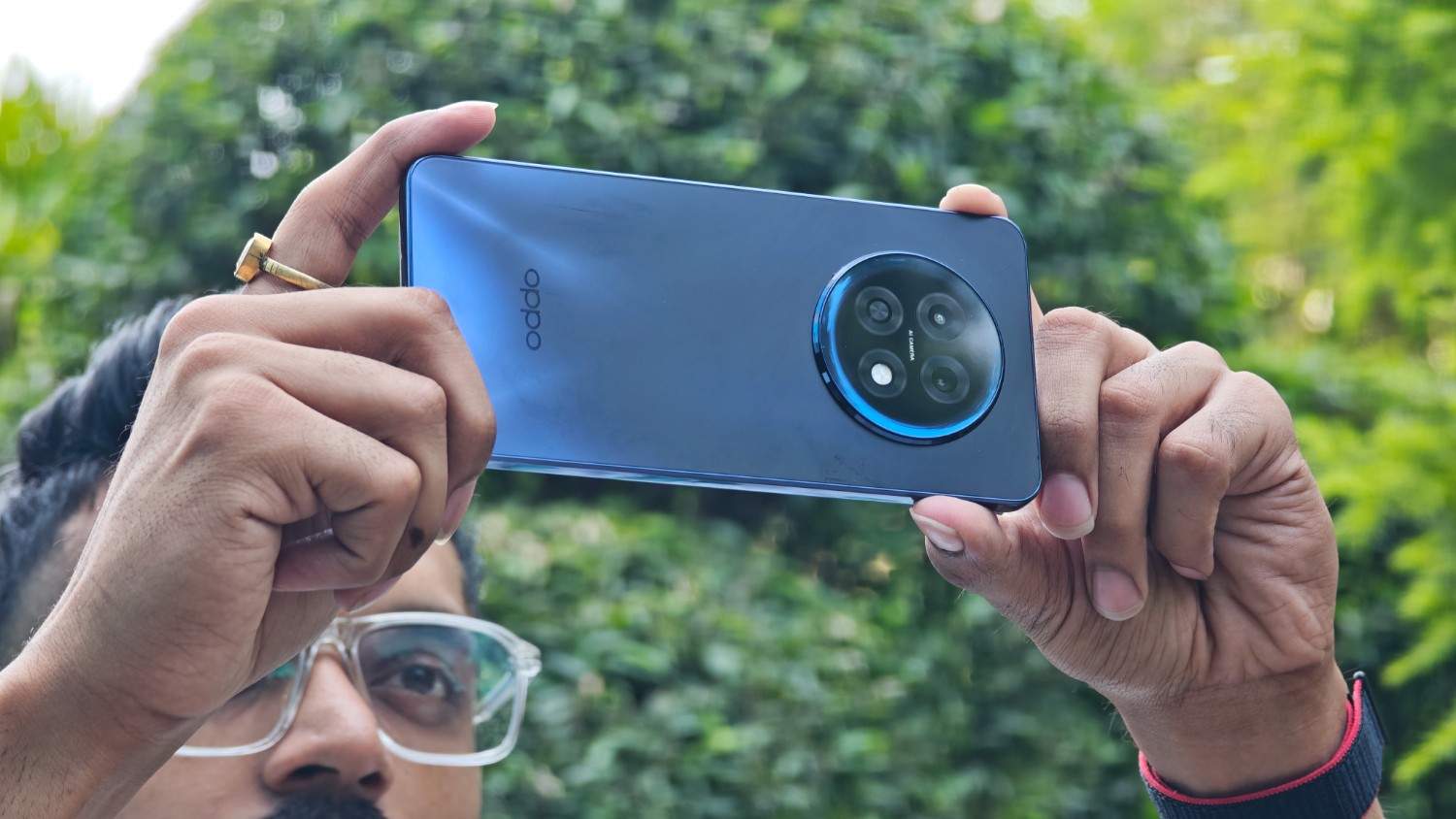
Our camera testing process is built around real-world usage. Every smartphone we review is tested across a variety of lighting conditions such as bright outdoor scenes, indoor setups, and low-light environments. This helps us see how well the camera system maintains exposure balance, colour accuracy, and fine details in different scenarios.
The primary camera is tested for overall sharpness, contrast, and tonal balance. The ultra-wide camera is evaluated for edge distortion, consistency in colour compared to the main sensor, and its ability to capture wide scenes without losing clarity. The telephoto lens, when present, is checked for optical zoom quality, detail retention, and colour uniformity across different zoom levels. Together, these tests reveal how well the entire camera system works as a whole rather than as individual lenses.
Portrait mode is one mode that most users are very curious about. To help them, we have developed a process in which we test both human and object subjects to see how effectively the phone separates the subject from the background and how natural the blur looks. The selfie camera undergoes a similar level of scrutiny, where we assess skin tones, facial detail, dynamic range, and low-light adaptability to ensure that selfies look natural and evenly exposed.
For video testing, we record with both front and rear cameras to check stability, autofocus speed, exposure transitions, and audio capture quality. Moving subjects, handheld footage, and quick light changes are part of this process, so we can understand how the phone handles real-life motion and lighting.
Each of these tests is supported by dozens of sample shots and clips. Over time, we have built a repository and revisit the same to compare results from other smartphones in the same price category. This comparative process and fine detailing allow us to highlight subtle strengths and weaknesses, ensuring that our camera evaluations reflect how the phone actually performs when used day to day and also in understanding the colour science and camera dynamics of every smartphone maker.
Artificial Intelligence:
AI has become a new buzzword for smartphones. It enables the device to perform smart tasks, such as recognising images, understanding speech, and enhancing photos quickly and efficiently.

To measure how well a smartphone handles AI, we use the Geekbench AI benchmark. This test runs real-world machine learning tasks on the phone's CPU, GPU, and AI chip (NPU) to give a clear score of its AI performance. It provides insights into speed and accuracy, helping to understand how capable a phone is for AI-powered apps and features. Since the AI capabilities are still coming of age, we are hoping that there will be far more stringent tests and benchmarks available in the near future that will help us understand these names better and also do an apples-to-apples comparison.
Multimedia:
Beyond these elements, we also examine the basic components of any smartphone, which play a significant role in entertaining you: the display and speakers.

We evaluate its maximum tested brightness using a Lux meter. And, we also focus on the screen's contrast ratio. For speakers, we use a decibel meter to measure their loudness and subjectively rate their clarity.