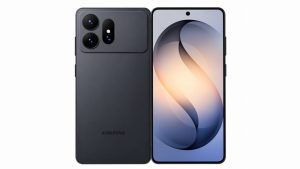
Understanding the CPU Specs and Our Testing Process
Here is a closer look at the main differences between the Dimensity 9500s and the Dimensity 9500:
|
MediaTek Dimensity 9500s |
MediaTek Dimensity 9500 |
| Process Node |
3nm (N3E) |
3nm (N3P) |
| CPU Configuration |
1x Cortex-X925 @ 3.73 GHz (Prime Core)
3x Cortex-X4 @ 3.3 GHz (Performance Core)
4x Cortex-A720 @ 2.4 GHz (Efficiency Core) |
1x C1-Ultra @ 4.21 GHz (Prime Core)
3x C1-Premium @ 3.5 GHz (Performance Core)
4x C1-Pro @ 2.7 GHz (Efficiency Core) |
| GPU |
Immortalis-G925 |
Mali-G1 Ultra |
The prime core inside the Dimensity 9500 SoC runs at a higher frequency than the one in the Dimensity 9500s SoC. In theory, the Dimensity 9500 has an advantage in tasks that demand immediate, maximum power for short durations, such as launching an app, rendering a heavy webpage, or processing the main logic of AAA video games.
However, the Dimensity 9500s takes a much smarter approach to sustained usage. While the Dimensity 9500 relies on higher clock speeds to push peak frame rates to the absolute limit, the Dimensity 9500s focuses heavily on thermal control and efficiency. This suggests that while the OPPO Find X9 offers brute force, a device like the POCO X8 Pro Max can maintain smooth, consistent frame rates after a game has loaded without overheating as quickly. By trading a fraction of peak output for better temperature management, the Dimensity 9500s, in theory, delivers a stable and battery-friendly experience over longer sessions.
That said, the expectation is based solely on the hardware on paper. To understand how the CPUs’ different architectures affect actual performance, we ran a series of CPU and GPU benchmarks:
- Antutu V11
- Geekbench CPU and GPU
- CPU Throttling (15 Minutes and 20 Threads)
- 3DMark
Given that some smartphone makers are known to tune devices for better benchmark numbers, we included these games in addition to benchmark tests to ensure a fairer comparison:
- BGMI
- Wuthering Waves
It’s worth noting that we ran these games for 30 minutes each on the POCO X8 Pro Max and the OPPO Find X9.
What the Tests Revealed
Now that we have covered the CPU architecture and test methodology, let us look at how the MediaTek Dimensity 9500s and MediaTek Dimensity 9500 fare in our performance evaluation:
|
MediaTek Dimensity 9500s (POCO X8 Pro Max) |
MediaTek Dimensity 9500 (OPPO Find X9) |
| Antutu |
2801896 |
3533165 |
| Antutu CPU |
843383 |
1043500 |
| Geekbench Single-Core |
2650 |
3264 |
| Geekbench Multi-Core |
8458 |
9554 |
| CPU Throttling |
77% |
75% |
Since AnTuTu assesses the entire system, including memory speeds and software optimisation, isolating the CPU score offers a clearer view of raw processing power. As expected, the Dimensity 9500 inside the OPPO Find X9 leads in this area. However, the Dimensity 9500s powering the POCO X8 Pro Max achieve figures that comfortably fall within the higher end of processing capabilities, indicating they are well-equipped for demanding applications.
Looking at Geekbench results, the Dimensity 9500’s higher single-core score suggests it will likely launch heavy applications somewhat faster. That said, the single-core scores of the Dimensity 9500s remain high enough that differences in daily interface responsiveness seem negligible. The multi-core results provide a more compelling data point. The POCO X8 Pro Max, expected to cost roughly half as much as the OPPO Find X9, surprisingly comes close to the flagship chip’s multi-core score. For users prioritising multi-threaded workloads, such as multitasking or high-resolution video rendering, this cost-to-performance ratio is hard to overlook.
Finally, the CPU throttling results show how these processors handle sustained workloads. The Dimensity 9500s retains 77% of its peak performance over time, while the standard Dimensity 9500 stabilises at 75%. This slight advantage in thermal management indicates that the POCO X8 Pro Max relies on a more conservative tuning approach, sacrificing a small part of peak processing power for longer-lasting stability during extended use.
|
MediaTek Dimensity 9500s (POCO X8 Pro Max) |
MediaTek Dimensity 9500 (OPPO Find X9) |
| Antutu GPU |
979495 |
1358050 |
| Geekbench GPU |
19478 |
24065 |
| 3DMark Wild Life Extreme |
6168 |
6480 |
| 3DMark Wild Life Extreme Stress Test |
67.1% |
51.8% |
AnTuTu assesses a phone’s graphical capabilities by rendering complex 3D scenes and calculating frame rates to estimate the GPU’s raw power. Naturally, the Dimensity 9500 inside the OPPO Find X9 claims the top spot here. That said, the Dimensity 9500s powering the POCO X8 Pro Max achieves scores that ensure a flagship-level graphical experience, proving better at handling highly detailed visual elements in demanding AAA titles.
Geekbench GPU measures a smartphone’s graphics capabilities during productivity tasks such as image processing, face detection, and physics simulations. In this test, the Dimensity 9500’s higher score indicates it can handle demanding workloads, such as exporting high-resolution videos and applying intensive filters, somewhat faster. That said, the Dimensity 9500s still appears well-equipped for compute-heavy productivity tasks, suggesting that the POCO X8 Pro Max should remain reliable even during intensive media editing.
3DMark Wild Life Extreme stresses the hardware by rendering scenes at a challenging 4K resolution. Capturing peak graphical output in short bursts, the narrow gap shows that the POCO X8 Pro Max nearly matches the flagship chip’s performance. This proves the Dimensity 9500s is fully capable of running graphically intensive games without noticeable compromises.
The story shifts drastically during the 3DMark Wild Life Extreme Stress Test. The POCO X8 Pro Max retains significantly more of its initial power, while the OPPO Find X9 experiences a steep decline due to heat management. This solidifies the Dimensity 9500s as the smarter choice for marathon gaming sessions, as it assesses thermal stability to prioritise long-term reliability and consistent frame rates over fleeting peak numbers during sustained loads.
|
MediaTek Dimensity 9500s (POCO X8 Pro Max) |
MediaTek Dimensity 9500 (OPPO Find X9) |
| BGMI Average Frame Rate |
118.6fps |
119.9fps |
| BGMI 5% Low Frame Rate |
112.9fps |
118fps |
On the POCO X8 Pro Max and the OPPO Find X9, BGMI is set to run at the lowest graphics settings. Given their highly capable hardware, both smartphones natively support a 120fps frame rate at these lowest visual settings. To evaluate their maximum potential, the frame rate on both devices is pushed to this absolute upper limit.
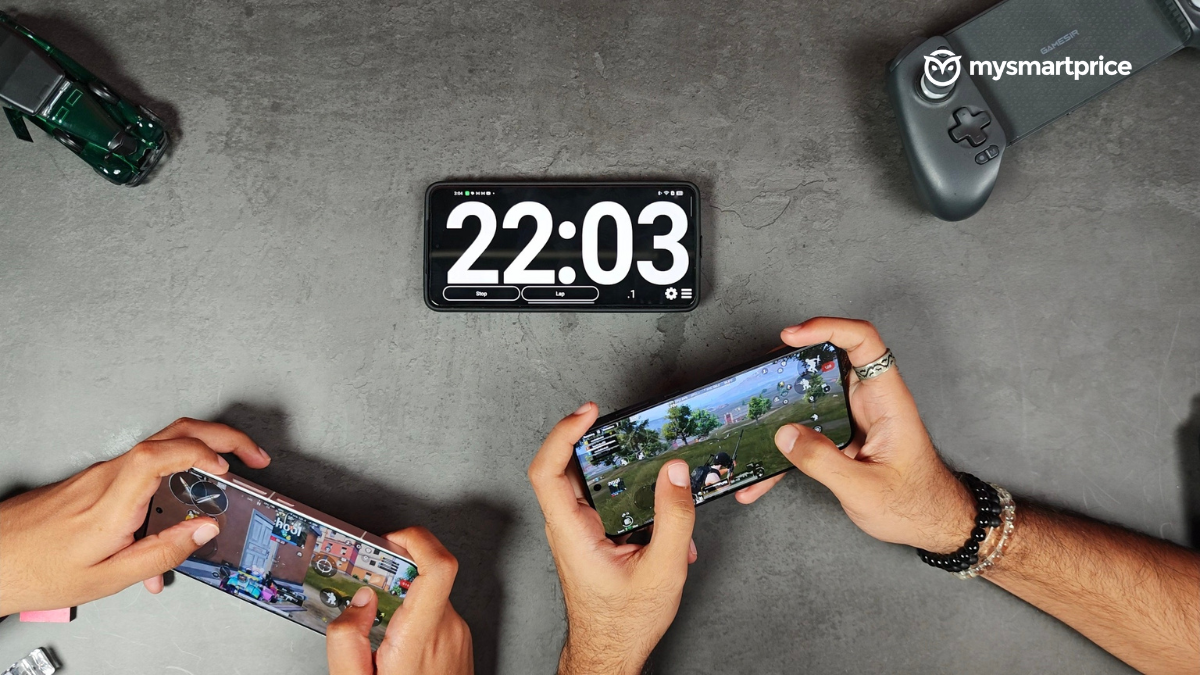
Both smartphones maintain a frame rate close to 120fps throughout the 30-minute round, as indicated by the average frame rate. However, the OPPO Find X9 exhibits slightly better frame stability, given the marginal gap between the average frame rate and the 5% low-frame-rate threshold. That said, the POCO X8 Pro Max still delivers highly consistent performance, ensuring any minor frame drops remain largely unnoticeable during intense gameplay.
|
MediaTek Dimensity 9500s (POCO X8 Pro Max) |
MediaTek Dimensity 9500 (OPPO Find X9) |
| Wuthering Waves Average Frame Rate |
48fps |
41.3fps |
| Wuthering Waves 5% Low Frame Rate |
27.9fps |
27.7fps |
| Initial Temperature (Rear) |
30.6°C |
31.4°C |
| Temperature After 30 Minutes (Rear) |
41.1°C |
40.8°C |
| Battery Drop from 100 percent |
92% (-720mAh) |
93% (-491.75mAh) |
Wuthering Waves is set to run at high settings and a frame rate of 60fps on both devices. To thoroughly assess their sustained performance, the initial rear temperature of each smartphone was measured before the session started. Another temperature reading was taken after the 30-minute test concluded, along with noting the total battery drain.
Interestingly, the POCO X8 Pro Max achieves a noticeably higher average frame rate than the OPPO Find X9 throughout the test. However, the nearly identical 5% low frame rates show that both smartphones experience similar frame drops during graphically demanding combat sequences. This indicates that the Dimensity 9500s renders the demanding open world more smoothly on average, even if maintaining absolute stability proves difficult for both chipsets.
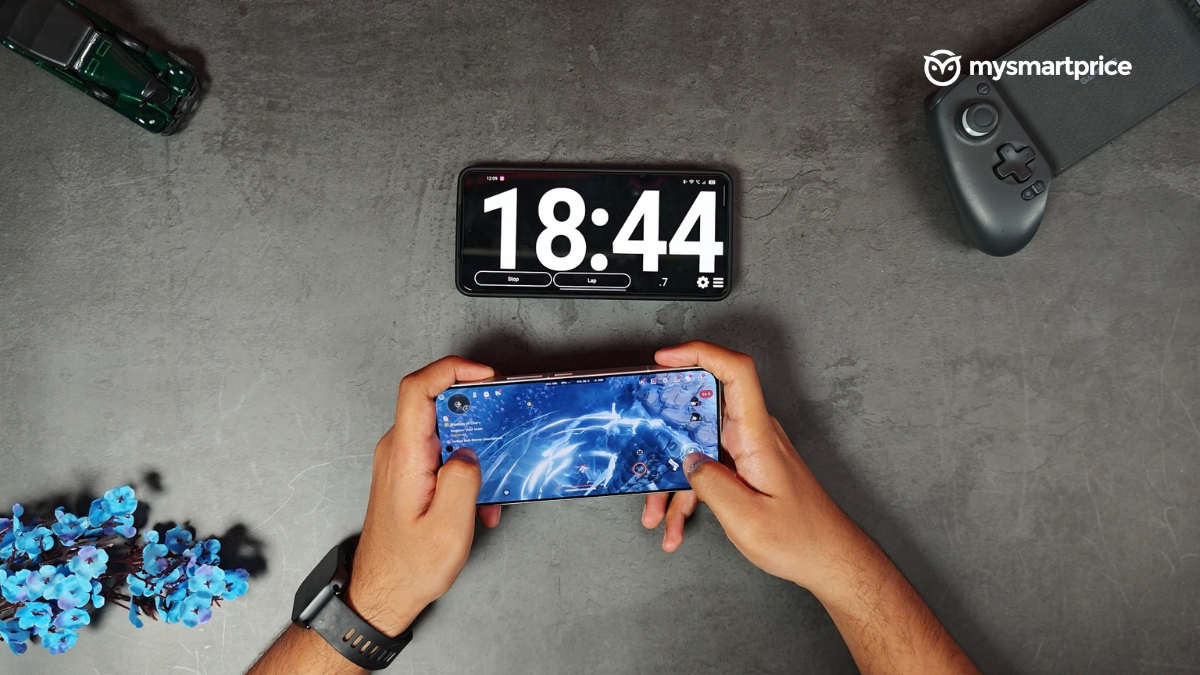
This performance gap also helps explain the difference in thermal behaviour and overall power consumption. The POCO X8 Pro Max exhibits a steeper increase in chassis temperature and greater battery drain by the end of the test. This seems to result from a more performance-oriented tuning approach, where the phone grants the chipset more headroom to sustain higher frame rates under load. While this means the Dimensity 9500s runs warmer and consumes more battery in this scenario, it also offers a noticeably smoother visual experience. In contrast, the OPPO Find X9 appears to manage performance more strictly, helping keep temperatures and battery use more under control.
Verdict
Our benchmark and gaming data reveal a clear difference in how these two processors handle heavy workloads. The standard Dimensity 9500 inside the OPPO Find X9 holds a measurable advantage in peak processing speeds. It also demonstrates better thermal management and energy efficiency, managing demanding tasks without severe power throttling. Conversely, the Dimensity 9500s powering the POCO X8 Pro Max stand out by prioritising sustained output over short benchmark spikes. It shows strong resilience during long gaming sessions, maintaining consistent frame rates for a smooth experience.
This extended performance results in higher temperatures and faster battery drain on the POCO device. However, this thermal behaviour indicates aggressive performance tuning rather than a flaw in the silicon itself. A software update could easily optimise this power consumption and set stricter thermal limits. As more devices adopt this architecture, future implementations are likely to find a better balance between stability and efficiency. Ultimately, the Dimensity 9500s delivers reliable, high-tier gaming performance at a far more accessible price point.