Eight generations in, Samsung no longer needs to prove that foldable phones can work. The larger challenge now is giving more people a reason to choose one.
At its Unpacked event in London, Samsung is attempting to do that by dividing the Galaxy Fold experience into two distinct devices. The Galaxy Z Fold8 Ultra carries forward the expansive, productivity-focused approach associated with Samsung's book-style foldables. The regular Galaxy Z Fold8 takes a more unexpected direction, using a shorter and wider, almost passport-sized form factor built around watching, reading, browsing, and gaming.
There is a lot of thought that has gone into making sure that Galaxy Z Fold8 does not come across merely as a smaller or less expensive version of the Ultra. It feels like Samsung is reconsidering what a foldable can be for users who are not necessarily looking to replace a tablet or turn their phone into a portable workstation.
I have always had a soft spot for unusual phone designs. I grew up fascinated by communicators that Nokia had back in the day. It had an undeniably premium feel to it. And there was a period when the Motorola Razr was the phone almost everyone wanted. I briefly owned a Black coloured Razr in 2006, so the return of folding devices has always carried a certain nostalgia for me.
The Fold8 taps into that feeling in a different way. Its broad, compact proportions reminded me more of the BlackBerry Passport than the clamshell phones that became the rage in the past. It is familiar enough to evoke those older devices, yet different enough from Samsung's existing Fold lineup to feel like a genuine new branch of the category.
The Form Factor Is the Real Story
Samsung describes the Fold8 as a device designed for moving between quick interactions on the cover screen and more immersive experiences on the inner display. Its 10:16 cover-screen ratio is intended for messaging, social media, browsing and short-form video, while the unfolded 4:3 display provides a broader canvas for films and games. Rotating the device also makes the screen better suited to articles, e-books and other long-form reading. Those ratios sound unusual on paper, but they make considerably more sense once the phone is in your hand.
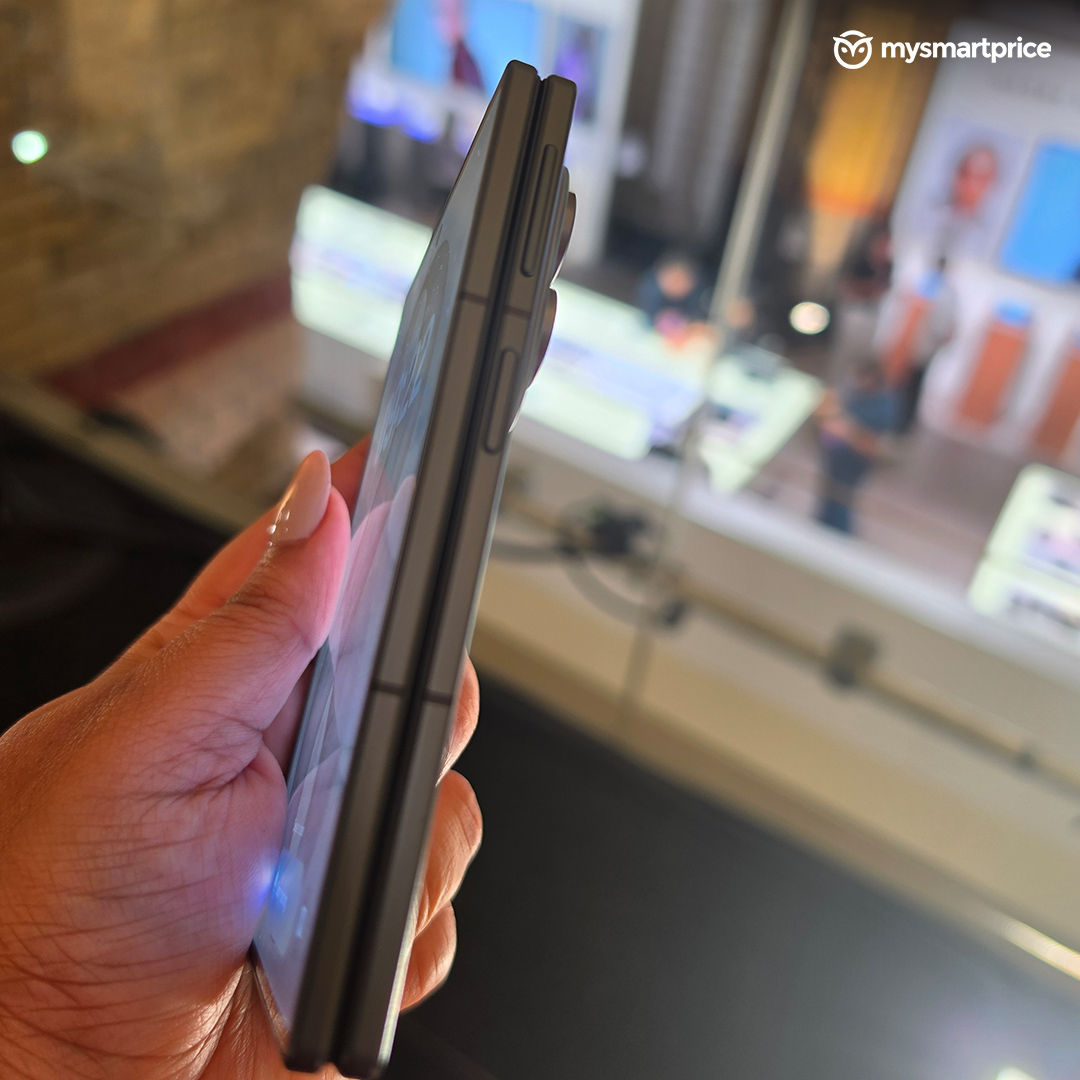
The Fold8 feels compact and easy to grip when closed. Its width gives it a more substantial presence than a conventional smartphone, but it does not feel awkward or excessively bulky. Opening it produces a screen that is broad without turning the phone into a large tablet, which could make it more convenient for people who want extra display space without carrying a traditional Fold-sized device.
Samsung says the new form factor is aimed partly at younger users who spend a considerable amount of time consuming content on their phones. That positioning feels believable after a brief hands-on session. Videos have more room to breathe, while the inner display feels naturally suited to scrolling through articles or reading longer pieces.
The more important question is whether apps adapt well to the unusual proportions. Video, reading and gaming could all benefit from the wider screen, but the experience will depend heavily on how individual apps use the available space. A distinctive aspect ratio is only useful when it adds usable screen area rather than larger borders or poorly arranged controls. Samsung also said that their close tieups with the app makers are helping them to adapt fast to this new screen ratio. However, it is to be seen that how most other apps would do in this form factor.
Considerably More Manageable Than a Traditional Fold
At 201g, the Galaxy Z Fold8 is Samsung's lightest Galaxy Z Fold so far. That weight is one of the first things you notice when holding it.
Book-style foldables have traditionally carried a physical reminder of their complexity. Even when they become thinner, their size and weight can make them feel like two phones joined together. The Fold8 avoids much of that sensation.
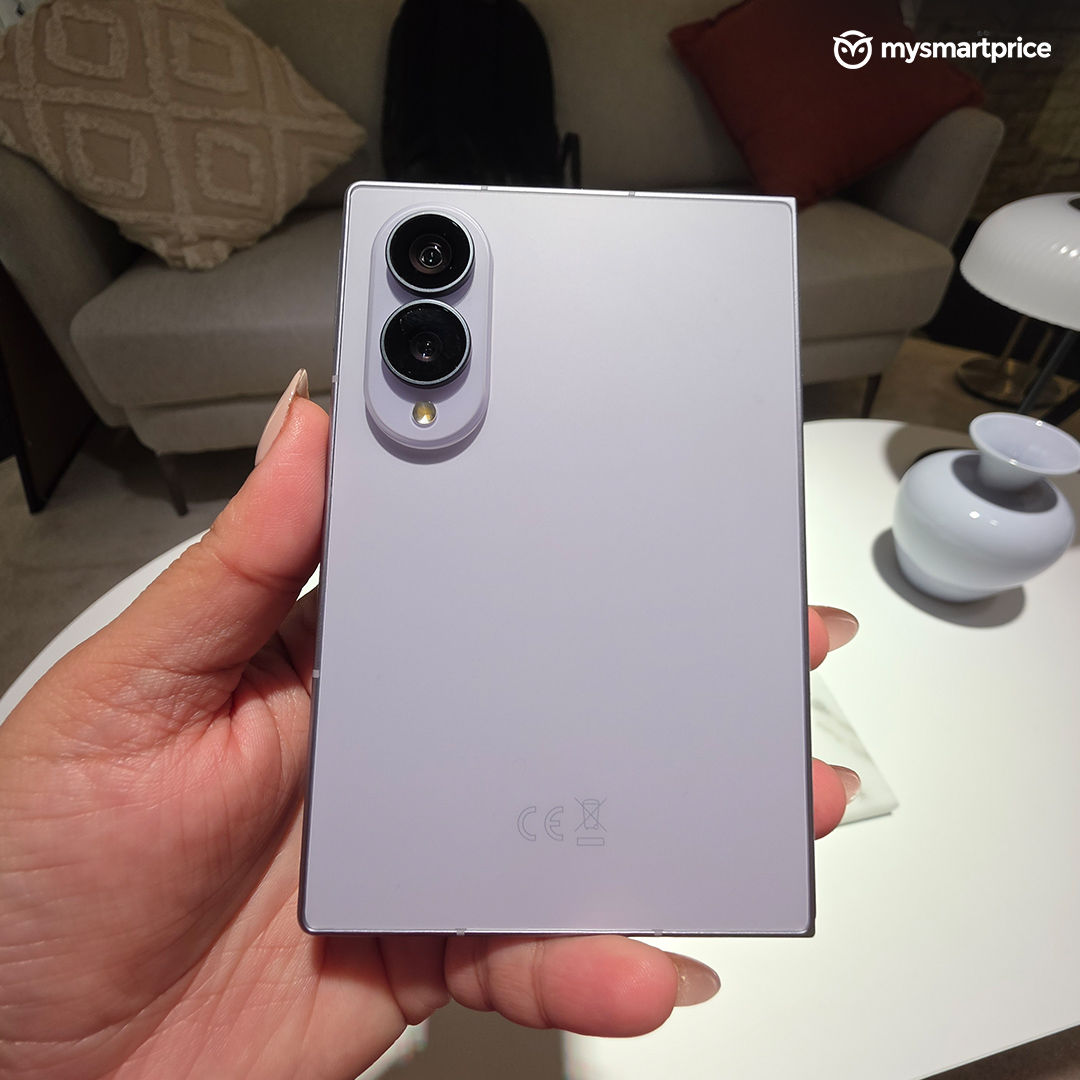
During my limited time with the device, it felt comfortable to hold both folded and unfolded. The shorter body makes the weight feel evenly distributed, while the relatively slim construction prevents it from becoming cumbersome when used as a regular phone.
Opening and closing it with one hand was less convenient. The phone is easy enough to carry in one hand, but unfolding it still requires a deliberate two-handed movement. While this may not matter during longer viewing or reading sessions, it does slightly reduce the immediacy of moving from the cover screen to the larger display.
Samsung is not turning the Fold8 into a device that flips open casually like a Razr. It remains a book-style foldable, only in a more compact and approachable shape.
The Hinge and Crease Feel More Refined
The folding mechanism made a strong first impression. I opened and closed the device multiple times during the session, and the hinge felt smooth and controlled throughout.
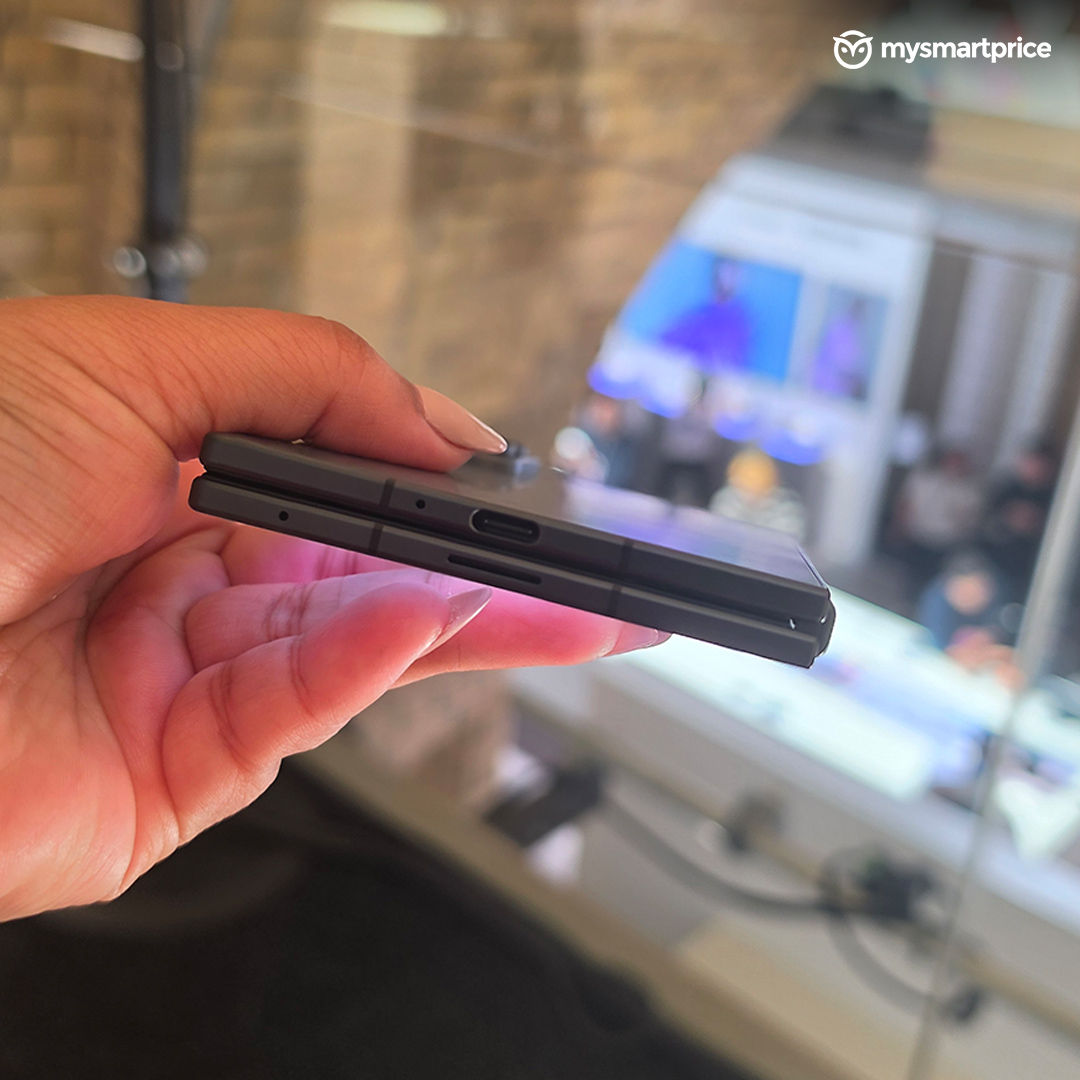
There was no sense of uneven resistance during the movement, and the phone did not require excessive force to open. At the same time, the hinge retained enough firmness to avoid feeling loose or fragile.
Samsung is using a new Flex Titanium structure that combines a titanium-alloy film with an enhanced titanium plate. According to the company, the construction is intended to support a thinner design, absorb pressure and impact, and reduce crease visibility over time.
The crease was certainly difficult to notice during regular use. It could still be detected from certain angles, but it did not immediately interrupt the viewing experience or draw attention away from the screen.
A brief hands-on session cannot establish how the hinge and display will age. Foldable durability is judged over months rather than minutes, particularly once dust, repeated folding and everyday handling enter the equation. Even so, the Fold8 feels more polished than experimental at first touch.
Both Screens Make a Strong First Impression
The cover and folding displays looked excellent during the time I spent with the device. Text appeared sharp, colours were vibrant and the wider inner screen immediately gave videos and reading material a different character.
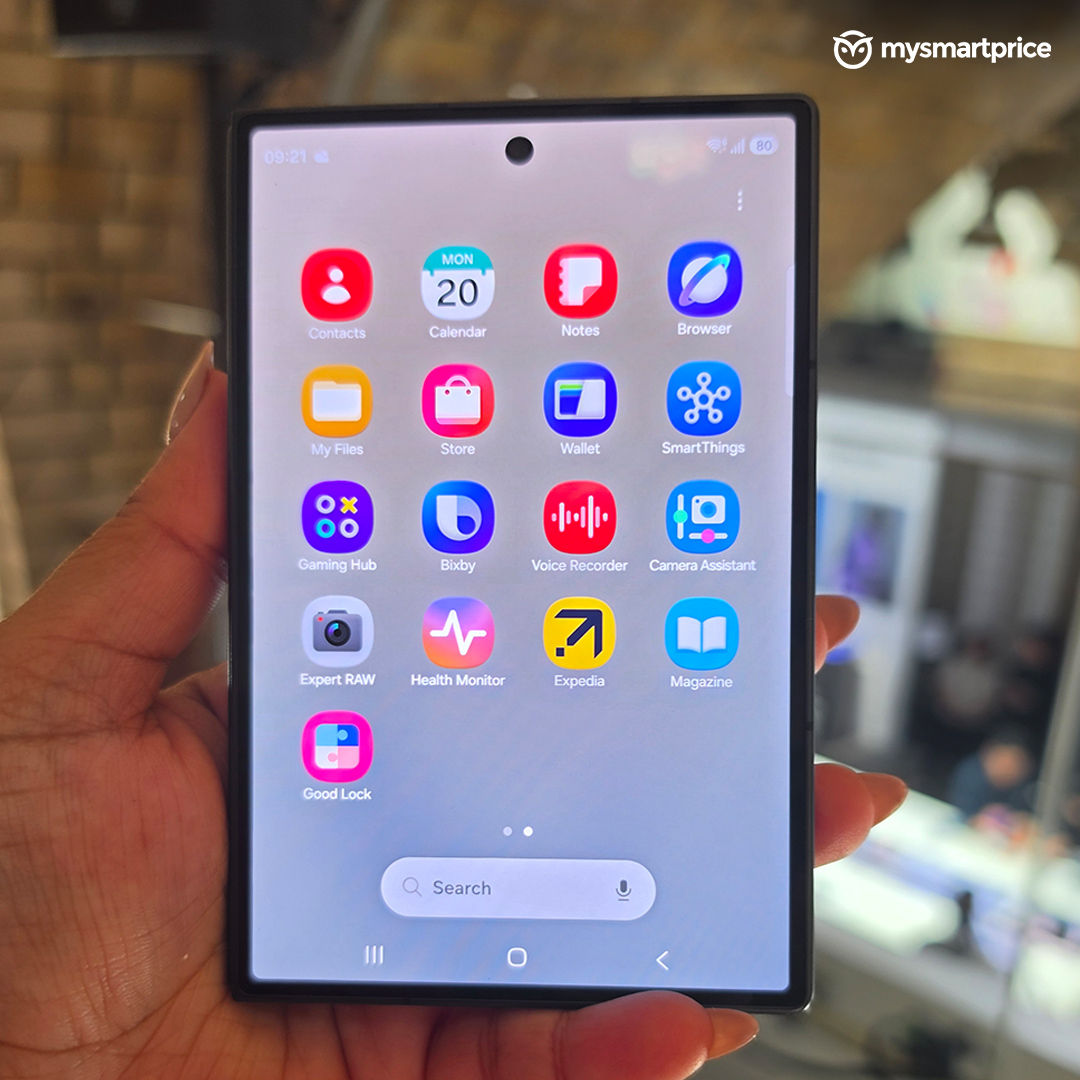
Samsung says the main display can reach up to 3,000 nits of brightness and includes Vision Booster along with a low-reflection finish. We did not have the varied outdoor conditions required to test those claims properly, but visibility was not a concern in the hands-on environment that we were in during the content capture session.
The Fold8's display experience is less about raw brightness than how the proportions change usage. Conventional Fold devices often encourage multitasking because their screens resemble small tablets. The Fold8 feels more naturally oriented towards giving a single piece of content more room.
That does not rule out multitasking, but it changes the device's emphasis. The Fold8 appears designed to make browsing, viewing and reading more immersive rather than to fit the maximum number of app windows on the screen.
Flagship Hardware, With Gaming Still to Be Tested
Samsung has equipped the Galaxy Z Fold8 with the Snapdragon 8 Elite Gen 5 for Galaxy. Basic navigation felt fluid during our session, although there was not enough time to draw conclusions about sustained performance.
Gaming will be an especially important test for this device. Samsung is positioning the wider display as suitable for games and targeting users who consume large amounts of entertainment on their phones. That creates expectations beyond simply opening apps quickly.
The processor will need to sustain performance without excessive heat, while games will need to scale correctly to the 4:3 screen. Controls that work well on a conventional widescreen phone may feel stretched or awkward here, depending on how each title handles the display.
The Fold8's manageable weight could work in its favour during longer sessions. A lighter foldable is less likely to become uncomfortable when held horizontally, but thermal behaviour and battery drain will ultimately determine whether it works as a practical gaming device rather than merely an impressive screen.
The 4,800mAh Battery Has a Difficult Job
The Galaxy Z Fold8 uses a 4,800mAh battery, which is larger than that of previous standard Galaxy Fold models. Capacity alone, however, does not reveal much about real-world endurance. The Fold8 has to power two displays, including an inner screen explicitly designed for long sessions of video, reading and gaming.
Its compact dimensions also leave less physical room than a conventional large foldable, making efficiency particularly important. The processor, display behaviour and Samsung's software optimisation will all influence whether the device can comfortably last through a day of mixed use.
Battery performance therefore remains one of the biggest unanswered questions from our hands-on time. The Fold8's entire content-first proposition becomes less convincing if users have to restrict how often they open the larger screen. It supports 45W of charging and 20W of wireless charging.
The Camera Setup Reveals the Compromise
Samsung has equipped the Fold8 with two 50MP rear cameras covering wide and ultra-wide perspectives. It also supports features such as Dual Recording, which can capture both sides of a moment, and My FanCam, which tracks a selected subject and reframes the footage for different aspect ratios.
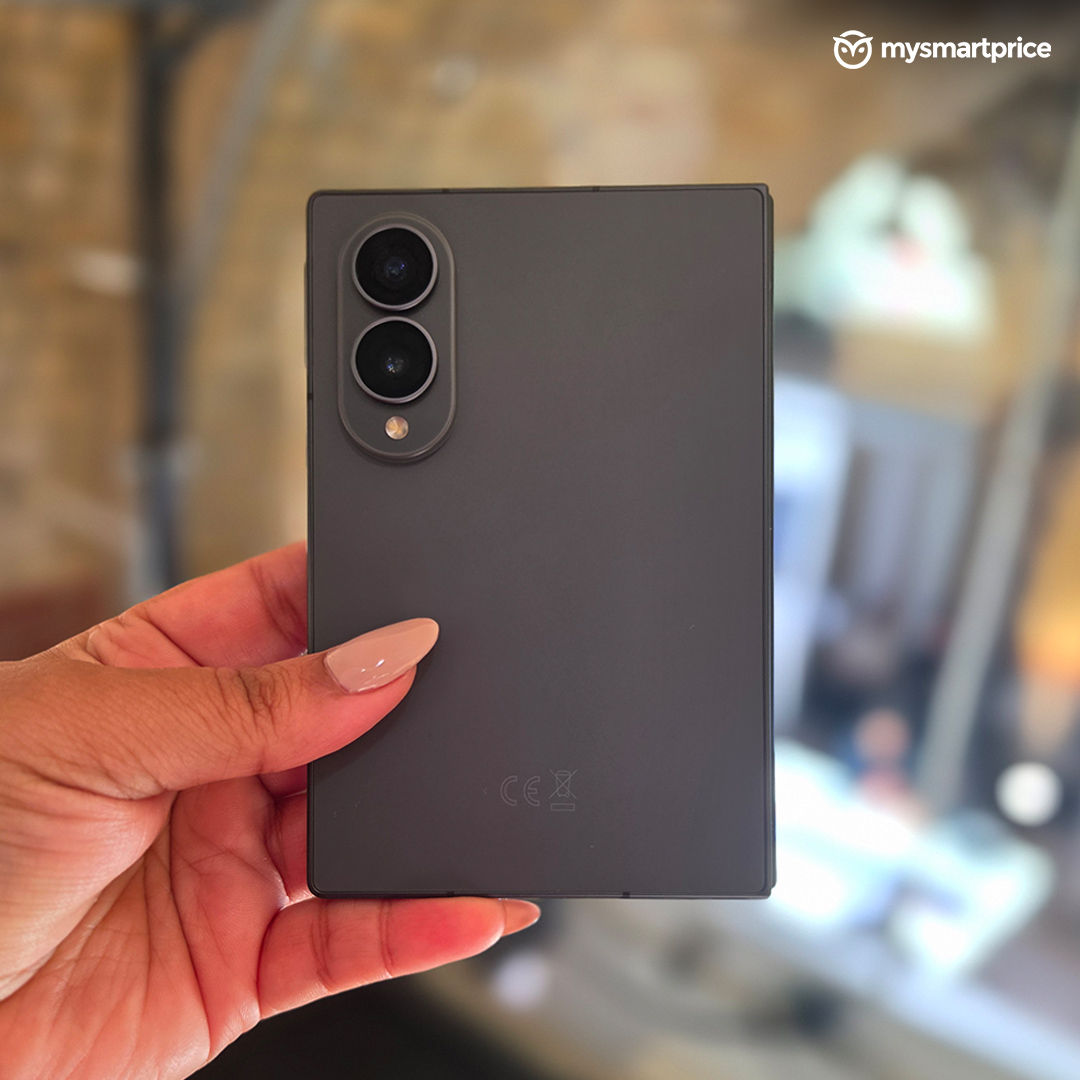
The absence of a dedicated telephoto camera is still notable.
It is one of the clearest ways in which Samsung separates the Fold8 from the more camera-focused Fold8 Ultra. The standard model may be positioned around consuming content, but the younger audience Samsung is targeting is also likely to photograph friends, concerts, holidays, food and everyday moments frequently.
A wide and ultra-wide pairing should cover basic photography, and image quality may still be strong. Two good cameras are preferable to an additional sensor included only to complete a specification sheet.
Even so, a third focal length would have given the Fold8 considerably more flexibility. The omission feels particularly visible on a premium foldable, where users may reasonably expect more than the basic wide and ultra-wide combination.
Camera quality will need to be judged after testing the phone across daylight, indoor and low-light situations. Our limited hands-on session was not enough to examine image processing, skin tones, motion handling or video stabilisation.
My Thoughts
The Galaxy Z Fold8 is interesting not because it is Samsung's most powerful foldable, but because it represents a more focused idea of what a foldable phone can be.
Instead of competing directly with large-screen productivity devices, it attempts to make the format more compact, manageable and oriented towards everyday content. Its passport-like proportions give it a distinct identity, while the low weight, smooth hinge and barely visible crease make it pleasant to handle.
There are compromises. The two-camera setup feels limited, unfolding still requires both hands, and the unusual display ratios will succeed only if apps use them properly. Battery endurance, gaming performance and thermals also remain untested. Yet the Fold8 already does something Samsung's recent foldables have occasionally struggled to achieve: it feels genuinely different.
It brings back some of the personality that disappeared when smartphones settled into a single rectangular template. There are echoes of communicators, the BlackBerry Passport and the experimental phones that once made each new form factor feel worth discussing.
Given the price will . That said we are looking forward to spending more time with the device and sharing our detailed review.