For years, 75-inch televisions have remained aspirational in India, admired but rarely adopted. High prices, space constraints, and logistical challenges kept the segment niche. Xiaomi believes that equation has now shifted.
Speaking to MySmartPrice, Gautam Batra, Associate Director, Product Marketing at Xiaomi India, and Sandeep Sarma, Associate Director, Marketing & PR, said the company's new 75-inch QLED TV is a continuation of its cinematic QLED strategy rather than a standalone experiment.
Last year, Xiaomi expanded its X Pro lineup with QLED displays, introducing features such as Dolby Vision, HDR10+, and Filmmaker Mode to bring a cinema-focused viewing experience into Indian homes. Until now, that experience was capped at 65 inches. The move to 75 inches, the company says, is the next logical step.
"We were earlier limiting ourselves to 65 inches. Moving to 75 inches is a natural extension of the cinematic QLED experience we have already established," Batra said.
Why 75 Inches Makes Sense Now
While large-screen TVs were once considered impractical for apartments, Xiaomi argues that 75 inches fits comfortably into more homes than commonly assumed. An 8 to 10 feet viewing distance is sufficient, making the size viable even in many two-bedroom setups.
There is also a practical ceiling involved. Seventy-five inches is the largest size that can be transported easily via service lifts in most high-rise buildings, making delivery and installation far more manageable than even larger formats.
Beyond metros, Xiaomi sees growing demand from tier-two and tier-three cities. Larger living spaces, combined with rising affluence, have made big-screen TVs a stronger aspirational purchase outside urban centres. Post-pandemic shifts in social behaviour have further strengthened this trend.
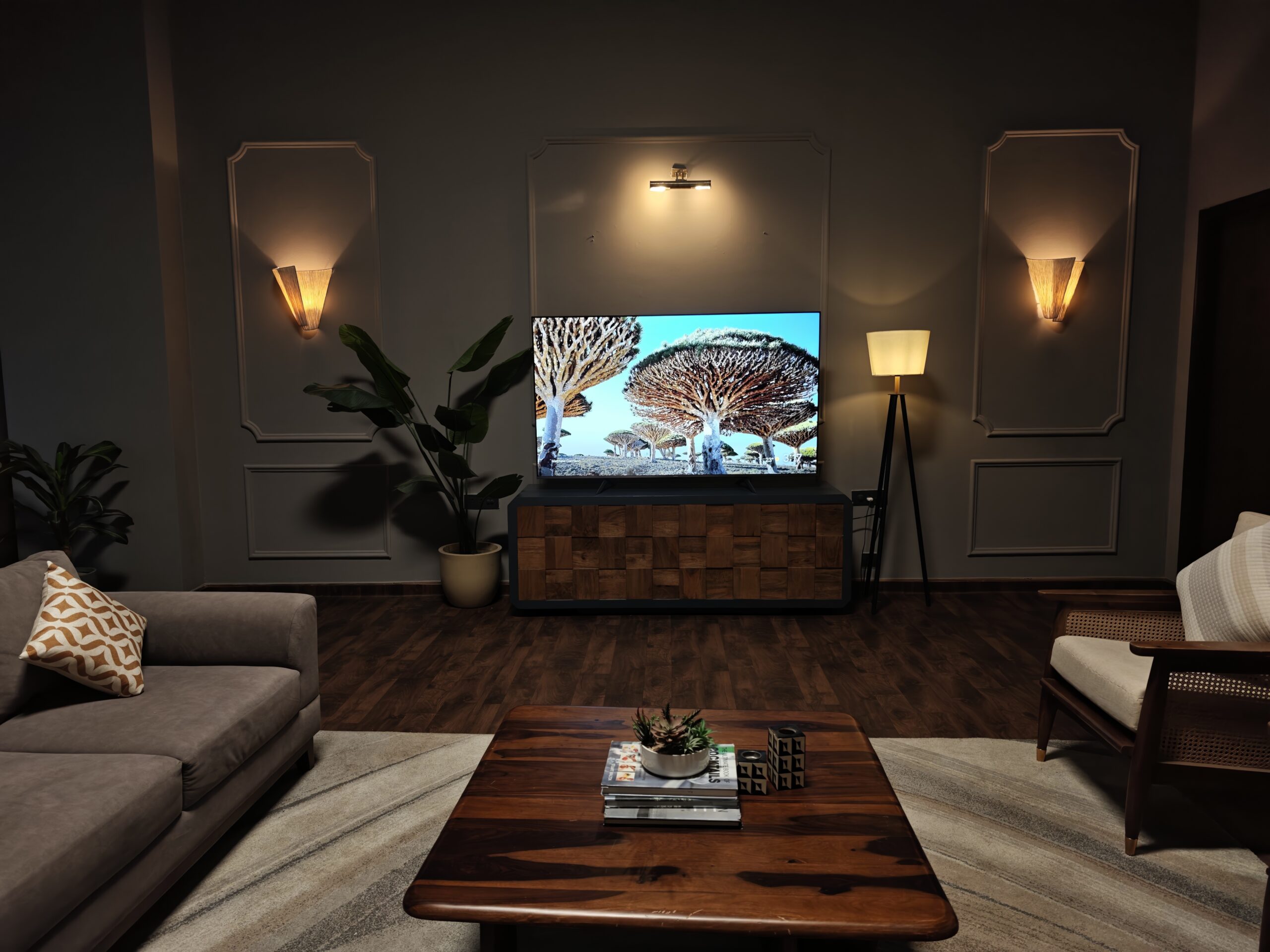
Content consumption habits have also changed. Home watch parties, OTT binge sessions, and family viewing have increasingly replaced outings, particularly in non-metro markets where entertainment options outside the home may be limited.
Xiaomi also expects the packed global sporting calendar in 2026 to accelerate this shift. With major tournaments returning and more live sports now broadcast in 4K and HDR formats, the brand sees renewed interest in large-screen TVs as a shared, social viewing experience.
Engineering for Scale, Not Just Size
Scaling up to 75 inches brings its own challenges. According to Batra, the biggest hurdles were not panel quality but execution across manufacturing and logistics.
From a component standpoint, Xiaomi says it remains confident about screen quality even at larger sizes. The greater challenge lies in ensuring manufacturing consistency, managing logistics, and keeping field failure rates low during shipping and installation, particularly as volumes increase.
On the content side, Xiaomi believes the ecosystem is far more mature than it was a few years ago. With a growing share of OTT content and live broadcasts available in native 4K and Dolby Vision, the reliance on aggressive upscaling has reduced. Learnings from Xiaomi's earlier large-screen models have also been factored into this generation, backed by months of internal testing before mass production.
Built-In Audio, Taken Seriously
Audio is another area where Xiaomi believes expectations have evolved. Large-screen TVs often require an external soundbar to feel complete, but Xiaomi says its X Series already raised the baseline for in-built sound.
The 75-inch QLED TV features upgraded 34W box speakers, compared to the 30W setup on earlier models. The larger speaker enclosure allows for improved bass response, while software features such as Xiaomi Sound, DTS Virtual:X support, dialogue enhancement, and multiple sound tuning options aim to deliver a fuller, more balanced audio experience straight out of the box.
Premiumisation Without Cutting Corners
Xiaomi acknowledges that its 75-inch QLED TV will not be positioned as the cheapest option in the market. The company says that it is a conscious decision.
Premiumisation in the TV category today is increasingly defined by picture quality, colour accuracy, sound performance, and long-term reliability rather than size alone. Xiaomi says it has prioritised component quality and tuning over chasing the lowest possible price point.
With televisions typically used for seven to eight years, the company argues that buyers are more willing to invest slightly more upfront for consistent performance, better service, and peace of mind. On-site servicing for TVs, rather than requiring customers to transport large panels to service centres, is positioned as part of that value proposition.
Disruptive, But Differently Now
Once known primarily as a price disruptor, Xiaomi says its approach has evolved with the market. Rising panel costs, memory prices, and logistics expenses have made unsustainably low pricing harder to justify, especially in large formats.
Rather than starting with a target price and building a product around it, Xiaomi says its current strategy is to focus on delivering a well-rounded product and pricing it honestly. The emphasis has shifted from chasing volumes to building long-term trust through consistent quality, durability, and user experience.
Xiaomi's Evolving Play in the Premium TV Segment
With the launch of its 75-inch QLED TV, Xiaomi is positioning itself more deliberately in India's premium television segment. As larger screens become mainstream and content quality continues to improve, the company sees this as a step toward shaping more experience-led, connected living rooms rather than simply selling bigger displays.