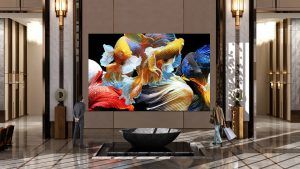
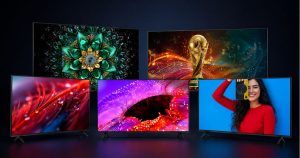
LG Electronics India has unveiled its 2026 AI TV lineup ahead of the festive season, expanding its premium portfolio with a new 115-inch (292 cm) QNED evo Mini LED TV and 25 ultra-large models across OLED evo, QNED evo Mini LED, Micro RGB evo, Mini RGB evo, and Nano 4K UHD series. While the 115-inch flagship is the headline act, the broader strategy is equally notable. LG is strengthening its position across premium price segments while making AI-powered software experiences a central part of the offering.
The Festive Push Starts Early
The festive quarter remains the biggest sales period for premium televisions, and LG is entering it with one of its widest premium lineups in recent years. At the top sits the 115-inch QNED evo Mini LED TV, the largest Mini LED television the company has introduced in India. It is joined by refreshed OLED evo models, new RGB-based LCD televisions and an expanded Nano 4K UHD range, giving LG a presence across multiple premium display technologies.
Speaking at the launch, Brian Jung, Director, Media Entertainment Solution, LG Electronics India, said the company expects demand for larger televisions to continue rising as consumers upgrade for OTT streaming, live sports and gaming.
Covering Every Premium Segment
Rather than pushing a single flagship, LG is broadening its premium portfolio to appeal to different kinds of buyers. The QNED evo Mini LED series focuses on larger screens and gaming with features such as Dynamic QNED Color Pro, Precision Dimming Ultra and Motion Booster of up to 330Hz on select models. The OLED evo G6 and C6 continue to target buyers seeking flagship picture quality, while the new Micro RGB evo and Mini RGB evo series introduce higher colour purity to the company’s premium LCD lineup. The Nano 4K UHD range, meanwhile, caters to buyers looking for large-screen entertainment at a relatively accessible price point.
A Software Play in a Hardware Race
Premium television hardware has become increasingly competitive, with most brands now offering AI processing, Dolby Vision, high refresh rates and gaming features. LG’s biggest differentiator is increasingly becoming webOS.
Every model in the 2026 lineup runs on webOS 26, bringing AI Voice ID, AI Concierge, Google Gemini and Microsoft Copilot integration, LG Gaming Portal, LG Channels and five years of operating system updates. More importantly, these experiences are no longer limited to flagship models. By extending them across the portfolio, LG is positioning software as a reason to stay within its ecosystem instead of treating it as an add-on feature.
The Premium TV Battleground Is Shifting
The premium television market is no longer defined by panel technology alone. Larger screens remain a key driver, but software longevity, AI-powered personalisation, gaming ecosystems and connected experiences are becoming equally important as consumers hold on to televisions for longer.
LG’s latest portfolio reflects that shift. While the company continues to invest in OLED and Mini LED, it is also placing greater emphasis on AI features and long-term software support across its range, signalling where it believes premium TV buying decisions are headed.
Price and Availability
| Series | Starting Price |
|---|---|
| Smart AI TV (LB65) | Rs 19,990 |
| Nano 4K UHD | Rs 38,990 |
| QNED evo Mini LED / QNED Mini LED | Rs 52,990 |
| OLED evo C6 | Rs 1,19,990 |
| OLED B6 | Rs 1,47,490 |
| OLED evo G6 | Rs 2,14,990 |
| Mini RGB evo | Rs 1,28,990 |
| Micro RGB evo | Rs 12,99,990 |
The televisions will be available in multiple screen sizes, ranging from 32 inches to 115 inches, depending on the series.
Where Does This Lineup Fit?
LG’s latest portfolio is aimed squarely at buyers planning a premium TV upgrade this festive season. Instead of steering consumers towards a single hero product, the company has built a lineup that spans OLED, Mini LED and LCD technologies while offering a consistent smart TV experience through webOS.
That approach could prove to be just as important as the hardware itself. As the differences in picture quality continue to narrow across premium televisions, software experience, ecosystem integration and long-term support are becoming stronger purchase drivers. LG is clearly betting that these factors, alongside its push into ultra-large screens, will help it maintain its edge in an increasingly competitive premium TV market.