As the haze settles over North India and winter begins to bite, air purifier sales are once again on the rise. Delhi's 24-hour average Air Quality Index recently touched 345, placing it in the "very poor" category, while pollution hotspots such as Anand Vihar crossed PM2.5 levels of 180 µg/m³. Nearby cities including Gurugram, Noida, and Lucknow are witnessing similar trends, triggering a familiar rush among consumers now far more aware of what they are breathing.
For many, this has turned into an immediate, almost instinctive reaction. Nitin, a software professional based in Noida, says, "As soon as the AQI hit the ‘very poor' zone, I started coughing every evening in my living room. The purifier I wanted showed a two-day delivery window on Amazon, but my eyes were already watering and my throat was burning. I ordered one from Blinkit instead and got it in just 14 minutes."
He adds that he has since ordered an extra set of filters. "Every year when this weather arrives, I start stocking up on filters before prices rise or stocks run out. It is like preparing for winter, only this time it's about the air you breathe." His experience mirrors a wider behavioural pattern across Indian cities. The moment AQI charts turn red, shoppers move quickly to secure purifiers and replacement filters, a trend now visible across all major e-commerce platforms.
Retailers across northern India are reporting a clear surge in air purifier sales over the past few weeks. Industry trackers estimate that demand has risen by nearly 50 to 60 percent since mid-October, with the sharpest growth seen in Delhi-NCR and other high-pollution regions. The pattern is consistent with what has become an annual cycle. As soon as air quality dips and AQI charts turn red, consumers begin rushing to secure reliable purification systems before inventories tighten.
Air Purifier Market Sees Strong Uptick Across Regions and Price Segments
"We've witnessed a strong 5X increase in air purifiers compared to typical days and Delhi-NCR witnessing a sharp 20X surge. The growth spans across Amazon's wide selection of air purifiers with the economy range (below INR10,000) growing 75% YoY, the mid-range (INR 10,000– INR 20,000) rising 70% YoY, and the premium segment (above INR 20,000) surging 150% YoY reflecting strong customer preference for solutions to improve indoor air quality. As customers prioritize cleaner air and healthier homes and workspaces, we offer widest selection of air purifiers starting at INR 4,999 from popular brands such as Philips, Honeywell, Eureka Forbes, Dyson, Coway, and Levoit with over 30 models available with one-day delivery option across Delhi-NCR", says K N Srikanth, Director, Home, Kitchen and Outdoors, Amazon India.
While Mohit Anand, Co-Founder and CEO of Secure Connection (Honeywell Air Purifiers' licensee in India), shared that the trend extends well beyond the current smog episode. "The category has been growing at around 40 percent year-on-year between January and July 2024, even before pollution levels spiked," he says. "At Honeywell, our growth during that same period was about 68 percent year-on-year. This shows how air purifiers are no longer just panic purchases — they're becoming informed lifestyle choices."
According to IMARC Group, the Indian air purifier market is valued at USD 507 million in 2024 and is projected to reach USD 1.8 billion by 2033, growing at nearly 14 percent CAGR. From our observation, we have witnessed that residential demand, in particular, is driving this momentum, with compact and mid-range models seeing the fastest uptake.
Growing Awareness and Behavioural Shifts
Mohit Anand points out that the surge is not only linked to Delhi's worsening air but also to a growing national awareness. "Even markets like Mumbai and Jaipur have shown worrisome AQI trends in the past two-three years," he says. "We've seen a significant sales spike in western India too, though the absolute numbers are still smaller than in the north."
He explains that new family setups are often key triggers for purchase. "When families welcome a newborn or when older parents come to live with them in cities, awareness around clean air rises. That has made air purifiers an all-season appliance rather than just a winter emergency."
Why Indoor Air Quality Needs Attention
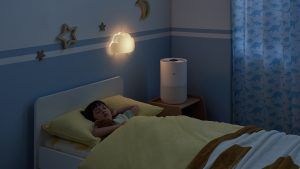
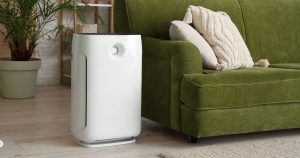
Anand also cautions against the misconception that indoor spaces are automatically safer. "Our homes are not airtight like western houses," he says. "Doors open frequently, exhaust fans draw outdoor air in, and daily activities like cooking, cleaning, or burning incense release pollutants and VOCs. Indoor air can often be more polluted than outdoor air."
This aligns with experts' observations across the industry. "With the continued spike in pollution, it's crucial for people to take proactive measures to protect their family members from the harmful effects of smog and pollutants," says Alex Hudson, Dyson Engineer in conversation to MySmartPrice. "To safeguard themselves from the alarming Air Quality Index outside, many prefer to stay indoors. However, it is equally important to ensure you are breathing clean air inside your four walls. What people often forget is that indoor air can contain dust, pet dander, pollen, and even harmful gases from cleaning products and cooking. Dyson air purifiers are designed to sense and capture these pollutants, projecting purified air throughout the room. Each machine uses a HEPA+Carbon filter that captures 99.95 percent of particles as small as 0.1 microns, with a fully sealed HEPA 13 filtration system that ensures no dirty air leaks back into the room."
Industry competition has intensified this season as both global and Indian brands expand their air purifier portfolios across different price points. While Dyson continues to lead the premium segment with advanced filtration and fully sealed HEPA 13 systems, Philips, Honeywell, and Sharp are strengthening their presence in the mid-range through multi-layer filtration, smart sensors, and energy-efficient operation.
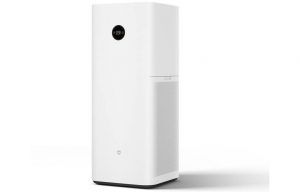
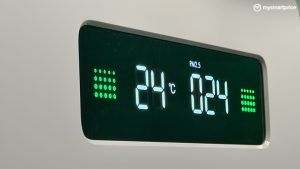
In the affordable category, Xiaomi, Kent, and Eureka Forbes are driving volume growth. Xiaomi has become a preferred choice among urban buyers because of its clean, minimalist design, smart app integration, and real-time AQI tracking. These are all features that were once limited to higher-end models. Kent, Qubo and Eureka Forbes, meanwhile, dominate the under-₹10,000 segment, appealing to first-time users who want reliable, easy-to-maintain purifiers for bedrooms or compact spaces. Their focus on filter availability and low running costs has helped them build trust among price-conscious families.
From trends, it is clear that air purifiers are no longer an off-season luxury. They have become a part of seasonal readiness in many homes, much like blankets or air humidifiers. As AQI levels climb and the chill deepens, India's clean air battle is increasingly being fought indoors.