India's smart cleaning market is still tiny, but for the average Indian household, the shift toward automation isn't driven by tech fascination, it is driven by exhaustion. Robot vacuums, once novelty gadgets, are increasingly being evaluated the same way people judge washing machines or air purifiers: "Does this actually reduce my workload?" That is why the category is growing faster than any other segment of home cleaning.
The India RVC market generated around 183.7 million dollars in 2021 and is projected to cross 1.36 billion dollars by 2030, growing at nearly 25 percent CAGR. The broader smart cleaning and hygiene category and the smart home market are on similar double-digit trajectories, even though penetration for robot vacuums is still under one per cent. What makes this moment interesting is that Indian buyers are now moving beyond curiosity and into expectation: they want appliances that remove effort, not create new rituals. That shift is exactly where the real battle between Dreame, Ecovacs, Xiaomi, iRobot, Milagrow and even new entrants will ultimately be fought.
Into this early but fast-moving landscape walks Dreame, which only entered India in late 2023 and has already grown its share from about five per cent to around a quarter of the organised robot vacuum category. The company, founded in 2017 in Suzhou, describes itself as a technology-first startup rather than a white label appliance brand. "Sixty per cent of our employees are in R&D, and we spend roughly seven per cent of our revenue there," says Manu Sharma, who leads Dreame's India business.
Dreame has pushed its brushless motors to 200,000 RPM, which Sharma calls "the heart of any cleaning appliance". The company also spends heavily on understanding how dust, air, and dirty water move through the device so as to ensure suction performance stays stable in real homes, not just lab conditions. On top of that sit what he calls "true AI" algorithms and a design language that blends into modern homes rather than looking like industrial hardware.
India, he argues, is one of the most complex markets Dreame operates in. The company sees a sharp divide between legacy rituals, where mopping is considered essential for a home to feel clean, and modern urban life, where dual-income nuclear families and scarce household help push people toward automation. "India is very complex. Our rituals at home, our demographics, the rise of working couples, complex flooring with marble, tiles and wood in the same apartment, all of this makes the demand for smart cleaning solutions very different from Europe or China," he says. This cultural layer matters because Indian users equate ‘clean' with wet mopping, which is why robots here need to deliver more than dry sweeping.
The regional skew is also unusual. Dreame estimates that nearly half the robot vacuum category comes from the South, especially Bengaluru and Hyderabad, where domestic help is harder to find and more expensive to retain. Users in these cities, Sharma says, "depend on these devices" because reliability matters more than theoretical availability of labour. This is also where buyers tend to skip basic bots and purchase fully automated docks, shaping what "premium" looks like in the Indian market
In product terms, Dreame is playing across the full stack. Globally, it is present in robotic vacuums, stick vacuums, wet and dry floor cleaners, grooming tools, robot mowers, pool cleaners and even restaurant robots. In India, the current focus is cleaning and grooming, but the company is already thinking about smart kitchen appliances, air fryers and purifiers as the next wave.
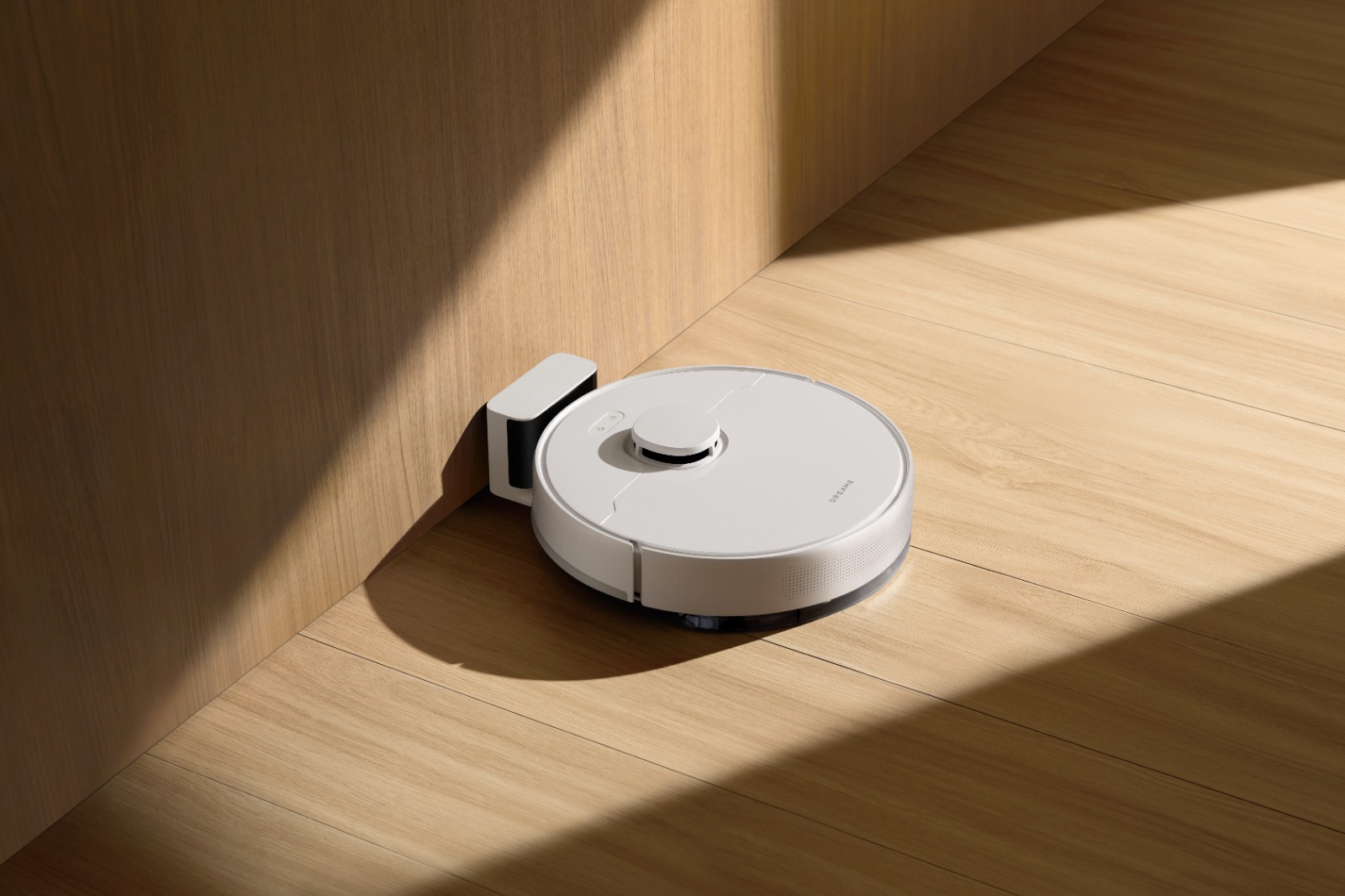
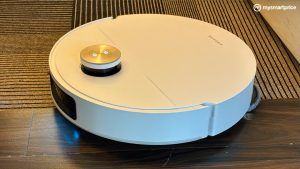
Within robot vacuums, Sharma sees the category naturally migrating toward fully integrated solutions rather than bare bones bots. Dreame's portfolio ranges from the flagship X series, with advanced AI-powered docking and cleaning, to more accessible products like the F10 entry-level robot and its wet and dry floor cleaners. He points to the Dreame L10 Prime, an automatic mopping system with a large water tank, as an example of how Indian expectations are evolving. Consumers want hands-free solutions where they do not have to keep filling water every time they clean. For many homes, that means twenty to twenty-five days, almost a month, without touching the tank," he says.
The competition is tough in the entry level, where you will find many established players such as Eureka Forbes, Ecovacs, Milagrow and Xiaomi, along with plenty of lesser-known brands. Even in the automatic mopping system, the competition is now heating up.
For Sharma, the problem with low-priced entry robots is not that they exist but that they often define the category for first-time buyers. The machines clean, but they require daily intervention to empty dustbins, refill tanks, and untangle hair from brushes. "What consumers really need, and the reason they buy robot vacuums, is so they do not have to manage the device after every run," he argues. Dreame's internal data suggests that once buyers understand the maintenance overhead, they upgrade to all-in-one docks that dust, wash and dry the mop in a single base station.
That is the space Dreame wants to expand. "Our role is to educate the market for all-in-one machines. First-time buyers who can afford it are already skipping the earlier generation. People who bought the first wave of robots with poor navigation will not go back to those single machines. They want fully automatic now," Sharma says.
The company's AI story is where the technology pitch becomes more specific. Dreame's robots use a mix of SLAM, three-dimensional structured light and AI cameras. The X40 Ultra, for instance, has been trained on around four million data sets and can identify about two hundred objects, including pets, with a claimed accuracy of 99%. That recognition is used for far more than obstacle avoidance.
According to Sharma, Dreame's algorithms look at scenes, objects and stains separately. Scene detection tells the robot what type of area it is in. Object detection covers things like cables, shoes and pet bowls. Stain recognition is the next layer, where the system distinguishes between dried wine on the floor and a fresh spill, then adapts mop pressure, brush speed and water flow. Features like mop extension for skirting edges and ProLift style elevation on carpets are designed around that intelligence, not bolted on later. This is practical, user-facing AI and less about marketing labels and more about reducing manual re-cleaning
Design is an equally deliberate lever. Sharma agrees that many entry-level robot vacuums look identical, but says meaningful design work is happening under the surface. Height reduction to get under low sofas, docks that can be self-installed like a dishwasher with water inlet and outlet, and finishes that align with Indian kitchens rather than just white plastic are some of the areas Dreame is experimenting with. Colour, material and finish choices still lean heavily on white, but he hints at more variation in future generations. These design choices matter because most robot vacuums live in visible areas of the home, unlike traditional appliances that can be tucked away.
The technology roadmap that excites him most is Cyber X, the stair-climbing concept Dreame has been showcasing globally. The product uses tread-like mechanisms, depth-sensing AI cameras and triple-braking systems to climb stairs up to around twenty-five centimetres, carry a robot vacuum to another level, deploy it, then return to charge. Sharma admits commercialisation will take time, but calls it "a signal that we are thinking beyond flat floors into complex multi-level environments, including commercial buildings". For India, where duplexes and split-level homes are rising in metros, this solves a major limitation of the current crop of cleaning robots.
Alongside this is a quieter push on efficiency and sustainability. Dreame's internal testing on products suggests that smart robots can cut water consumption by almost three-quarters compared to traditional mopping for the same area, with more consistent usage patterns and less chemical runoff, while HEPA filtration improves indoor air quality for users with allergies.
On the ground in India, the strategy is as much about distribution and service as about technology. Dreame entered as an online-first brand with Amazon and Flipkart, then began building an offline footprint with Croma in 2025, complete with dedicated Dreame Zones for live demos. It already has a service network that covers over one hundred and sixty-five cities and is targeting two hundred, backed by a helpline that works six days a week and virtual installation and education sessions for new users. This signals that robot vacuums are maturing from impulse gadgets to serious appliances that require education and after-sales support.
Penetration remains tiny, but the company is treating that as an opening rather than a constraint. Sharma believes that as awareness grows and Indian households see robot vacuums move from lockdown impulse buys to durable must-have appliances, the market will consolidate around a few serious players. "It is still early, with less than one percent penetration, but it is also the fastest growing part of the vacuum cleaner market. In categories like this, brands that invest in real innovation and long-term service usually end up leading once the dust settles," he says. While the market size is still small, there are many competing brands like Ecovacs, Xiaomi, Milagrow, and iRobot that are vying for consumer attention.
For potential buyers, the implications are now clearer than before. Robot vacuums in India are splitting into two distinct paths: affordable bots that need constant hand-holding and integrated all-in-one machines that behave like refrigerators or washing machines. If your goal is true automation, the latter is the only sustainable choice, even if the upfront cost feels higher. The long-term savings on time, water, and re-cleaning make these machines far more aligned with how Indian homes actually function. As cities get denser, homes get more complex, and domestic help becomes unpredictable, fully automatic docks are no longer a luxury but the segment that will define the category's next decade. That is also where Dreame is placing its biggest bets and where users will extract the most value.