Dreame is entering 2026 with a sharper focus on India, but not in the way most smart appliance brands typically approach the market. Instead of chasing headline features or global flagship trickle-down, the company is reworking its robot vacuum strategy around something far more fundamental: Indian homes and how they actually function. That shift becomes clear in its latest launches, the L40 Ultra AE and D20 Ultra, but more importantly, in how Dreame is thinking about adoption, pricing, and product-market fit in India.
Moving Beyond the Spec Race to Solve for Indian Homes
Robot vacuums globally have largely been defined by a spec race. More suction, better mapping, smarter AI. Dreame is still playing that game, but the India strategy is evolving beyond it. The company is anchoring its approach around local usage patterns where mopping, mixed floor types, compact layouts, and high dust levels define everyday cleaning.
"India is a unique market. It has its own rituals. Mopping is one of the key requirements," said Manu Sharma during the interaction.
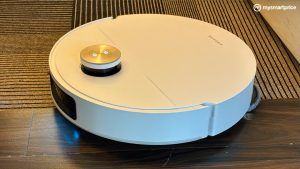
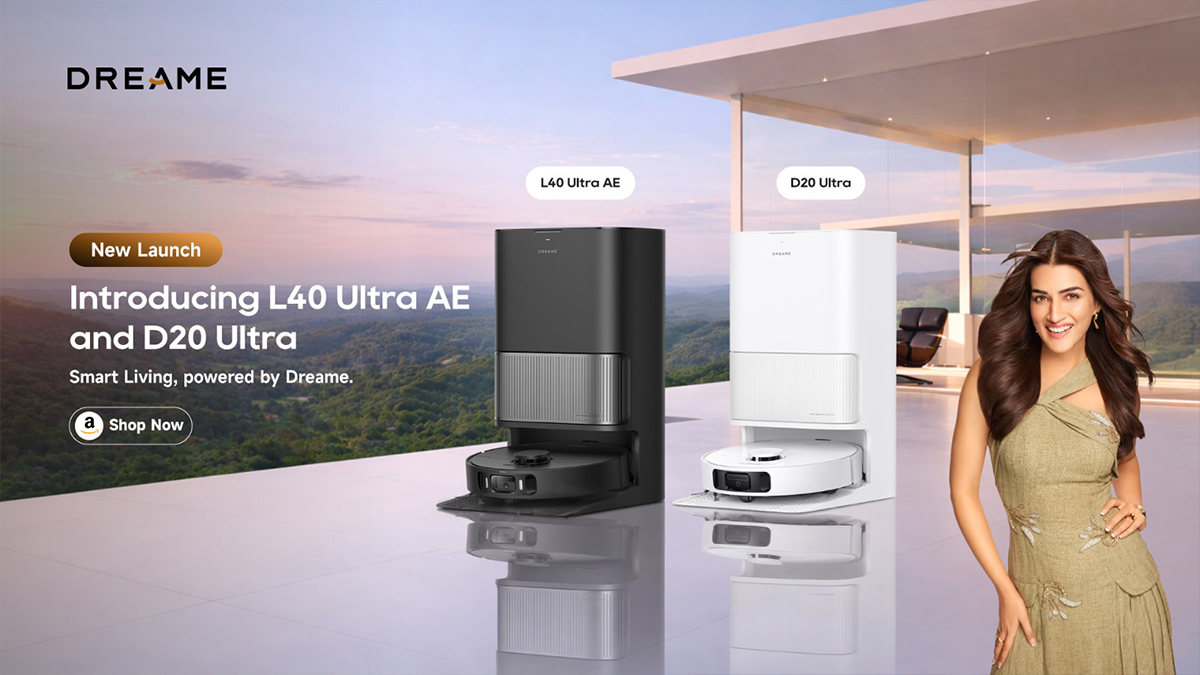
The new lineup reflects this shift. The L40 Ultra AE, priced at ₹59,999, pushes into premium mid-range territory with features like 19,000Pa suction, hot water mop washing, and advanced obstacle recognition. The D20 Ultra, at ₹39,999, is designed for wider adoption, retaining the all-in-one automation approach while trimming some advanced capabilities. The emphasis, however, is consistent across both models. The focus is on reducing manual effort rather than simply increasing performance.
"What we're sensing clearly is that people don't want standalone RoboVacs anymore. They want an all-in-one machine that gives them convenience," Sharma noted.
Adoption Is Growing, But Trust Remains the Real Barrier
Despite strong growth rates of 40 to 50 percent, the robot vacuum category in India is still early. Dreame is not positioning this as a mass adoption moment yet. Instead, it sees a gradual expansion led by specific consumer segments.
"The base is still very small… it's not going to be a mammoth takeoff. It will be gradual," Sharma said.
The more important challenge is not pricing alone but confidence. Consumers continue to question whether these machines can handle Indian conditions such as kitchen stains, hair entanglement, uneven surfaces, and tight corners. Adoption today is being driven by working couples, nuclear families, and households without reliable help. There is also an emerging trend of these devices being purchased as gifts for parents in smaller cities, indicating early demand beyond metros but not yet scale.
Navigation and Execution Are Emerging as Key Differentiators
While AI continues to be part of the narrative, the conversation is shifting toward execution. Dreame's focus areas are object identification, mapping accuracy, and obstacle avoidance, all of which directly impact real-world usability.
"We feel we have an edge in identification and navigation," Sharma said.
This aligns with how the category is evolving. Once baseline suction performance is achieved, the real differentiation comes from how well the robot navigates complex environments without leaving gaps. Features like hair-cutting brushes, edge-reaching mop mechanisms, and automated dock systems are attempts to reduce intervention rather than add complexity.
India Product Fit Is Driving Portfolio Decisions
A notable shift in Dreame's strategy is its approach to global products. Instead of bringing its entire portfolio to India, the company is selectively introducing products that align with local demand and price sensitivity.
"We don't want to bring each and every product… it has to be India product fit," Sharma said.
This indicates a move toward localisation, not just in features but also in pricing and positioning. High-cost experimental products and niche innovations are being deprioritised in favour of models that can scale in the Indian market.
Experience-Led Selling Becomes Critical for Category Growth
To address the trust deficit, Dreame is investing in demos and offline experience. The company is rolling out pre-purchase home demonstrations through Amazon in select cities, expanding offline presence through retail partners, and preparing a direct-to-consumer channel.
This is a structural shift in how the category is being sold. For a product that still requires behavioural change, visibility and experience are becoming as important as specifications. Demonstrations are likely to play a key role in converting interest into actual purchases.
The Real Bet Is on Making Automation Invisible
Dreame's broader play in India is less about pushing the idea of automation and more about making it fit seamlessly into existing routines. The presence of domestic help, varied home layouts, and differing cleaning habits mean that these devices need to adapt rather than replace.
The category will continue to grow, but not in sudden spikes. The next phase of adoption will depend on how well these products integrate into everyday life without requiring constant oversight. If that transition happens, robot vacuums in India will move from being an aspirational purchase to a practical one.
With the L40 Ultra AE and D20 Ultra, Dreame is targeting the ₹40,000 to ₹60,000 sweet spot where serious consideration for robot vacuums begins, and where competition from Ecovacs, iRobot, and Xiaomi is intensifying. Its pitch is straightforward: higher suction, more capable all-in-one docks, and reduced manual intervention at competitive pricing. The D20 Ultra works as an entry into full automation for first-time buyers, while the L40 Ultra AE is aimed at users who want a more hands-off experience in larger or more demanding homes.
The broader shift is that the category is becoming more structured, with clearer segmentation and use-case-driven products rather than just spec-led upgrades. For buyers, the decision now hinges less on headline numbers and more on how well these machines fit into their daily routine. Dreame's new launches strengthen its position in this evolving space, but their real success will depend on consistent real-world performance and the ability to build trust in a category that is still finding its footing in India.