Indian homes are entering a new phase of intelligence. What once felt like a scattered assortment of "smart" gadgets is now becoming a more coordinated ecosystem where appliances sense context, adapt to routines, and quietly reduce the manual load of everyday work. Air, cleaning and cooking are seeing the fastest transformation, and together they reveal how the Indian home is slowly but steadily learning to think for itself.
Smart appliances today are not chasing novelty. They are chasing relevance. This is particularly true in air quality management, where the need for constant intervention has long frustrated users. Honeywell's India partner Secure Connection Ltd. describes this shift as a move toward meaningful automation. Mohit Anand, Co-Founder and CEO of Secure Connection Ltd., says artificial intelligence in Honeywell purifiers is used to make air purification more intuitive. According to him, the devices now learn from usage patterns, indoor air quality trends and India-specific environmental signals such as humidity and particulate behaviour. This is what allows the purifier to automatically adjust filtration intensity or fan speeds in the background. Anand also stresses that personalisation is built without compromising trust. He explains that the system uses localised and anonymised data processed through an encrypted infrastructure that adheres to global and local privacy norms. These elements reflect the evolution of the purifier from a device to a small but consistent decision maker inside the home.
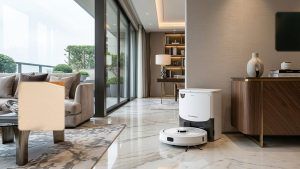
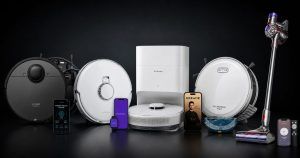
A similar pattern is visible in home cleaning, although the motivations are broader and shaped by India's complicated living conditions. Mixed flooring, irregular layouts, unpredictable availability of domestic help and long commutes have pushed households toward more reliable cleaning systems. Dreame's India leadership believes this shift is driven by a demand for autonomy that works within the practical realities of Indian homes. Manu Sharma, Managing Director of Dreame India, notes that Indian households often have marble in one room, tiles in another and wooden flooring elsewhere. According to him, the appeal of robotic cleaning is not the idea of a moving gadget but the idea of consistent cleanliness without supervision. Dreame's approach focuses on engineering advances such as high-speed digital motors, fluid mechanics for sustained suction and learning based navigation that recognises objects, stains and room patterns. The company has expanded aggressively offline because live demonstrations are often what help first-time buyers understand why a fully automatic cleaning station reduces far more effort than a single bin robot.
Milagrow, which has been present in this category far longer, arrives at similar conclusions from the opposite side of the market. It has been observed that although the category is still small in absolute value, adoption is growing quickly because expectations from cleaning devices have matured. Amit Gupta, Sr. Vice President at Milagrow Humantech highlights that Indian users want reliable suction, predictable navigation and straightforward maintenance. The brand has focused on local language responses, remote controls for households that avoid app-heavy appliances and algorithms tuned for Indian dust conditions. It also emphasises a privacy angle through local data storage and India-based servers. The company sees a mix of first-time buyers and upgraders who purchased basic models during the pandemic and now want a more complete cleaning experience. Both Dreame and Milagrow agree that the future lies in all-in-one docks that refill water, rinse and dry mops and empty dust automatically, with plumbing integrated solutions representing the next level of home cleaning autonomy.
Kitchens That Learn and Guide
If air and cleaning reveal how homes are becoming more aware of their surroundings, cooking shows how appliances are beginning to respond to human behaviour itself. In the kitchen, artificial intelligence is being used to reduce uncertainty and build skill rather than simply automate tasks. Upliance.ai explains this shift through the idea of guided confidence. Mahek Mody, CEO and Co-Founder, says cooking has always been personal, but is filled with hesitation when people try unfamiliar dishes. Artificial intelligence is now providing real-time guidance on heat levels, timings and recovery steps. According to Mody, users who barely cooked earlier are now producing complex dishes because the system removes the fear of failure. The platform's Kitchen OS learns from weekly cooking patterns, search behaviour and recipe feedback, and improves with every session. It reflects a move toward cooking experiences where the user and the appliance collaborate rather than follow static instructions.
The company also sees the next frontier in interoperability. Mody believes the kitchen will soon become a coordinated environment where appliances share intent. He describes scenarios where a cooker signals its preheat cycle to an air fryer, where a purifier increases airflow automatically when frying begins, and where refrigerators guide recipes based on ingredient freshness. This is an early glimpse of what a genuinely intelligent home could look like, where devices interact with each other instead of expecting users to manage them one by one.
A Home That Works With You
Across these categories, a common idea is taking shape. Indian consumers do not want louder apps or more complicated dashboards. They want outcomes that are consistent and require minimal involvement. This is influencing engineering, service design, data practices and distribution strategies. Offline demos matter because users need to feel the autonomy rather than read about it. Privacy and data residency are becoming differentiators as devices grow more connected. Localisation is no longer optional. And as brands plan for the next wave of integration, India's thinking home is beginning to look like a space where appliances quietly collaborate and routines unfold with less friction.
The shift may be early, but it is decisive. The connected home was about visibility. The thinking home is about relief. And across air, cleaning and cooking, that relief is now within reach.