As 2025 draws to a close, the consumer tech industry finds itself at an inflection point. The conversation is no longer about how many devices a home can connect, but how quietly and intelligently technology can disappear into daily life. Across categories, from home robotics and appliances to security and infrastructure, consumer expectations are shifting away from manual control and towards systems that anticipate needs, adapt over time, and reduce friction.
It is about intelligence that feels invisible. Now, consumers are quietly pushing back, asking a far more demanding question: does this technology actually reduce effort, or does it add another layer of management to daily life?
The quiet death of the ‘smart' label
For over a decade, consumer tech sold the promise of smart homes through voice commands, apps, and connected ecosystems. But for many users, this phase introduced friction rather than convenience. Managing multiple apps, inconsistent integrations, and frequent manual inputs has led to fatigue.
Heading into 2026, consumer behaviour reflects a clear reset. Buyers increasingly want technology that understands context and makes decisions independently, without requiring constant oversight. Intelligence is expected to be ambient, not interactive.
Mohit Anand, Co-Founder and CEO of Secure Connection Ltd, frames the shift more bluntly. "The real shift in consumer behaviour is not from offline to online, but from control to intelligence," he said.
This is especially visible in categories like home appliances, robotics, and security, where automation is moving from novelty to necessity. Products are now judged on how reliably they operate in the background, not how many features they advertise upfront.
From Smart Homes to Intelligent Environments
The smart home narrative of the past decade focused on adding devices. The emerging narrative is about building environments. An intelligent home is not defined by the number of connected products it contains, but by how seamlessly those products work together to simplify everyday life.
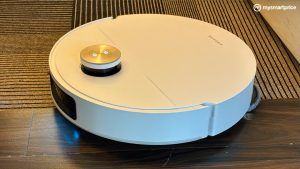
This is visible in the evolution of home robotics, where intelligence is now measured by how well a device navigates real-world chaos rather than lab conditions. Similarly, in appliances, features that adapt to usage patterns, climate conditions, and energy consumption are becoming more valuable than static presets.
Manu Sharma, Managing Director, Dreame Technology, India, reflects this broader industry direction, noting that consumers are moving away from isolated smart gadgets towards intelligent systems that anticipate needs and blend naturally into daily routines. The emphasis, he suggests, is on autonomy paired with consistency, not novelty.
Trust, data, and long-term value
As intelligence becomes more autonomous, trust is emerging as one of the most critical currencies in consumer tech. Products that collect data but fail to explain how it is used, or systems that feel intrusive rather than supportive, face growing resistance.
Transparency around data, predictable performance, and long-term reliability are no longer optional. Consumers expect devices to improve over time through software, but not at the cost of privacy or security. This is particularly relevant in India, where awareness around data protection and digital trust is rising steadily.
In 2026, brands that fail to clearly explain how data is used, stored, and protected will face growing resistance. Intelligence without trust risks being perceived as surveillance rather than convenience. Parallely, the brands taking the lead will be those that make intelligence feel invisible. Easy installation, minimal setup, low maintenance, and cross-platform compatibility will matter more than aggressive claims around "AI-powered" features.
Sustainability and restraint as differentiators
Interestingly, restraint is becoming a differentiator in itself. Consumers are increasingly selective, especially in urban households where space, energy costs, and noise levels are real constraints. Every product must earn its place by reducing effort, improving well-being, or delivering long-term value.
This has also brought sustainability into sharper focus. Energy-efficient systems, durable products, and technology that optimises resource usage automatically are gaining preference over short-term upgrades. The changing BEE norms too will play a part in defining how consumers look at energy efficiancy in 2026 and beyond.
What will define winners in 2026
The next phase of consumer tech will not be defined by who ships the most connected products, but by who removes the most friction. Ease of installation, seamless interoperability, self-optimising performance, and low-maintenance operation are emerging as decisive factors.
Brands preparing for 2026 are increasingly investing in research and development that prioritises experience over specification. The focus is shifting from selling devices to building intelligent environments that quietly take care of everyday tasks.
At Secure Connection, this translates into investments aimed at simplifying smart living while keeping systems efficient and sustainable. At Dreame, it is visible in products designed to learn from users and environments rather than relying on manual inputs. But the trend itself extends far beyond individual brands.
What 2026 will really be about
Taken together, these shifts point to a clear conclusion. The tech market in 2026 will not be defined by louder innovation, but by quieter intelligence. The winning products will be those that fade into the background, reduce mental load, and allow consumers to focus on what actually matters.
For consumers, this means fewer devices demanding attention and more systems that simply work. For brands, it raises the bar significantly. Innovation will be judged not just by what technology can do, but by how effortlessly it integrates into everyday life, and how much trust it earns along the way.