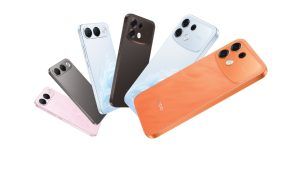
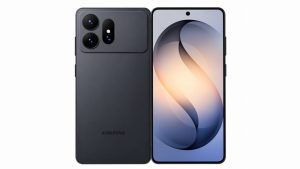
Samsung has partnered with quick commerce platform Instamart to enable near-instant delivery of select Galaxy devices across major Indian cities, marking one of the fastest fulfilment models yet for consumer electronics in the country. Under the partnership, consumers can order Galaxy smartphones, tablets, wearables and accessories through Instamart and receive them at their doorstep within minutes.
The collaboration significantly expands Samsung's omnichannel footprint at a time when consumer expectations around speed and convenience are being reshaped by quick commerce. Until recently, such platforms were largely restricted to groceries and daily essentials. Their gradual movement into electronics reflects growing confidence in last-mile infrastructure, inventory management and consumer trust for high-value products delivered within ultra-short timelines.
From a competitive standpoint, Samsung's move mirrors a broader industry shift where brands are testing rapid-delivery models to capture impulse purchases and last-minute upgrade demand. While smartphone sales in India have traditionally been driven by physical retail and large e-commerce platforms with next-day delivery, quick commerce introduces a fundamentally different buying trigger, anchored in immediacy rather than planned research. Competitors such as Xiaomi, Realme and Apple continue to rely heavily on conventional e-commerce for same-day or next-day fulfilment, making Samsung's Instamart integration a distinct experiment in speed-first electronics retail.
The partnership gives consumers access to a broad portfolio of Galaxy products across price segments. Samsung said the objective is to strengthen accessibility to Galaxy devices for users who value instant availability rather than delivery windows stretching across days. Rahul Pahwa, Director, MX Business, Samsung India, said the collaboration strengthens the company's omnichannel strategy and brings Galaxy products to users within minutes. From Instamart's side, the company positioned the tie-up as part of its effort to adapt to evolving urban consumption patterns where convenience increasingly drives purchasing behaviour.
Quick Commerce Growing Rapidly
From an industry-trend perspective, India's quick-commerce ecosystem is expanding rapidly beyond groceries into categories such as personal electronics, grooming appliances, kitchen tools, and even premium accessories. Platforms including Instamart, Blinkit and Zepto are aggressively expanding dark-store networks in metros and Tier-1 cities, supported by improved rider density and predictive demand algorithms. For electronics brands, quick commerce offers access to high-intent, last-minute buyers, while reducing dependence on festival-led demand spikes. It also changes the economics of impulse upgrades, especially in the sub-₹30,000 smartphone segment.
At a brand strategy level, the partnership reinforces Samsung's long-term push toward omnichannel dominance, where offline retail, traditional e-commerce, and now quick commerce coexist as parallel sales engines. For Samsung, which already runs one of India's largest authorised offline retail networks, quick commerce acts as a complementary layer rather than a replacement channel. It allows the brand to stay relevant for urban consumers who increasingly expect instant fulfilment to be a default service, not a premium exception.
From a user-centric perspective, the biggest value proposition here is emergency or urgent replacement scenarios. Consumers whose primary phone fails suddenly, users needing a last-minute gift or business users replacing accessories such as wearables or chargers can now bypass typical 24- to 48-hour delivery cycles. However, instant delivery also compresses the traditional research window, shifting purchase behaviour toward familiarity with trusted brands over deep spec comparison.
Quick commerce makes the most sense for accessories, entry- and mid-range smartphones, and wearables where immediate need outweighs price discovery. For flagship phones and higher-value purchases, buyers may still benefit from traditional e-commerce platforms that offer bank offers, exchange discounts and longer return periods. Consumers should also verify device availability, return policies and warranty activation processes carefully when buying electronics through instant-delivery platforms.
Samsung's move is strategically timed as quick commerce platforms look to expand average order values beyond groceries. While 10-minute smartphone delivery sounds disruptive, its real impact will be measured not in flagship sales but in how effectively it drives impulse upgrades and accessory pull-through. If execution stays tight, this could quietly become one of the most influential retail shifts in India's electronics market over the next two years.
With this partnership, Samsung becomes one of the first major consumer electronics brands to blend mass-market hardware with ultra-fast commerce at scale. As quick commerce platforms race to move up the value chain, this model could soon become a new battleground for brand visibility, impulse conversion and urban retail dominance.