NVIDIA’s GeForce Now officially launched in India last week, marking a massive moment for local gamers. The promise is incredibly alluring: stripping away the hefty burden of dropping ₹1,50,000+ on a high-end gaming laptop or desktop. Instead, it offers a premium PC gaming experience across everyday thin-and-light laptops, TVs, tablets, and even smartphones.
The only real prerequisite? A highly stable internet connection. Ideally, your loaded latency should sit comfortably under 40ms for a truly lag-free experience. My very first hands-on experience of GeForce Now in India was very promising, though that was a part of the controlled media preview session.
I’ve spent the last week putting the service through its paces to see if cloud gaming is finally ready for the Indian mainstream. Here is my hands-on experience.
The Test Setup and Environment
To truly test the “play anywhere” claim, I avoided dedicated gaming hardware entirely. My testing rig was a 2.5-year-old Asus ZenBook 14 OLED, a 1.2kg thin-and-light laptop boasting a 120Hz display but lacking any discrete GPU muscle.
I tested GeForce Now across multiple WiFi environments to see how it handled real-world network variations:
- Home: A 150 Mbps Jio Fiber line, switching between the primary router and a standard WiFi signal extender (non mesh).
- Office: A standard 50 Mbps fiber line.
Going in, my expectations were tempered: I anticipated a solid experience for single-player games but expected the service to struggle with the fast-twitch demands of competitive multiplayer titles. I am happy to report that GeForce Now completely blew past those expectations.
Performance: Single Player Experience is Fantastic!
For single-player sessions, as long as you have a stable connection (ideally a 100 Mbps+ fiber line on a 5GHz band) and latency below 50ms, the experience is practically indistinguishable from playing locally on a top-tier dedicated PC.
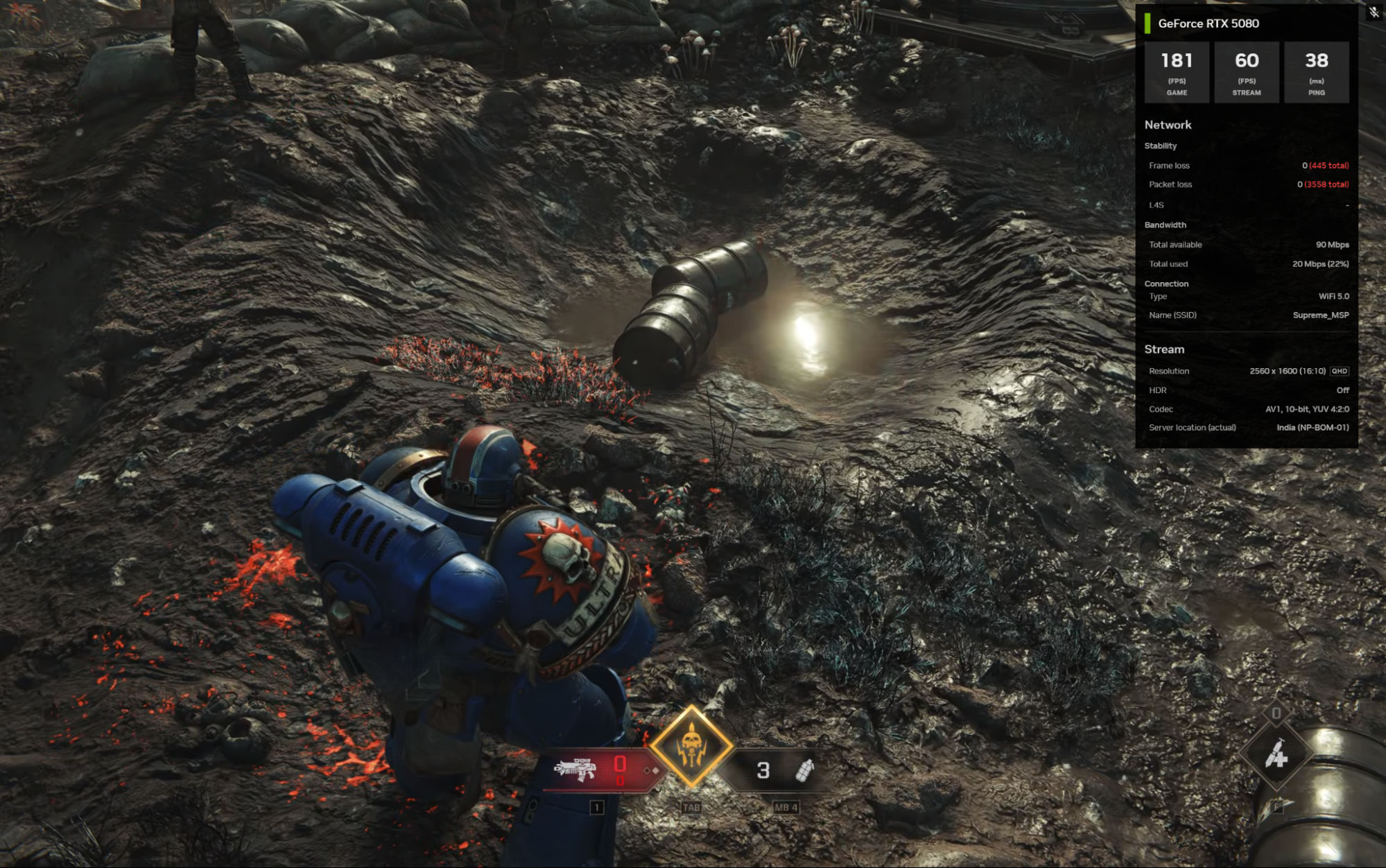
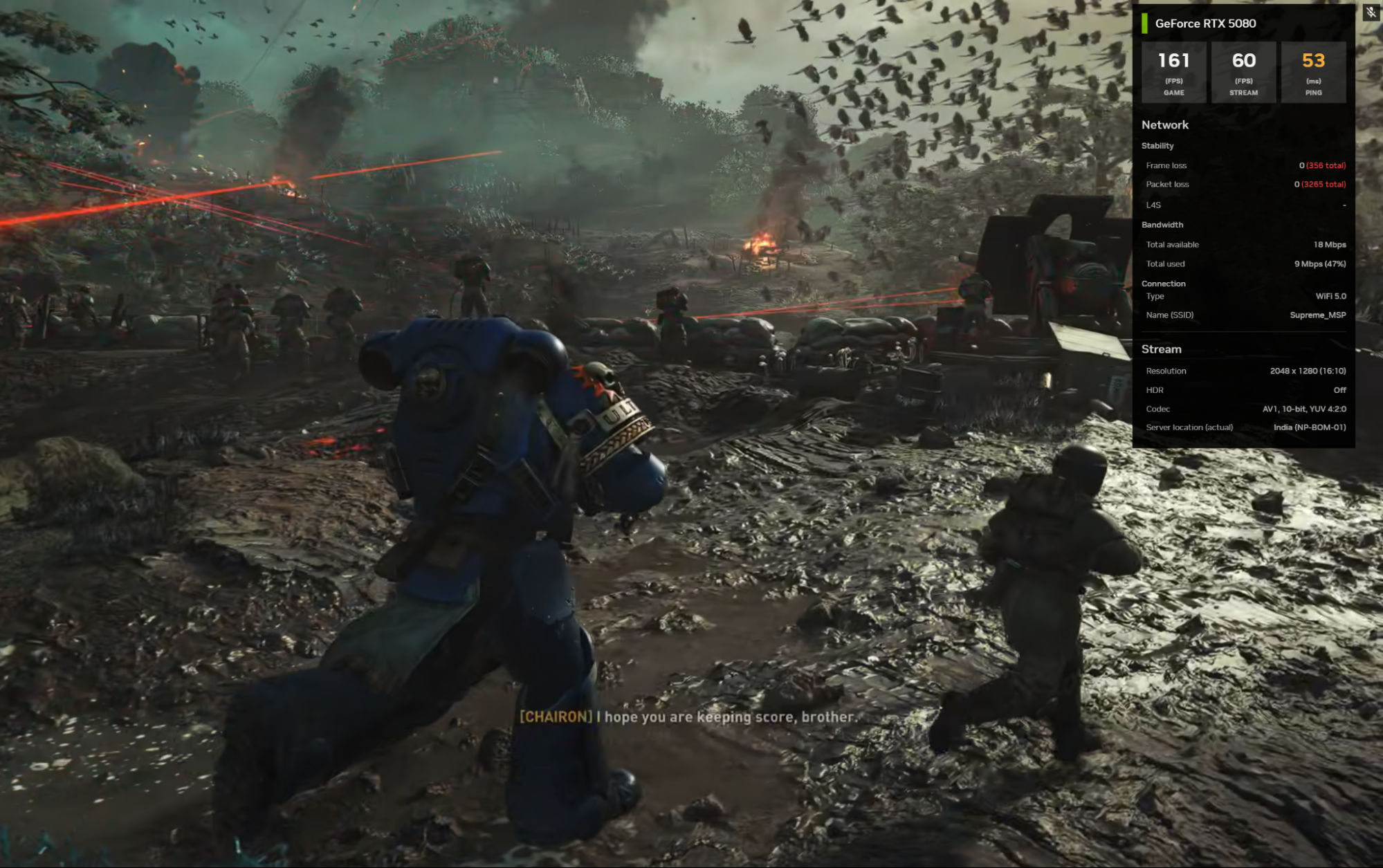
I tested fast-paced, graphically demanding shooters like Warhammer 40,000: Space Marine 2, Doom Eternal, and Metro Exodus (PC Enhanced Edition). For 90% of my playtime, I was getting an experience mirroring a rig equipped with an RTX 5060 or 5080 class GPU, 32GB of RAM, and a high-end Core i7 or Ryzen 7 CPU, easily pushing past 100 FPS on High or Ultra settings.
Multiplayer Performance: Pleasantly Surprised!
Switching to multiplayer, the service handled Counter-Strike 2 and Call of Duty: Warzone beautifully. Running these at the highest settings on a battery-powered thin and light felt like absolute magic.
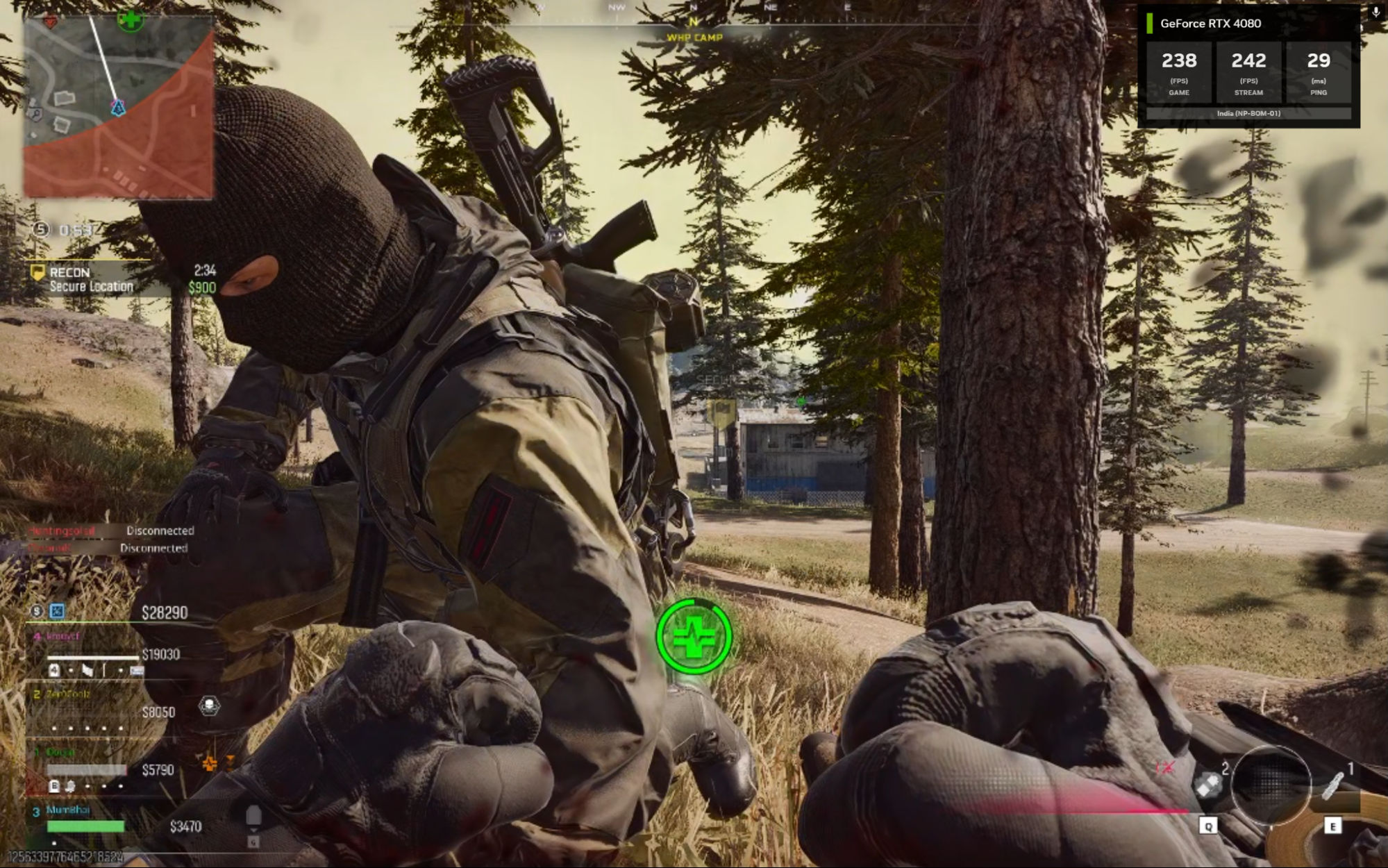
The caveats: During heavy, effect-laden firefights, there were occasional frame drops, and the dynamic resolution would occasionally dip from my standard 1600p down to 1080p. However, none of this was alarming or severely impacted my gameplay. Input lag was incredibly well controlled. While I wouldn’t recommend GeForce Now to esports pros where a single millisecond dictates a tournament win, it is more than capable for casual and even moderately competitive multiplayer sessions.
Can’t Ignore the Perks: Cool, Quiet, and Green
Beyond the obvious financial savings of not buying a dedicated rig, cloud gaming brings a few massive quality-of-life and environmental upgrades to your daily sessions.
First is the power consumption. Streaming a game uses a fraction of the electricity required to power a localized GPU and CPU running at maximum capacity. This translates to lower power bills per gaming session and a much smaller carbon footprint, making your hobby surprisingly eco-friendly.
Second is the physical comfort. Anyone who has gamed on a laptop knows the dreaded hot zones that inevitably lead to sweaty palms, regardless of how advanced the thermal management system claims to be. With GeForce Now, all the heavy lifting happens on a server hundreds of miles away. Your local device stays perfectly cool.
And finally, the silence. There is something deeply satisfying about dropping into an intense, explosive firefight without your laptop fans whizzing into turbo mode and sounding like a jet engine preparing for takeoff. A cool, quiet, and sweat-free gaming session is an underrated luxury that is hard to give up once you experience it.
Ultimate Tier Details and Specs
I reviewed the service on the Ultimate Tier, and NVIDIA has brought out the big guns for the Indian market, utilizing Mumbai-based servers to keep latency in check.
What you get for ₹1,999 (90-day pack):
- Cost Breakdown: Roughly ₹700 a month, a fraction of the cost of a gaming PC.
- Hardware: Powered by RTX 5080-class servers.
- Performance: Up to 5K resolution at 120 FPS or 1080p at 360 FPS.
- Tech Support: DLSS 4 and AV1 encoding for superior stream quality.
- Perks: 8-hour uninterrupted gaming sessions and zero wait times in server queues.
Storage and Library: The service includes a brilliant “Install to Play” feature with 100GB of session storage included. This allows you to stream thousands of Steam games that might not be officially listed on the platform. If you want to save those manual installs between sessions, there is an optional 200GB persistent storage add-on for ₹299.
Syncing your existing library is a breeze. The dedicated PC client is clean, snappy, and infinitely better than browser-based logins. It automatically syncs with your Steam, Xbox (Game Pass), Ubisoft Connect, and GOG accounts. Epic Games and Battle.net require a quick manual account link via settings, but the process is seamless.
Network Requirements: To push 4K, you need at least 45 Mbps. For 5K, you need 65 Mbps (though 100 Mbps is recommended for peak quality, eating up about 30GB of data per hour). An AV1 compatible processor or GPU on your local device is also highly recommended to decode the stream beautifully.
Glitches, Hiccups, and a Second Opinion
While the experience was largely free of major lags or aggressive downscaling, it wasn’t flawless.
- Input Lag in Doom Eternal: I faced specific, persistent input lag in this title that didn’t resolve even after restarting the stream across multiple sessions.
- Resolution Drops in CS2: On a few occasions, the resolution plummeted below 640p. It recovered within 3 to 4 seconds, which points more to a sudden network fluctuation on my end, but it highlights the reality of cloud gaming: your experience lives and dies by your router.
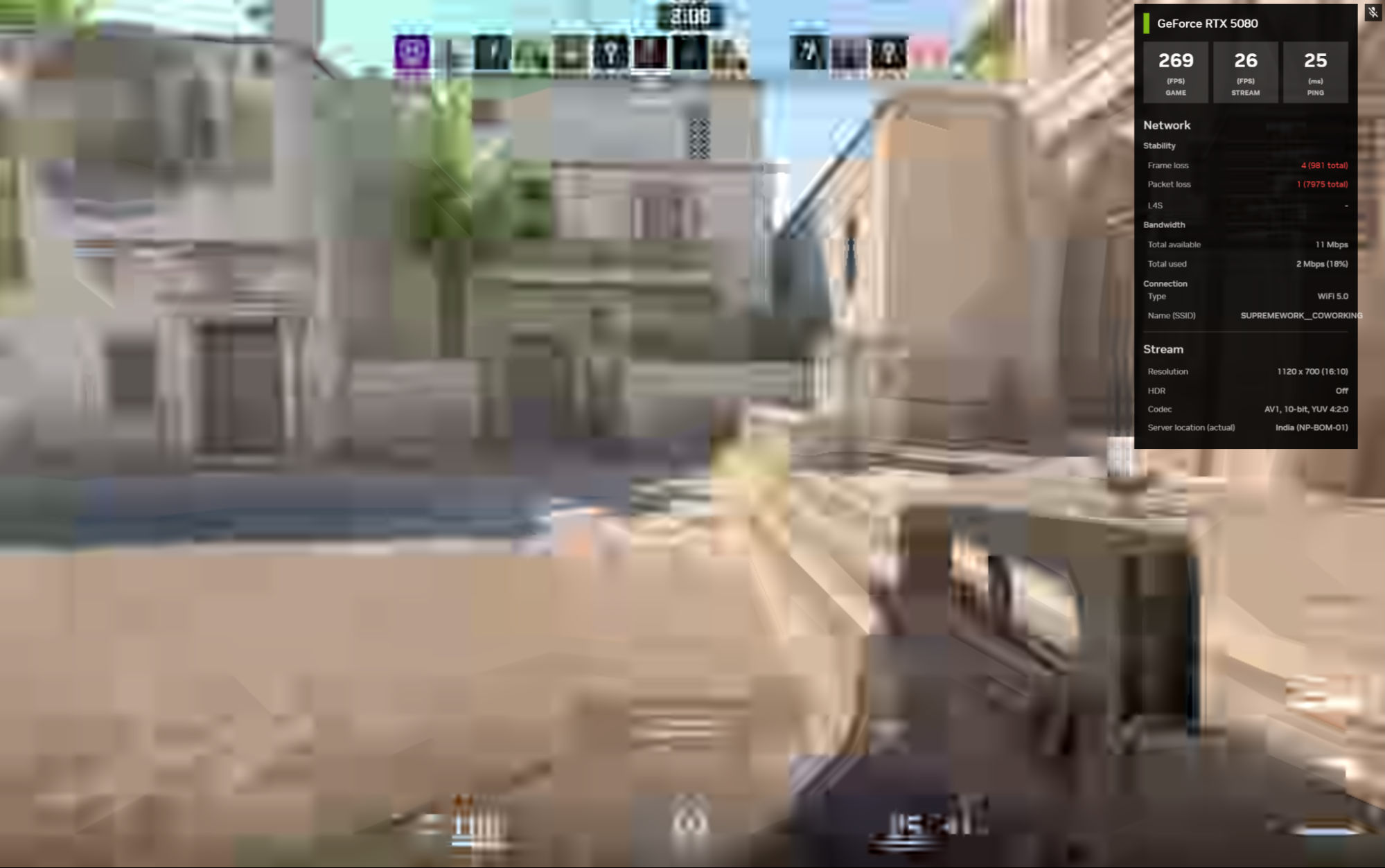
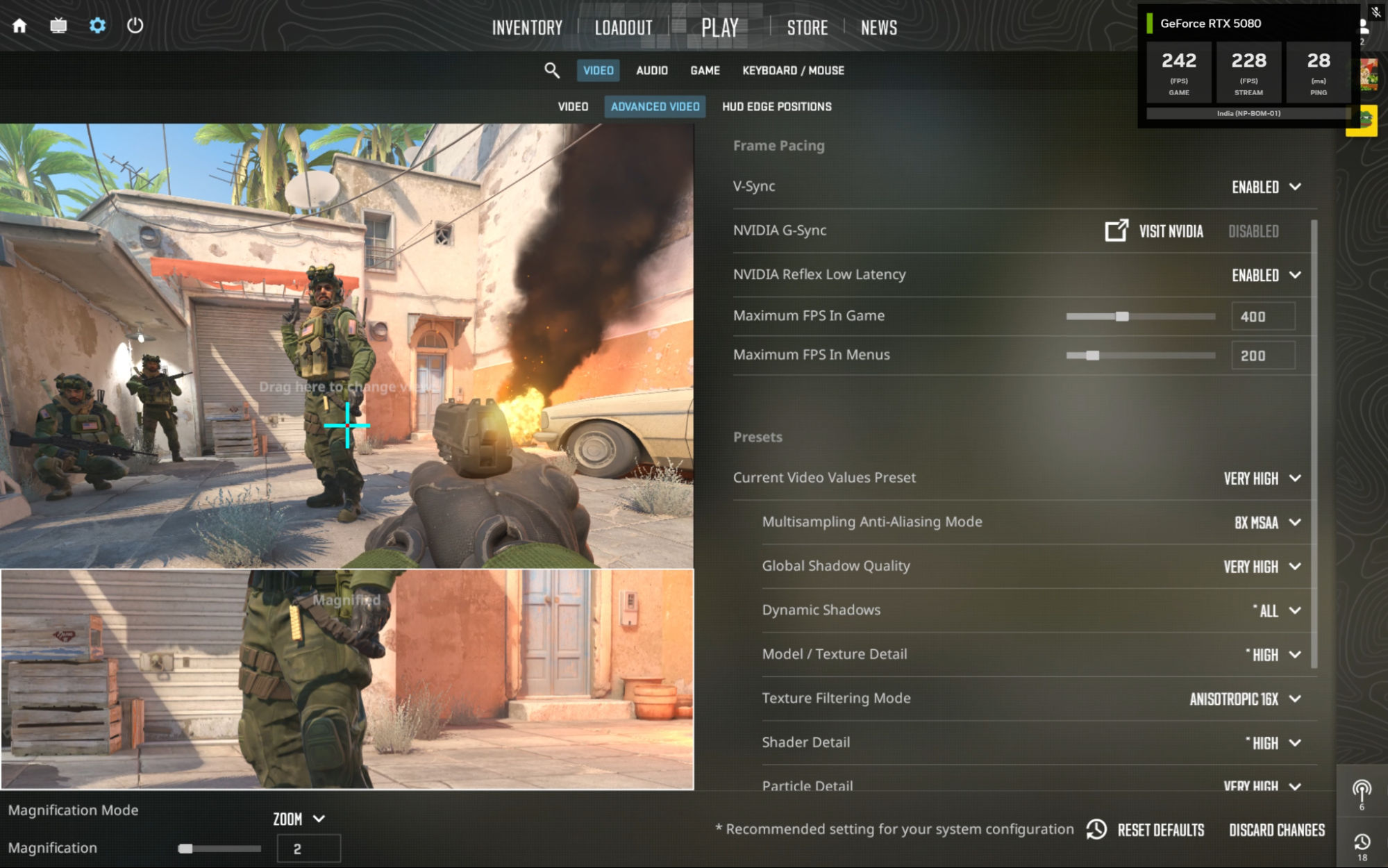
To ensure my review was not just limited to my experience, I had my colleague, Yetnesh Dubey, test the service as well. His experience mirrored mine, but he noted some interesting quirks when pushing graphically intense RPGs on fluctuating networks:
“I played The Witcher 3: Wild Hunt at RT Ultra settings. While rendering enhanced graphics wasn’t an issue, maintaining high resolution often became a challenge,” Yetnesh noted. “During action-heavy scenes, latency issues would appear, though exploration was stable. GeForce Now does its own optimizations to cope with unstable internet; for instance, at higher resolutions, menus remain razor-sharp, but in-game visuals may scale down, resulting in object shimmering or pixelation. As the connection recovers, so does the picture. If you have a dedicated, stable line, you won’t see these adjustments as much. FPS largely remains stable, with occasional minor stutters, but overall the experience is quite good.”
A Personal Return to PC Gaming
I must put out a quick disclaimer: I have been in and out of PC gaming. I was once a regular gamer who transitioned from AAA titles to multiplayer sessions, and eventually, I moved entirely to mobile gaming. Why? Simply because I no longer had the time to build, maintain, and upgrade a dedicated gaming rig. When it came to laptops, I have always preferred thin and light models purely for their mobility and long battery life, which naturally pushed high-end PC gaming out of contention.
When GeForce Now officially exited its beta stage and went public, way back in 2020, I knew it was my ticket back to PC gaming without the bulk of a gaming PC Rig, with savings and flexibility as the cherry on top. Back then, internet connections in India weren’t quite up to the task. But today? We have incredibly fast, responsive broadband, and this subscription is well within reach for almost any gamer.
The game has officially changed. For folks like me who wanted to game but fell back on mobile out of pure accessibility and plug-and-play convenience, we no longer have to miss the breathtaking graphics, deep involvement, and immersive storytelling of single-player PC games. GeForce Now signals a true “back to gaming” moment for me. That massive chunk of money I’m saving on hardware? It’s going straight into building my Steam library.
The Road Ahead: The Ultimate Stress Test
As transformative as this launch is, there is a massive elephant in the room: infrastructure. GeForce Now is a service that relies entirely on how well NVIDIA and its local server partners can manage the compute and network throughput required to meet demand.
And that demand is going to be astronomical.
With the entry-level 1080p subscription priced at just ₹999 for three months, we are going to see gamers, especially college students, queuing up to give it a try. The overall experience from here will take one of two paths: it will either get progressively better as NVIDIA adds more server muscle to meet the surge, or it will degrade if the demand is tepid and the unit economics fail to justify expansion.
If I had to place a bet, I’d say demand will far exceed expectations. It’s not just the aggressive pricing; it’s the frictionless entry. You aren’t tethered to a PC ecosystem. GeForce Now is accessible across PCs, TVs, tablets, and smartphones. This level of accessibility doesn’t just threaten the traditional PC hardware market; it puts the home console business squarely in the crosshairs. When you can deliver 80 to 90% of a premium gaming experience at a fraction of the cost, with zero long-term commitments or hardware strings attached, it’s hard to imagine a single gamer who wouldn’t want to at least take it for a spin.
NVIDIA will undoubtedly have enough gamers trying the service. The ultimate question is: Can they maintain the infrastructure to meet this tidal wave of demand and delight those users with a solid, consistent experience that only gets better over time?
The Final Verdict
GeForce Now is a special moment for gamers in India. It successfully democratizes high-end PC gaming, turning everyday laptops into RTX-powered gaming beasts for just ₹700 a month (for the top-most tier).
Who is it for? Everyone else. If you just want to play the latest AAA titles at maximum settings without worrying about hardware obsolescence, and you have a solid fiber internet connection, GeForce Now is currently the best deal in gaming.
Who is this not for? PC gaming purists. If your passion lies in building rigs, tweaking BIOS settings, overclocking hardware, and squeezing every drop of localized performance out of your machine, this service won’t entice you, and it was never meant to. Pro gamers and esports league players for whom every millisecond of latency can mean the difference between qualifying for a major tournament or missing out entirely are also not the target audience.