We took the new Intel Arc G3 handhelds, MSI’s Claw 8 EX AI+ and Acer’s Predator Atlas 8, for a quick spin on the show floor. Same chip, same eight inches of screen, but two very different things to hold. First impressions, straight off the demo tables.
For two generations, Intel’s handheld story was mostly a promise. With Arc G3, that starts to change. This is the first handheld chip Intel built from scratch for this kind of device. It is a Panther Lake chip that puts an efficient CPU and new Xe3 Arc graphics on one package, and it comes in two versions: a standard Arc G3 and a faster Arc G3 Extreme.
The pitch has two parts. On raw speed, Intel says the G3 Extreme is about 42% faster on average than AMD’s Ryzen Z2 Extreme at the same 35W, and it uses XeSS 3 (its AI upscaling plus Multi-Frame Generation) to push that lead further. The other part is the battery. Intel says you can get the same smooth gameplay at half the power, and up to 11 hours of play once Endurance Gaming starts capping frames. We got a deeper dive into the Intel Arc G3 with Intel’s Gaming God- Tom Peterson, and you can read more here on what Tom had to say. This piece is about the hardware in your hands.
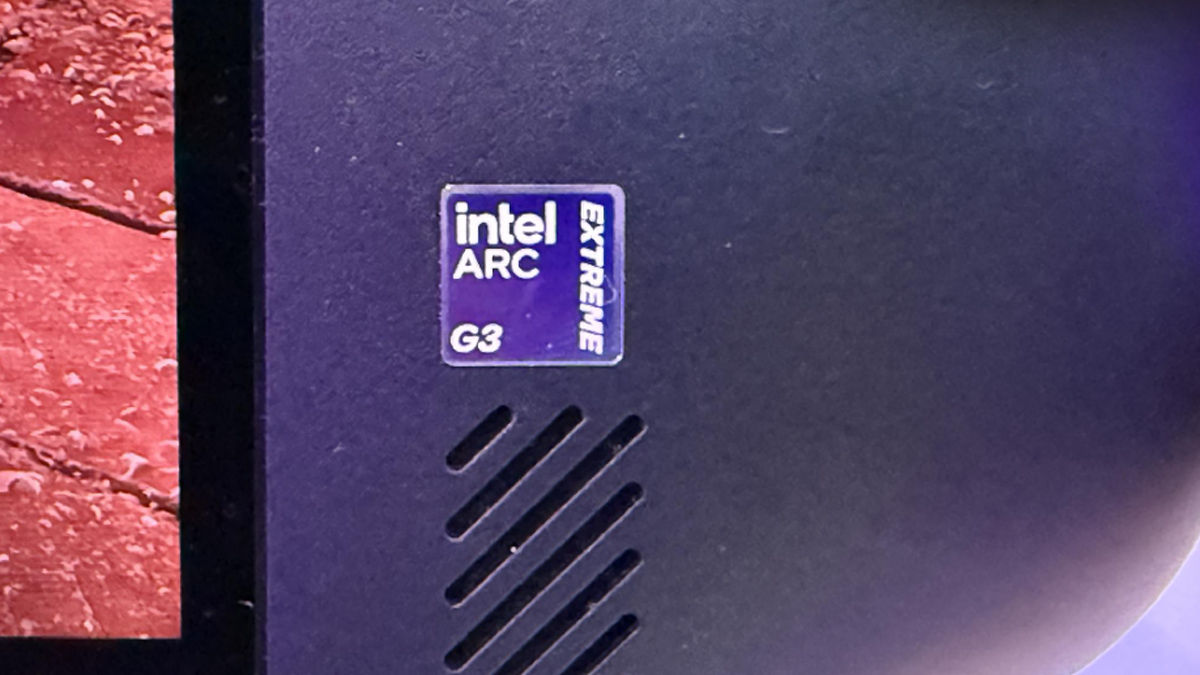
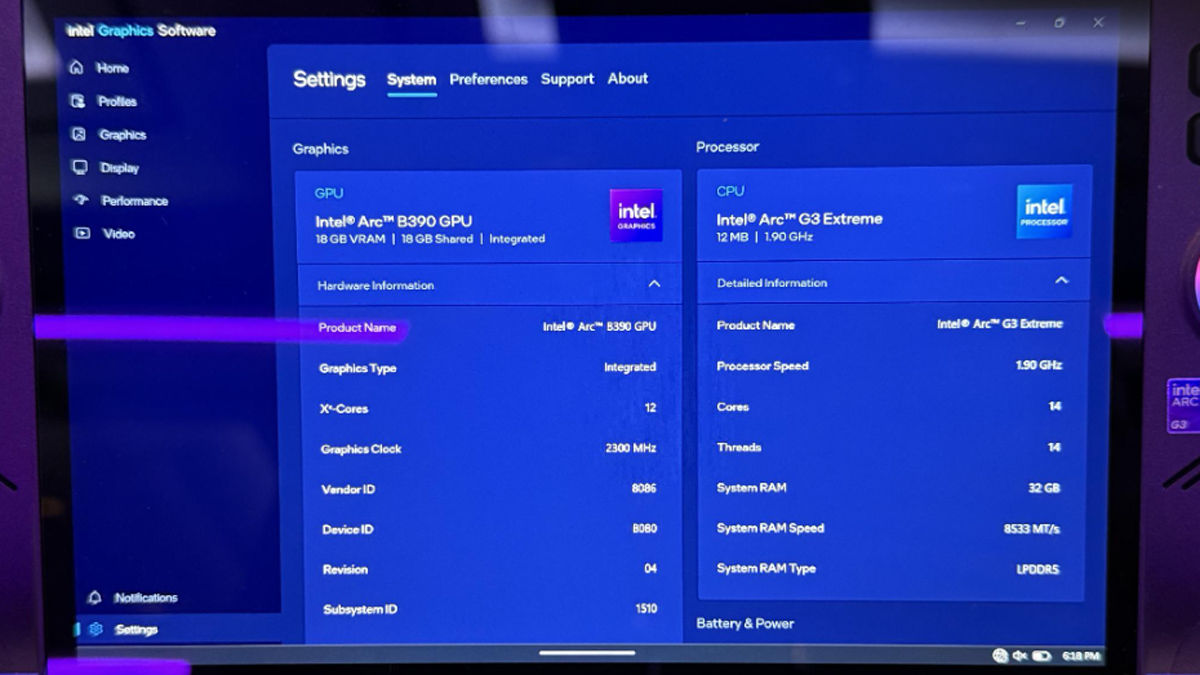
Open up Intel’s own software, and the spec sheet stops being marketing. On the MSI, the G3 Extreme shows up as a 14-core CPU sitting next to the Arc B390 GPU, with 12 Xe-cores running up to 2.3GHz and 32GB of fast LPDDR5X-8533 memory feeding it. That is a real little gaming PC, not a phone chip in a controller. Worth a note here, because it is the first real split between the two: that 32GB at 8533 is the MSI’s loadout and the platform’s ceiling. Acer dials the same chip back to 24GB of slower LPDDR5X-7467 in the Atlas 8. Same chip, different memory config.
Two of a Kind, Until You Pick Them Up
Put them on a table, and you could easily think they were the same product in two shells. Both have an eight-inch screen. Both put the sticks, the disc D-pad, and the XYAB buttons in almost the same spots. That is not lazy. Everyone already knows the standard controller layout, and if you move things around too much, you make life harder for anyone who has used a gamepad for years. So both Acer and MSI stay close to what looks like a shared base design.
The screen settles the easy question first. Both run what is effectively the same panel: an 8-inch, 1920 x 1200 IPS at 16:10, with variable refresh from 48 to 120Hz and 500 nits of brightness. That 120Hz ceiling is the whole reason the XeSS frame-generation story is worth chasing, because all those extra frames need that high refresh-rate support.
And you do have to pick them up, because that is where they split. Side by side in the stand, they look like twins. In the hand, they feel like cousins. The Acer is the thinner, flatter one and feels a bit lighter. The MSI is clearly chunkier, but in a solid, well-built way rather than a heavy, awkward way. A minute with each, and the split is clear.
Here is the funny part: The scale does not back up the hand. Both demo units carried the 80Wh Extreme configuration, and on paper, the Acer is slightly heavier of the two, 810 grams against roughly 785 for the MSI, which sits about 10 grams under the Claw it replaces. The Acer simply spreads that weight thinner and flatter, so it reads as lighter even when it is not.
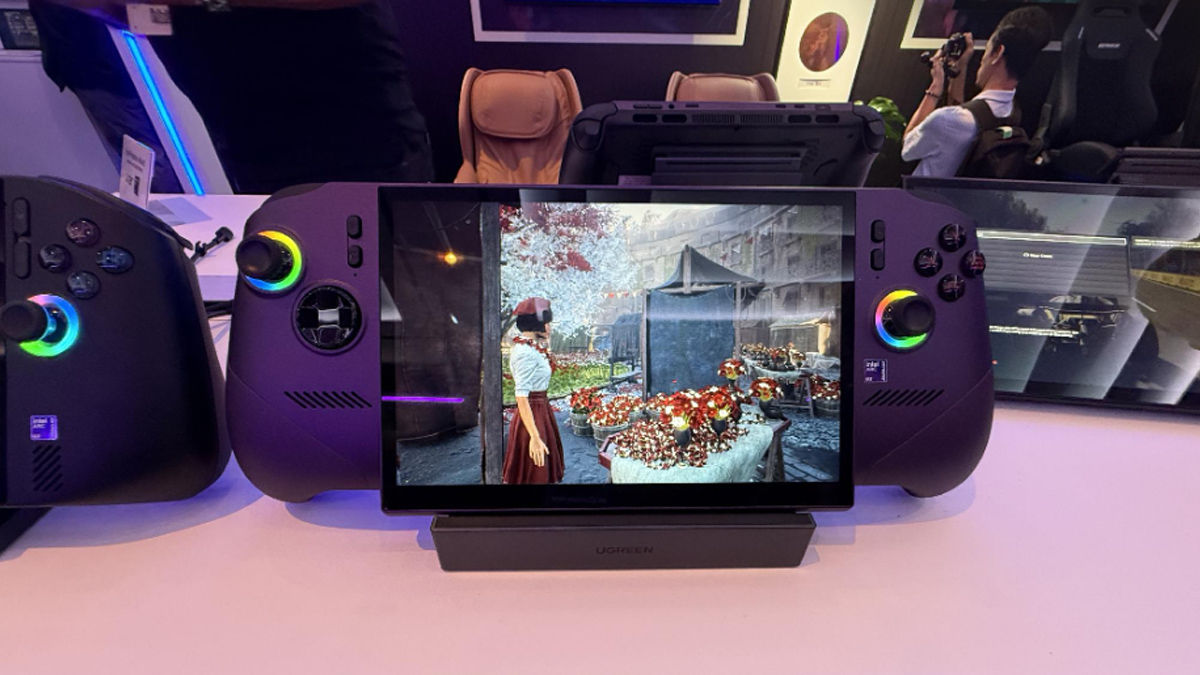
Chunky, wide, Xbox-style grips and a solid, well-balanced weight. It goes for a classic premium pad feel, and the buttons are nice and clicky, the kind you can trust under your thumbs.
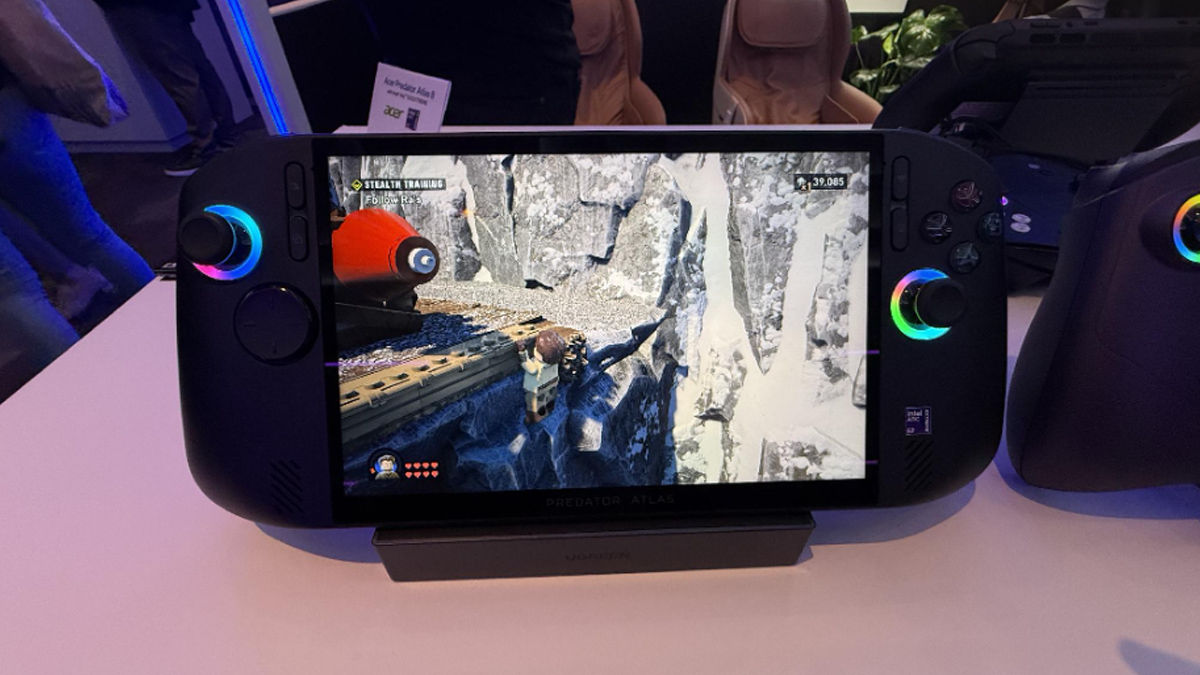
A thin, flat shape that hides its eight inches well. Even though the screen matches the MSI, the body feels smaller, and it is light enough to suit smaller hands and long, comfy sessions.
MSI’s Claw: Familiar and Tactile
MSI’s whole idea is feel. The face buttons, shoulder buttons, and D-pad all click with a crisp, mechanical snap that makes the Claw feel sharper than most handhelds. It is the kind of clean input you want when a fighting game needs the right move at the right moment. Add the wider Xbox-style grips and it is the easiest device here to just settle into for a long session.
It runs cool, too, and it stays quiet. The fans keep calm, even with a big game pushing the chip. There is a handy touch inside as well: a full-size M.2 2280 slot, so a storage upgrade just means a cheap desktop SSD instead of a fiddly special card. That is a real win over the last Claw, which used the smaller 2230 format, though it is worth saying Acer matches it, with the same full-size 2280 slot in the Atlas, so neither device boxes you in on storage. On the software side, the Claw lays out all of Intel’s options clearly, from an XeSS frame-generation setting that goes up to 4x, to Endurance Gaming and a low-latency mode, all only a couple of taps away.
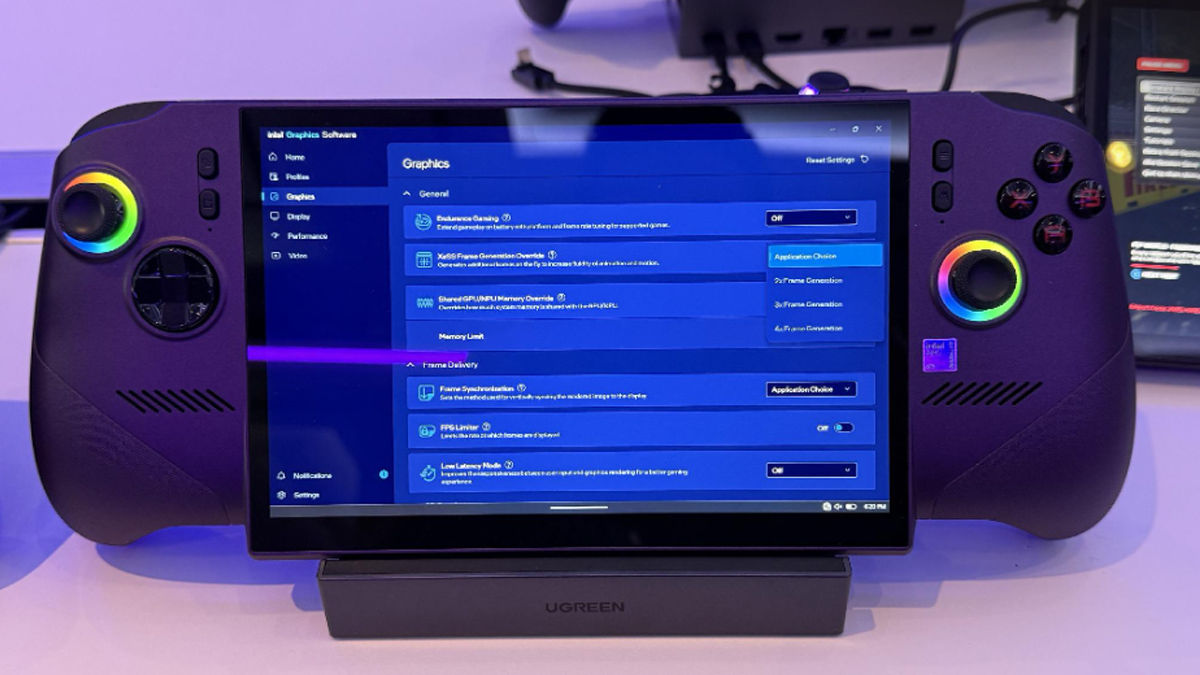
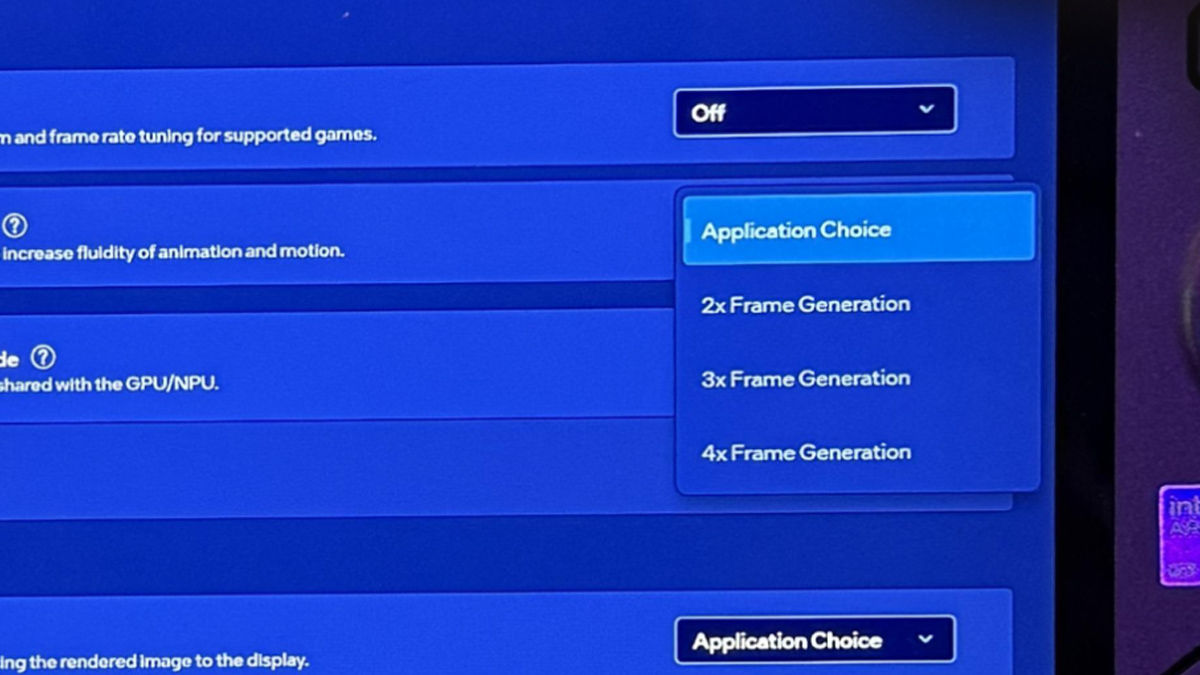
Here is our one real reservation, and it has nothing to do with how the Claw plays. Stand it next to last year’s Claw 8 AI+, and you would struggle to tell them apart. The silhouette, the eight-inch footprint, and the control layout all carry straight over, and even the weight lands within about 10 grams of the old model. There are genuine refinements under the skin, deeper grips, reworked haptics, and the jump to a full-size M.2 2280 slot, but those are tweaks to a known shape, not a rethink of it. For a mature product, leaving a good design alone is the smart move.
For a category this young, it reads like a missed chance to swing. Handhelds are still arguing with themselves about what they even want to be, and a fresh generation is exactly the moment you expect a bold idea or a standout feature to give the segment a jolt. The Claw plays it safe instead. We can read that in two ways. Either MSI reckons it has already nailed the shape and sees no reason to touch what works, or this generation was always meant to be a silicon story, with the real design swing held back for the next one. We honestly cannot tell which, and we are not fully convinced that the safe road is the right one this early in the category’s life.
Acer’s Atlas: Slimmer and Agile
Acer has spent most of the handheld years on the sidelines while Asus, MSI and Lenovo fought it out, so the Atlas 8 feels like a real bid to join in. The main thing here is how light and small it feels. The thinner, flatter body takes up less room than its eight-inch rival, which makes it easier to hold and to put away, and it is light enough that holding it up through a long session never becomes the thing on your mind.
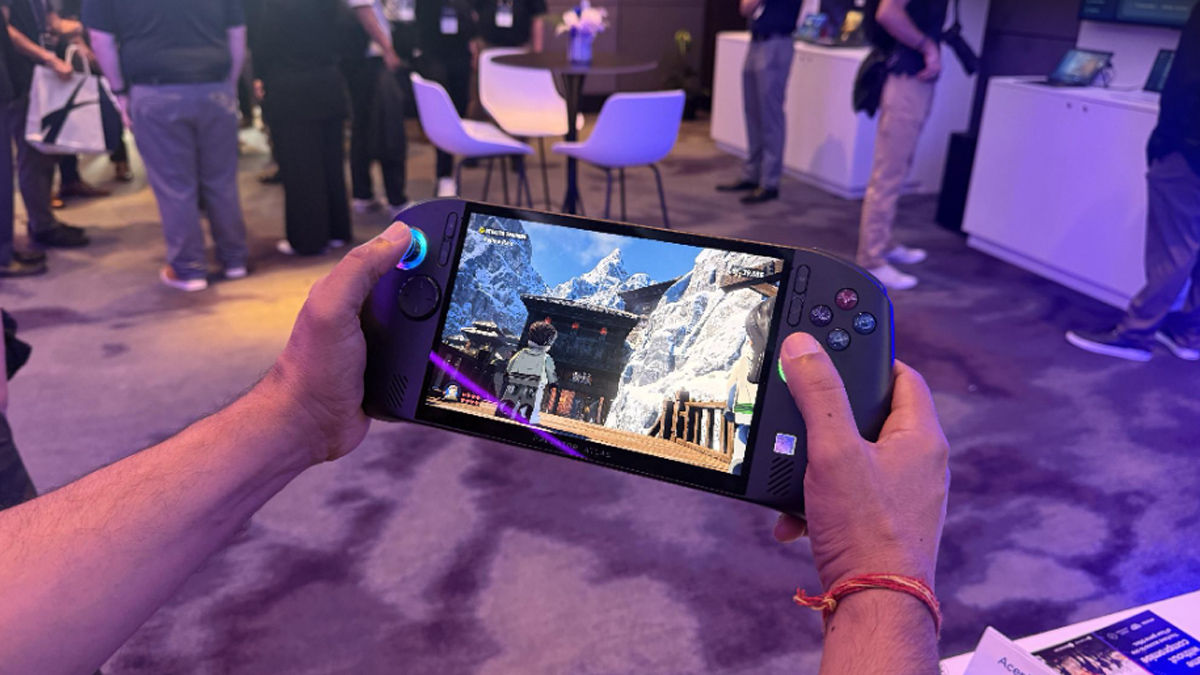
The sticks are a real high point, with a firm, well-judged tension that stops accidental over-movement and rewards the careful aiming a shooter needs. The best part, though, is the triggers. They are mechanical, and they physically switch between a deep, racing-sim pull and a quick, clicky tap, so one handheld suits both a racing fan and a fast shooter without either one having to give anything up.
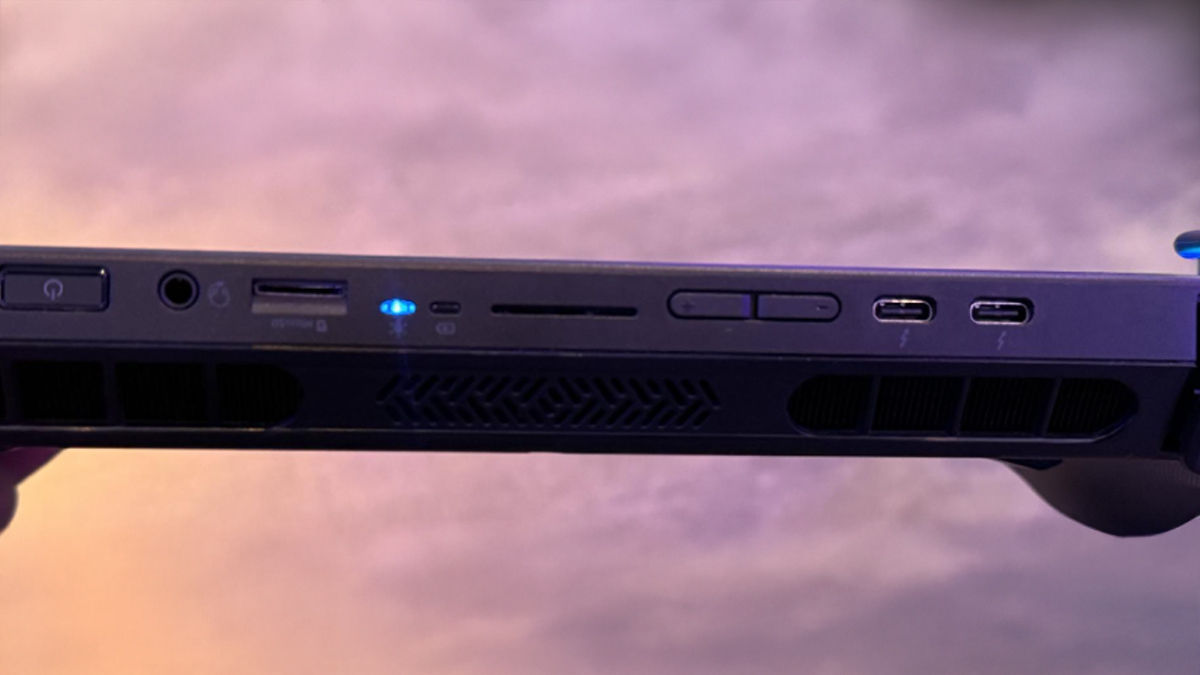
Cooling is a strong point too. Acer is using what it calls a world-first internal metal fan in a device this size, the AeroBlade, with 89 blades at 0.1mm thickness, and the company claims a 10% airflow gain over rivals. On the floor, the Atlas stayed cool under load. The ports along the top edge are generous as well: power and volume, a 3.5mm headphone jack, a UHS-II microSD reader, and two USB-C Thunderbolt 4 ports on either side of a wide central vent, with 65W USB-C charging to fill that battery back up.
What the Chip Actually Does
Spec sheets are easy to doubt. Live numbers are harder. With Clair Obscur: Expedition 33 running, the Claw’s overlay told the real story. It was well over 90 frames with XeSS turned on, the GPU running flat out at 2.3GHz, and all of it drawing only about 21 watts. That last number is the quiet headline. You get close to console smoothness at a power level that leaves plenty for the battery.
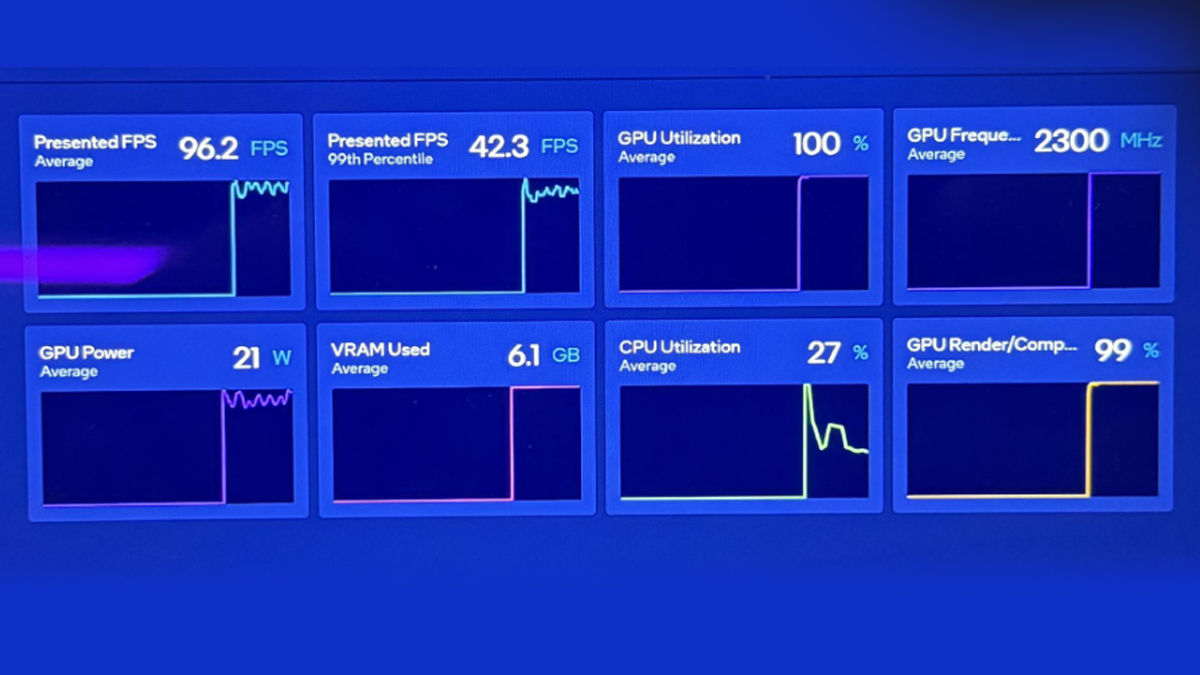
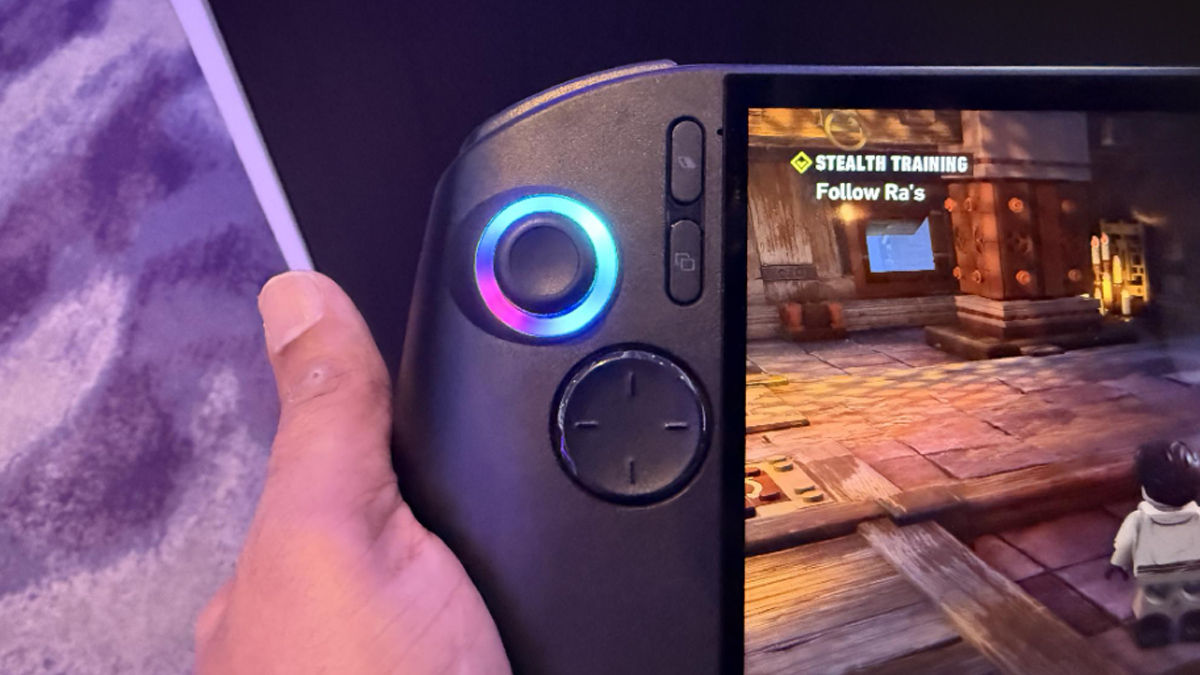
One honest caveat before anyone saves that screenshot. This was a few minutes on a show floor with a friendly title, not a week with a heavy AAA title. Clair Obscur looks gorgeous but is not the meanest test you can throw at a chip, and LEGO Batman on the Acer is lighter still. Churning 96 frames at 21 watts is a very promising sign, not a settled benchmark.
That spare power is the thread that ties the platform together. It is why Endurance Gaming can offer 30, 40, and 60 fps caps that stretch a charge toward the 11-hour mark Intel quotes, why Intelligent Bias Control can quietly move power between the CPU and GPU during a game, and why a slim device like the Atlas can stay cool without loud fans. The G3 is not just fast. It is fast for very few watts. The cell doing the stretching is an 80Wh battery on both Extreme units, the same capacity as an ROG Ally X, so Intel’s headline endurance figure has a real tank behind it rather than an optimistic one.
The India Question
There is an extra wrinkle in India. Handheld gaming PCs have never really taken off here. They sell in small numbers, and you often see them turn up with heavy discounts during the big festive sales as shops try to clear stock. The category has stayed a niche, not a mainstream buy.
This new wave makes that harder, not easier, and the launch maps say so before the price tags even arrive. The Claw lands globally on 23 June from $1,499, with no India date attached. The Atlas does not reach shelves until October, and only across North America, EMEA, and Australia, which leaves India off the official map entirely. So before we even argue value, the honest answer to “when can I buy one here” is some flavour of “not yet, and not officially.”
That math is the problem. A serious gamer weighing one of these against a gaming laptop has a hard time saying yes to the handheld, however good it feels in the hand. Plenty will resist purely because of the price tag. So the same price worry that hangs over the global launch hits even harder in India, and it is the thing Acer and MSI will have to answer if they ever want these to sell here.