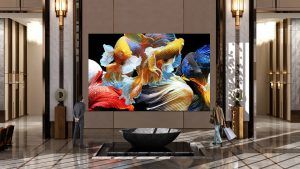
The Indian TV market is quietly shifting. What used to be a 43-inch or 55-inch conversation is now moving toward 65-inch and 75-inch screens, driven largely by aggressive pricing. Xiaomi has played a big role in that transition, and the QLED X Pro 75 is its latest push to make large screens feel less aspirational and more accessible.
Xiaomi QLED X Pro 75
69,999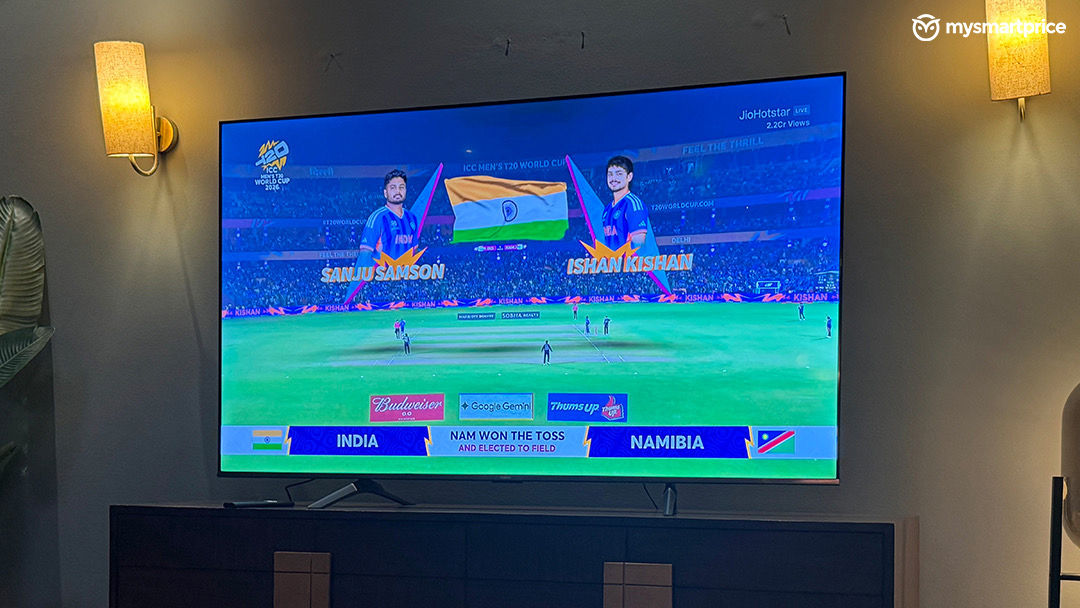
What Is Good?
- Large 75-inch panel at an aggressive price
- Good colour reproduction, especially in Standard mode
- Clean upscaling without artificial processing
- Improved software performance and ecosystem
- Good viewing angles
What Is Bad?
- HDR lacks punch compared to higher-end panels
- Audio lacks depth for a screen this size
- Stand could be sturdier
At ₹69,999, this is positioned as an entry point into the 75-inch category. It promises a lot on paper, such as a QLED panel, Dolby Vision, and Google TV, but the real question is whether it delivers once you start living with it.
After using it for about three weeks, it becomes clear that Xiaomi has focused on making the experience consistent and easy to watch, even if it doesn’t always try to impress.
Design: Slim, Minimal, and Clearly Built for Wall Mounting
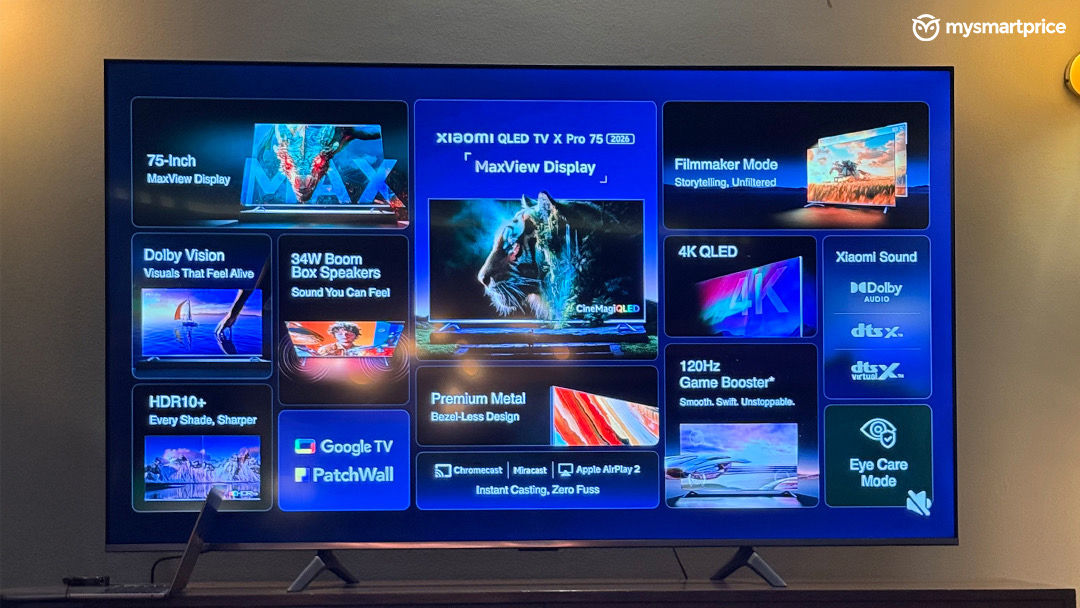
The design is clean and functional. You get thin bezels on three sides and a relatively subtle chin, which helps the screen remain the focus.
The TV itself is slim, and that works in its favour. When wall-mounted, it doesn’t protrude awkwardly, which is important at this size. Xiaomi also mentioned that most buyers in India prefer wall mounting for larger TVs, and this design clearly aligns with that.
The stand is wide and stable enough for everyday use, but it doesn’t feel particularly premium. At 75 inches, you do notice that the sturdiness could have been better.
Viewing angles are good. Colours remain consistent even when viewed from the side, with only a slight drop in brightness — something that matters in larger rooms.
Display Performance: Easy to Watch, Impressive Colour Reproduction
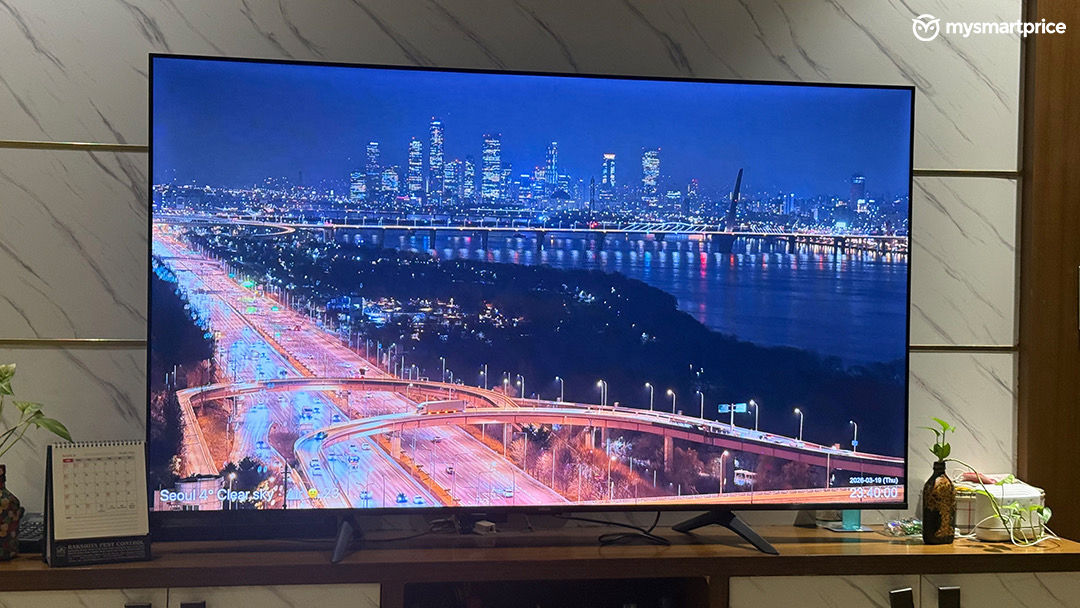
The 75-inch QLED panel is the main draw here, and it delivers a viewing experience that is more about consistency than impact.
Xiaomi has not officially disclosed peak brightness figures for the QLED X Pro 75. In real-world use, the panel is bright enough for typical indoor viewing and holds up well in well-lit rooms, though HDR highlights do not reach the intensity seen on higher-end Mini LED or OLED TVs.
Take the opening scene from House of the Dragon, where the dragon cuts through bright clouds. The TV handles this in a controlled manner. The sunlight doesn’t blow out, and cloud details remain intact, which makes the image look natural. But the highlight never really pops. It looks more like a soft glow than a sharp burst of brightness, which is where the limitation becomes clear.
Dark scenes follow a similar pattern. The TV keeps shadow detail visible, which helps in everyday viewing, but blacks appear slightly lifted. Instead of deep contrast, you get a flatter image that prioritises clarity over cinematic depth. On a 75-inch screen, that trade-off is easier to notice.
Colour reproduction is one of the strongest aspects of the TV. Watching animated content like Demon Hunters, especially the “Your Idol” sequence with heavy pink and neon lighting, the panel holds colour well without turning messy.
Xiaomi offers multiple picture modes, including Standard, Vivid, Movie, Sports, and Filmmaker Mode.
In my usage, I found myself sticking to Standard mode most of the time. It offered a more balanced output, with natural colours and enough brightness for everyday viewing. Vivid mode does push brightness and saturation higher, which works in brighter rooms, but in certain scenes, it can feel slightly overprocessed.
Filmmaker Mode takes the opposite approach. It sticks closer to original colour profiles, but compared to Standard or Movie modes, it can feel slightly subdued, especially if you’re used to brighter output.
This is one of those areas where preference plays a bigger role. Depending on what you’re watching and the kind of image you prefer, you may find yourself switching between modes.
Upscaling is handled well in terms of processing. The TV keeps lower-resolution content clean, without introducing noticeable noise or excessive sharpening.
However, the 75-inch screen makes the limitations of 720p content very obvious. Edges look softer, and finer details don’t hold up as well. This is not a flaw in processing as much as a reality of stretching lower-resolution content across a large panel. You see the same behaviour in broadcast content as well.
Watching live cricket gives you a good sense of how the TV handles motion. In regular playback, things look stable. Camera pans are smooth, and there is no obvious stutter. But during faster moments, like bat swings or quick camera tracking, you do notice a slight softness around moving objects.
The ball tracking is fine, but edges are not as crisp as you would expect from a true high refresh rate panel. The grass texture also looks slightly soft, especially when the source is not full 4K. Xiaomi’s DLG-based motion enhancement helps with smoothness and the overall experience was smooth.
Audio: Gets the Job Done, But Doesn’t Match the Screen
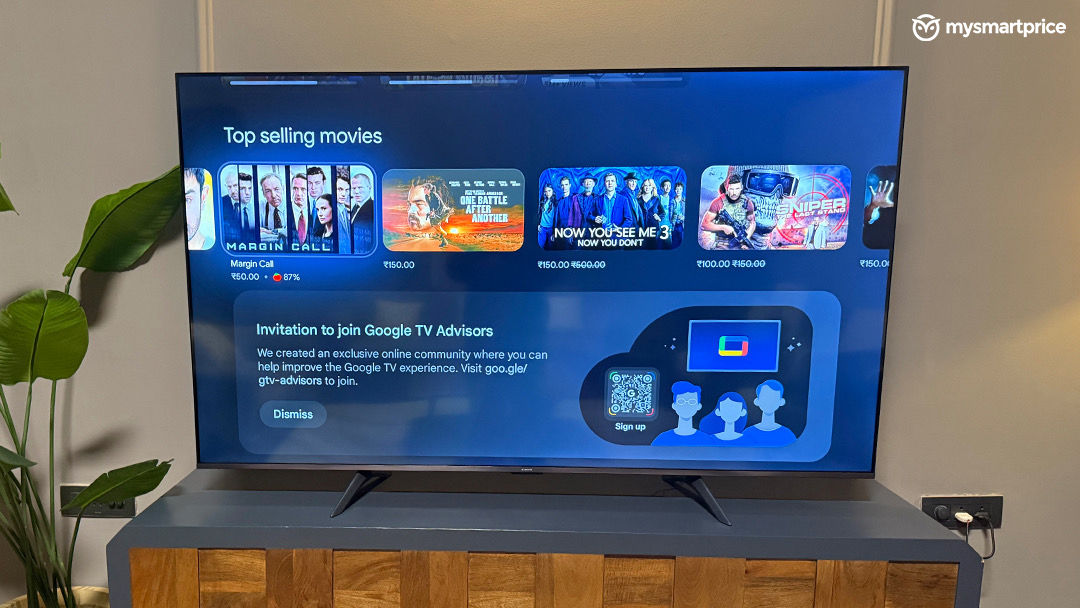
The 34W speaker setup is decent for everyday use. Dialogue is clear, and volume levels are sufficient for mid-sized rooms. However, with a 75-inch screen, expectations are naturally higher. The sound lacks depth, particularly in the low end, and in larger rooms, it doesn’t feel as expansive as the visuals. The presence of an HDMI eARC port makes it easy to add a soundbar, which is something most buyers should consider.
Performance and Software: Better Than Before, But Still Not Effortless
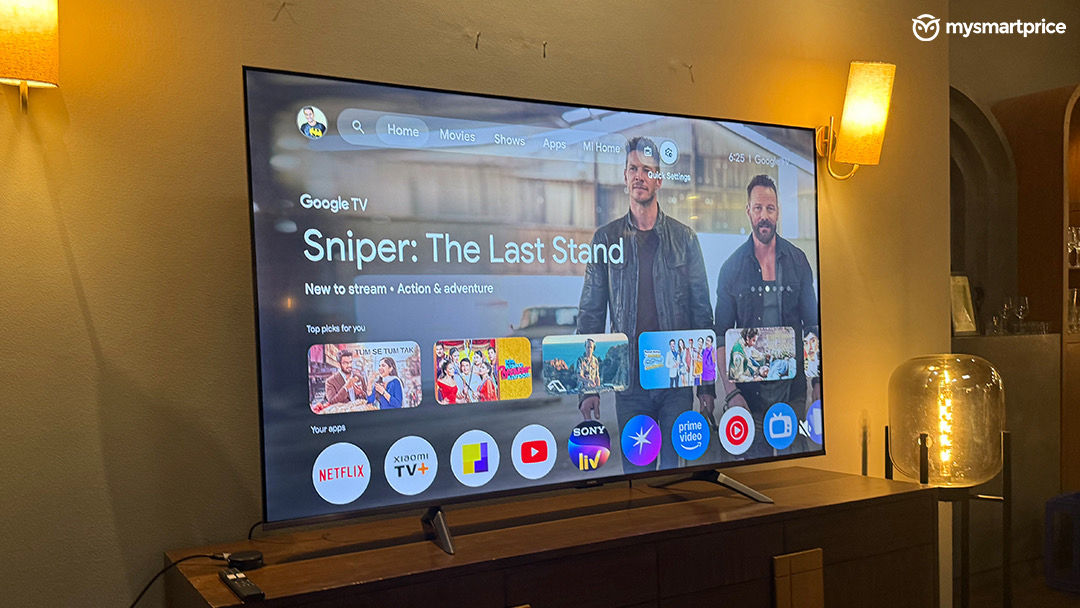
The QLED X Pro 75 runs on Google TV with Xiaomi’s PatchWall layered on top, and this combination continues to be one of the more content-friendly approaches in this segment. The integration between Google TV recommendations, PatchWall’s content curation, and Xiaomi TV+ (with its free live channels) makes it easy to land on something to watch without having to jump between apps too often.
In day-to-day use, performance is noticeably better than what older Xiaomi TVs used to offer. Boot time is just a few seconds, and once you are in, the interface feels stable. Apps like Netflix, YouTube, and JioHotstar load without long waits, and general navigation through menus is smooth.
Where the experience starts to show its limits is in transitions. If you are quickly switching between apps using the remote — for instance, jumping from Netflix to YouTube and then back — there are moments where the interface feels slightly jerky. It is not outright lag, but more of a hesitation before the system catches up.
Over longer usage, this does not become frustrating, but it does remind you that this is still running on fairly standard hardware. The TV handles most tasks reliably, but it is not as fluid as what you would get on more premium models where transitions feel almost instant.
Remote: Functional, But a Step Back in Ergonomics
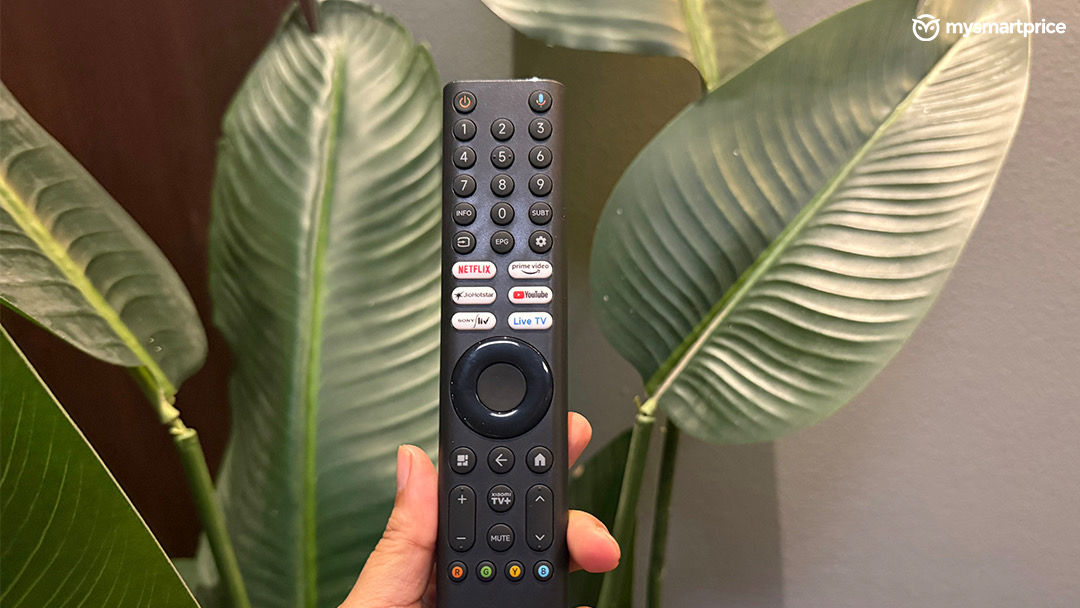
The remote is something you interact with constantly, and here Xiaomi has made a few changes compared to the previous generation.
It now feels slightly chunkier in hand. The earlier remote was slimmer and, in my opinion, more comfortable for long usage. This one leans more towards adding functionality than refining ergonomics. That said, you do get used to it over time.
The layout is practical. There are dedicated shortcut buttons for popular apps like Netflix, Prime Video, YouTube, SonyLiv, and JioHotstar, along with a number pad and a Google Assistant button for voice commands. Everything is easy to reach, and there is no learning curve here.
In terms of responsiveness, the remote works well. Button feedback is tactile, and there is no noticeable delay between input and on-screen action, which is important when navigating across apps or adjusting settings.
One small usability quirk that stood out during regular use is volume behaviour across apps. Since different apps have slightly different volume levels, you often end up adjusting sound frequently. In some cases, dropping the volume quickly by several steps can push it into mute, which takes a moment to correct. It is a minor annoyance, but one you notice over time.
Verdict
The Xiaomi QLED X Pro 75 understands exactly what it is trying to be, and more importantly, what it is not. This is not a TV that chases spec-sheet leadership or tries to compete with Mini LED or OLED panels on sheer performance. Instead, it focuses on delivering a large-screen experience that feels consistent, approachable, and easy to live with over time.
In everyday use, that approach works. The picture tuning is balanced, colours are handled well across content types, and the panel remains comfortable to watch, whether you are streaming shows, watching live TV, or going through lower-resolution content. It does not overwhelm you with brightness or contrast, but it also avoids the kind of extremes that can make some TVs feel tiring over longer viewing sessions.
At the same time, the limitations are clear once you start looking for them. HDR does not have the kind of impact that makes scenes stand out, dark scenes lack depth, and motion clarity falls short of what a true high refresh rate panel can offer. The audio, too, feels functional rather than immersive, especially for a screen of this size.
But taken as a whole, the experience comes together in a way that makes sense for its price. At ₹69,999, this is less about chasing the best picture quality and more about making a 75-inch screen practical for more buyers. Xiaomi gets enough of the fundamentals right to make that transition feel worthwhile.
If your priority is to move to a large screen without stepping into significantly higher price brackets, the QLED X Pro 75 makes a strong case for itself. It may not impress in isolated moments, but it holds up well where it matters most — in everyday viewing.