Samsung did not start the year with a launch. It started the year with intent.
The Galaxy Trifold is not here to convince anyone about foldables. That conversation has already been settled over multiple generations. What Samsung is doing now is showing how far the form factor can be pushed when a company is no longer experimenting, but refining with confidence.
When Engineering Meets How We Actually Live
The first thing that struck me when I held the Galaxy Trifold was composure. For a device that unfolds into a 10-inch display across three panels, the weight management is impressively well judged. Nothing feels top heavy. Nothing feels awkward. The balance in the hand feels deliberate, as if the device already knows how it wants to be used.
Unfolded fully, the screen immediately reframes the experience. I did not have the time to actually binge a show in a brief hands-on, but the idea of it cropped up almost instantly. That in itself says something. Playing a short YouTube video was enough to see where this device is headed. The display is gorgeous, the colours feel rich, and the mechanism allows the phone to settle naturally into a semi-folded position.
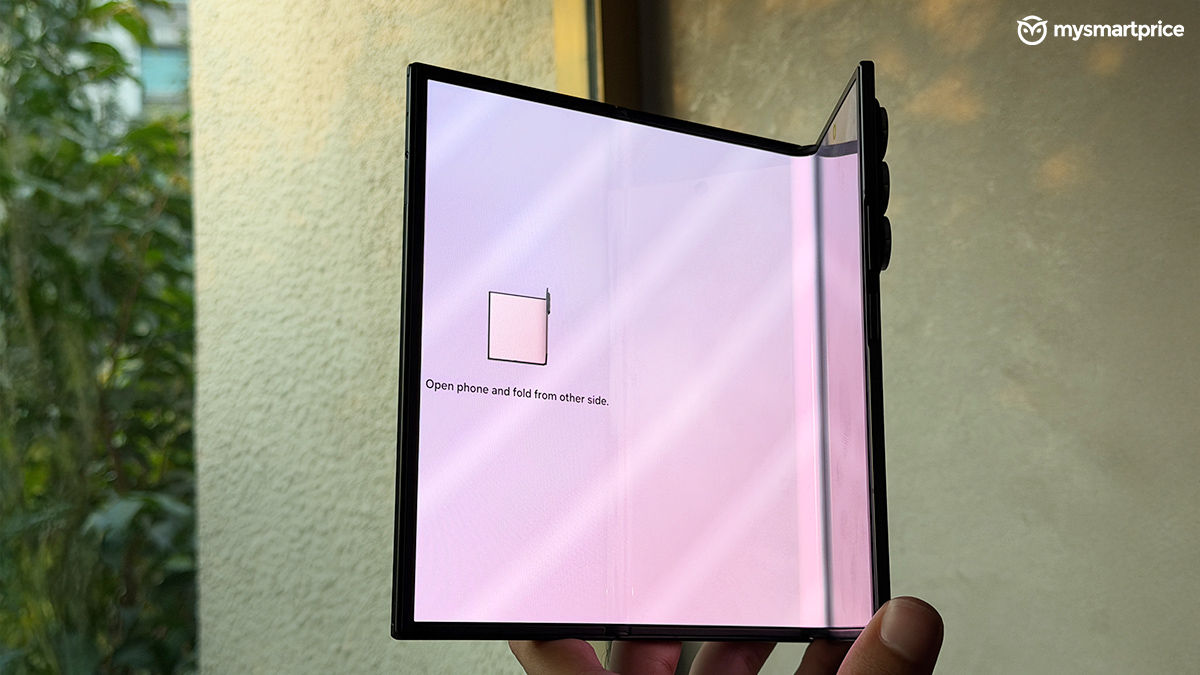
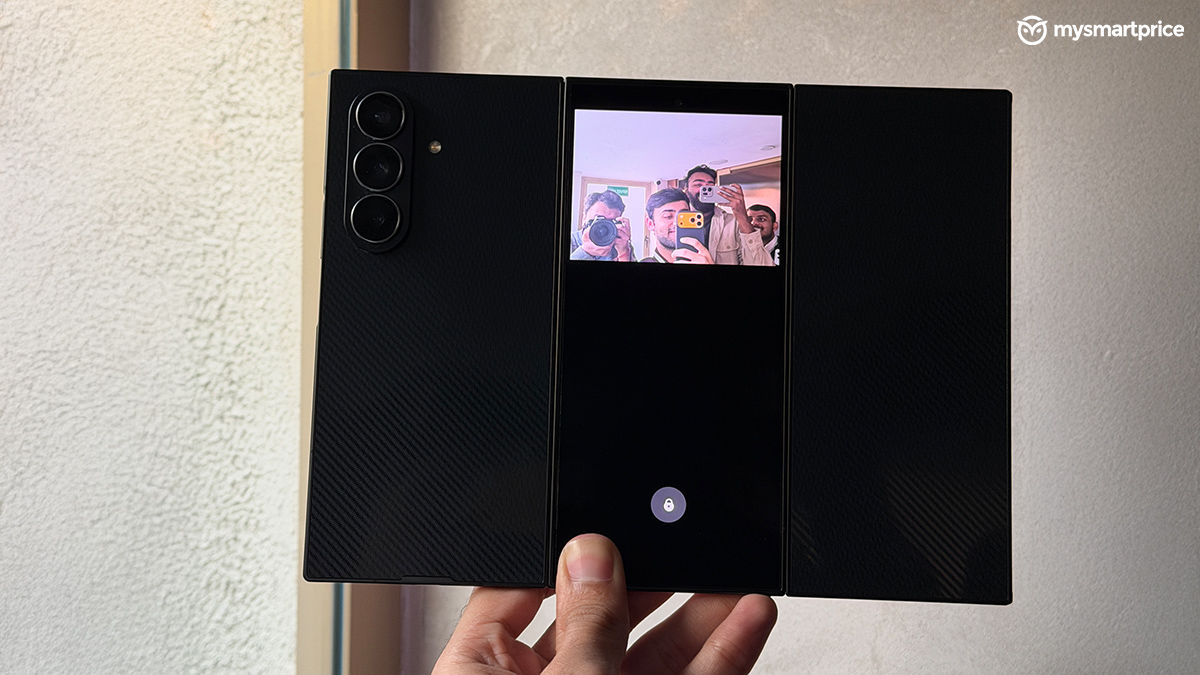
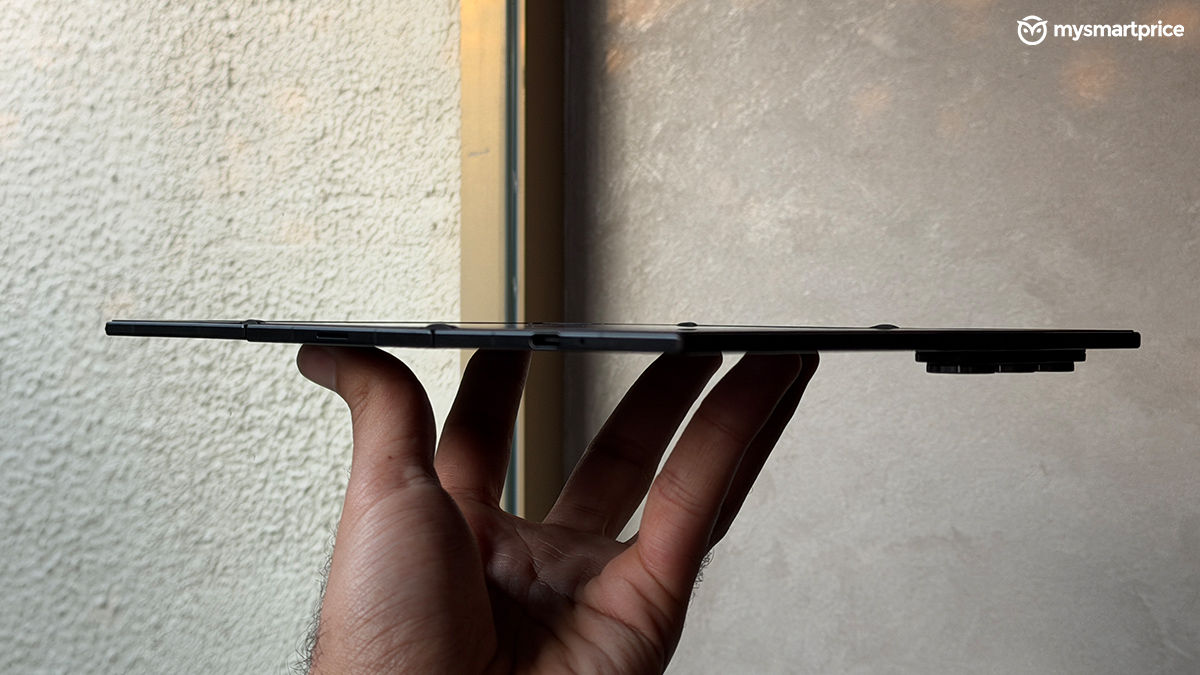
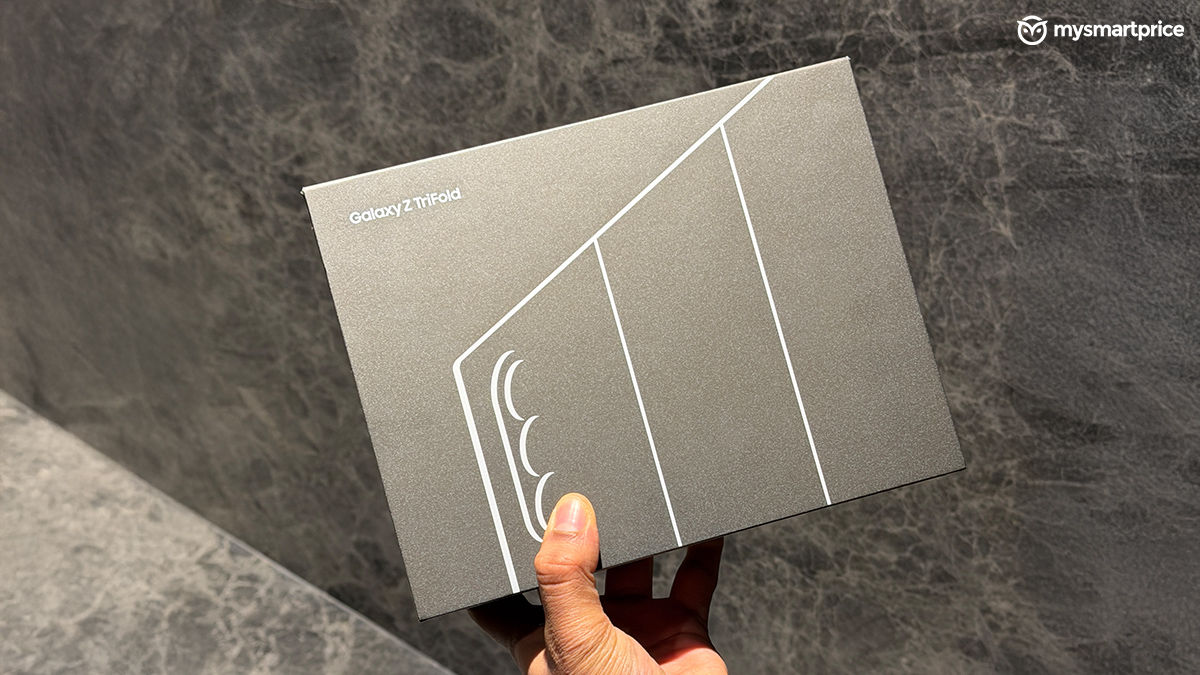
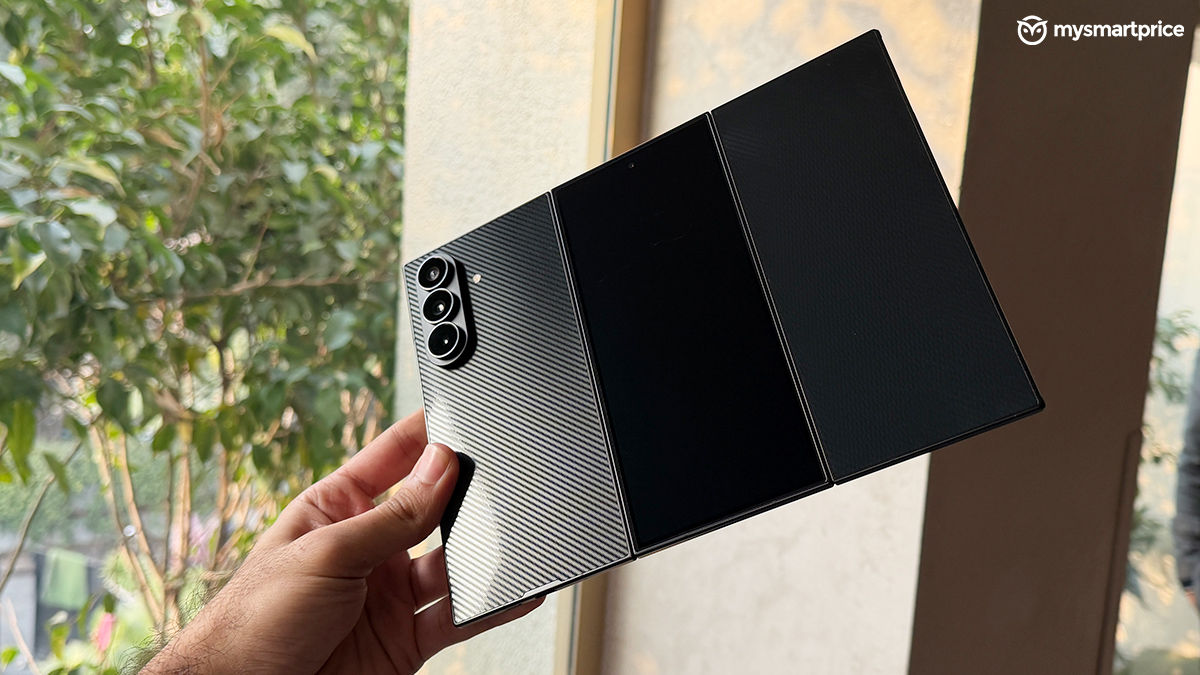
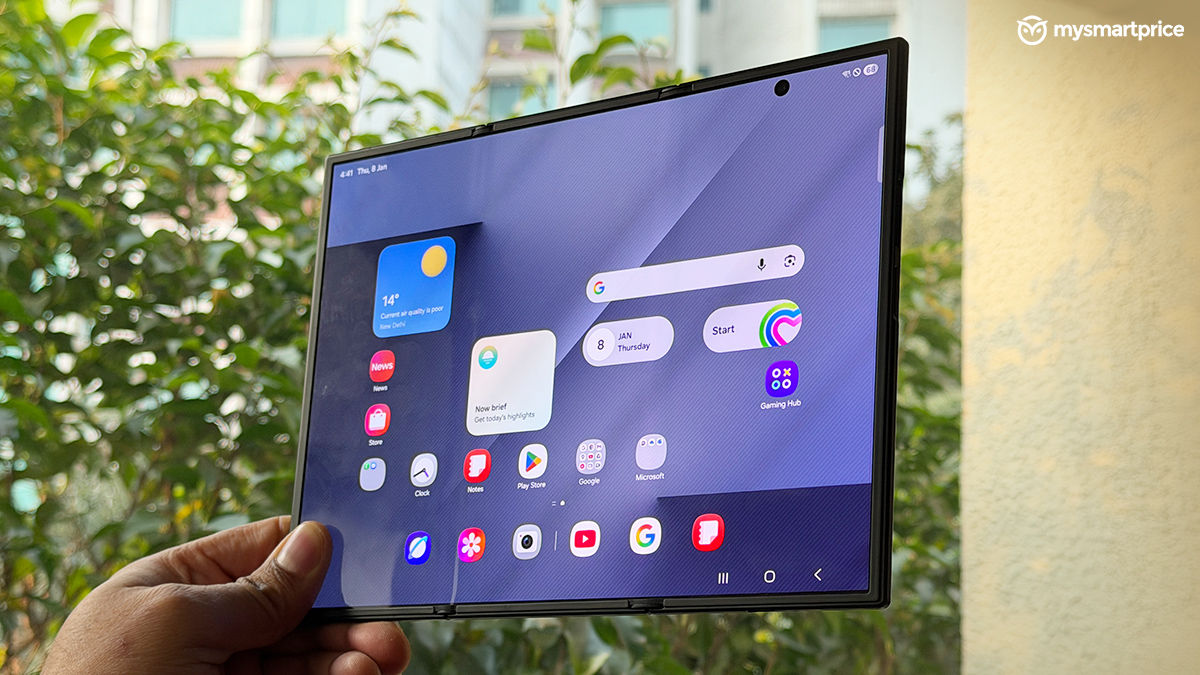
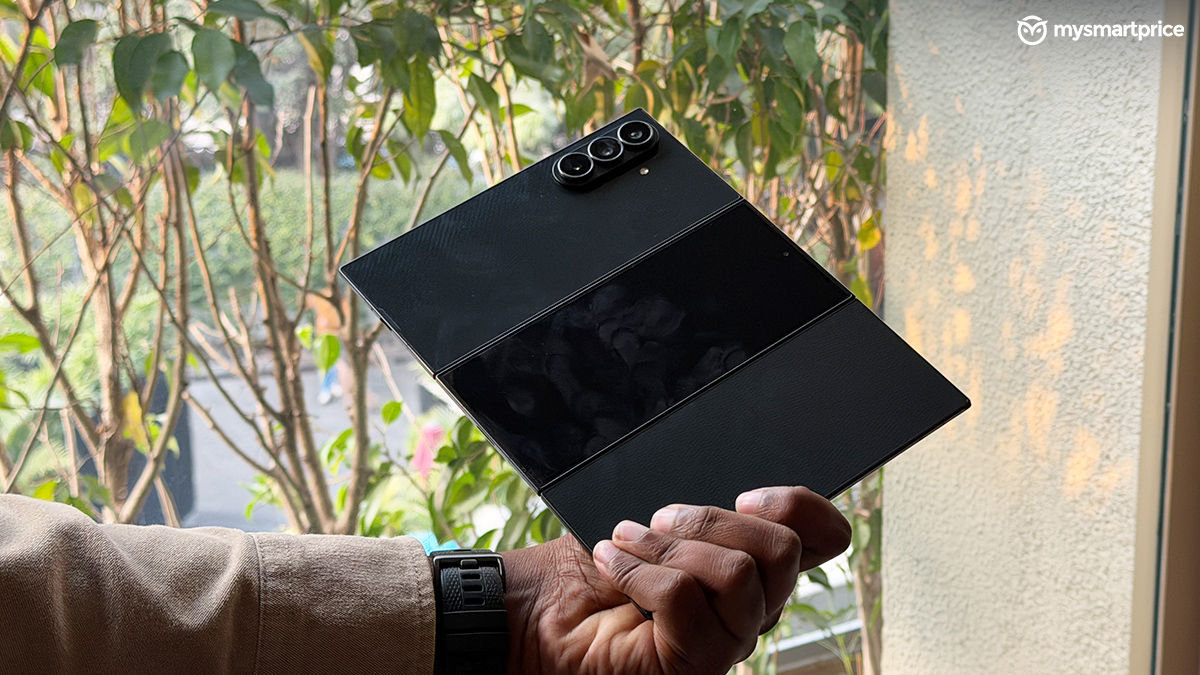
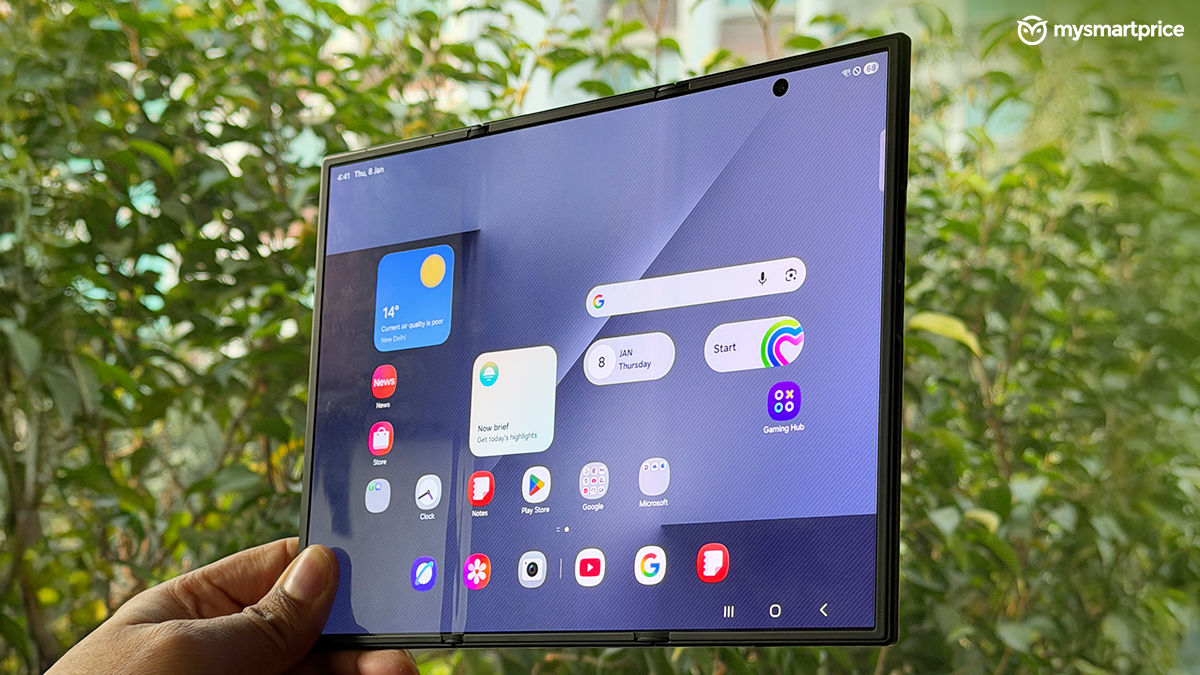
If you have used Samsung's Fold series before, including the Fold7, this behaviour will feel familiar. But the Trifold takes it further. The additional hinge and wider surface area allow the device to hold that posture more confidently. It begins to feel less like holding a large phone and more like placing a screen where you want it. I could not help but imagine what it would be like to binge-watch a recently released Korean drama, such as Idol I, on Netflix.
Not conclusions, but questions. Would it get tiring to hold over time? Would the battery last through extended viewing? Those are questions that only real-world use can answer. But on paper, and in brief use, it is clear Samsung has thought about how people actually consume content, not just how big a display can be.
This is also where practical thoughts begin to surface. Hand fatigue. Heat. Battery life. Samsung says the Trifold is optimised for this new form factor, and the numbers suggest that effort is real. The device packs a 5,600 mAh three-cell battery system spread across its panels, the largest battery ever on a Galaxy smartphone. It supports 45 W wired charging and 15 W wireless charging.
In an era where some competitors are exploring next-generation battery chemistries like solid-state, Samsung has chosen to stay with Li-ion. It is a conservative decision, but also a predictable and reliable one. For daily use, this should translate into stability. Still, given how this device encourages longer sessions rather than quick interactions, the 45 W charging ceiling feels slightly restrained. Faster top-ups would feel more aligned with how central this device wants to be.
Familiar Discipline, Quiet Confidence
There is something unmistakably Korean in how the Galaxy Trifold approaches ambition.
Samsung's choice of an inward folding design speaks volumes. It prioritises durability over spectacle, refinement over theatrics. The hinge does not ask for attention. It guides you gently, almost training your hands over time to fold the device the right way. That restraint feels intentional.
As someone who feels a genuine pull towards South Korea, not just as a tech hub but as a place, that sensibility resonated. Seoul has a way of rewarding patience. Step into neighbourhoods like Seochon or Ikseon-dong, and the city quietens. You start noticing materials, balance, craft. The Trifold carries that same energy. It does not overwhelm you. It settles into your life quietly.
Materials reinforce that confidence. Samsung's use of ceramic glass fiber reinforced polymer and advanced Armor Aluminium makes the Trifold feel solid without feeling industrial. This does not feel like a fragile prototype. It feels like a precision instrument designed for repeated, everyday use.
Built To Unfold Into More Than A Phone
The cover display is slightly narrower than what most slab phones offer, and typing takes a moment to adjust to. It is not instantly fluid. But the Trifold reveals itself once you stop treating it like a conventional phone.
Split-screen multitasking feels natural, and Samsung DeX finally feels fully at home in a mobile form factor like this. This is where the device stops being about consumption and starts behaving like a pocketable workspace. The large display makes multitasking feel practical rather than cramped.
Photography follows the same philosophy of restraint. The camera setup mirrors what Samsung already offers on the Fold7, led by a 200 MP main sensor and supporting lenses that have already proven their worth. For a device that is fundamentally about screens, interaction, and form factor, this conservative approach feels intentional rather than disappointing.
Performance, powered by the Snapdragon 8 Elite for Galaxy with up to 16 GB of RAM, does not draw attention to itself. Apps open instantly. Transitions are smooth. Multitasking feels effortless in brief hands-on use. There is little to critique here without deeper testing, which is itself a quiet compliment.
What ultimately anchors the experience is the display. A 10-inch AMOLED screen that folds into your pocket is not just a technical milestone. It changes behaviour. It changes how you watch, how you work, and how long you stay engaged.
A Brand In Its Post Proof Era
What the Galaxy Trifold ultimately reflects is where Samsung now finds itself as a brand.
This is no longer a company chasing validation for foldables or experimenting to see what sticks. Samsung has already done the hard work of normalising an entirely new category. It has shipped multiple generations, absorbed public failures, refined its engineering, and built muscle memory not just into its products, but into its users. The Trifold feels like the outcome of that long arc. Calm. Assured. Selective about when to push and when to hold back.
That confidence is not accidental. It is the confidence of a brand that understands its global position and no longer feels the need to shout. Innovation here is not loud. It is measured. It shows up in restraint, in durability-first decisions, in the willingness to prioritise refinement over spectacle.
This is where the BTS parallel begins to make sense.
When BTS became associated with Samsung, it marked a phase where the company was actively asserting its cultural relevance alongside its technological leadership. It was a moment of expansion, visibility, and global ambition. That period neatly overlapped with Samsung's early Fold years, when the brand was pushing boundaries in public and learning quickly in front of the world.
The Galaxy Trifold feels like what comes after that phase.
Much like BTS entering their comeback year now, Samsung is operating from a place of self-assurance rather than proof. The emphasis is no longer on range or reinvention, but on control, maturity, and intentionality. Even if that ambassador relationship evolves going forward, the parallel holds. This is a brand that knows who it is, knows what it has built, and is comfortable letting the work speak.
To be clear, the Galaxy Trifold is not launching in India, at least for now. But for enthusiasts, the idea of travelling to South Korea to experience it properly feels less like a stretch and more like a natural extension of curiosity. Not in a hurried showroom, but somewhere unassuming. The phone resting in its natural fold, a cup of hot odeng from a street stall nearby, winter air in the background, and maybe a bungeoppang filled with red bean paste warming your hands. Familiar comfort. Quiet craft. A device that feels deeply considered.
In the end, all I can say is that the Galaxy Trifold leaves you thinking less about what it is today and more about what living with it could feel like.