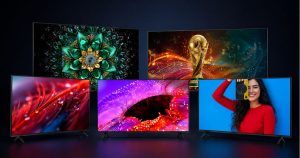
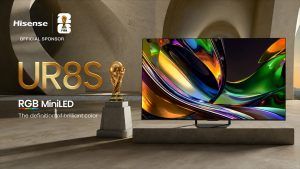
Hisense has pulled the curtain back on its 2026 global TV lineup, and the message is clear: the brand wants Mini-LED to be seen not as an OLED alternative, but as a premium category in its own right. The newly announced UR9S and UR8S series introduce RGB Mini-LED backlighting and next-generation HDR support, marking one of the most ambitious technology shifts Hisense has made in recent years.
The announcement comes at a time when global TV brands are rethinking how to deliver flagship-grade performance without the cost and longevity trade-offs associated with OLED, especially in larger screen sizes.
RGB Mini-LED and Dolby Vision 2 Take Centre Stage
The headline upgrade in Hisense's 2026 portfolio is the move to RGB Mini-LED backlighting. Unlike traditional Mini-LED TVs that rely on white LEDs with colour filters, RGB Mini-LED uses independent red, green, and blue light sources. In practical terms, this enables higher peak brightness, improved colour purity, and wider colour gamut coverage, particularly beneficial for HDR content.
The new UR9S and UR8S series are also among the first televisions globally to support Dolby Vision 2, Dolby's next-generation HDR format. While content support will roll out gradually, the inclusion positions Hisense's 2026 TVs as future-ready, especially for streaming platforms and next-gen content pipelines.
Gaming and motion performance see a noticeable boost as well. Hisense is advertising high refresh-rate support, with up to 4K 120Hz for consoles and even higher refresh rates for PC use cases, aligning the lineup with the growing demand for TVs that double as large-screen gaming displays.
Where This Fits in the Global TV Market
Hisense's 2026 strategy reflects a broader industry trend. As OLED pricing stabilises and panel innovation plateaus, brands like Hisense and TCL are doubling down on advanced LCD technologies to compete on brightness, durability, and value at scale.
RGB Mini-LED, in particular, is emerging as the next battleground. Samsung, TCL, and LG are all expected to showcase competing approaches in 2026, but Hisense's early commitment to Dolby Vision 2 gives it a differentiation angle, especially in regions where Dolby formats dominate streaming ecosystems.
The India Question
While the 2026 lineup has been announced primarily for global markets, the developments are highly relevant for India. Hisense has been steadily expanding its TV footprint in the country, introducing large-screen Mini-LED and QLED models across premium and upper-mid segments.
India is also seeing rising demand for bigger screens, brighter panels, and gaming-friendly TVs, driven by OTT consumption, sports viewing, and console adoption. If Hisense brings even a trimmed-down version of its RGB Mini-LED technology to India, it could significantly reshape the premium LCD segment, particularly for consumers priced out of OLED.
That said, launch timelines and pricing remain unclear, and Hisense's India strategy will likely hinge on localisation, panel sourcing, and competitive pressure from bigger TV brands such as Sony, Samsung and LG.
Hisense’s Vision for 2026
Hisense's 2026 TV lineup is less about one product cycle and more about long-term positioning. By betting on RGB Mini-LED and next-gen HDR early, the brand is signalling confidence in LCD's ability to evolve meaningfully, rather than simply coexist alongside OLED.
For consumers, this could mean brighter, longer-lasting large TVs with fewer burn-in concerns, while still delivering near-flagship picture quality. For the industry, it raises the stakes for what "premium" means in the non-OLED space.
Hisense's 2026 TV lineup feels less like an incremental refresh and more like a statement. RGB Mini-LED and Dolby Vision 2 point to a future where premium TVs are no longer defined by panel type alone, but by how intelligently brightness, colour, and HDR are engineered together. If this technology makes its way to India at the right price, it could put real pressure on both OLED pricing and traditional Mini-LED rivals in the year ahead.