The premium Windows laptop landscape has grown increasingly perplexing. Over the last year, price tags have surged while genuine, generational leaps in innovation have stalled. Flagship machines that used to top out around ₹1.5 lakh now easily breach the ₹2 lakh barrier, leaving consumers with a very valid question: what exactly are you paying for?
ASUS ExpertBook Ultra
Rs 2,39,999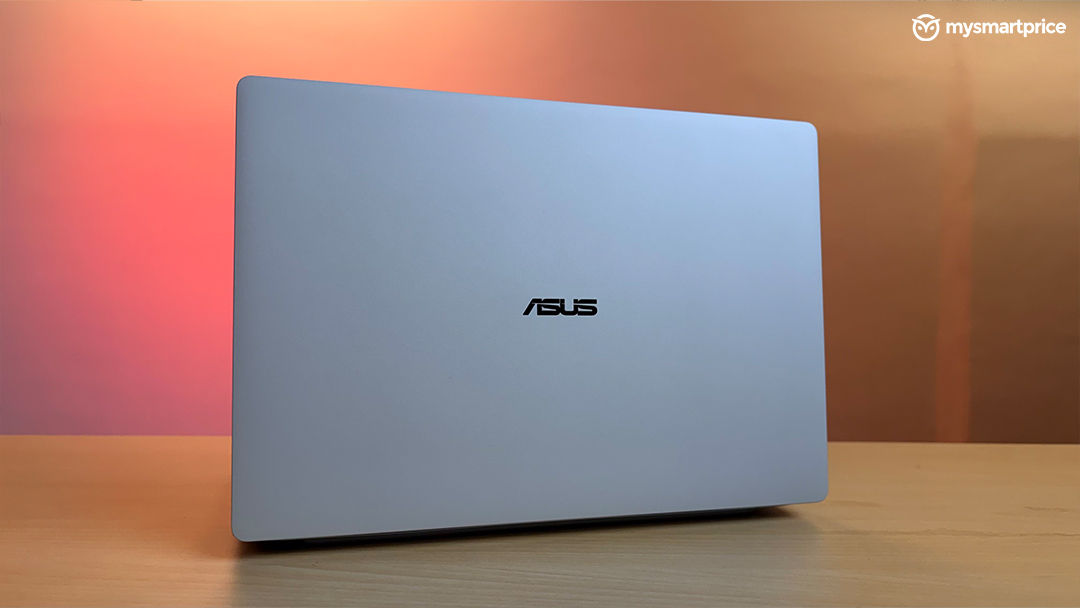
What Is Good?
- Weighs just 0.99 kg but remains remarkably rigid via its CNC-machined magnesium-aluminum chassis
- The matte Tandem OLED screen effectively kills glare while remaining bright and power-efficient
- Outstanding 1.5mm key travel paired with a precise, satisfying haptic touchpad
- Generous I/O including dual Thunderbolt 4, HDMI, and full-size USB-A ports
- Class-leading battery life (up to 16 hours) thanks to hyper-efficient 30W power tuning
What Is Bad?
- At ₹2.39 lakh, it represents a massive financial investment for a non-workstation machine
- Lacks a full-size SD card slot for creators
ASUS aims to answer that with the ExpertBook Ultra.
Commanding a staggering ₹2.39 lakh, it stands as one of the priciest thin-and-light Windows machines on the market today. However, rather than leaning on flashy spec-sheet padding or the latest AI marketing jargon, the ExpertBook Ultra takes a different route: uncompromising refinement.
After using the ASUS ExpertBook Ultra as my primary driver for a week, the sheer level of engineering packed into this chassis is undeniable. The lingering question is whether that hardware mastery justifies its towering asking price. Let us break it down.
Key Specifications
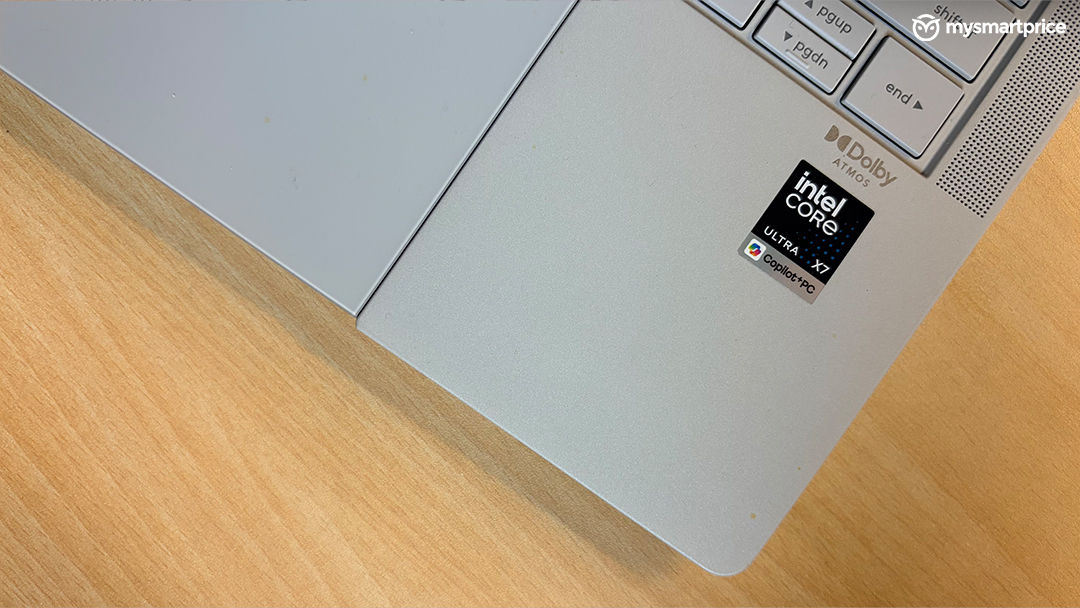
- Processor: Intel Core Ultra X7 358H (16 cores, up to 4.8 GHz) equipped with a 50 TOPS NPU
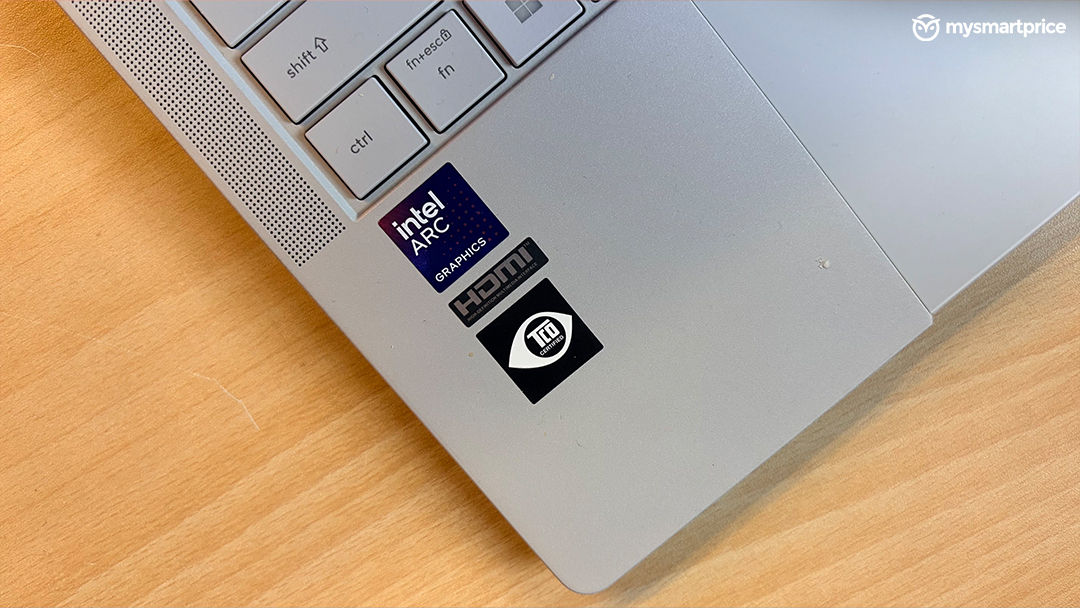
- Graphics: Integrated Intel Arc B390 Graphics
- Display: 14.0-inch Tandem OLED Touchscreen (2880 x 1800 resolution, 120Hz refresh rate)
- Memory: 32 GB LPDDR5X RAM
- Storage: 1 TB NVMe PCIe 4.0 SSD
- Battery: 70 Wh capacity paired with 90W Type-C fast charging
- Dimensions & Weight: 10.9 mm thick, weighing 0.99 kg (2.18 lbs)
- Connectivity: Wi-Fi 7 and Bluetooth 6.0
- Ports: 2x Thunderbolt 4, 2x USB 3.2 Gen 2 Type-A, 1x HDMI 2.1, 3.5mm combo audio jack
- Audio: 6-speaker Dolby Atmos array
- Camera: 1080p FHD IR webcam featuring a physical privacy shutter and AI upscaling
Design, Build Quality, and Inputs
ASUS highlights that the ExpertBook Ultra’s chassis is forged from AZ31B—an aerospace-grade magnesium-aluminum alloy—crafted via CNC machining. In practical terms, this translates to a chassis that is remarkably light yet exceptionally durable. At just 0.99 kg, the rigidity is phenomenal. Whether you are typing aggressively or applying deliberate pressure to the panels, there is virtually zero flex.
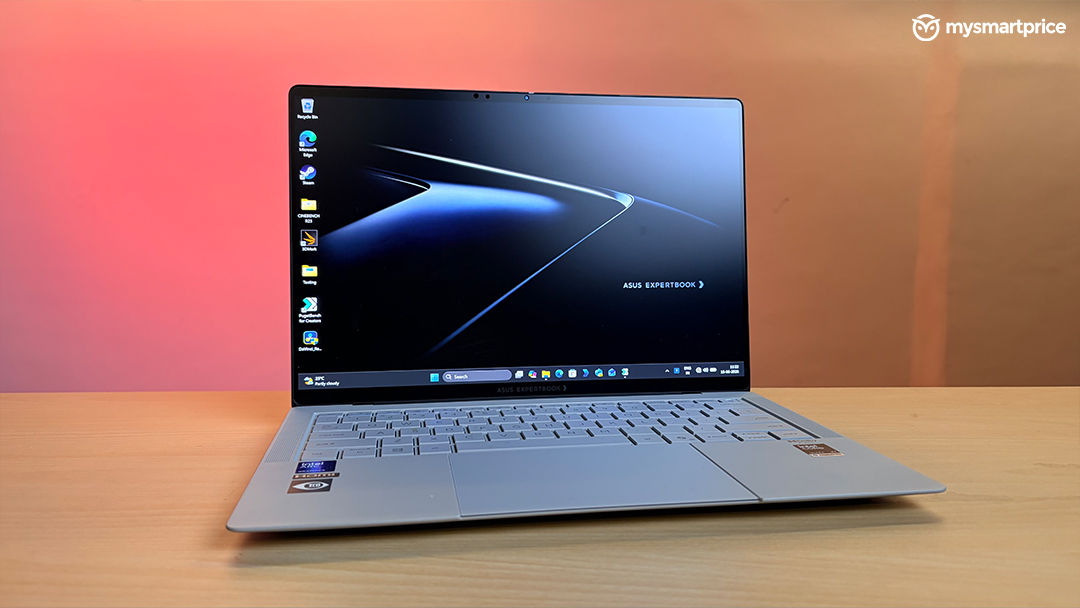
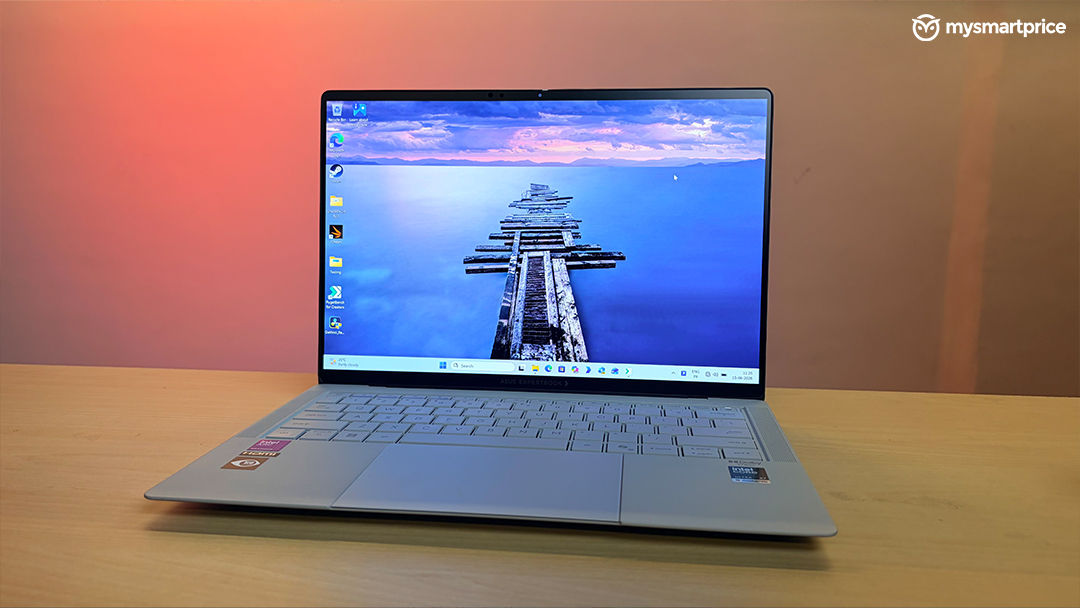
This structural integrity extends to the display. ASUS utilized “Direct Optical Bonding” to sandwich the tandem OLED panel, optical adhesive, and cover glass into a magnesium alloy enclosure. This technique skips the traditional air-gap method, resulting in a display lid that remains incredibly thin while heavily resisting flex and accommodating touch functionality.
When it comes to inputs, the keyboard is a massive win. Despite the laptop’s slim sub-11mm profile, ASUS managed to engineer 1.5mm of key travel. Considering most ultra-thins compromise at 1.0mm or 1.2mm, this depth is a breath of fresh air. The keys feature a subtle dish shape that hugs the fingertips, and the springback action ensured zero fatigue during my longest typing sessions.
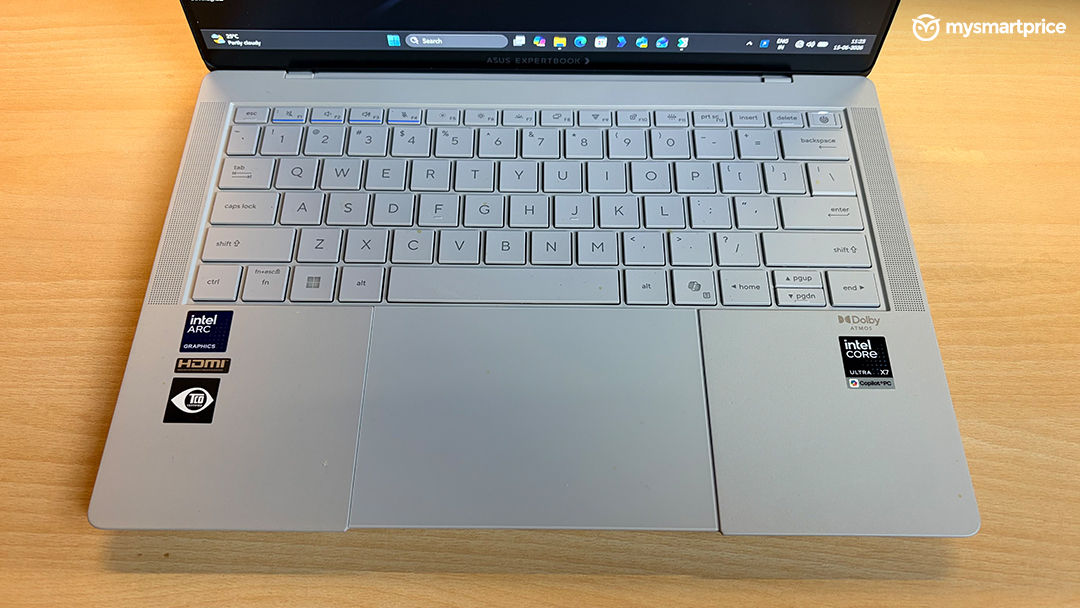
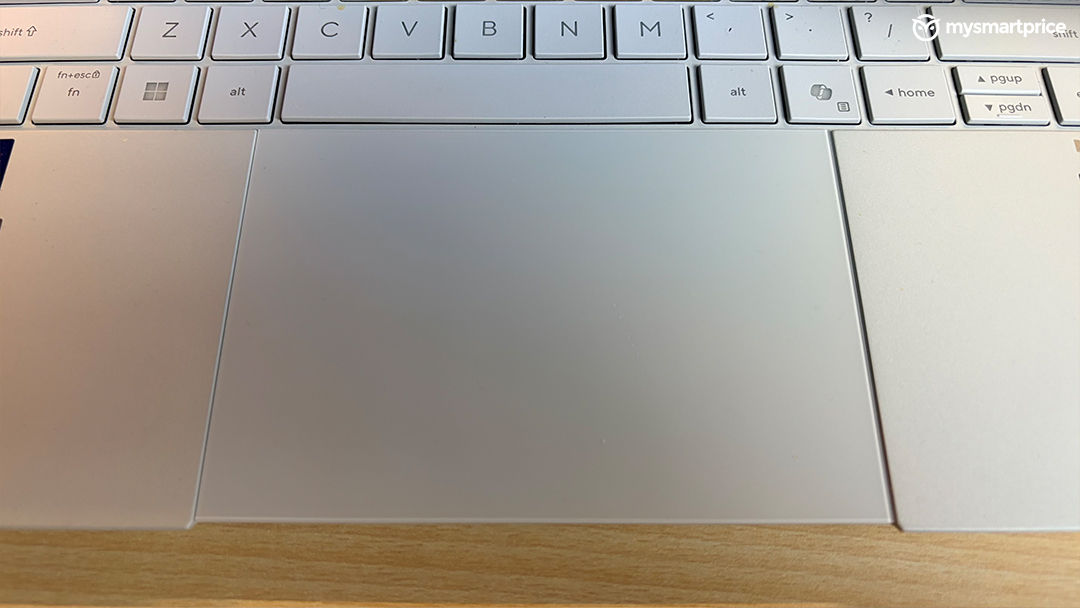
The trackpad is equally impressive. ASUS ditched the traditional mechanical diving-board switch in favor of a modern haptic touchpad. It is highly precise, and the haptic feedback feels excellent—a welcome inclusion, especially considering the similarly priced Zenbook S14 oddly stuck with the older mechanical style.
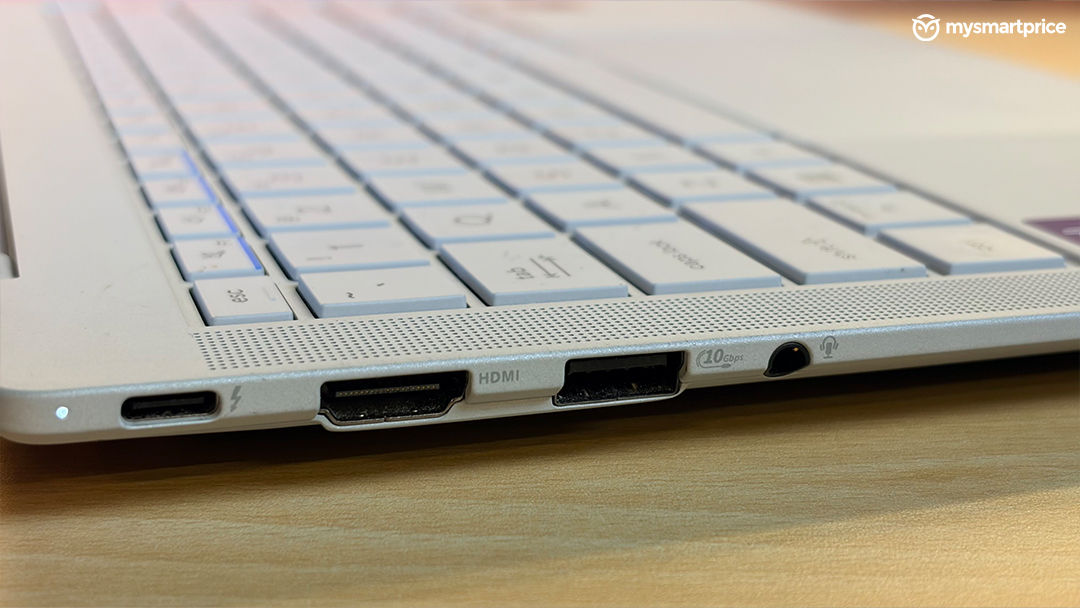
Connectivity is where this ultra-thin truly defies logic. Most sub-1kg laptops force you into the “dongle life,” but ASUS managed to squeeze in a highly practical port array. You get full-sized USB-A ports, an HDMI out, and Thunderbolt 4 ports on both the left and right sides, allowing you to charge from whichever side is most convenient.
Display and Audio Experience
The visual experience here is top-tier. The 14-inch 3K tandem OLED display achieves up to 1,400 nits of peak brightness in HDR while simultaneously draining less battery than traditional OLEDs.
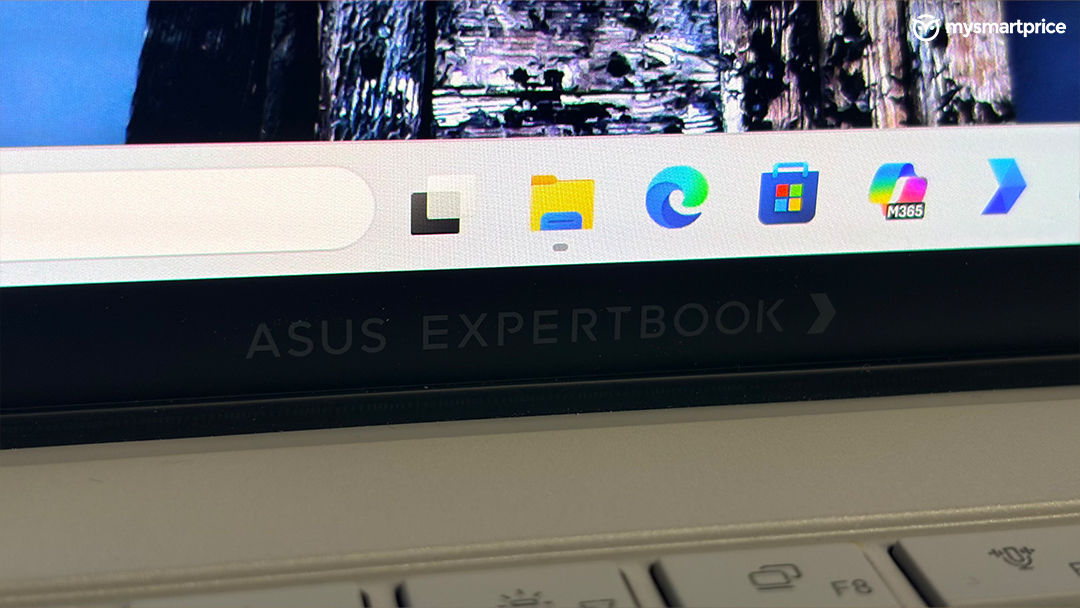
However, the real star of the show is the matte, micro-etched coating layered over Gorilla Glass Victus. It aggressively diffuses reflections, making the laptop incredibly usable under harsh office lighting or direct sunlight. Backed by a smooth 120Hz refresh rate, professional color calibration, and 100% DCI-P3 coverage, this screen easily handles professional creative workflows, casual gaming, and cinematic media consumption.
Audio performance completely shatters expectations for a chassis this small. While many larger 16-inch laptops—like my daily driver, the Samsung Galaxy Book6 Pro—settle for quad speakers, ASUS crammed a six-speaker Dolby Atmos system into the ExpertBook Ultra. Complete with dedicated tweeters and dual-magnetic woofers, the audio is rich, distortion-free at high volumes, and provides a surprisingly wide stereo soundstage with actual bass depth.
Performance and Thermal Benchmarks
The ExpertBook Ultra doesn’t just look good; it punches well above its weight class in performance. Looking at Geekbench 6, the Intel Core Ultra X7 358H holds its own against the competition, scoring 2,819 (Single-Core) and 16,567 (Multi-Core).
| Laptop | Processor | Geekbench 6 Single-Core | Geekbench 6 Multi-Core |
| Samsung Galaxy Book6 Pro 16 | Intel Core Ultra X7 358H | 2,890 | 17,108 |
| ASUS Zenbook S14 | Intel Core Ultra 9 386H | 2,905 | 16,659 |
| ASUS ExpertBook Ultra | Intel Core Ultra X7 358H | 2,819 | 16,567 |
| Dell XPS 14 | Intel Core Ultra X7 358H | 2,704 | 16,895 |
In Cinebench R23 rendering tests, it secured second place for single-core tasks (2,067) and closely trailed the larger Samsung Galaxy Book6 Pro in multi-core performance (15,365). This proves that the ExpertBook Ultra’s ultra-slim chassis can dissipate heat just as effectively as laptops with significantly more physical thermal headroom.
| Laptop | Cinebench R23 Single-Core | Cinebench R23 Multi-Core |
| ASUS Zenbook S14 | 2,107 | 14,735 |
| Dell XPS 14 | 2,076 | 12,772 |
| ASUS ExpertBook Ultra | 2,067 | 15,365 |
| Samsung Galaxy Book6 Pro 16 | 2,016 | 15,517 |
To test thermal stability, we ran the 3DMark Wild Life Extreme Stress Test. A passing score requires 97% stability, but the ExpertBook Ultra posted a highly respectable 94% with a total score of 12,418 points. It thoroughly outclassed the larger Galaxy Book6 Pro (90% stability) and the Dell XPS 14 (a dismal 77%).
| Laptop | 3DMark Wild Life Extreme Score | Frame Rate Stability |
| ASUS ExpertBook Ultra | 12,418 | 94.0% |
| Samsung Galaxy Book6 Pro 16 | 11,536 | 90.0% |
| Dell XPS 14 | 11,302 | 77.0% |
| ASUS Zenbook S14 | 4,089 | 96.1% |
(Note: The Zenbook S14 lacks the Arc B390 iGPU, relying on weaker Intel Graphics, making its stability score less comparable despite a much lower overall point total.)
Perhaps the most fascinating takeaway is power efficiency. Both the Samsung Galaxy Book6 Pro and the ExpertBook Ultra run the identical Core Ultra X7 358H. However, the Samsung chip pulls nearly 45W under load, while the ASUS caps out at roughly 30W—yet delivers virtually identical performance. This clearly indicates that pushing this processor past 30W yields steeply diminishing returns.
Battery Life
Armed with a 70Wh battery, the ExpertBook Ultra’s endurance is stellar. Our overnight video loop yielded an impressive 16 hours of screen-on time. Under a mixed-use productivity workload, it survived for 12 hours and 32 minutes before dying.
This comfortably beats the Samsung Galaxy Book6 Pro 16, which tapped out at 10 hours and 45 minutes. The ASUS benefits from a smaller, highly efficient display and masterful power capping; keeping the processor at that 30W sweet spot allows it to sip battery without sacrificing noticeable real-world speed.
The Verdict
The ASUS ExpertBook Ultra exists at a strange crossroads. On one hand, ₹2.39 lakh is an eye-watering sum for a Windows ultrabook, especially in a market where consumers are already suffering from premium price fatigue.
On the other hand, ASUS has delivered a masterclass in hardware balance. By maintaining a 10.9mm thickness and a sub-1kg weight, it offers uncompromising portability without sacrificing usability. You are getting an anti-glare tandem OLED panel, desktop-class port variety, a phenomenal keyboard, haptic trackpad, rich audio, and class-leading battery life.
Its performance tuning is brilliant, proving that a smartly capped 30W system can easily trade blows with much larger 45W laptops.
The only true hurdle here is the value proposition. A year ago, this kind of money bought absolute desktop-replacement power; today, it buys you the pinnacle of ultra-portable refinement. It is a tough sell for the average consumer, but if your budget is limitless and you demand a zero-compromise travel companion, the ExpertBook Ultra unequivocally delivers.