NVIDIA walked us through a live gaming demo on pre-production RTX Spark laptops in Taipei, running Pragmata and Alan Wake 2 alongside Fortnite and Naraka: Bladepoint, showing off DLSS 4.5 Ray Reconstruction and Day One anti-cheat support. Here is what we saw, what NVIDIA put on the record, and the one question that decides whether this is a real gaming machine.
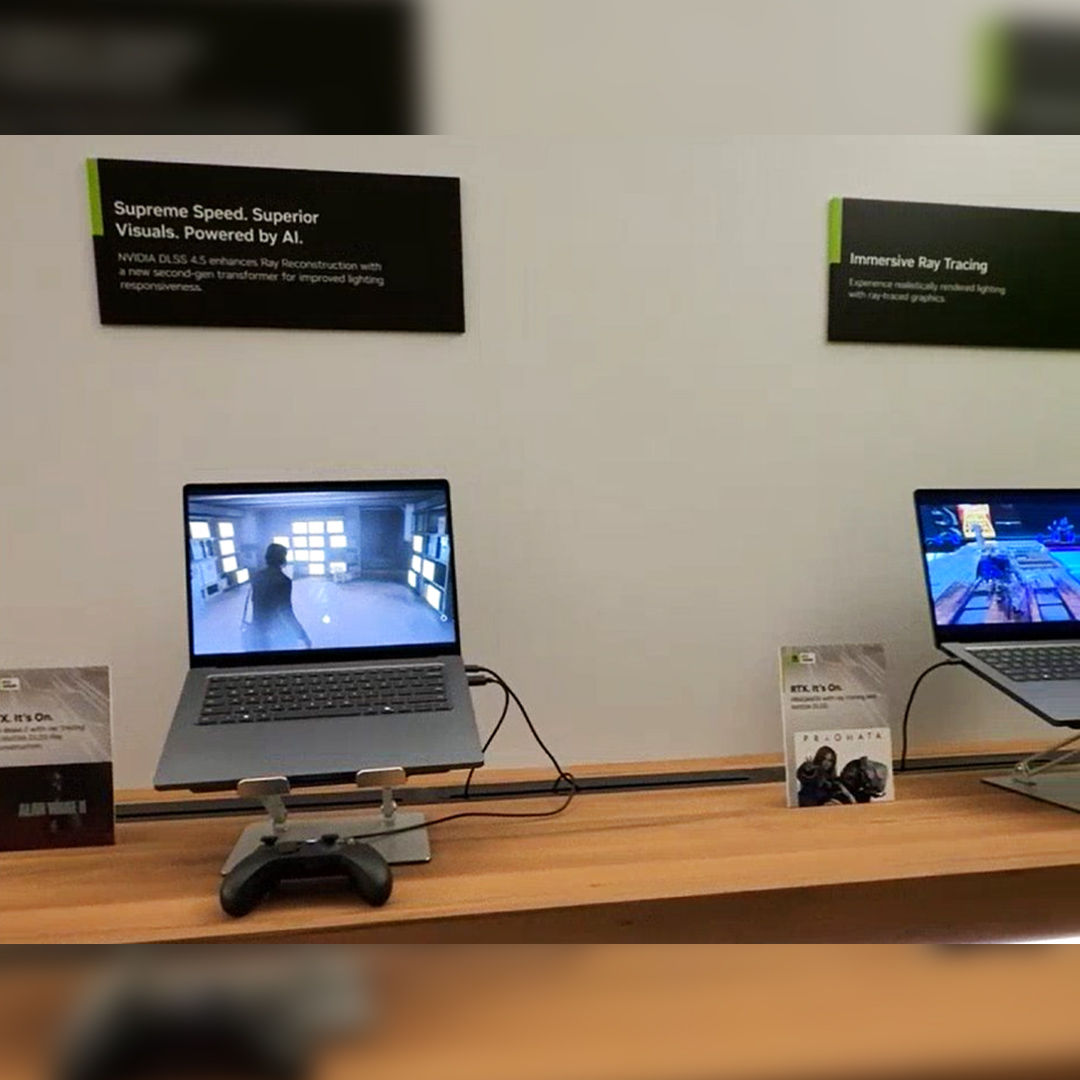
RTX Spark has an AI story and a creator story, but the part NVIDIA was most at home with was gaming, and it is easy to see why. This has been NVIDIA’s turf for 30 years, and a thin and light laptop with no discrete GPU has the most to prove right here. We spent time in the gaming room at Computex 2026 while an NVIDIA host ran through a live demo on the first RTX Spark machines, with four Microsoft systems set up and a controller and mouse on the desk. The hardware impressed. But the question that matters is not how pretty the games looked. It is whether an ARM laptop can run the PC game library at all, and that it did, and how!
Pre-Production, and NVIDIA Said So
To NVIDIA’s credit, the first thing the host did was set expectations. These are pre-production units, not final, and by NVIDIA’s own account, the retail machines are months away, due in the fall. The company was also specific about the fact that the fan and power curves are not locked in yet, so the noise and thermal behaviour we heard should not be read as representative of the shipping product. NVIDIA’s framing was that they are good today and will be great by launch, and that the demo was about a taste of the performance and the features rather than final numbers. We appreciate the honesty, and it is exactly why we are treating everything here as a claim to be tested rather than a result to be quoted.
The Real Question: Emulation on ARM
The big question on everyone's mind. RTX Spark is an Arm platform, and most PC games are built for x86, so the make-or-break question is how well those games run through translation. NVIDIA demoed both halves of that answer side by side. Pragmata was running as an x86 build through Microsoft’s translation layer, the same emulation path the bulk of the existing PC library would take. For the average reader, an x86 build essentially acts as a standard Windows game, which makes it the crucial “compatibility test” for the platform. Right next to it, Alan Wake 2 was running as a native ARM build, which NVIDIA said it produced by working directly with Remedy. Seeing the emulated title and the native title humming along next to each other was the most useful thing in the room.
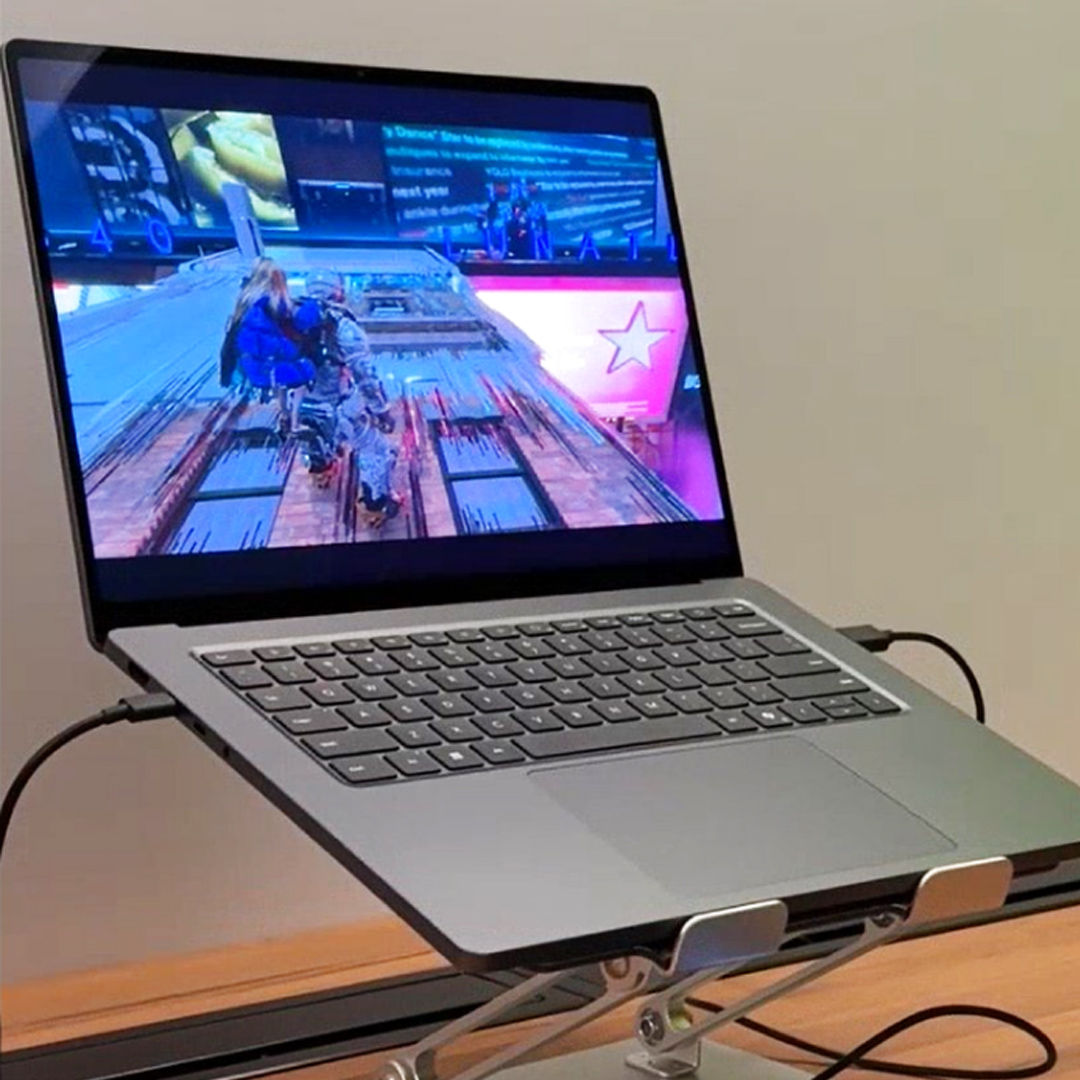
NVIDIA’s pitch to developers is that it will meet them either way. If a studio wants its game running well through the Microsoft translation layer, NVIDIA says it will help tune it. If a studio wants a native ARM build, NVIDIA says it will help with that too, leaning on three decades of developer relationships. That is a sensible position, and on the floor, both routes looked smooth. The catch is the one we always come back to: a curated demo on a show floor is not the same as your own Steam library. Emulation is where Windows on ARM has stumbled before, and it is the first thing we will stress test, native build against translated build, the moment we get a review unit.
DLSS 4.5 Ray Reconstruction, The New Trick
The other thing NVIDIA wanted to show was that the full software stack comes with the platform. Both Pragmata and Alan Wake 2 were running ray tracing, DLSS Super Resolution, DLSS Frame Generation, NVIDIA Reflex, and, the headline addition, the new DLSS 4.5 Ray Reconstruction. NVIDIA describes this latest Ray Reconstruction as a transformer-based model, a second generation of the technology, and it used Alan Wake 2 to make the point.
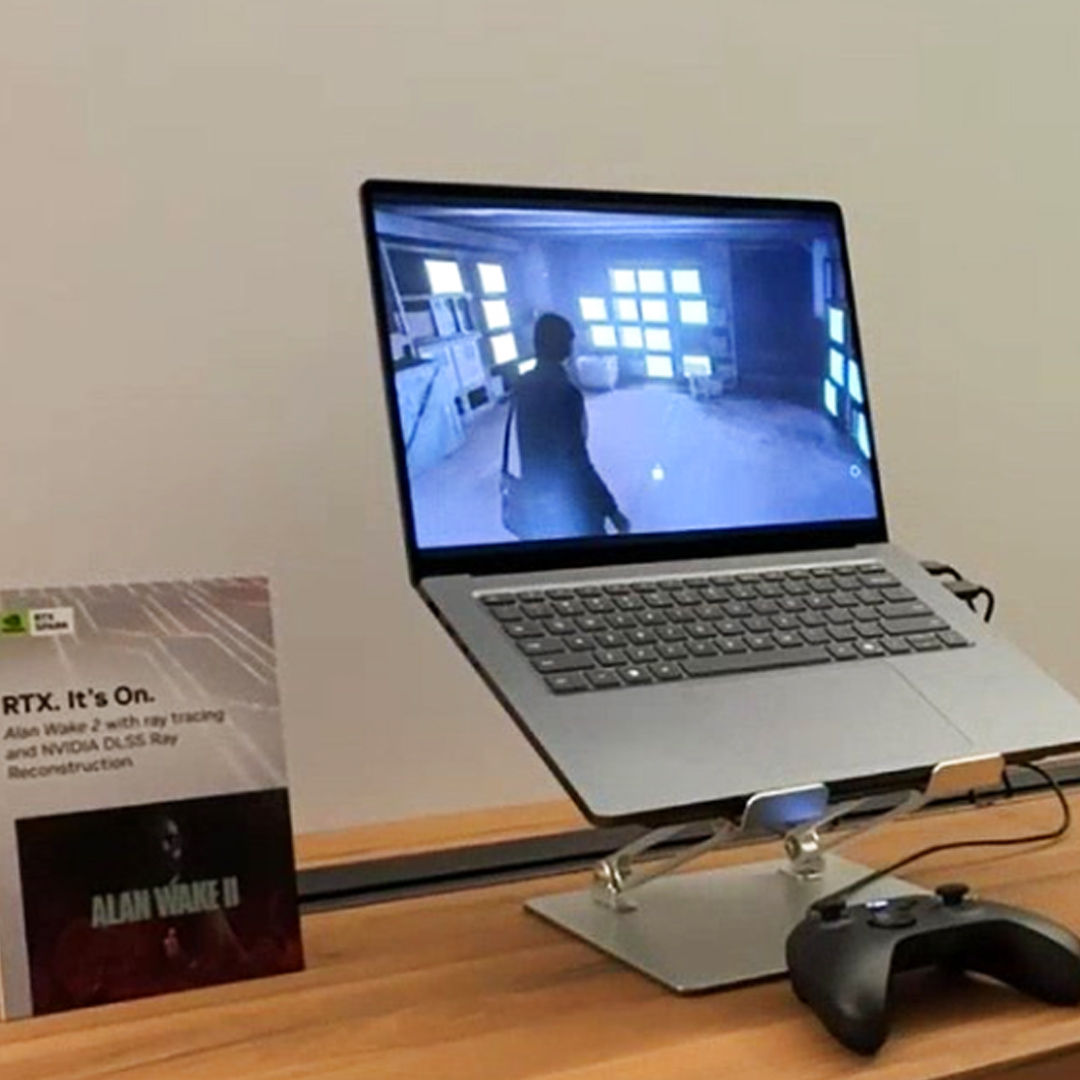
NVIDIA had the demo rig configured with a toggle to switch between the old Ray Reconstruction model and the new one, using a scene full of TV screens. With the new model enabled, the TVs showed the intended static, and the lights flickered, the visual cues the art director put there to tell you a spot is worth investigating. Switch back to the old model, and that detail flattened out, the static cleaned up, and the flicker went solid. The argument is that the transformer model reconstructs the scene closer to what the game simulation and the artist actually intended. NVIDIA was refreshingly upfront that this was a hand-picked example and that there will be scenes where you cannot tell the models apart, which is the kind of caveat we wish more demos came with. In this one scene, the difference was clear enough.
Fortnite, Naraka, and the Anti-Cheat Problem NVIDIA Says It Solved
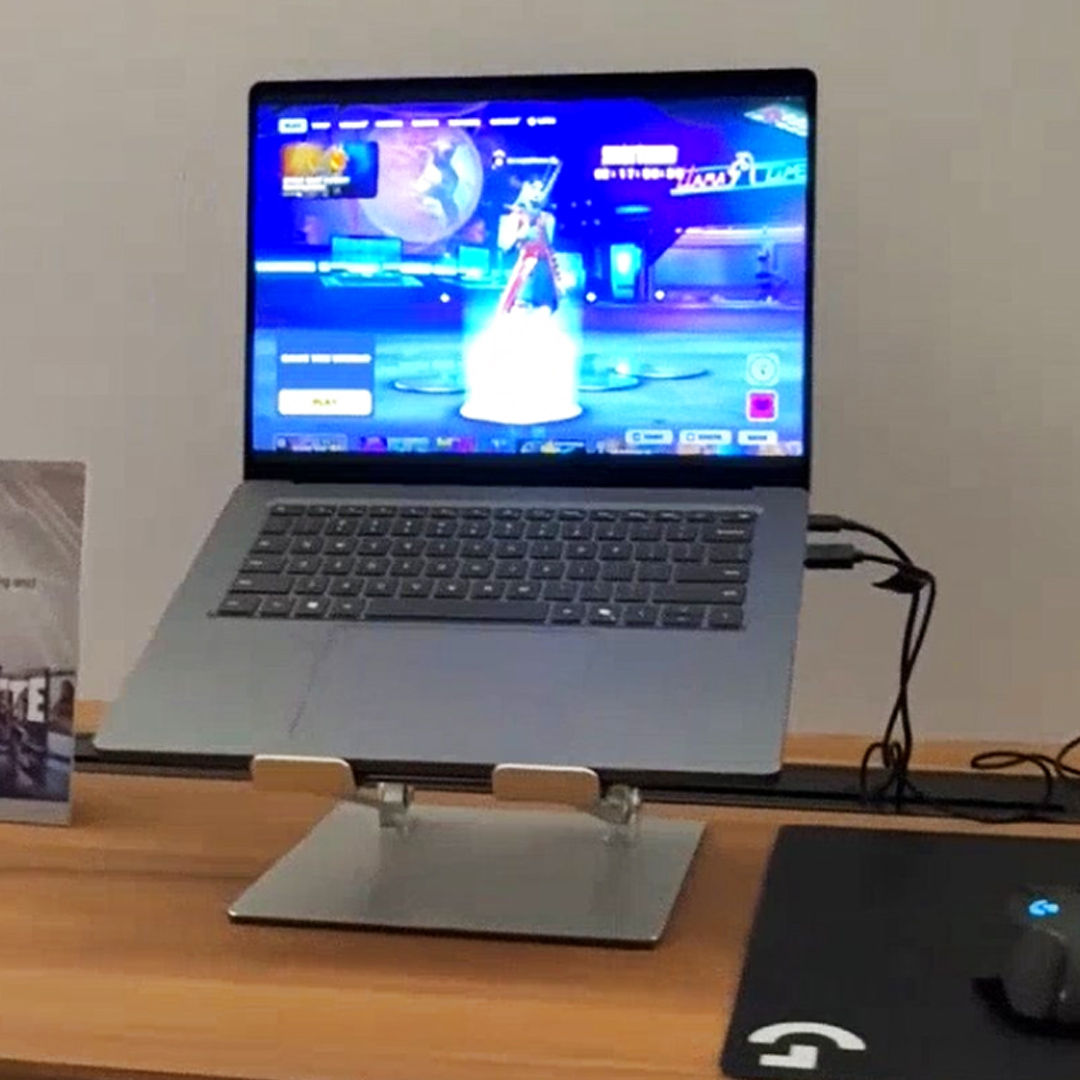
The two systems on the other side were running Fortnite and Naraka: Bladepoint, and the reason those two were chosen has nothing to do with graphics. It is anti-cheat. NVIDIA used them to make a single, important promise: Day One full support for anti-cheat software on RTX Spark, naming BattlEye, Easy Anti-Cheat, and NetEase’s own system for Naraka. If you have followed gaming on ARM, on Mac, or on Linux through Proton, you will know that anti-cheat is exactly where competitive multiplayer games go to die on a new platform, because the anti-cheat hooks deep into the system and often simply refuses to run. A launch day commitment that the big anti-cheat engines work is, for an esports crowd, a bigger deal than any frame rate.
How It Looked, and What Kind of Performance Can You Expect?
So how did it actually play? Smooth, at high resolutions, with the settings turned up, on every system we saw. That is the honest experiential read, and it is also where we have to stop. There was no on-screen frame rate counter anywhere in the demo, NVIDIA did not confirm a single FPS number, and the units are not final, so we will not put a performance figure in your head that we have not measured. Based on what we saw and also did a bit of hands-on gaming, the performance was surely in the realm of a high-end gaming laptop. Triple-digit FPS at 1440p with all settings maxed out is surely not out of the realm for the RTX Spark. And that, on a thin, light, relatively low-power machine, is a deal you cannot ignore.
When asked about the comparative estimate of how the RTX Spark-based laptops are expected to perform in comparison to NVIDIA's GeForce series of laptops, NVIDIA said that the Blackwell GPU in RTX Spark lands around the RTX 5070 level, with a performance hit of around 10 to 15 percent at most when running games in emulation. If both of those hold up under our testing, this gets very interesting.
What This Means for India
For Indian gamers, the appeal is obvious if the pricing lands right. A traditional RTX 5070-class gaming laptop, here is a thick, plastic, fan-loud machine with mediocre battery life. RTX Spark is trying to put that level of graphics into a slim, all-metal body that also doubles as a quiet work and AI machine, which is a genuinely different proposition. The problem, as always, is price. NVIDIA has not announced one, and our own estimate is a global launch in the 1,800 to 2,000 dollar range, which, after the usual duties and GST, would put the top configurations into flagship territory in India, likely upwards of the 1.8 to 2 lakh rupee mark. This creates a strong contrast: while users face flagship pricing, the goal is to deliver flagship performance in a design that is worlds apart from the traditional thick, loud gaming laptops. There is no official India launch or pricing yet, and we will update our buying guides the moment there is. We're hoping a few make it to Indian shelves before the festive buying season kicks off.
Key Takeaways
- Performance Target: NVIDIA claims RTX Spark Blackwell GPU performance rivals the RTX 5070.
- Anti-Cheat Promise: NVIDIA promises Day One full support for major anti-cheat systems.
- Emulation Caveats: While native and x86 builds are promising, real-world performance on the full Steam library remains to be tested.
The Bottom Line
Gaming is the most convincing pillar of the RTX Spark pitch, precisely because it is the one NVIDIA knows best. The full DLSS stack is here, DLSS 4.5 Ray Reconstruction looks like a real step, and the Day One anti-cheat promise quietly removes the single biggest blocker for competitive games on a new platform. But the platform still has to win the argument that started this piece: that an Arm laptop can run your whole library, emulated and native, without the asterisks that have sunk Windows on Arm before. NVIDIA showed us it can run a curated handful beautifully. Whether it runs everything, and at what frame rate, is what we will find out when review units land on our bench. The demo was good today. We will hold NVIDIA to great tomorrow. Watch this space.
The Nvidia RTX Spark could be the MacBook Pro moment for Windows, but in a whole new way. It paves the way for thin, light, premium laptops that truly excel at gaming, creator workloads, on-device AI compute, and agentic AI.