For more than two decades, new Wi-Fi generations have been promoted on the promise of faster speeds. Larger channels, higher modulation, and bigger numbers shaped each upgrade cycle. During Intel's educational briefing on Wi-Fi 8, led by Intel Fellow and Wireless CTO Carlos Cordeiro, it became clear that the next generation of Wi-Fi is taking a different path. Wi-Fi 8 is not being defined by peak throughput. It is shaped around steadiness, predictability, and what Cordeiro repeatedly referred to as Ultra High Reliability. This reflects the demands of an AI-driven world where cloud services, smart devices, and sensors communicate constantly and require consistent behaviour rather than headline speed.
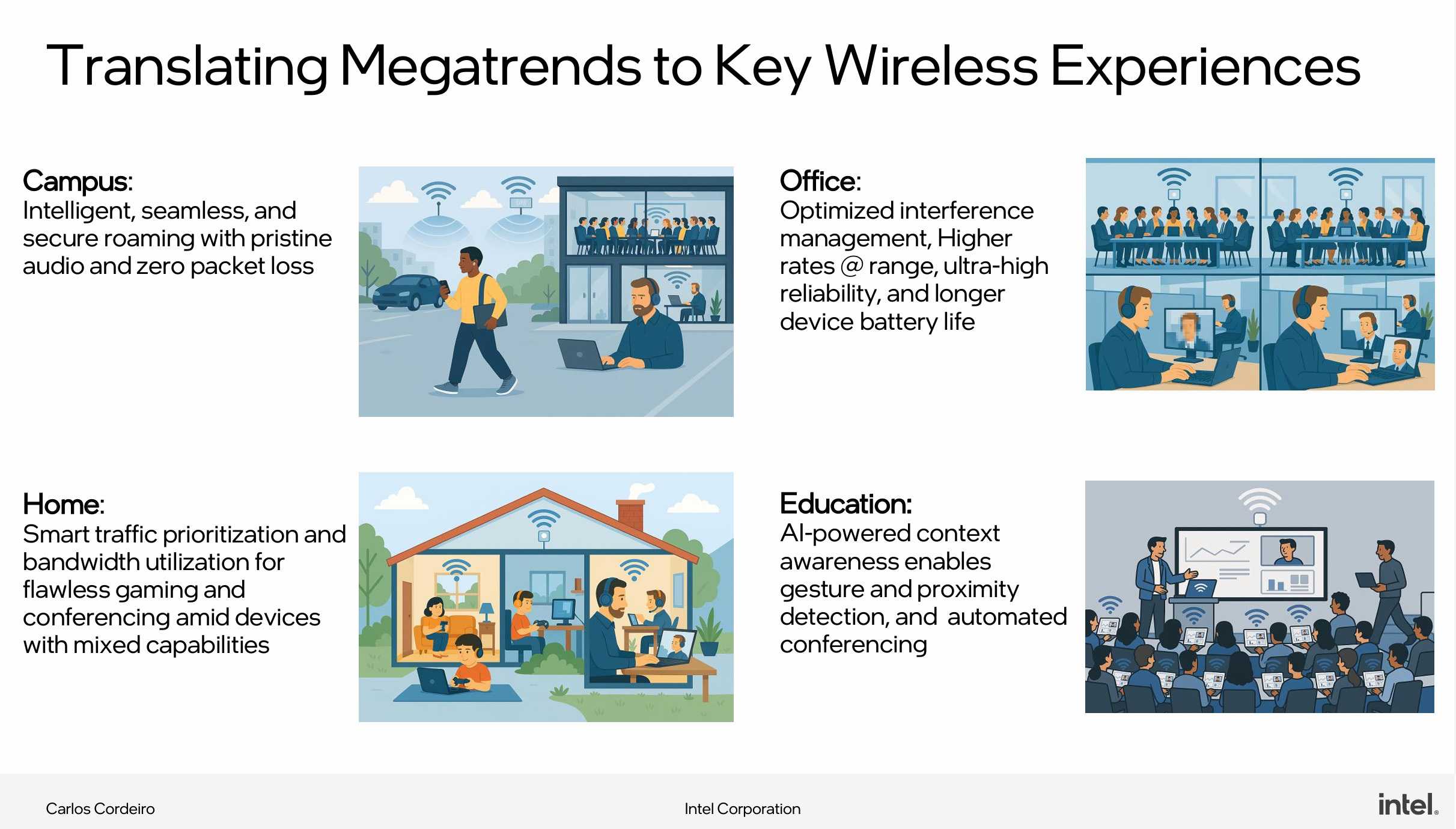
This change became noticeable to me during the briefing itself. Because it was an international session scheduled for 9.30 PM Indian Standard Time, I joined the call from home and was moving between rooms while listening. As I walked from my bedroom to the living room, my laptop shifted from the extender to the main router and briefly froze. It was a familiar interruption caused by the switching between access points. Moments like this highlight what truly matters during an important call. At that hour, I was far more concerned about the transition being smooth and the video not stuttering, freezing, or dropping frames than about whether I was receiving the full bandwidth that my router or service plan offered. Wi-Fi 8 is designed to reduce such disruptions by allowing a device to establish its next connection before it leaves the current one.
What’s New in Wi-Fi 8 Compared to Wi-Fi 7
Cordeiro noted that Wi-Fi 7 delivered impressive theoretical speeds, yet many of the everyday issues that people face remain. Range can be uneven. Latency can spike without warning. Roaming still leads to momentary drops. Nearby routers often interfere with each other and cause unpredictable slowdowns. Wi-Fi 8 aims to address these problems directly.
The standard introduces more resilient modulation, smarter link adaptation, and stronger uplink management, all intended to help devices maintain steadier connections across rooms and through walls. Industry documents and early technical drafts suggest that Wi-Fi 8 is targeting approximately a 25 percent improvement in effective throughput under identical signal conditions compared to Wi-Fi 7. This figure represents a design goal rather than a verified real-world result, but it illustrates the direction and intent of the new standard.
A major architectural shift comes from coordinated access points. Instead of operating completely independently, access points in a Wi-Fi 8 environment are expected to coordinate their transmissions more intelligently. This is intended to reduce interference in dense environments and mesh setups where overlapping networks often create inconsistent performance.
Roaming is also a significant focus. The new mobility architecture is designed to allow devices to complete their next connection before releasing the current one. If implemented effectively across routers and client devices, this should lead to smoother movement through the home with fewer momentary disruptions.
Wi-Fi 8 Promises to Improve Everyday Connectivity
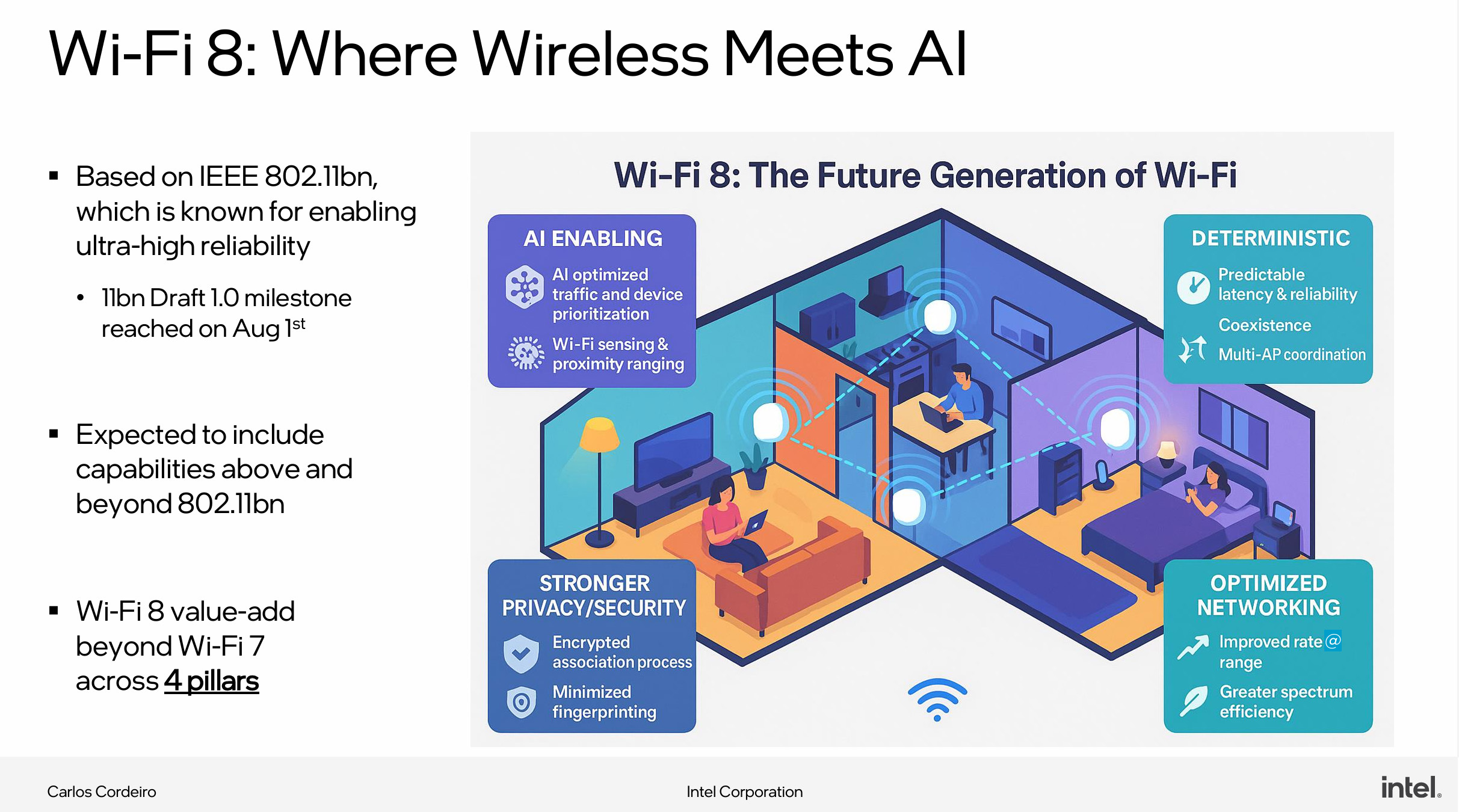
The reliability-first philosophy behind Wi-Fi 8 is intended to improve many situations where today’s Wi-Fi often falters. The standard promises clearer video calls even in busy homes, steadier streaming in far rooms, and smoother transitions between access points without the familiar pause in audio or frozen frame. It also aims to provide more predictable latency, something that is crucial for cloud gaming, remote work, and AI-powered services that depend on consistent timing rather than maximum throughput.
These goals align with real-world frustrations. When I tested Xbox Cloud Gaming shortly after its launch in India, performance varied dramatically depending on my location and even the time of day. Ping, jitter, and packet loss shifted so much that I often abandoned wireless entirely and relied on Ethernet despite using a Wi-Fi 6E laptop. Wi-Fi 8 aims to stabilise uplink behaviour, reduce jitter, and improve scheduling consistency, which raises hope that cloud gaming may become more dependable without the need for an Ethernet cable. The standard also promises better power efficiency by reducing unnecessary retransmissions, which could translate into improved battery life for mobile devices over time.
New Experiences and AI-Driven Features
A major theme of the briefing was the potential for Wi-Fi 8 to act as a platform for new AI-powered experiences. The standard integrates advanced Wi-Fi sensing and fine-grained proximity detection. These capabilities are designed to allow devices to interpret presence, movement, and gestures by analysing subtle changes in wireless signals, offering a more privacy-friendly alternative to camera-based sensing. Device continuity is another area where Wi-Fi 8 aims to bring improvements. Calls could shift more smoothly between devices, and wireless displays or docking solutions could respond with less delay. While many of these ideas have been explored before, Wi-Fi 8 is the first standard to integrate them deeply rather than treat them as extras. The extent to which they reach consumers will depend on implementation decisions by hardware and software partners.
When to Expect Wi-Fi 8 Devices and How It Will Impact Users in India
The finalisation of the WiFi 8 standard is expected in 2027. The first routers and access points are likely to appear near the end of that year, followed by adoption in laptops, tablets, and smartphones throughout 2028. By 2029 and 2030, Wi-Fi 8 should be common across new devices, although the real-world impact will depend on how quickly manufacturers adopt and optimise the standard.
India’s regulatory environment is changing at the same time. The government recently released draft rules proposing to open the lower portion of the 6 GHz band for indoor Wi-Fi use. This is an important step toward enabling Wi-Fi 6E, Wi-Fi 7, and Wi-Fi 8 on a cleaner spectrum. These rules remain in draft form, and the upper portion of the band continues to be debated between telecom operators seeking it for future cellular networks and technology companies advocating for unlicensed Wi-Fi use.
Many of the most important improvements promised by Wi-Fi 8 do not rely on access to 6 GHz. The standard aims to deliver stronger uplink performance, more stable roaming, better interference management, and more predictable latency on the existing 2.4 GHz and 5 GHz bands that India already uses. This makes Wi-Fi 8 particularly relevant for dense apartment communities where overlapping routers create unpredictable performance. Mobile first users may also notice clearer calls, smoother video uploads, and more stable cloud gaming, even on current devices, since many enhancements originate from the router rather than the client device. Once 6 GHz becomes available in India, Wi-Fi 8 will be positioned to take advantage of the cleaner spectrum.