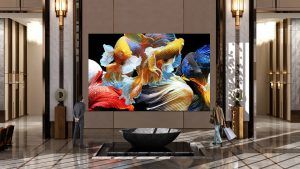
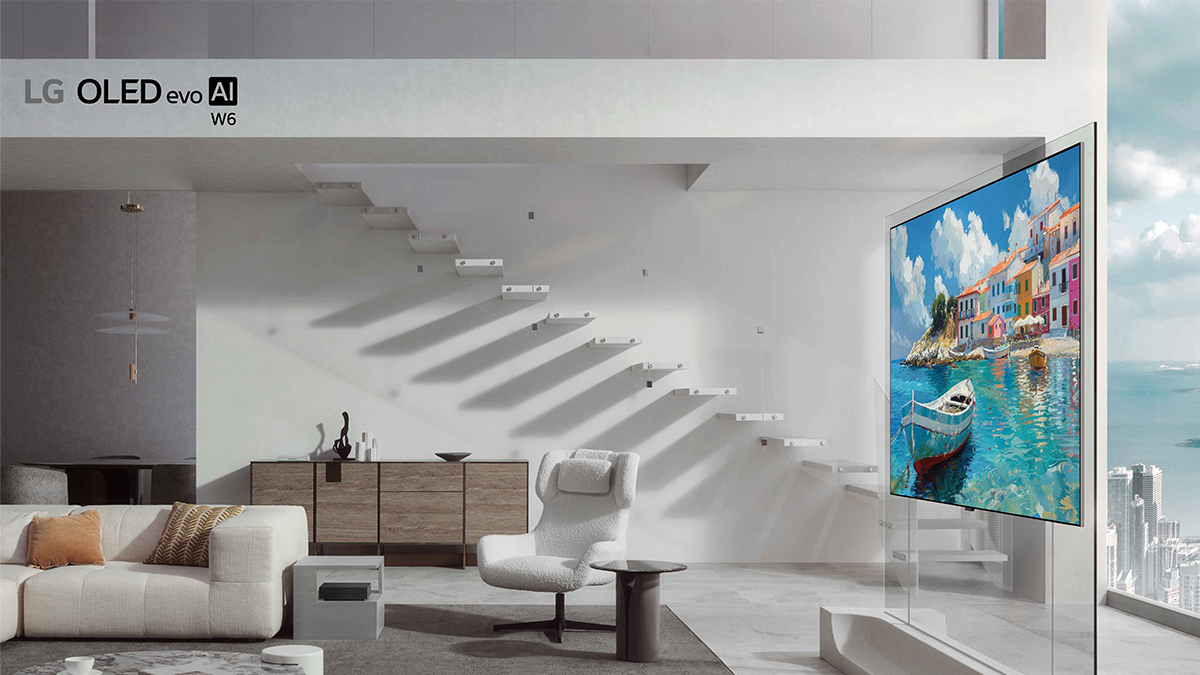
LG has refreshed one of its most recognisable TV designs with the return of the Wallpaper TV, unveiled at CES 2026 as part of its 2026 OLED lineup. The new OLED evo W6 revives the ultra-slim form factor first introduced in 2017, while adding True Wireless connectivity and a new picture pipeline aimed at brighter, more adaptable OLED viewing.
Positioned as a design-led flagship rather than a volume product, the Wallpaper TV is built to visually recede into the living space. With a 9mm-class thin profile, the panel sits flush against the wall using a redesigned mount, while all physical connections are shifted to an external Zero Connect Box that can be placed up to 10 metres away. This separation allows LG to prioritise form factor without eliminating ports or processing power.
Design-Led Engineering With Clear Trade-Offs to Examine
LG has long treated the Wallpaper TV as a statement of engineering rather than a conventional television, and the W6 continues that philosophy. The True Wireless approach is central to this design, removing the need for visible cables and AV units near the screen. What will be important to assess in a full review is how reliably this wireless transmission performs in real homes, particularly in environments with multiple wireless devices and dense networks.
Another area worth exploring is thermal and long-term performance. Ultra-thin OLED panels place greater emphasis on heat management and component longevity, and LG's past OLED track record gives confidence, but sustained brightness and durability will be key factors for buyers considering a product at this level.
Brighter OLED Performance Meets Smarter Processing
On the picture side, LG is introducing Hyper Radiant Color Technology across its 2026 OLED lineup, with the Wallpaper TV positioned at the top end. The combination of this new colour system with Brightness Booster Ultra is intended to push OLED brightness significantly higher than previous generations, while improved reflection handling aims to make the panel more usable in bright living rooms.
Powering the display is the Alpha 11 AI Processor Gen3, which brings a dual AI processing approach focused on balancing noise reduction with detail preservation. LG's OLED TVs have historically delivered strong motion handling and accurate colour reproduction, so the key question here is whether the new processor meaningfully improves real-world viewing without introducing artificial sharpening or tonal inconsistencies.
Beyond picture quality, the Wallpaper TV also highlights LG's broader platform strategy. Features such as personalised webOS profiles, deeper AI assistant integration, and high-end gaming support, including 4K at 165Hz, position the W6 as both a lifestyle product and a performance-focused display.
From an editorial perspective, the Wallpaper TV stands out less for any single headline feature and more for how LG is attempting to unify design, wireless freedom, and next-generation OLED performance. The areas that merit close scrutiny in a full review will be wireless stability, sustained brightness, reflection control in Indian living spaces, and whether the extreme thinness introduces any practical compromises. Given LG's strong OLED track record, the W6 sets up an interesting evaluation rather than an easy verdict.